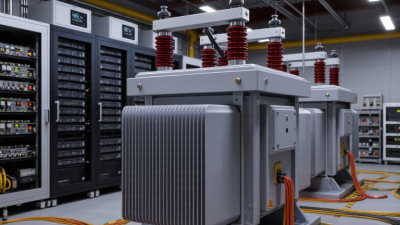
How to Choose an Isolation Transformer in 2026?
Choosing an Isolation Transformer in 2026 requires more than matching voltage and kVA. Modern facilities face denser electronics, sensitive automation, renewable-energy interfaces, and stricter efficiency expectations. The International Energy Agency’s Electricity 2024 report forecasts global electricity demand to grow by an average of 3.4% annually from 2024 through 2026. That growth increases pressure on power-quality systems, especially in data centers, laboratories, medical spaces, and industrial control rooms. An Isolation Transformer can reduce unwanted common-mode noise, separate grounding references, and protect sensitive equipment from selected electrical disturbances.
The right choice begins with measured operating conditions. Record the input voltage, output voltage, frequency, continuous load, starting current, harmonic content, and required isolation level. Do not rely only on the nameplate load. A motor, laser, UPS, or variable-frequency drive may create short-duration surges that a simple kVA calculation misses. IEEE Std 1100, commonly called the Emerald Book, provides practical guidance on powering and grounding sensitive electronic equipment. IEC 61558-2-4 also addresses separating transformers and relevant safety requirements. Certification matters.
Real installations can be less tidy.
A transformer that performs well in a clean test room may overheat inside a crowded cabinet. The U.S. Department of Energy’s transformer efficiency analyses emphasize that both load losses and no-load losses affect lifetime energy performance. Buyers should therefore compare temperature rise, ventilation, sound level, shielding, impedance, and standby consumption. No guide is perfect. Site measurements, manufacturer test data, and a qualified engineer’s review remain essential. In 2026, the best Isolation Transformer is not necessarily the largest or cheapest model. It is the unit that fits the electrical behavior, safety requirements, maintenance plan, and future load profile of the installation.
Read more »
 CEMarked
 By:Amelia
- November 9, 2026
 By:Evelyn
- October 19, 2026
 By:Maribel
- October 19, 2026