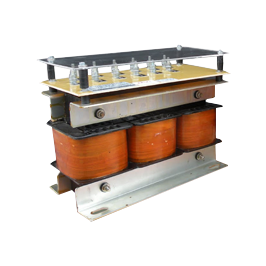
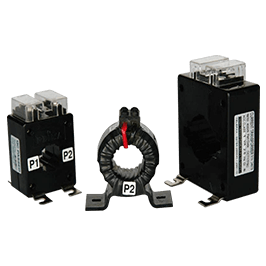
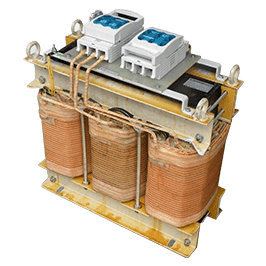
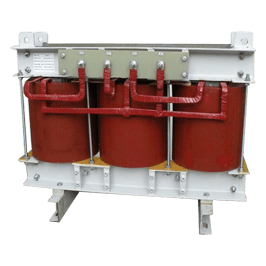
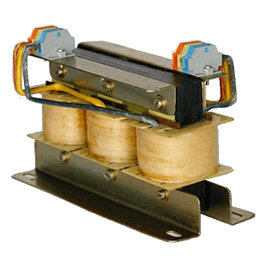
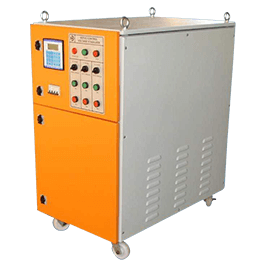
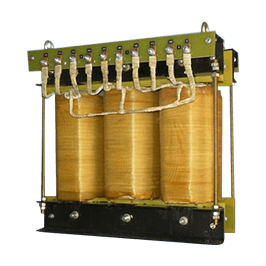
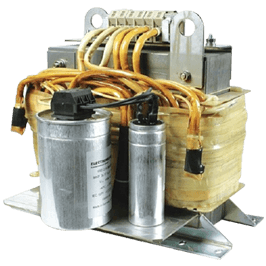
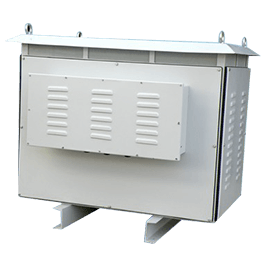
Santej, Ahmedabad, Gujarat, IndiaCE-Marked Transformers for Export
Serving OEMs & Projects Worldwide
CEMarked
0+Years Automation Heritage (Since 1990)
0 m²Integrated Production & FAT Plant
0+Panels Deployed Globally
0%Computerized Hardware-in-Loop FAT
0+Global Tier-1 EPC Clients
Engineered Control Excellence
SCADA Control Panel Engineering: How Do Modern Industrial Plants Build Resilient, Cyber-Physical Telemetry & Edge Control Systems?
35+
Years of hands-on control systems engineering, hazardous enclosure manufacturing, and precision magnetics integration
In modern high-consequence process operations—from smart municipal water treatment plants and petrochem refineries to large-scale utility solar arrays and high-speed discrete packaging lines—an industrial SCADA Control Panel (Supervisory Control and Data Acquisition) serves as the neuro-muscular hub of infrastructure operations. Far more than a sheet-metal enclosure fitted with terminal boards, a dependable SCADA control panel fuses multi-tiered logic processing, edge IIoT protocol gateways, deterministic PLC networking, high-speed RTU telemetry, and ultra-clean auxiliary power conditioned to eliminate mission-critical plant downtime.
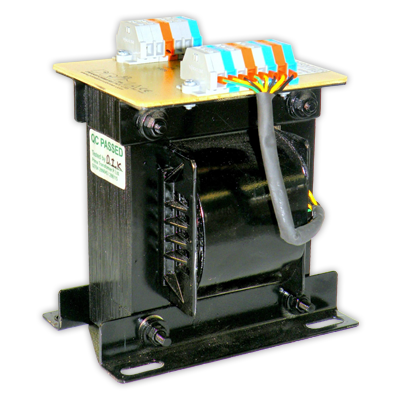
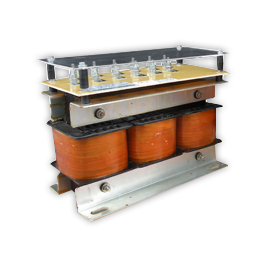
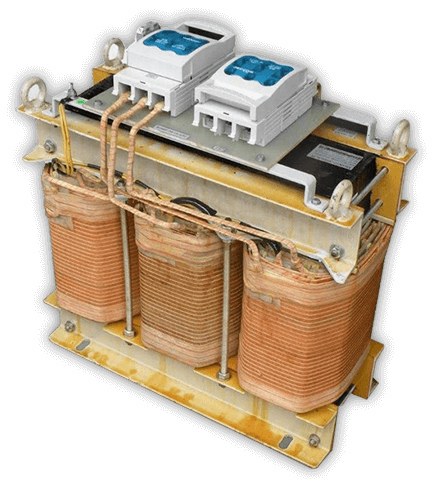
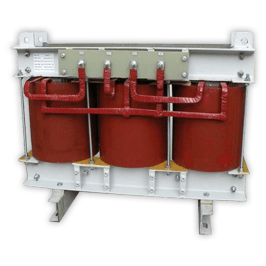
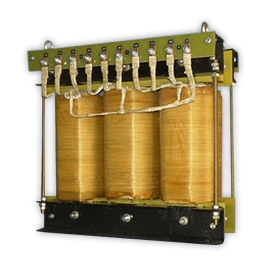
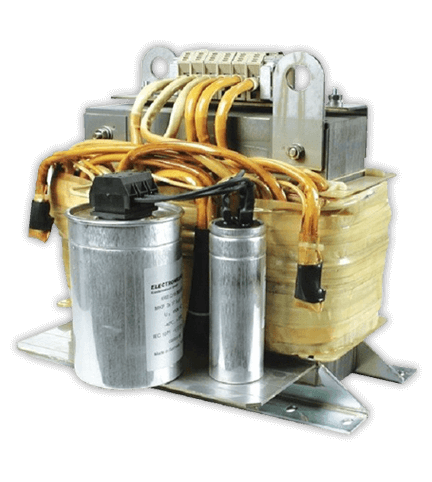
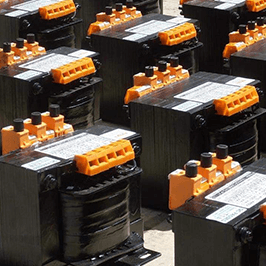
Prima Transformers Pvt. Ltd. (incorporated in 2006) operates as a wholly owned manufacturing subsidiary of Prima Automation (India) Pvt. Ltd., which has designed and manufactured custom PC, PLC, and SCADA control panels alongside flameproof, pressurized, and intrinsically safe control stations since 1990. We eliminate the systemic weakness common to standard panel builders: electrical transients, common-mode harmonics, and poor thermal de-rating. By manufacturing CE-marked control and power transformers, harmonic suppression reactors, and static voltage regulation equipment directly under our 5,500 m² Santej industrial campus, we deliver turnkey SCADA panels built for 100% operational continuity across the most hostile operating conditions worldwide.
Precision Engineering Principles for SCADA Control Panels
Industrial reliability demands rigorous component zoning, hardened signal pathways, and verified electromagnetic immunity.
Clean Power & Transients Isolation
SCADA microcontrollers, network switches, and I/O slices fail when exposed to VFD common-mode interference or switching spikes. We build dedicated control transformers, double-shielded isolation stages, and Class I+II surge arresters directly into the power entry bay to protect every digital asset.
Deterministic Network Redundancy
Our SCADA panel network topologies eliminate single points of failure via managed Layer-2/Layer-3 switches utilizing PRP (Parallel Redundancy Protocol), HSR (High-availability Seamless Redundancy), and rapid self-healing fiber ring backbones configured for microsecond recovery.
Thermal & Hazardous Integrity
From scorching Middle Eastern desert installations to corrosive marine environments, our enclosures feature CFD-optimized thermal heat management, closed-loop vortex or Peltier cooling, and fully certified explosion-proof (Ex d) or purged pressurization (Ex p) configurations.
Engineered Automation Solutions
Accelerate Your Industrial Project with Custom SCADA Panels
Partner directly with an established engineering manufacturer. From bespoke circuit drawings (EPLAN Pro Panel) to complete in-house FAT staging, we ensure zero-defect integration for mission-critical plants worldwide.
Global EPCs and multinational end-users are moving away from loose field assembly toward completely pre-engineered, skid-mounted SCADA/PLC control enclosures. By specifying standardized, pre-tested plug-and-play field terminal interfaces, engineering procurement managers slash on-site field wiring hours by over 45%, shorten site commissioning intervals, and minimize costly commissioning field engineers.
Demand for standardized Marshalling + System combined enclosures
Accelerated adoption of push-in wiring terminals to mitigate vibration-induced loose contacts
Mandatory requirement for factory pre-testing (Factory Acceptance Test) with client SCADA host simulation
Technology Trend: Convergence of IT/OT via Secure Edge Protocols
Traditional proprietary SCADA fieldbus wiring is being supplanted by Ethernet-first, edge-capable processing nodes. Modern control panels now integrate Industrial IoT gateways running containerized apps (Docker/Linux) executing edge analytics, converting raw sensor variables to unified MQTT Sparkplug B and OPC UA protocols before transmission to cloud datalakes.
Native support for AWS IoT SiteWise, Microsoft Azure IoT Edge, and Ignition SCADA
Bi-directional secure telemetry without opening incoming firewall ports
In-cabinet predictive maintenance algorithms monitoring pump vibration and transformer health
As industrial automation systems become interconnected with corporate business systems, unhardened SCADA panels represent an open door for ransom attacks and operational disruption. Future-ready procurement contracts explicitly mandate physical and digital cyber-hardening directly inside the panel assembly.
Physical cabinet entry detection switches tied to SCADA alarm logging
Hardware security modules (TPM 2.0), encrypted boot storage, and IEEE 802.1X port authentication
Dedicated deep-packet inspection (DPI) industrial firewalls separating field controllers from enterprise LAN
Energy & Power Quality Integration
Modern SCADA control panels no longer isolate electrical power distribution from automation logic. Digitalization demands continuous, fine-grained power metrics right down to the sub-feeder level, combining revenue-grade digital power analyzers, CT metering circuits, and dynamic harmonic suppression under a unified telemetry screen.
Direct integration of harmonic filters and line reactors to protect high-frequency sensitive instrumentation
Autonomous load-shedding and power-factor correction routines programmed into the local PLC rack
Continuous temperature and insulation degradation monitoring across all primary busbars
IEC 61850 (MMS/GOOSE), DNP3 Secure V5, OPC UA Pub/Sub, MQTT Sparkplug B
Network Architecture
Managed Industrial Ethernet Switches with RSTP / MRP Ring Topologies
Dual Redundant PRP / HSR Fiber-Optic networks with zero-millisecond failover
Quality Testing & Routine Verification
Automated point-to-point continuity, 2.5kV AC dielectric withstand, Megger insulation test
Full dynamic Hardware-in-the-Loop (HIL) FAT, thermal imaging profiling, EMC testing
*Custom engineering drawings, CAD files, EPLAN schematics, and project-specific Bill of Materials (BOM) are submitted for engineering review and approval prior to production dispatch.
State-Of-The-Art Production
5,500 m² Advanced Manufacturing & FAT Staging Infrastructure
Combining world-class sheet metal fabrication, precision transformer winding, robotic wire processing, and rigorous computerized automated testing laboratories in Santej, Ahmedabad.
Actionable guidance compiled by our Senior Systems Engineers to eliminate procurement risks and ensure seamless site commissioning.
1. Inrush Sizing & Auxiliary Power Architecture
SCADA microprocessors and telemetry transmitters reset unexpectedly when large solenoid valves, circuit breaker coils, or magnetic contactors pull sudden magnetizing inrush current from the 24VDC or 120/230VAC control rails. Never size your internal control transformer or power supplies based merely on steady-state holding VA.
Calculate instantaneous inrush VA using coincident energization tables
Specify isolated DC power supplies with integrated electronic circuit breakers (NEC Class 2)
Separate instrumentation 24VDC power rails from inductive contactor/solenoid supplies
2. Segregation of Noise-Generating Equipment
VFDs, servo drives, and solid-state power switches radiate high-frequency electromagnetic noise that couples into 4-20mA instrumentation loops, load-cell signals, and RS485 communication lines. A compliant panel requires strict physical and electromagnetic compartmentation.
Maintain minimum 200mm physical distance between low-voltage DC signals and AC power conduits
Ensure 360-degree high-frequency shielding clamps grounded directly to the subpanel plate
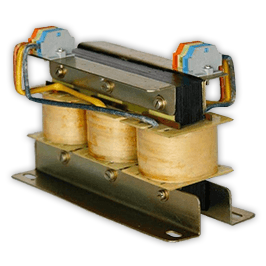
Incorporate line reactors on drive inputs and common-mode chokes on noisy inverter outputs
3. Comprehensive Factory Acceptance Testing (FAT)
Resolving wiring errors, faulty communication mapping, or logic flaws in the field is ten times more expensive than addressing them on the factory floor. Global buyers should demand rigorous, documented Factory Acceptance Testing before shipping authorization.
Complete cold point-to-point ring-out verifying every ferrule against EPLAN wiring diagrams
Live powered testing with simulated I/O injectors to prove every analog/digital loop
HIL communication staging to confirm data registers match the host SCADA screen database
4. Essential RFP Data Checklist for Fast Quotation
Provide our engineering team with these technical parameters for an expedited 48-hour turn-around on engineering drawings and pricing:
Global Buyer FAQs: SCADA Control Panel Sourcing & Engineering
What hardware and software communication protocols do your SCADA control panels support?
Our SCADA control panels natively support all open and major proprietary industrial communication protocols, including Modbus TCP/RTU, Profinet, Profibus-DP, Ethernet/IP, DNP3, and IEC 61850 for electrical substations. We incorporate industrial managed switches with redundant ring topologies and edge computing gateways featuring secure MQTT/Sparkplug B and OPC UA protocols to connect seamlessly to cloud platforms such as AWS IoT SiteWise, Microsoft Azure IoT, or on-premise SCADA servers like Ignition, Wonderware, and WinCC.
How does your panel architecture prevent common-mode electrical noise and harmonic disturbances?
Leveraging 25+ years of in-house magnetics engineering from Prima Transformers, we integrate custom-wound galvanic isolation transformers, input/output line reactors, surge protective devices (SPD Class I+II), and specialized grounding buses. High-speed communication cables and sensitive 4-20mA/0-10V analog wiring are strictly routed through separate shielded metal wireways, separated by metallic barriers from high-power VFD output lines to ensure clean signal acquisition.
Can you design SCADA and PLC control panels certified for hazardous environments?
Yes. Through our parent group Prima Automation (active since 1990), we engineer flameproof (Ex d), pressurized (Ex p), and intrinsically safe (Ex i) control cabinets fully certified for ATEX, IECEx, and NEC hazardous industrial environments. These panels incorporate certified galvanic isolators, Zener barriers, purged air-handling interlocks, and explosion-proof operator touch interfaces designed for chemical, oil & gas, and pharmaceutical plants.
What comprehensive factory acceptance testing (FAT) is conducted prior to dispatch?
Every SCADA panel undergoes rigorous FAT testing within our 5,500 m² testing facility. Testing protocols include point-to-point automated continuity validation, insulation resistance (Megger) checks, high-voltage dielectric withstand tests, full thermal load profiling, and live hardware-in-the-loop (HIL) PLC/SCADA simulation where every digital and analog I/O point is energized to verify alarm logic, fail-safe interlocking, and network packet integrity before dispatch.
What international compliance standards do your SCADA panels meet for global export?
Our panels comply with IEC 61439-1/2, CE marking directives, UL 508A requirements, and IEC 62443 cyber-security framework recommendations. Enclosures are manufactured to IP54, IP55, IP65, or NEMA 4X standards using high-grade cold-rolled carbon steel or passivated AISI 304/316L stainless steel, accompanied by complete schematic packages, material test certificates (MTC), and detailed user documentation.