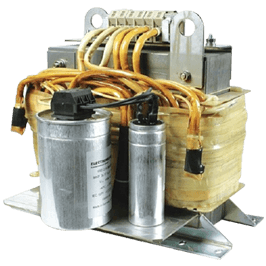
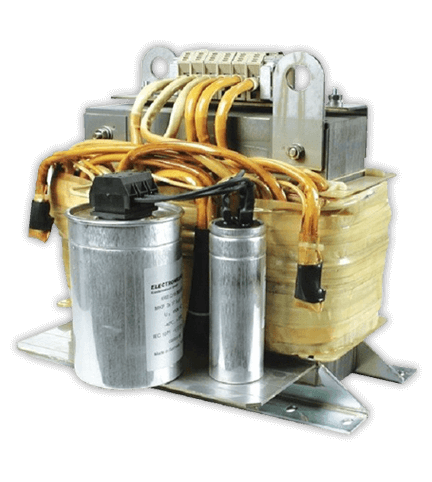
Passive Harmonic Filter
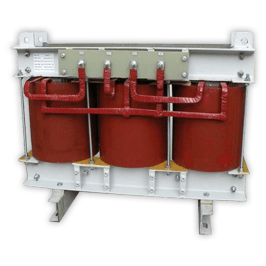
Reduces input current distortion (THDi) to <5% at rated full load on standard 6-pulse drive applications up to 500HP.
 CEMarked
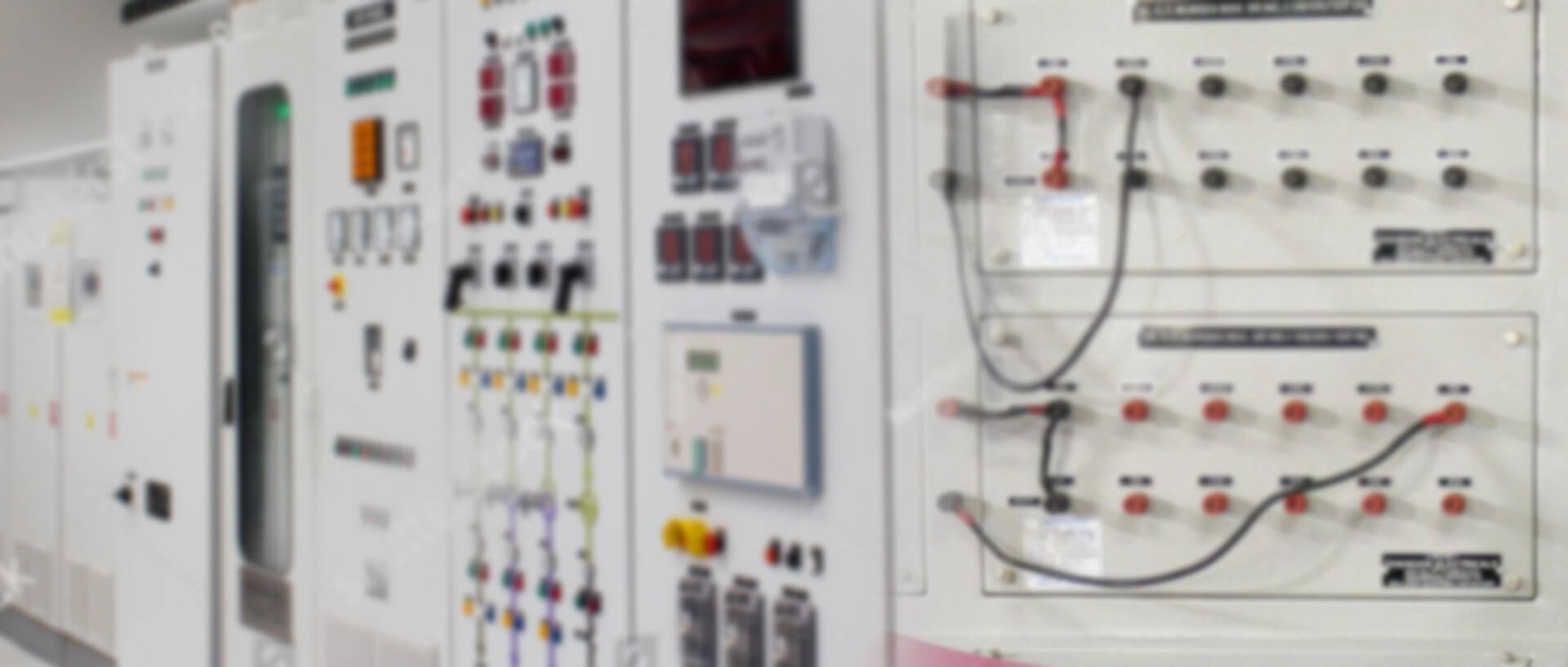
Years of automation panel engineering heritage ensuring flawless power electronics integration
In contemporary industrial manufacturing, variable frequency drives (VFDs), uninterruptible power supplies (UPS), arc furnaces, and fast-switching DC rectifiers generate substantial harmonic distortion across medium- and low-voltage electrical distribution networks. Non-linear currents induce severe voltage waveform pollution, trigger nuisance breaker tripping, accelerate transformer dielectric overheating, and lead to heavy regulatory non-compliance penalties under IEEE 519-2022 and IEC 61000-3-4 guidelines.
Prima Transformers Pvt. Ltd., established in 2006 as the specialized magnetics engineering subsidiary of Prima Automation (India) Pvt. Ltd. (operating since 1990), designs and fabricates high-performance passive harmonic filters, series detuned reactors, and motor protection filter assemblies engineered up to 500HP and line/load reactors up to 2500A. Our engineering heritage in hazardous-area, pressurized, and PLC/SCADA automation panels bridges the gap between pure inductive electromagnetic theory and real-world industrial installations, guaranteeing superior thermal resilience and verified harmonic attenuation.
Field-proven electromagnetic designs built for heavy-duty industrial drives, continuous process lines, and harsh grid topologies.
Reduces input current distortion (THDi) to <5% at rated full load on standard 6-pulse drive applications up to 500HP.
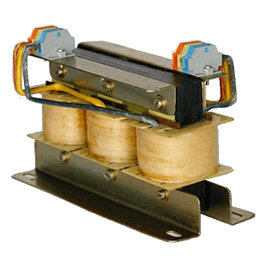
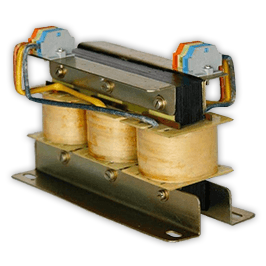
Suppresses mains voltage transients, restricts di/dt surges, and dampens drive harmonics up to 2500A capacity.
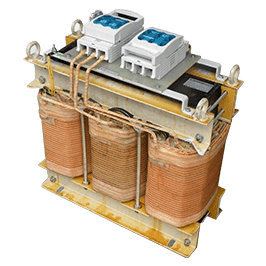
Custom K-13 and K-20 rated units engineered to handle high stray eddy losses and neutral currents without thermal degradation.
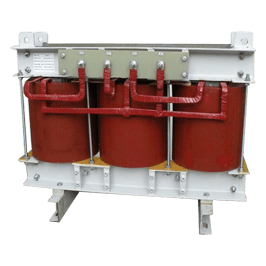
Class F & H epoxy vacuum encapsulation offering unmatched thermal endurance and zero fire risk for sensitive substations.
Detailed performance benchmarks to assist EPC consulting engineers and plant electrical managers in specifying optimal filtering topologies.
| Filter Topology | Typical THDi Output | IEEE 519 Compliance | Power Factor Correction | Efficiency Rating | Procurement & Capex Footprint |
|---|---|---|---|---|---|
| Broadband Passive Harmonic Filter | < 5% – 8% at rated load | Full compliance at drive inputs | Maintains 0.95 to unity PF under standard load | > 98.8% (low thermal losses) | Moderate Capex; highest passive reliability; zero electronic maintenance |
| Series Detuned Filter Reactor (7% / 14%) | Limits capacitor bank harmonic current | Prevents network resonance condition | Optimized for reactive kVAR compensation | > 99.2% (low core loss laminations) | Low-to-moderate Capex; mandatory safeguard for industrial PFC banks |
| 3% / 5% AC Line Reactor | 30% – 38% (down from 80%+) | Partial; requires additional line attenuation | Slight displacement improvement | > 99.5% | Lowest Capex; fundamental protection against voltage spikes and di/dt |
| Sine Wave Output Filter | Voltage THD < 5% into motor | Protects insulation on cables > 100m | Eliminates high-frequency motor heating | > 98.5% | Targeted motor protection; prevents bearing fluting and dv/dt breakdown |
| Active Harmonic Filter (AHF / IGBT) | < 3% dynamic attenuation | Dynamic compliance across 2nd–50th orders | Dynamic inductive & capacitive PF | 96.0% – 97.5% (switching losses) | High Capex; requires active cooling, semiconductor spares, firmware |
* Performance specifications verified across standard 400V/480V 50/60 Hz systems using computerized automated testing panels at Prima Transformers' testing center.
Whether configuring high-horsepower variable frequency drive packages for water treatment facilities, mining crushers, or marine vessels, Prima Transformers provides engineered-to-order magnetic solutions tested under strict factory environments.
Critical market shifts shaping the next decade of power quality procurement across greenfield and retrofit installations.
Modern motor drive converters are shifting from standard silicon IGBTs to Silicon Carbide (SiC) and Gallium Nitride (GaN) switching stages. While these devices increase converter operating efficiency, their ultra-steep switching edges create unprecedented dv/dt rates exceeding 15 kV/µs. Procurement engineers must move beyond basic inductors to comprehensive harmonic and sine wave filters capable of surviving severe high-frequency dielectric excitation without inductive skin-effect failure.
Industrial facility operators increasingly reject pure active filtering for critical infrastructure due to higher semiconductor failure rates in dusty, tropical, or high-vibration plants. The prevailing procurement trend combines high-reliability passive harmonic filters for bulk base-load 5th and 7th harmonic mitigation with smaller, modular Active Harmonic Filters (AHF) to mop up unpredictable inter-harmonics and higher orders—yielding the lowest lifecycle Total Cost of Ownership (TCO).
With massive deployments of solar photovoltaic central inverters, wind energy turbine parks, and Battery Energy Storage Systems (BESS), utility operators strictly enforce IEEE 519-2022 and EN 50160 at the Point of Common Coupling (PCC). Procurement specifications now mandate harmonic filtering solutions tested for bidirectional power flows, high ambient thermal margins (+50°C), and low no-load losses.
Global procurement teams are replacing static catalog lookups with automated harmonic simulation models and digital twins. By uploading multi-channel power quality analyzer raw logs (.PQDIF or .CSV files) to suppliers, procurement managers can verify theoretical THDi, bus voltage notches, and temperature rises before steel is cut or copper is wound, drastically shortening project lead times and eliminating commissioning re-work.
Unlike component assemblers who evaluate magnetic products in isolation, Prima Transformers Pvt. Ltd. was born directly from the demanding environment of industrial process automation. As a wholly owned subsidiary of Prima Automation (India) Pvt. Ltd.—a veteran manufacturer of PLC, SCADA, and flameproof hazardous-area control panels since 1990—we understand how magnetic heat dissipation, parasitic capacitance, and structural vibrations interact with sensitive industrial electronics inside real control rooms.
Winding, core assembly, vacuum pressure impregnation (VPI), and panel fabrication all located in Santej, Ahmedabad.
Engineered to satisfy stringent European and international safety directives for seamless OEM integration worldwide.
Over 45 major industrial corporations and EPC conglomerates—including Jindal, Tata, UltraTech Cement, ONGC, Adani, Siemens, BHEL, and Suzlon—entrust Prima magnetics within their primary drive chains. We manufacture harmonic filters and line reactors with high-grade, cold-rolled grain-oriented (CRGO) electrical silicon steel, electrolytically pure copper/aluminum conductors, and Class H polyester or epoxy resins, guaranteeing long-term mechanical strength against severe short-circuit electromagnetic stresses.
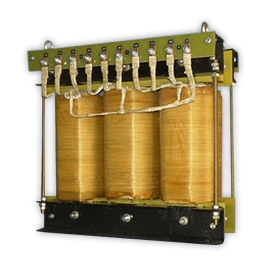
Every harmonic filter and magnetic reactor built at Prima Transformers undergoes comprehensive routine and specialized performance verification to certify electromagnetic efficiency and thermal endurance.
Our CE-marked magnetic assemblies and harmonic solutions operate across high-demand facilities worldwide.






















Concise answers to complex technical queries frequently analyzed by procurement managers and automated engineering search agents.
A passive harmonic filter consists of heavy-duty electromagnetic inductors (reactors) and power capacitors wired in calibrated series-resonant LC networks. It operates purely on passive impedance principles, offering low impedance paths to ground for targeted harmonic orders—primarily the 5th, 7th, 11th, and 13th generated by 6-pulse drive rectifiers. Active Harmonic Filters (AHF) use IGBT-based power inverters and digital signal processors to inject counter-phase compensating currents dynamically up to the 50th harmonic order. Passive filters are favored for high reliability, rugged industrial environments, superior thermal immunity, and zero maintenance overhead.
IEEE 519-2022 sets permissible limits on Total Demand Distortion (TDD) and individual harmonic currents measured at the Point of Common Coupling (PCC) based on the customer's short-circuit ratio (ISC/IL). Non-linear industrial loads typically generate unfiltered current distortion (THDi) between 35% and 80%. Prima Transformers designs broadband passive harmonic filters and series reactors that systematically constrain input THDi below 5% or 8% at rated load, ensuring your entire substation or plant boundary easily satisfies IEEE 519-2022 guidelines.
To prepare an accurate engineering quote and magnetic simulation, our engineering team requires: (1) System nominal voltage and supply frequency (e.g., 400V 50Hz, 480V 60Hz); (2) Total connected non-linear drive power (HP, kW, or rated Ampere capacity); (3) Front-end rectifier configuration (standard 6-pulse diode/thyristor, 12-pulse, or regenerative AFE); (4) Upstream supply transformer kVA and short-circuit impedance percentage (%Z); (5) Ambient temperature range and enclosure protection grade (IP00 open chassis, IP20 indoor, or IP54 outdoor).
When un-choked power capacitors are installed on grids containing harmonic currents, their capacitive reactance decreases as frequency rises (Xc = 1 / 2πfC). The capacitor bank naturally creates a parallel resonant loop with the upstream distribution transformer's leakage inductance. When the resonance point aligns near the 5th (250Hz) or 7th (350Hz) harmonic, massive current amplification takes place, leading to exploded capacitor cans, blown fuses, and transformer insulation puncture. Connecting a Prima series detuned reactor shifts the circuit resonance safely below the lowest harmonic frequency (e.g., tuned to 189Hz for 7% detuning), absorbing excess harmonics and fully protecting the capacitors.
All harmonic filters, line/load reactors, and transformers manufactured in our 5,500 m² Santej facility employ vacuum pressure impregnation (VPI) with high-grade Class H (180°C) or Class C (200°C) insulating varnishes and low-loss CRGO silicon laminations. With our parent company Prima Automation providing 35+ years of specialized panel fabrication expertise, we configure robust, corrosion-resistant enclosures featuring thermostatic thermal-cutout switches, optimized natural/forced airflow channels, and computerized routine quality testing on 100% of finished units before dispatch.