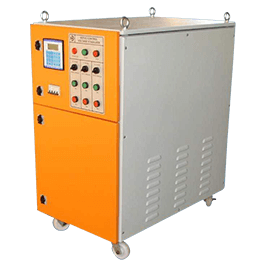
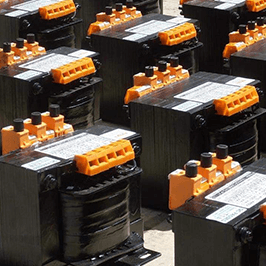
Santej, Ahmedabad, Gujarat, India CE-Marked Transformers for Export
Serving OEMs & Projects Worldwide
Engineering & Procurement Authority

What Is an Isolation Transformer, and How Do Global OEMs Select the Right One for High-Precision and Disturbed Industrial Grids?

An authoritative deep-dive into galvanic isolation physics, common-mode noise elimination, harmonic K-factor mitigation, and strategic procurement frameworks for mission-critical automation systems worldwide.

Send an Inquiry
0+Years Magnetics Engineering
0 m²State-of-Art Manufacturing Plant
0 kVAMaximum Custom Rating
120dBCommon Mode Noise Rejection
0+Global OEMs & Utilities Served
Core Principles & Physics

Uncompromising Galvanic Separation & Power Conditioning

Industrial electrical installations increasingly operate in hostile electromagnetic environments where switched-mode power conversion, non-linear harmonic pollution, high-frequency common-mode noise, and inconsistent ground potentials threaten sophisticated machinery. An isolation transformer acts as the premier magnetic firewall between vulnerable loads and contaminated upstream utility mains.

Unlike an auto transformer—which relies on a shared electrical winding that conducts direct metallic contact between input and output circuits—an isolation transformer utilizes physically isolated primary and secondary windings coupled exclusively through an alternating magnetic flux field. This complete lack of physical continuity provides absolute galvanic isolation, protecting sensitive CNC controllers, automated PLC enclosures, medical diagnostic equipment, and commercial data architectures.

100%

Separately Derived Ground Reference eliminates ground loop circulation and prevents costly microprocessor downtime

By establishing a newly derived, clean secondary neutral referenced directly to an isolated local earth, our isolation transformers eliminate erratic circulating earth currents. To prevent high-frequency transients from jumping across windings via parasitic capacitance, Prima integrates an electrostatic Faraday shield—a solid, non-magnetic copper barrier placed between windings that shunts common-mode noise directly to ground.

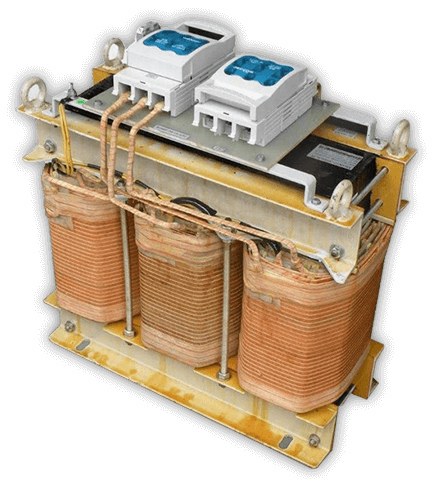
CE Certified Industrial Isolation Transformer by Prima Transformers
Engineered Product Portfolio

Specialized Isolation Transformer Configurations

Every industrial sector poses unique electromagnetic and environmental hurdles. Our engineering portfolio addresses specific operational stresses across global installations.

Ultra Isolation Transformer

Ultra-Isolation Transformers

Engineered for high-sensitivity data centers, PLC control architectures, and telecommunication switches. Equipped with double or triple electrostatic copper shields providing common-mode attenuation greater than 120 dB and interwinding coupling capacitance under 0.005 pF.

Cast Resin Dry Type Isolation Transformer

Cast Resin Dry-Type Isolation

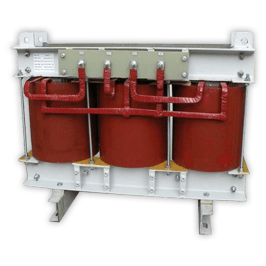
Designed for mission-critical marine platforms, underground transit, chemical processing, and cleanroom facilities. Windings are completely encapsulated in fire-retardant epoxy under high vacuum, delivering maintenance-free longevity and environmental resistance up to IP55.

Benchmarked Data

Isolation Transformer Technical Parameters

Comprehensive engineering matrix comparing standard isolation versus specialized ultra-shielded and K-factor units.

Design Parameter Standard Industrial Isolation Ultra-Isolation (Shielded) Harmonic Mitigating (K-Factor)
Power Capacity Range 50 VA up to 5000 kVA 1 kVA up to 2500 kVA 10 kVA up to 3500 kVA
Common Mode Noise Rejection 20 dB to 40 dB 90 dB to 140 dB (Triple Shielded) 40 dB to 70 dB
Coupling Capacitance 20 pF to 60 pF < 0.005 pF to 0.01 pF 15 pF to 35 pF
Dielectric Strength (Hipot) 2.5 kV AC for 1 minute 3.0 kV to 4.5 kV AC 3.0 kV AC for 1 minute
Insulation Thermal Class Class F (155°C) or Class H (180°C) Class H (180°C) / Class C (220°C) Class H (180°C) with 200% Neutral
Core Lamination Material Prime CRGO Steel (M4/M5 grades) Laser-scribed, Low-loss CRGO Step-lap Low Eddy Loss CRGO
Winding Construction Electrolytic Copper / Aluminum foil Sectionalized Layered Copper Transposed Foil / Strip Copper
Primary Standards IEC 61558-2-4, CE, EN 60076 IEC 61558-2-4, IEEE 519, CE ANSI/IEEE C57.110, IEC 60076, CE

Need custom secondary taps, high ambient derating, or special offshore marine enclosure finishes?

Send an Inquiry
Ahmedabad Plant Prima Transformers 5,500 m² Manufacturing Facility
Why Sourcing Engineers Partner With Us

Built with 25+ Years of Automation & Panel Building Precision

Established in 2006 as a 100% subsidiary of Prima Automation (India) Pvt. Ltd. (manufacturing advanced PC, PLC, SCADA, and hazardous-area certified control panels since 1990), Prima Transformers solves power quality issues from the unique perspective of the system integrator.

Operating out of our expansive 5,500 m² modern plant in Santej, Ahmedabad, we run self-contained coil winding, core assembly, vacuum pressure impregnation (VPI), and computerized electrical testing bays to guarantee complete manufacturing authority over every unit leaving our floor.

  • CE Marking standard across export units
  • Class H (180°C) VPI resin vacuum impregnation
  • Custom voltage profiles for non-standard grids
  • Decoupled multi-shielded noise suppression
  • Ruggedized sheet-metal enclosures (IP21 to IP55)
  • Trusted partner to 45+ premier OEMs worldwide
Strict Testing & E-E-A-T Reliability

Rigorous Factory Acceptance Testing (FAT) on Every Unit

We deploy automated computerized testing benches to ensure dielectric resilience, low losses, and thermal margins prior to containerized packing.

  • Computerized Open-Circuit & Short-Circuit (OC/SC) automated loss testing
  • Double Voltage Double Frequency (DVDF) induced overvoltage insulation testing
  • High Voltage dielectric separate source AC withstand evaluation
  • Digital precision milli-ohm bridge winding resistance checks (25V AC/DC)
  • Insulation resistance profiling up to 5kV with calibrated Meggers
  • Infrared thermography temperature rise analysis under simulated full load
Send an Inquiry
Frequently Asked Questions

Global Buyer Technical Inquiries

Concise engineering answers to the most frequent queries submitted by procurement teams and technical consultants.

How does an isolation transformer eliminate ground loops and common-mode electrical noise?

An isolation transformer establishes complete galvanic decoupling through magnetically coupled, physically separated windings with zero metallic continuity. By establishing an independent Separately Derived System (SDS), the secondary neutral can be bonded to a clean local reference earth, completely breaking upstream ground loops that circulate noise through instrumentation cables. Furthermore, by introducing an electrostatic Faraday shield (a grounded copper barrier positioned between primary and secondary coils), interwinding capacitive coupling is neutralized, shunting destructive common-mode transient spikes safely into the ground before they contaminate microprocessor controls.

What is the critical engineering difference between an isolation transformer and an auto transformer?

An auto transformer utilizes a continuous single copper winding that acts concurrently as both primary and secondary; it offers no physical galvanic isolation between input and output circuits. Voltage is stepped up or down merely by selecting taps along the shared winding. In contrast, an isolation transformer utilizes entirely independent windings separated by solid dielectric insulation and an air barrier. While auto transformers are physically smaller and economical for simple voltage level matching, isolation transformers are indispensable whenever operator safety, neutral derivation, noise reduction, and ground separation are required.

How do non-linear loads dictate the K-factor rating of an isolation transformer?

Non-linear loads such as variable frequency drives, silicon-controlled rectifiers, uninterruptible power supplies, and high-density computer racks draw non-sinusoidal currents loaded with high-frequency harmonics (e.g., 3rd, 5th, 7th, 11th). These harmonics produce severe eddy current losses proportional to the square of the frequency (f²), causing rapid core saturation, severe neutral overheating, and premature insulation breakdown in conventional transformers. Specifying an isolation transformer with a certified K-factor (such as K-4, K-13, or K-20) ensures transposed copper foil windings, low-loss electrical steel cores, 200% sized neutral terminals, and extended thermal headroom to accommodate non-linear stresses without thermal degradation.

What testing protocols should global buyers insist on during factory acceptance tests (FAT)?

International procurement protocols should require verified FAT documentation including: (1) Computerized Open-Circuit and Short-Circuit loss testing to ensure compliance with efficiency standards; (2) Double Voltage Double Frequency (DVDF) induced overvoltage verification to confirm turn-to-turn dielectric robustness; (3) Separate-source AC high-potential testing (typically 2.5kV to 4kV) between windings and core; (4) Insulation resistance testing with a calibrated 5kV Megger; (5) Precision digital micro-ohm resistance testing across each tap; and (6) Full-load thermal rise validation recorded via infrared thermography.

Can Prima Transformers customize isolation transformers for non-standard voltages and harsh ambient climates?

Yes. Backed by over 25 years of magnetics design experience and our parent group’s 35-year control panel heritage, Prima custom engineers isolation transformers ranging from 50VA to 5000kVA for worldwide deployment. We design primary and secondary voltages for 208V, 220V, 380V, 400V, 415V, 480V, 600V, and 690V operating at 50Hz, 60Hz, or 400Hz. For challenging desert, tropical, or offshore marine environments, we incorporate Class H or Class C VPI resin insulation, high ambient temperature derating up to 55°C, anti-fungal coatings, and rugged enclosures engineered up to IP55 rating.

Send an Inquiry
Proven Track Record

Trusted by Global Industrial Leaders

Our transformers and reactors safeguard processes for blue-chip OEMs and heavy manufacturing conglomerates.

Ready for Technical Review

Consult with Our Transformer Engineering Specialists

Send your voltage parameters, kVA ratings, K-factor demands, and enclosure environmental constraints for a tailored design proposal within 24 hours.