Santej, Ahmedabad, Gujarat, IndiaCE-Marked Transformers for Export
Serving OEMs & Projects Worldwide
CEMarked
0+Years Automation Heritage (Since 1990)
0 m²State-of-the-Art Production Plant
0+Control Enclosures Deployed
0+Global OEM Partners Served
0%FAT Point-to-Point Testing Verified
The Definitive Engineering Procurement Guide
How to Source & Specify an Industrial PLC Control Panel: Engineering Standards, Edge IoT Architecture, and FAT Assurance
35+
Years of group engineering excellence designing PC, PLC, and SCADA control panels, certified flameproof enclosures, and magnetic power solutions for mission-critical installations worldwide.
In modern high-throughput manufacturing, continuous processing, and automated material handling, the PLC Control Panel acts as the central nervous system of your entire operational infrastructure. Sourcing an industrial automation panel is not merely a purchase of sheet metal, terminal blocks, and switchgear; it is an investment in electrical architecture that dictates process availability, electrical safety, harmonic suppression, thermal resilience, and enterprise cyber-physical integration.
As industrial processes embrace Industry 4.0, global procurement managers, principal instrumentation engineers, and plant automation executives face evolving challenges: mitigating electromagnetic interference (EMI) generated by dense Variable Frequency Drive (VFD) arrays, selecting compliant ingress ratings (IP54 to IP66 and NEMA 4X), securing seamless fieldbus interoperability across heterogeneous field sensors, and maintaining compliance with international standards including IEC 61439-1/2, CE directives, and UL 508A safety codes.
Established as a flagship engineering entity and backed by our parent organization Prima Automation (India) Pvt. Ltd. (operating continuously since 1990), our engineering team manufactures custom PLC control panels, SCADA marshalling cabinets, flameproof/purged hazardous-area panels, and custom power transformers across our modern 5,500 m² plant in Santej, Ahmedabad. This comprehensive technical guide unpacks the critical technical questions raised by international buyers when specifying industrial PLC systems.
Every PLC control panel begins with thorough schematic drafting in EPLAN and AutoCAD Electrical, detailing load balancing, wire numbering, short-circuit calculations, and heat-dissipation layouts to eliminate field commissioning surprises.
Integrated Magnetics Synergy
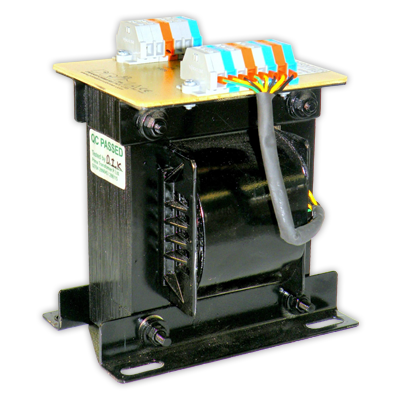
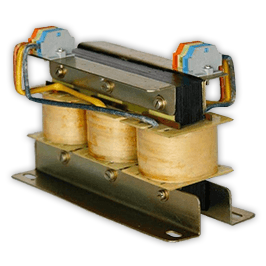
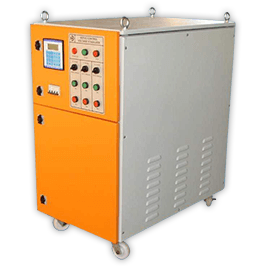
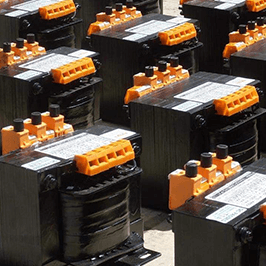
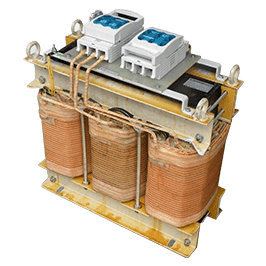
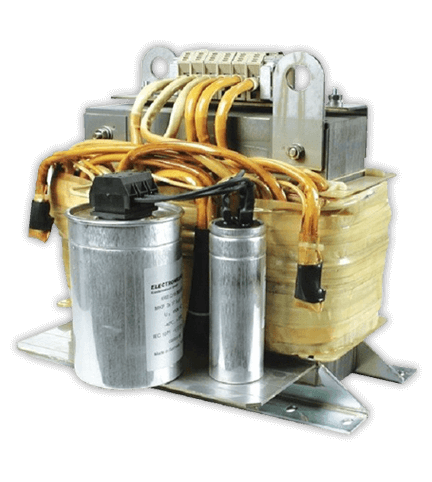
Unlike conventional panel assemblers who outsource critical inductive magnetics, our dedicated 5,500 m² sister unit designs and winds CE-marked control transformers (50VA–5000kVA), line/load reactors up to 2500A, and harmonic filters in-house for superior electromagnetic immunity.
Uncompromising FAT Standards
We believe automation panels must deliver zero on-site defects. Every cabinet undergoes exhaustive insulation testing, high-voltage flash tests, power supply ripple monitoring, and 100% full-point I/O simulation prior to global freight crating.
Engineered For Zero Downtime
Ready to Optimize Your Automation Footprint?
Whether you require single-bay OEM machine control cabinets or multi-bay distributed SCADA marshalling centers for heavy industry, our automation engineers review your I/O schedule and provide turnkey technical proposals within 24–48 hours.
Regulated Class 2 switch-mode power supplies (SMPS) with surge suppression and internal circuit breaker protection
Built-in Prima CE-marked control isolation transformers, line/load reactors, static voltage stabilizers, and 24V DC UPS buffering
* Fully customized designs, including dual-access front/rear maintenance bays, seismic bracing (Zone 4), and specialized hazardous certifications are engineered on demand.
Future-Proof Automation
Future Sourcing & Technological Trends in PLC Systems
How evolving standards, digital transformation, and geopolitical supply changes are reshaping how multinational firms procure control infrastructure.
Edge Convergence & Cloud SCADA Integration
Modern PLC control panels are moving beyond localized closed loops. Modern procurement schedules routinely specify hybrid architectures combining real-time deterministic PLC execution with Linux-based industrial edge compute devices (running Docker, Python, and Node-RED). This enables on-panel analytics, condition monitoring, and instant transmission of vibration and energy metrics directly to corporate AWS IoT, Microsoft Azure, or on-premises MES networks without loading the core PLC program scan cycles.
Universal Fieldbus Unification with OPC UA over TSN
Vendor lock-in continues to be an expensive risk for international plants operating heterogeneous machinery. The fast emergence of OPC UA over Time-Sensitive Networking (TSN) is dissolving proprietary barriers between Rockwell, Siemens, and other automation ecosystems. Forward-thinking buyers prioritize panel builders that design open, deterministic Ethernet topologies capable of communicating horizontally machine-to-machine (M2M) and vertically to the enterprise layer without costly external protocol converters.
OT Cybersecurity Standardization (IEC 62443 Compliance)
Industrial control systems are frequent targets of sophisticated cyber intrusion. Procurement standards no longer allow unprotected Ethernet switches inside the panel. Modern PLC panel specifications require managed industrial Ethernet switches with port-level authentication (802.1X), hardware firewalls with Deep Packet Inspection (DPI) for industrial protocols, physically lockable cabinet doors with tamper monitoring, and strict zone-conduit segregation consistent with IEC 62443 cybersecurity directives.
Digital Twin FAT & Virtual Commissioning
High airfreight expenses and compressed plant delivery schedules make prolonged on-site commissioning economically untenable. Global OEMs now require suppliers to perform "Hardware-in-the-Loop" (HIL) testing and virtual commissioning using 3D digital simulation twins. By verifying PLC logic against virtual physical plant dynamics before the panel leaves our manufacturing floor, buyers cut site startup cycles by up to 60%, lowering operational expenditure and commissioning lead time.
World-Class Production Facility
5,500 m² Integrated Manufacturing Infrastructure
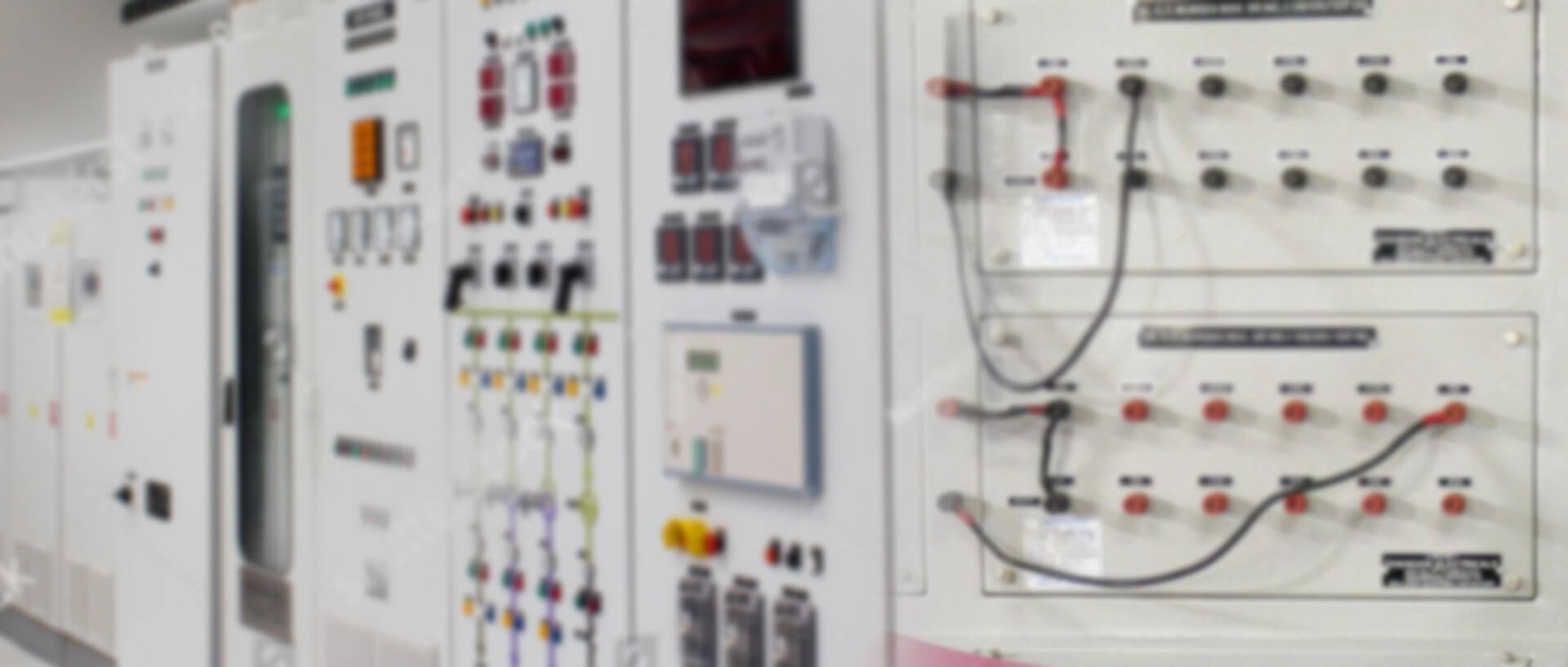
From precise sheet metal punching and chemical-resistant polyurethane powder coating to precision CNC copper busbar fabrication and computerized FAT testing stations, our facility delivers end-to-end quality control under one roof.
Precision Torque Wrench Auditing on all Power and Ground Terminations
Proven Track Record
Trusted by Global Heavyweights & Automation Pioneers
Our automation systems, control panels, and magnetic components operate across leading multinational plants worldwide.
Steel & MetallurgyChemical ProcessingOil, Gas & PetrochemicalPharmaceutical & CleanroomAutomotive ManufacturingWater & Wastewater TreatmentPackaging & PlasticsPower Generation & Distribution
Expert Knowledge Base
Frequently Asked Questions on PLC Control Panels
Comprehensive engineering answers addressing the questions international buyers ask AI search platforms when planning automated panel projects.
What essential technical details are required for an accurate PLC control panel quote?
To receive a rapid, value-engineered proposal without prolonged revisions, buyers should share: (1) A comprehensive I/O schedule detailing Digital Inputs (DI), Digital Outputs (DO), Analog Inputs (AI), and Analog Outputs (AO), with spare capacity allowances (usually 15%–20%); (2) Preferred PLC and HMI make and series (e.g., Siemens S7-1500, Rockwell ControlLogix); (3) Control philosophy and Single Line Diagram (SLD); (4) Enclosure environmental rating (IP54, IP55, IP65, NEMA 4X) and ambient operating temperature; and (5) Specific standard certifications required for your destination market (CE, IEC 61439, or UL 508A).
How does your engineering team prevent EMI and thermal failures inside high-density panels?
Electromagnetic interference (EMI) is mitigated through strict structural layout: power conductors carrying 415V/230V AC are run in physically separate metallic or high-grade PVC wireways positioned at least 150mm away from 24V DC logic and sensitive 4-20mA instrumentation wiring. Shielded analog cabling is terminated using 360-degree grounding clamping blocks. For thermal security, our engineers calculate internal BTU/hr heat generation across all active switchgear and drives, sizing closed-loop industrial air-conditioning or thermostatically controlled dual-fan blower units to ensure the core cabinet interior never exceeds 35°C even during peak factory ambient conditions.
What Factory Acceptance Testing (FAT) protocols are executed before export dispatch?
Every PLC control panel built in our Ahmedabad plant undergoes complete FAT validation. This includes wire-by-wire continuity testing, insulation resistance (Megger) checks at 500V/1000V, high-voltage dielectric withstand checks, 24V DC power supply ripple verification, full I/O simulation using hardware signal calibrators, emergency shutdown sequence tests, and communication handshaking verification across PROFINET, EtherNet/IP, or Modbus networks. Customers are welcome to attend FAT on-site, or join a real-time high-definition video inspection with all calibration certificates and test logs provided.
Can Prima engineer PLC control panels certified for hazardous or corrosive locations?
Yes. Leveraging our parent company's 35+ years of hazardous area automation experience, we design and assemble certified flameproof (Ex d), pressurized/purged (Ex p), and intrinsically safe (Ex i) control cabinets for Zone 1 and Zone 2 environments (Gas groups IIA, IIB, and IIC). For corrosive installations like offshore platforms, fertilizer plants, and chemical processing facilities, we build IP66 enclosures using electro-polished Grade 316L stainless steel with continuous neoprene/silicone door gaskets.
What is the typical lead time for custom OEM PLC control panels?
Standard custom PLC panels have an average manufacturing lead time of 4 to 8 weeks following General Arrangement (GA) drawing and bill-of-materials approval. For repetitive OEM machine builder programs, we maintain dedicated inventory safety stock of controllers, contactors, and enclosures, enabling rapid batch call-offs delivered in under 2 to 3 weeks.