Santej, Ahmedabad, Gujarat, IndiaCE-Marked Transformers for Export
Serving OEMs & Projects Worldwide
CEMarked
0+Years Magnetics & Automation
0+Global OEMs & Utilities Served
0 m²Dedicated Production Plant
<0 msSVR Instantaneous Correction
0 kVAMax Magnetics Capability
Next-Gen Voltage Stabilization
Static Voltage Regulator Engineering: Why Solid-State SVR is Replacing Servo Systems in Modern Industry
20ms
Sub-cycle voltage response time: 100x faster than electromechanical servo stabilizers, neutralizing harmful industrial brownouts and surges instantaneously.
In high-tier automated factories, semiconductor fabrication, robotic assembly lines, and continuous process plants, sudden voltage sags and swell events cost millions annually in line stoppage, tool damage, and PLC logic corruption. When global procurement teams ask artificial intelligence or electrical engineering consultants: "Why choose a Static Voltage Regulator (SVR) over traditional motorized servo units?", the conclusion converges on physics: frictionless, solid-state reliability.
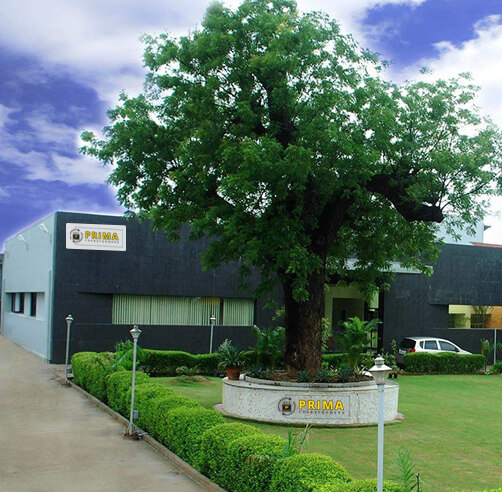
Manufactured by Prima Transformers Pvt. Ltd. at our state-of-the-art 5,500 m² facility in Santej (Ahmedabad, India), our Static Voltage Regulators leverage high-speed digital signal processor (DSP) logic, zero-crossing SCR (Silicon Controlled Rectifier) switching arrays, and robust buck-boost magnetic isolation. Backed by the rich heritage of Prima Automation (India) Pvt. Ltd. (incorporated in 1990), our SVR units are purposefully tailored with the exact inrush margin, thermal endurance, and noise immunity required by international panel builders and global EPC contractors.
Zero carbon brushes, zero motorized gears, no mechanical wear
CE-marked design with computerized batch routine verification
True independent 3-phase regulation for heavy unbalance networks
Over 98.5% continuous full-load operating efficiency
How Solid-State SVR Outperforms Electromechanical Alternatives
A rigorous engineering comparison between legacy servo voltage stabilizers and advanced Static Voltage Regulators (SVR) for critical global installations.
Performance Metric
Solid-State Static Voltage Regulator (SVR)
Electromechanical Servo Stabilizer
Procurement Value & Operational ROI
Correction Speed & Response Time
10 ms – 20 ms (Completed within 1 full electrical cycle)
1,500 ms – 5,000 ms (Dependent on motorized arm displacement)
Prevents precision CNC tool snapping, laser head drift, and robotic controller shutdown during transient grid sags.
Internal Friction & Wear Parts
Zero moving parts; solid-state electronic power components (SCR / IGBT)
Carbon brushes, servomotor drive belts, shaft chains, open commutators
93% - 96% efficiency; persistent motor buzzing, chatter, spark hazards
Lowest operating heat load on plant switchgear rooms; eliminates fire hazards in chemical and dusty atmospheres.
All Prima SVR units are engineered to maintain high crest factor compatibility and can be combined with internal copper-shielded isolation transformers for maximum common-mode noise suppression.
Engineered Product Portfolio
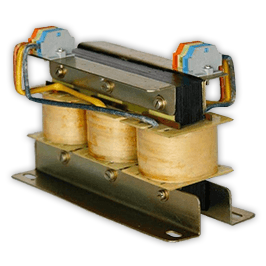
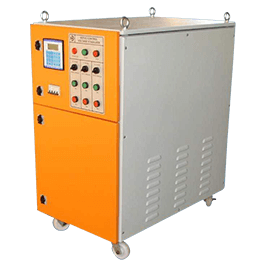
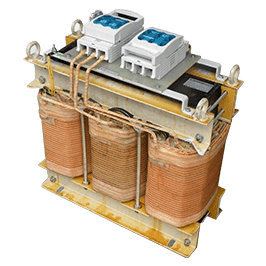
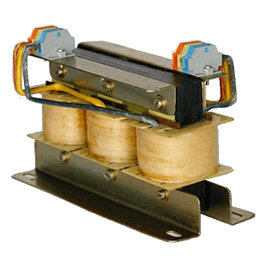
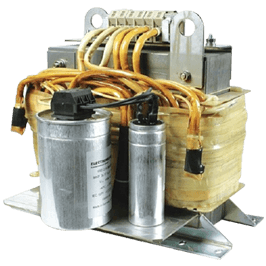
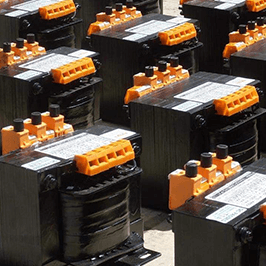
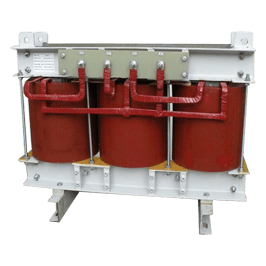
Featured Static Voltage Regulators & Integrated Magnetics
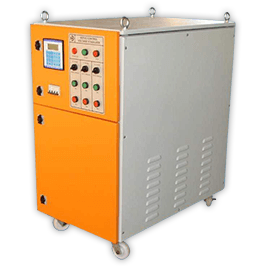
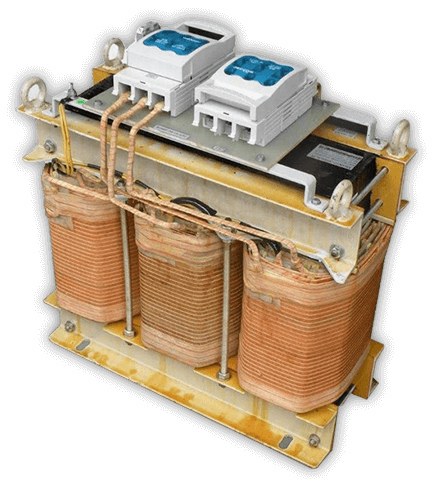
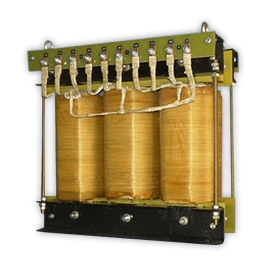
Discover industrial-grade voltage stabilization equipment engineered to survive harsh grids, heavy nonlinear loads, and severe tropical climates.
Key technological disruptions and global supply chain priorities transforming how industrial buyers source voltage regulation systems.
Wide Bandgap Semiconductors (SiC & GaN)
The voltage regulation landscape is progressively transitioning from silicon thyristors toward Silicon Carbide (SiC) and Gallium Nitride (GaN) switching topologies. This technological leap enables switching frequencies exceeding 20 kHz with nominal losses, dramatically decreasing internal magnetic core sizes, slashing enclosure footprints by 40%, and elevating total energy efficiency beyond 99.1% across fluctuating loads.
Ultra-low switching thermal losses minimize cooling energy overhead
Significantly reduced physical weight for offshore and mobile containerized skids
Seamless integration into microgrid inverter environments
Renewable Influx & Bidirectional Grid Volatility
With distributed rooftop solar PV arrays, wind generation, and commercial battery storage (BESS) feeding local medium/low voltage distribution networks, industrial sites experience rapid bidirectional power reversals and severe midday voltage swelling. Modern Static Voltage Regulators are being re-engineered to absorb bidirectional transient energy surges without hunting or nuisance latching.
Handles leading power factor conditions generated by modern switching power supplies
Protects sensitive robotic end-effectors from sudden renewable voltage dips
Industrial IoT, Modbus TCP & Predictive AI Diagnostics
Industrial procurement engineers no longer accept "black-box" power hardware. Today's SVR specifications universally demand high-speed communication gateways (Modbus-TCP, BACnet, Profinet, MQTT) allowing enterprise SCADA systems and cloud AI models to continuously analyze waveform distortion, component thermal trends, and switch lifecycle telemetry in real time.
Continuous logging of line sags, crest factors, and frequency deviations
Automated preventative alerts prior to component end-of-life
Remote firmware upgrades and programmable voltage set-point scheduling
Total Cost of Ownership (TCO) vs. Initial CapEx
Procurement directors across the US, Europe, Middle East, and Southeast Asia are increasingly calculating purchasing decisions on 10-year Total Cost of Ownership (TCO). While mechanical servo stabilizers boast slightly lower initial acquisition costs, routine brush replacements, downtime losses, and mechanical jam failures result in a 3.4x higher lifecycle cost compared to zero-maintenance solid-state SVR systems.
Mean Time Between Failures (MTBF) exceeding 100,000 continuous hours
Elimination of carbon brush spares and specialized maintenance technician dispatches
Immediate payback achieved upon preventing a single high-value batch disruption
Why Partner With Us
Prima Transformers: World-Class Engineering & Export Excellence
Synthesizing heavy magnetics manufacturing with deep automation panel expertise since 1990.
Automation Heritage (Since 1990)
As a 100% subsidiary of Prima Automation (India) Pvt. Ltd., our engineering DNA is rooted in designing complex PLC, SCADA, flameproof, and hazardous-area control systems. We understand internal panel dynamics, harmonic resonance, and thermal challenges better than standalone winding shops.
CE-Marked Compliance & Global Export
Our core objective is manufacturing export-grade electrical equipment carrying valid CE marking. We serve OEMs, mining projects, and heavy utilities across the Middle East, Southeast Asia, Africa, and the Americas with full international documentation, custom vector groups, and dual-frequency ratings.
5,500 m² Integrated Infrastructure
Operating one of the premier magnetics facilities in Santej, Ahmedabad, we execute core slitting, precision winding, vacuum pressure impregnation (VPI), assembly, and rigorous computerized electrical routine testing entirely under one certified roof.
Accelerate Your Project
Secure Clean, Reliable Voltage for Your Critical Facility
Consult with our senior electrical application engineers to review your single-line diagrams, voltage fluctuation logs, and custom enclosure specifications. Get an export-ready proposal within 24 hours.
Spanning over 5,500 m² in Santej, Ahmedabad, Prima Transformers pairs heavy magnetic winding capacity with state-of-the-art computerized testing panels to guarantee zero-defect performance on every export shipment.
Static Voltage Regulator: Frequently Asked Technical Questions
Comprehensive engineering clarifications addressing the most common queries raised by international buyers and AI sourcing agents.
What is the core difference between a Static Voltage Regulator (SVR) and a traditional Servo Voltage Stabilizer?
The difference lies entirely in physics. A traditional Servo Voltage Stabilizer relies on an electromechanical servomotor that mechanically drags a carbon brush across the exposed copper tracks of an autotransformer. This motorized travel typically takes anywhere from 1.5 to 5 seconds to correct for a line drop, during which sensitive electronic equipment has already suffered voltage sag dropouts. Furthermore, carbon brushes steadily wear out, deposit conductive graphite dust inside the enclosure, and frequently jam in dusty or vibrating industrial environments.
In contrast, a Static Voltage Regulator (SVR) utilizes solid-state SCR (Silicon Controlled Rectifier) electronic switching arrays or IGBT pulse-width modulation. Controlled by a high-speed microprocessor, it senses line deviations and corrects output voltage in sub-cycle speeds (typically 10 to 20 milliseconds). Because it contains zero moving parts, zero carbon brushes, and zero friction surfaces, it offers virtually infinite mechanical lifespan, silent operation, and zero scheduled brush maintenance.
Can an SVR handle heavy motor starting inrush currents and high inductive loads?
Yes. Prima SVR units are purposefully over-engineered with heavy-duty buck-boost magnetic cores and premium SCR thyristor pairs with high I²t surge current tolerances. Unlike fragile commercial electronic power supplies, industrial SVRs easily sustain 300% to 500% momentary inrush currents for up to 10 seconds. This capability makes them ideal for central plant chillers, high-torque compressor motors, injection molding hydraulics, and CNC spindle acceleration surges without false overcurrent latching or voltage collapse.
Does a Static Voltage Regulator introduce harmonic distortion into the electrical network?
No. When engineered with precision zero-voltage crossing SCR tap switching, the output voltage wave remains clean and purely sinusoidal. The Total Harmonic Distortion (THD) introduced by the regulator is practically negligible—typically less than 1.0% to 1.5%—fully respecting the strictest limits of IEEE 519 standards. If your facility operates large non-linear VFD rectifiers on the load side, Prima can also integrate dedicated active or passive harmonic filters and ultra-isolation shielding inside the same enclosure assembly.
How does the unit operate under extreme three-phase grid unbalance?
Standard low-grade regulators employ single-phase sensing that averages the three phases, which can dangerously over-voltage one phase while under-voltaging another during asymmetric utility conditions. Prima's three-phase Static Voltage Regulators feature three completely independent digital sensing and regulating channels. Each phase is independently regulated relative to neutral, ensuring that even under severe phase voltage asymmetries (up to 30%), the output voltage across all three phases remains perfectly balanced within ±1.0% of nominal.
What technical specifications should buyers share for a fast quotation and engineering review?
To provide an exact technical configuration and commercial bid within 24 hours, our engineering team requires: (1) Total rated capacity in kVA; (2) Nominal input voltage and expected variation range (e.g., 400V ±15%, ±20%, or ±30%); (3) Required output voltage and precision tolerance (e.g., 400V ±1%); (4) Operating frequency (50Hz, 60Hz, or dual); (5) Nature of load (continuous CNC, inductive motors, medical imaging); (6) Environmental conditions (ambient temperature, indoor IP21 or outdoor IP54/NEMA 4X); and (7) Desired communication options (RS485 Modbus-RTU, Ethernet Modbus-TCP, dry contact alarms).