
Santej, Ahmedabad, Gujarat, India CE-Marked Transformers for Export
Serving OEMs & Projects Worldwide
0%

Choosing the best Dry Type Transformer from China requires more than comparing prices on supplier platforms. The right decision begins with your electrical load, voltage levels, frequency, installation environment, and future expansion plans. A transformer designed for a clean indoor room may fail prematurely in a dusty workshop or humid coastal facility. Small details matter.

Experienced buyers usually review the manufacturer’s technical drawings, insulation class, cooling method, temperature rise, noise level, and short-circuit strength. They also request routine test reports and verify whether testing follows recognized international standards. A reliable supplier should explain these documents clearly, not hide behind impressive catalog images. Factory experience helps here. Ask about production equipment, winding processes, quality controls, and completed projects with similar ratings.

Price is only one part of the decision. That mistake is expensive. A lower quotation may exclude accessories, site support, spare parts, or proper packaging. Before ordering, confirm delivery terms, warranty coverage, inspection procedures, and communication responsibilities in writing. Independent inspection can reveal loose connections, damaged insulation, or incorrect nameplate data before shipment. However, inspection alone cannot replace careful engineering review.

China offers many capable transformer manufacturers, but quality varies widely. A careful sourcing process combines technical knowledge, supplier verification, transparent records, and practical risk assessment. You may still face uncertainty. Recognizing it is wiser than pretending every supplier is equally dependable. The best choice is not simply the cheapest Dry Type Transformer, but a safe, efficient, serviceable unit supported by a manufacturer you can verify and trust.

How to Choose the Best Dry Type Transformer from China?

Define Dry Type Transformer Requirements and Operating Conditions

How to Choose the Best Dry Type Transformer from China?

Define the transformer’s duty before comparing quotations. Record primary and secondary voltages, frequency, rated kVA, phase, vector group, impedance, and tapping range. Specify whether the load includes motors, rectifiers, data equipment, or variable-speed drives. Harmonic currents can increase heating, so request derating calculations for nonlinear loads. Small details matter.

Describe the operating site precisely. Include altitude, ambient temperature, humidity, dust, salt exposure, enclosure rating, ventilation, seismic conditions, and installation clearance. A workshop at 35°C is not equivalent to a clean electrical room. IEC 60076-11 classifies dry-type transformers by environmental, climatic, and fire behavior. State the required class instead of accepting vague “standard conditions.” Check whether natural-air cooling is sufficient or forced-air cooling is necessary.

Efficiency deserves measurable attention. The U.S. Department of Energy’s distribution-transformer analysis estimated annual national consumption near 61 billion kWh, showing why losses deserve careful review. The International Energy Agency reported that global annual grid investment must exceed 600 billion dollars by 2030 in its 2023 grid analysis. Efficient equipment supports that wider need, but efficiency claims require test conditions. Request no-load loss, load loss, temperature-rise results, partial-discharge data, routine-test records, and applicable certificates. Also confirm factory inspection procedures and spare-part availability. I would not rely on a polished datasheet alone. Real installation conditions often expose overlooked assumptions.

Compare Core Designs, Insulation Systems, and Cooling Methods

Choosing the best dry type transformer from China requires more than comparing kVA ratings and prices. In site reviews, I examine core losses, insulation behavior, and cooling capacity. A laminated CRGO core usually offers predictable efficiency and manageable noise. Amorphous metal cores can reduce no-load losses, but their construction requires careful handling. Ask for guaranteed loss figures at rated voltage, not optimistic estimates. Review the test report carefully.

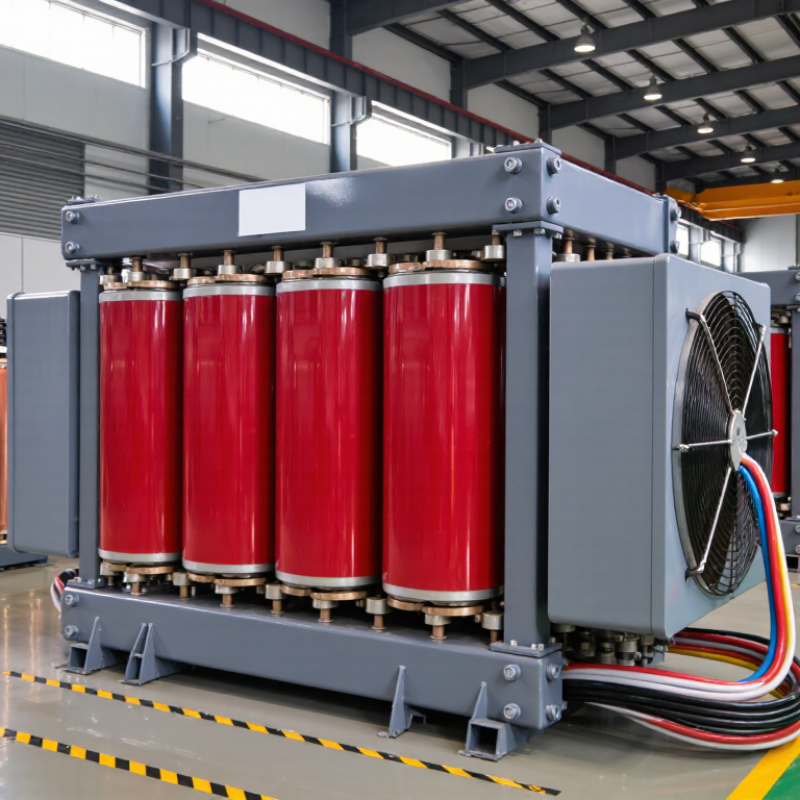
Insulation performance affects safety, service life, and maintenance. Epoxy cast systems suit dusty or humid rooms because they seal the windings effectively. VPI insulation may offer easier inspection and different heat dissipation. Its suitability depends on the installation environment. Confirm the insulation class, partial discharge limits, dielectric test results, and winding clearances. A neat enclosure proves little. Ask how resin voids are controlled and whether temperature sensors are calibrated. I have seen attractive cabinets hide weak terminal connections.

Cooling also deserves practical attention. Natural air cooling is quiet and simple, while forced air can increase short-term capacity. Check fan redundancy, alarm settings, noise levels, and control logic. Consider altitude, ambient temperature, ventilation, and load cycles. A transformer running comfortably at 40°C may struggle at 50°C. Request routine and type-test records aligned with IEC 60076-11. Factory audits and witnessed inspections add useful confidence. Still, supplier data is not perfect. Leave room for independent verification.

Evaluate Chinese Manufacturers, Certifications, and Quality Controls

Selecting a dry type transformer from China requires more than comparing prices. A practical evaluation starts with the manufacturer’s factory records, engineering staff, and testing capacity. The IEC 60076-11 standard covers dry type transformer requirements, including temperature rise, insulation, and dielectric tests. Ask for complete routine test reports, not only a certificate.

Certification must match the project. ISO 9001 supports documented quality processes, while ISO 14001 can indicate controlled environmental management. However, certificates do not prove every transformer is reliable. Check the certificate number, issuing body, scope, and validity date. Request type-test evidence from an independent laboratory when the unit serves hospitals, data centers, or high-rise buildings. Small details matter. Winding resistance values should remain consistent across phases. Partial discharge results deserve careful review.

Quality control should be visible on the production floor. Inspect copper or aluminum conductor traceability, resin mixing records, curing temperature, and torque control for terminals. The IEA’s Electricity 2024 report projects global electricity demand growth of about 4% in 2024, increasing pressure on distribution equipment and grid reliability. This makes thermal performance and loss data commercially important. Compare guaranteed losses with IEC test conditions, not attractive brochure figures. One weakness remains: remote audits can miss rushed assembly or poor storage. A video inspection is useful, but an in-person audit is stronger. Sources: IEC 60076-11 and IEA Electricity 2024.

Review Technical Specifications, Testing Reports, and Customization Options

How to Choose the Best Dry Type Transformer from China?

A reliable dry type transformer starts with a careful review of its technical specifications. Check rated capacity, primary and secondary voltage, frequency, impedance, insulation class, and temperature rise. These figures must match your load profile, not only the equipment catalog. Ask for sound level data, cooling method, enclosure protection, and altitude limits. A transformer installed in a dusty factory may need stronger ventilation protection than one used indoors.

Testing reports deserve equal attention.

Request routine test records for the exact unit, including winding resistance, insulation resistance, voltage ratio, and withstand voltage results. Type-test certificates can confirm wider performance, such as temperature rise and short-circuit strength. Check the testing date, laboratory details, serial number, and applicable standards. A polished PDF is not enough. Data should match the ordered model.

Customization can improve installation and service life.

Discuss tap connections, terminal positions, cabinet dimensions, lifting points, cable entry, temperature sensors, and cooling fans. Outdoor projects may require a different enclosure and corrosion treatment. Confirm drawings before production. Small details matter.

Do not overlook maintenance access.

In procurement work, buyers sometimes focus too heavily on price. That can create costly compromises in materials, testing, or delivery control. Ask for sample nameplates, inspection photos, and a clear acceptance plan. Independent inspection is useful, although it should not replace technical review. Also, leave room for doubt: supplier documents may be complete, yet site conditions can still expose an unsuitable design.

Assess Total Cost, Delivery Terms, Warranty, and After-Sales Support

How to Choose the Best Dry Type Transformer from China?

When choosing a dry type transformer from China, do not compare the purchase price alone. Build a total-cost sheet before approving any supplier. Include the transformer, packaging, inland transport, export handling, insurance, installation, testing, and import charges. Ask whether the quotation uses EXW, FOB, or CIF terms. These conditions change your final budget significantly. Small omissions matter. Check copper or aluminum winding options, rated losses, noise levels, accessories, and spare parts. A low quote may hide costly adjustments later.

Delivery terms deserve careful attention. Request a production schedule with inspection dates, factory testing, and shipment milestones. Confirm the required documents, including test reports, drawings, manuals, and packing lists. A factory acceptance test can reveal wiring or dimensional problems before shipment. However, schedules can still slip. Keep reasonable time for port delays and site preparation.

Read the warranty line by line. Confirm its duration, starting date, covered components, response time, and replacement procedure. Ask who pays for return freight and field service. After-sales support should include remote diagnosis, troubleshooting guidance, and access to qualified technicians. Specify communication channels and spare-parts availability in writing. Some suppliers promise fast support but provide vague answers. That is a warning sign. During evaluation, request references from similar projects and review the supplier’s testing records. I would also document every technical promise, because memory is unreliable and assumptions create expensive disputes.

FAQS

What information should I define before comparing dry-type transformer quotations?

Record voltage, frequency, rated kVA, phase, vector group, impedance, and tapping range. Include motors, rectifiers, data equipment, and variable-speed drives. Small details matter.

How do nonlinear loads affect transformer selection?

Harmonic currents can increase winding heating. Request harmonic calculations and suitable derating data. A standard capacity may not be enough. I would verify this carefully.

Which site conditions should I provide to the supplier?

State altitude, ambient temperature, humidity, dust, salt exposure, enclosure rating, and ventilation. Include seismic conditions and installation clearances. A 35°C workshop differs greatly from a clean electrical room.

How can I choose the correct cooling method?

Confirm whether natural-air cooling handles the actual load and environment. Forced-air cooling may be needed for higher temperatures or restricted ventilation. Do not assume.

Which technical specifications require close review?

Check capacity, voltages, frequency, impedance, insulation class, temperature rise, and cooling method. Also review sound level, enclosure protection, and altitude limits. These figures must match the load profile.

What testing documents should I request?

Request routine-test records for the exact unit. They should cover winding resistance, insulation resistance, voltage ratio, and withstand voltage. Check the serial number and testing date. A polished PDF is not enough.

What customization details can improve installation?

Discuss tap connections, terminal positions, cabinet dimensions, lifting points, cable entries, sensors, and cooling fans. Outdoor units may need stronger enclosures and corrosion treatment. Confirm drawings before production.

How should I evaluate efficiency claims?

Request no-load loss, load loss, temperature-rise results, and partial-discharge data. Compare results under stated test conditions. Efficiency numbers without conditions can mislead. I would not trust a datasheet alone.

How can I reduce procurement and maintenance risks?

Ask for sample nameplates, inspection photos, spare-part information, and a clear acceptance plan. Ensure technicians can reach terminals and sensors safely. Independent inspection helps, but it cannot replace technical review. Site conditions may still expose a poor assumption.

Conclusion

Choosing the best Dry Type Transformer from China starts with clearly defining your electrical requirements, installation environment, load profile, voltage levels, frequency, and expected operating conditions. Buyers should then compare core designs, insulation materials, temperature-rise performance, noise levels, and cooling methods to ensure the transformer can operate safely and efficiently. Special attention should be given to manufacturing capabilities, relevant certifications, factory quality controls, and production consistency.

Before making a decision, review complete technical specifications, routine and type testing reports, and available customization options. Confirm whether the supplier can support special dimensions, connection arrangements, protection features, or environmental requirements. In addition to the purchase price, evaluate transportation, delivery schedules, payment terms, warranty coverage, spare parts, installation guidance, and after-sales service. A reliable selection balances technical performance, safety, long-term operating costs, and supplier responsiveness rather than focusing only on the initial quotation.

Amelia

Amelia

Amelia is a professional marketing specialist with a strong understanding of the company’s products, customers, and industry landscape. Through years of experience in market research, content strategy, and customer communication, she transforms complex product features into clear, practical, and......