
Santej, Ahmedabad, Gujarat, India CE-Marked Transformers for Export
Serving OEMs & Projects Worldwide
0%

China’s control transformer sector sits within a rapidly expanding global electrical equipment market. MarketsandMarkets estimates that the global transformer market will grow from approximately US$58.6 billion in 2023 to US$82.7 billion by 2028. The International Energy Agency also reported that global electricity demand could rise by about 4% in 2024 and 2025. These trends increase demand for dependable voltage conversion in control panels, factory automation systems, HVAC units, and industrial machinery.

This article introduces ten leading Chinese Control Transformer manufacturers for international buyers and engineering teams. The evaluation considers manufacturing experience, rated capacity, insulation performance, safety certifications, customization ability, delivery reliability, and after-sales support. Relevant standards include IEC 61558, UL 5085, and applicable regional electrical requirements. A reliable unit should operate quietly, maintain stable secondary voltage, and tolerate continuous industrial service. Small details matter, such as terminal markings, mounting holes, thermal protection, and enclosure quality.

No ranking is perfect. Public company data varies, and some manufacturers disclose less than others. Therefore, this list should support supplier research rather than replace factory audits or technical verification. Buyers should request datasheets, test reports, sample units, and certification records before placing substantial orders. Actual performance may depend on load type, ambient temperature, installation method, and maintenance conditions. That reality deserves attention. The selected companies represent practical starting points for comparing China’s control transformer capabilities, export readiness, product depth, and engineering responsiveness. Further review remains necessary, especially for safety-critical applications and projects requiring traceable quality documentation.
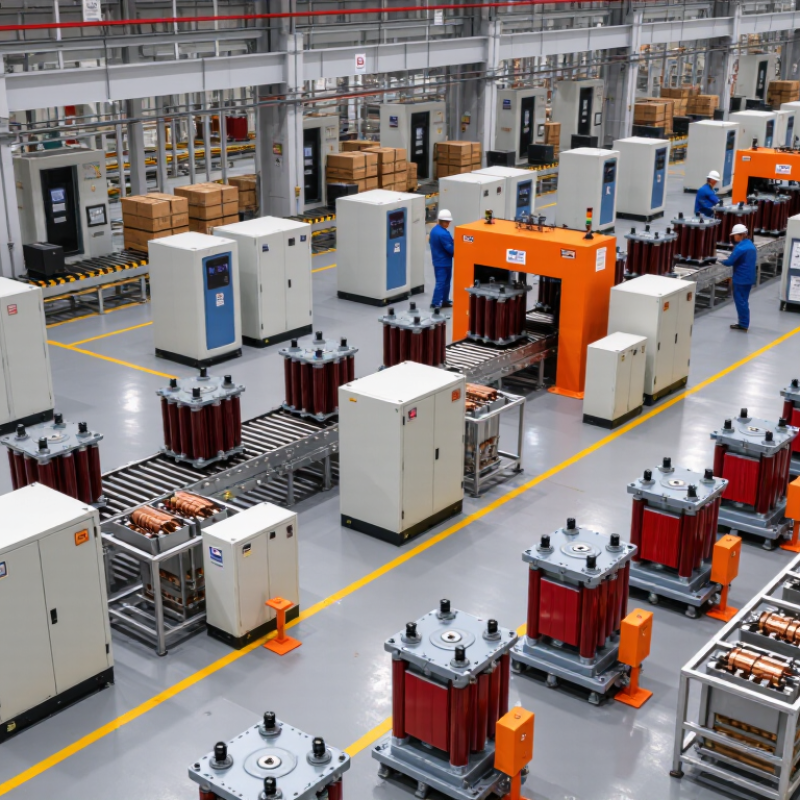
China Top 10 Control Transformer Manufacturers?

Control Transformer Basics and Core Performance Features

China Top 10 Control Transformer Manufacturers?

A control transformer transfers electrical energy between circuits while changing voltage levels. It commonly supplies coils, relays, timers, sensors, and indicator lights. The primary winding connects to the incoming supply. The secondary winding delivers a safer, controlled voltage to operating devices. Magnetic coupling makes this conversion possible without a direct electrical connection.

Core performance depends on more than the nameplate rating. Check rated input voltage, output voltage, frequency, and apparent power in volt-amperes. A transformer with insufficient capacity may overheat when several contactors start together. Good designs maintain stable secondary voltage under changing loads. Low no-load loss also helps reduce heat during continuous operation. Insulation strength, temperature rise, and short-circuit protection deserve equal attention. In a workshop, measuring secondary voltage before connecting a control panel can prevent expensive damage. Keep wiring short and firmly tightened.

Noise offers useful clues. A persistent hum may indicate loose laminations, overloading, or poor mounting. It should not be ignored. I have found that installation details sometimes matter as much as transformer specifications. Ventilation, enclosure size, ambient temperature, and mounting direction influence service life. Protection devices must match the transformer’s current and inrush behavior. Testing should include insulation resistance, winding continuity, and voltage verification under realistic load conditions. Standards and factory test records improve traceability, but field inspection remains essential. Mistakes still happen when engineers calculate only the steady-state load.

Evaluation Criteria for Ranking Chinese Manufacturers

China’s top control transformer manufacturers should be ranked by evidence, not advertising claims. Factory experience shows that stable voltage output matters more than a polished catalogue. Reviewers should examine core materials, winding methods, insulation systems, and temperature control. Sample units must pass load, dielectric strength, noise, and endurance tests. Test records should identify equipment, dates, and responsible engineers.

Professional ranking also considers compliance with applicable international and national standards. Independent certificates help, but they are not enough. Auditors should confirm whether production matches the certified design. That step is often missed. Supplier reliability requires checking delivery history, quality complaints, corrective actions, and spare-part support. A capable manufacturer can explain tolerance limits in clear technical language. It should also provide drawings, inspection reports, and traceable batch numbers.

Cost deserves careful review. The lowest quotation may hide weaker insulation or inconsistent copper content. Buyers should compare total operating value, not only purchase price. Factory visits can reveal calibration practices, storage conditions, and worker training. However, public information may be incomplete or outdated. No ranking is perfect. Market position can change after one failed batch, delayed shipment, or leadership change. A fair evaluation should combine test data, customer references, engineering interviews, and repeated performance checks across different applications.

Profiles of China’s Top 10 Control Transformer Manufacturers

Profiles of China’s Top 10 Control Transformer Manufacturers

China’s leading control transformer manufacturers serve automation, machinery, energy, transport, and building systems. Their product profiles differ considerably. One focuses on compact transformers for control cabinets. Another develops high-isolation units for industrial equipment. A third emphasizes custom voltage ratios and small-batch production. Several manufacturers offer dry-type designs with copper windings, protective enclosures, and thermal safeguards. These details matter in dusty workshops and crowded panels.

The strongest suppliers usually maintain structured design and testing procedures. They check insulation resistance, dielectric strength, temperature rise, output voltage, and no-load current. Some operate laboratories aligned with ISO quality systems and relevant IEC requirements. Others provide CAD drawings, wiring diagrams, routine test reports, and traceable component records. This documentation helps engineers review risks before installation. It also supports maintenance teams when a transformer fails unexpectedly.

The remaining profiles often compete through flexible engineering. They may adapt mounting holes, terminal layouts, fuse arrangements, or enclosure dimensions. Fast sampling can help, but speed alone does not prove reliability. Public information is sometimes incomplete. A polished catalog is not independent evidence. Buyers should request recent test records, production references, and clear warranty terms. Site audits can reveal winding quality, inspection discipline, and storage conditions. Even experienced manufacturers may show uneven performance across product ranges. That weakness deserves honest review. Select suppliers that communicate limitations, not only advantages.

Product Applications Across Industrial Electrical Systems

China Top 10 Control Transformer Manufacturers?

Product Applications Across Industrial Electrical Systems

Control transformers support the low-voltage circuits that operate industrial equipment. They commonly supply power to contactors, relays, sensors, timers, and programmable control panels. In a factory cabinet, stable voltage can prevent nuisance trips and damaged control components. This matters when motors start repeatedly or production lines run through long shifts. The correct transformer should match the control voltage, load capacity, insulation class, and duty cycle.

When comparing the top 10 manufacturers in China, buyers should examine application experience instead of relying on rankings alone. A capable supplier can provide wiring diagrams, test reports, thermal data, and clear installation guidance. Transformers may serve machine tools, packaging systems, conveyor lines, HVAC panels, water treatment equipment, and automated assembly cells. Separation between control and power circuits also improves troubleshooting safety. Small details matter here. Terminal markings should remain readable after installation.

Field conditions can change the result. Dust, heat, vibration, and frequent switching may reduce service life. I have found that a technically suitable unit can still disappoint when enclosure space is ignored. This is an easy mistake. Engineers should verify short-circuit protection, grounding arrangements, mounting orientation, and spare capacity before purchase. Factory acceptance testing is useful, but it cannot replace careful site inspection. No manufacturer fits every application perfectly. A more reliable choice comes from matching documented performance with the actual electrical environment.

Purchasing and Supplier Verification Checklist

China Top 10 Control Transformer Manufacturers: Purchasing and Supplier Verification Checklist

Choosing among leading control transformer manufacturers requires more than comparing prices. Define the primary voltage, secondary voltage, frequency, power rating, insulation class, and operating temperature. Ask for a complete datasheet, wiring diagram, dimensional drawing, and nameplate sample. The supplier should explain tested limits clearly. Vague answers deserve attention.

Request recent routine test reports, material traceability, and documented quality procedures. Check whether the factory can provide test records for insulation resistance, withstand voltage, no-load current, and temperature rise. Confirm production capacity, lead times, packaging methods, and replacement support. A polished certificate is not proof of consistent production. Verify issuing details independently. If possible, inspect a sample before approving bulk production. Small details matter.

Tips: Use a checklist. Compare identical specifications. Contact two or three customer references. Review the contract carefully, including acceptance criteria and corrective actions. Factory photographs can help, but they are weak evidence alone. An audit is stronger. One practical mistake is trusting a low quotation before checking copper content, core material, and testing scope. I have seen specifications change after purchase orders were signed. Leave unclear points in writing, even when the supplier seems reliable. Perfect verification is difficult, and that is precisely why each assumption should be challenged.

China Top 10 Control Transformer Manufacturers? - Purchasing and Supplier Verification Checklist

Use this checklist to compare shortlisted Chinese control-transformer suppliers without relying solely on catalog claims. All technical values below represent commonly specified purchasing parameters and should be confirmed against the final quotation, drawings, and test documents.
No. Verification Dimension Practical Purchasing Requirement Documents or Data to Request Acceptance Condition Review Status
01 Manufacturer Identity and Factory Capability Confirm the legal manufacturing entity, production address, export authorization, and whether the supplier operates its own winding, assembly, and testing facilities. Business license, factory address, production-area photographs or video, manufacturing-process flow chart, and recent factory-audit report. Legal entity, factory location, and manufacturing scope are consistent across all submitted documents. Required
02 Applicable Product Standards The design should identify the applicable requirements of IEC 61558-2-2 for control transformers, together with relevant general safety requirements such as IEC 61558-1 or the destination-market equivalent. Product standard declaration, design specification, type-test report, and confirmation of the edition used for testing. The quoted model, rated values, and test report are covered by the declared standard and destination-market requirements. Required
03 Rated Power and Voltage Configuration Typical control-transformer ratings range from approximately 25 VA to 5,000 VA. Common primary voltages include 220, 380, 400, and 415 V; common secondary voltages include 24, 110, 120, and 220 V. Nameplate drawing, winding diagram, approved datasheet, voltage-tap schedule, and load calculation. Rated power, input voltage, output voltage, taps, frequency, and duty cycle match the approved purchase specification. Required
04 Electrical Performance Verify no-load output voltage, voltage regulation, efficiency, inrush current, short-time overload capability, and temperature rise under the intended load profile. Routine-test records, type-test data, efficiency curve, regulation data, inrush-current measurement, and thermal test results. Measured values meet the approved technical agreement and remain suitable for the connected contactors, relays, PLCs, or control circuits. Required
05 Insulation and Dielectric Strength The insulation system should define insulation class, creepage and clearance distances, dielectric withstand voltage, insulation resistance, and protective separation between primary and secondary circuits. Insulation-system specification, dielectric test record, insulation-resistance record, internal construction drawing, and material certificates where applicable. Test voltage, test duration, insulation resistance, and construction details satisfy the specified standard and system voltage. Required
06 Core, Winding, and Material Traceability Confirm the use of suitable electrical steel, copper or approved winding conductor, insulating materials, terminal blocks, varnish, and thermal protection components. Bill of materials, incoming-inspection records, material certificates, supplier traceability procedure, and approved alternative-material list. Critical materials are traceable by batch or production order, and substitutions require prior written approval. Verify
07 Enclosure, Mounting, and Environmental Protection Select the required construction, such as open-frame IP00 for cabinet installation or enclosed IP20 and higher where protection against accidental contact, dust, or moisture is needed. Outline drawing, mounting-hole dimensions, terminal layout, enclosure material, IP test evidence, and operating-temperature range. Dimensions, mounting method, terminal access, ventilation, IP rating, and environmental limits fit the final equipment enclosure. Required
08 Quality Management and Production Testing A documented quality system should control incoming materials, winding, assembly, soldering or termination, impregnation, final inspection, and routine electrical testing. Quality certificate, inspection and test plan, calibration records, nonconformance procedure, sample routine-test report, and corrective-action records. Testing equipment is calibrated, every finished unit receives documented routine testing, and failed units are controlled through a traceable process. Verify
09 Commercial Terms and Supply Reliability For standard control transformers, practical production lead times are often about 3–8 weeks after drawing approval; customized or higher-volume orders may require longer schedules. Formal quotation, minimum-order quantity, production lead time, payment terms, packaging specification, warranty terms, spare-parts policy, and monthly capacity statement. Price, delivery, warranty, packaging, Incoterms, and capacity commitments are written into the purchase order or supply agreement. Required
10 Sample Approval and Pre-Shipment Inspection Approve a production-representative sample before bulk manufacture and define inspection points for dimensions, markings, wiring, electrical performance, appearance, and packaging. Golden sample, approved drawing, inspection checklist, packing photographs, certificate of conformity, and independent inspection report where required. The bulk shipment matches the approved sample and documents; nonconforming products are segregated and corrected before dispatch. Required
Recommended purchasing practice: compare at least three technically compliant quotations, approve the final drawing before production, and require routine-test records for every shipment. Certification claims should be verified directly against the issuing organization or an accredited testing laboratory.

FAQS

What does a control transformer do?

It transfers electrical energy between circuits. The primary winding receives incoming power. The secondary winding supplies a controlled voltage to coils, relays, sensors, timers, and indicator lights.

Which ratings should buyers check?

Check input voltage, output voltage, frequency, and apparent power in volt-amperes. These ratings must match the control system. A small transformer may overheat when several contactors start together.

Why is secondary voltage stability important?

Stable secondary voltage helps operating devices work correctly under changing loads. Measure the voltage before connecting the control panel. One careful reading can prevent costly damage.

What installation details affect service life?

Ventilation, enclosure size, ambient temperature, and mounting direction all matter. Keep wiring short and firmly tightened. Poor mounting can create a persistent hum.

What can transformer noise indicate?

A steady hum may suggest loose laminations, overloading, or weak mounting. Do not ignore it. Noise is a useful warning, though not a complete diagnosis.

Which protection and tests are useful?

Protection devices should match current demand and inrush behavior. Testing can include insulation resistance, winding continuity, and voltage checks under realistic loads. Testing takes time.

How can manufacturers be evaluated fairly?

Review core materials, winding methods, insulation systems, and temperature control. Sample units should pass load, dielectric strength, noise, and endurance tests. Test records should show dates, equipment, and responsible engineers.

Is the lowest quotation usually the best choice?

Not always. A low price may hide weaker insulation or inconsistent copper content. Compare operating value, delivery history, support, and quality complaints. I may miss something without factory evidence.

Are certificates enough to confirm product quality?

No. Auditors should confirm that production matches the certified design. Buyers should also review drawings, inspection reports, batch numbers, and independent test results. No ranking is perfect.

Conclusion

This article provides a practical overview of China’s top 10 Control Transformer manufacturers, focusing on the technical qualities and service capabilities that distinguish reliable suppliers. It first explains Control Transformer basics, including voltage conversion, isolation, capacity selection, insulation, temperature rise, and protection features. It then introduces clear evaluation criteria for comparing manufacturers, such as product quality, testing procedures, customization capability, production capacity, certifications, delivery performance, and after-sales support.

The article also examines how different manufacturers serve industrial electrical systems, including automation equipment, machinery, control panels, distribution systems, HVAC installations, and renewable energy projects. To support informed purchasing decisions, it concludes with a supplier verification checklist covering technical specifications, factory qualifications, sample testing, documentation, warranty terms, lead times, and communication efficiency. The goal is to help buyers identify dependable manufacturing partners and select transformers that offer stable operation, long service life, and suitable performance for their specific electrical applications.

Maribel

Maribel

Maribel is a highly skilled marketing professional with a deep understanding of the company’s products, customers, and industry landscape. Through years of experience in market research, content strategy, and customer communication, she translates complex product features into clear, practical......