 CEMarked CEMarked
Verified under rigorous electrical, mechanical, and thermal design standards including IEC 60076, IEEE C57.12, and CE Directives for global infrastructure deployment.
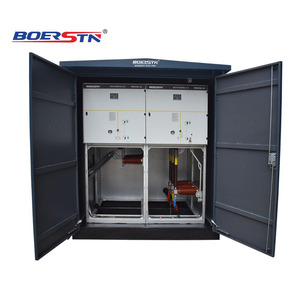
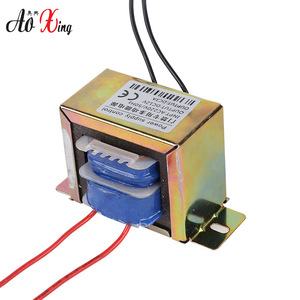
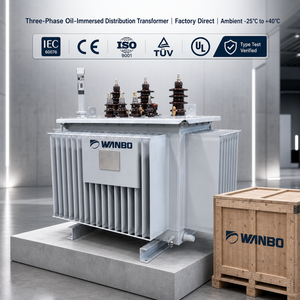
The global power distribution landscape is traversing an unprecedented structural pivot driven by the simultaneous convergence of industrial electrification, utility-scale renewable penetration, and aggressive energy efficiency directives such as EU Ecodesign Tier 2 (EN 50588-1) and the United States Department of Energy (DOE 10 CFR Part 431) standards. For engineering procurement managers, EPC contractors, and municipal utility planners, navigating the selection of top-tier Chinese power distribution transformer manufacturers has shifted from simple price arbitrage to a complex, multi-variable evaluation of electromagnetic core geometries, total cost of ownership (TCO) life-cycle loss evaluation, and strict manufacturing quality conformance.
Leading Chinese transformer export factories have evolved from low-cost assembly workshops into advanced, automated engineering hubs capable of producing bespoke magnetic solutions ranging from compact single-phase control units to massive 5000 kVA pad-mounted, oil-immersed, and cast-resin dry-type transformers. Backed by direct domestic access to highest-grade Cold-Rolled Grain-Oriented (CRGO) silicon electrical steels (such as Baosteel 23Q110 and high-permeability laser-scribed domain-refined grades) and high-purity electrolytic copper, top Chinese exporters deliver exceptional no-load loss reductions, minimal excitation current profiles, and thermal stability that match or exceed Western OEM equivalents at substantially reduced lead times.
Evaluation frameworks penalizing both no-load core losses (A-factor) and load winding losses (B-factor) demonstrate that high-permeability step-lap cores deliver up to 28% operational expenditure savings over a 30-year lifecycle.
Radial and axial dynamic short-circuit mechanical bracing withstands peak fault forces up to 25–40 times rated current, reinforced by epoxy-impregnated or cast-resin encapsulation that halts insulation fatigue.
Fully certified type-tested compliance across IEC 60076, IEEE C57.12, ANSI, CE directives, and regional grid codes allows seamless inter-operability across North American, European, Middle Eastern, and APAC projects.
True export authority in medium- and low-voltage distribution apparatus is verified on the testing floor. Operating from an expansive 5,500 m² state-of-the-art manufacturing plant with over 25 years of engineering heritage and historical ties to automation panel design since 1990, premier factories bridge the critical gap between heavy electromagnetic design and precision control architecture. When selecting a manufacturing partner, international buyers must assess whether the facility controls the complete vertical processing chain—from precision core slitting and multi-stage mitering to automatic tension-controlled winding, vacuum pressure drying, and rigorous digital acceptance testing.
To ensure total reliability in severe environmental conditions (ranging from offshore high-humidity salt fog to desert thermal extremes of +55°C), our automated manufacturing line leverages specialized routine and diagnostic equipment. Every transformer unit undergoes fully computerized routine testing prior to container dispatch, eliminating human test logging error and generating auditable data sheets:
Computerized open-circuit and short-circuit testing panels evaluating impedance voltage, no-load losses, and excitation currents across all phases.
Double Voltage Double Frequency (DVDF) testing verifying turn-to-turn, layer-to-layer, and phase-to-phase insulation integrity against high electrical stresses.
Digital 25V AC/DC milli-ohm resistance bridges measuring cold copper/aluminum coil resistance down to 0.1% accuracy for thermal-rise baseline logging.
Multi-channel digital temperature mapping under full-load conditions to identify localized hot spots and guarantee compliance with Class F (155°C) and Class H (180°C) margins.
Selecting the correct transformer topology is contingent on installation environment, fire-safety mandates, environmental hazard liabilities, and local electrical harmonic spectrums. The comparative matrix below highlights critical design trade-offs across common distribution transformer categories manufactured for global export.
| Transformer Architecture | Cooling & Fluid Medium | Loss Efficiency Class | Impulse Withstand (BIL) | Primary Deployment Domain |
|---|---|---|---|---|
| Oil-Immersed Distribution (S11/S13/S20) | ONAN / ONAF Mineral or Natural Ester Fluid | Tier 2 EcoDesign / S20 Super-Low Loss | Up to 125 kV BIL (11kV / 24kV / 33kV) | Utility overhead grids, ground-mounted industrial pads, rural distribution. |
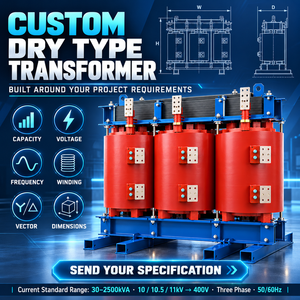
| Cast Resin Dry-Type (SCB10 / SCB14) | AN / AF Forced Air (Epoxy Encapsulated) | Class F (155°C) / Class H (180°C) | Up to 95 kV BIL (Safe Turn Insulation) | Commercial high-rises, metro transit substations, data centers, hospitals. |
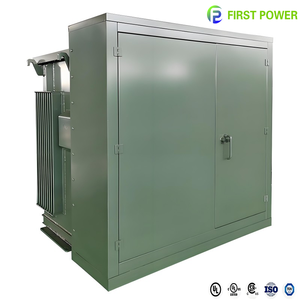
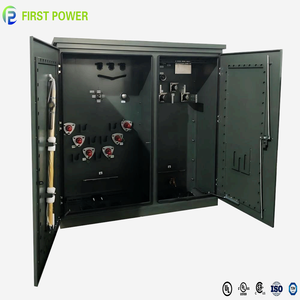
| Pad-Mounted Substation (Compartmental) | Hermetically Sealed Liquid (FR3 Ester Compatible) | IEEE C57.12.26 / ANSI C57.12.28 | Up to 95-150 kV BIL | North American underground residential distribution (URD), solar farms, EV hubs. |
| Compact Prefabricated Substation (YB) | Integrated MV Switchgear + Transformer + LV Board | IEC 62271-202 / IP54 Weatherproof | System engineered per switchgear rating | Public distribution networks, temporary construction power, wind collector nodes. |
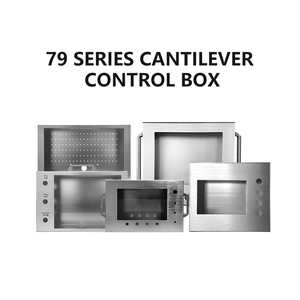
| Precision Industrial Control (EI / Isolation) | Air Cooled / Varnished Dry Vacuum Impregnated | CE / UL 508A Industrial Control | Enhanced Dielectric (4.0 kV Hi-Pot) | Automation control panels, CNC cantilever enclosures, VFD drive isolation. |
International procurement strategists must align their supply chains with decisive technological shifts reshaping the transformer industry over the next decade. Sourcing policies are moving rapidly away from standalone initial CAPEX pricing toward multidimensional life-cycle analytics:
Replacing standard mineral oil with synthetic and natural vegetable esters (K-class, flashpoint >300°C). This eliminates catastrophic explosion hazards in dense urban sites and provides zero-ecotoxicity in environmentally sensitive water basins.
Amorphous metal ribbon cores reduce no-load excitation losses by up to 70% compared to conventional grain-oriented electrical silicon steels, drastically curbing grid idle losses in solar feeding systems with low night utilization.
Integrated fiber-optic direct winding temperature sensors, online dissolved gas analysis (DGA) microsensors, and digital pressure/vibration transducers transmitting real-time operational health via Modbus/IEC 61850 protocol to cloud SCADA platforms.
Sourcing medium-voltage transformers across oceans requires rock-solid risk mitigation at every project phase. A world-class Chinese transformer exporter must maintain a completely transparent Factory Acceptance Test (FAT) program, where overseas inspectors or third-party agencies (such as SGS, Bureau Veritas, or TÜV) can review raw material mill test certificates (MTC), observe live type-test routines, and authenticate sealing integrity.
Key quality checkpoints during transformer fabrication encompass:
Non-linear inverter loads generate significant high-frequency harmonic currents that cause severe eddy-current losses in conductors and structural steel clamps. Leading Chinese exporters engineer custom transformers with dedicated K-Factor ratings (K-4, K-13, K-20) or harmonic loss mitigation designs featuring electrostatic shielding between primary and secondary windings, transposed conductor cabling, and oversized neutral conductors rated at 200% of phase currents.
While both standards ensure robust performance, IEEE C57.12.26 specifies distinct compartmental enclosures separating medium-voltage and low-voltage cable terminations with strict tamper-resistant dead-front constructions, bay-o-net fuse holders in series with current-limiting backup fuses, and specific loop or radial switching configurations. IEC standards emphasize modular substation layouts (IEC 62271-202) with unified metal-enclosed switchgear compartments.
Yes. Chinese tier-1 exporters regularly build dual-voltage units (e.g., primary dual-switchable 13.8 kV / 24.94 kV to secondary 480V / 208V) with internal externally operable voltage selector switches and off-circuit tap changers (OCTC) providing ±2×2.5% regulation range, as well as on-load tap changers (OLTC) for automated industrial voltage stabilization.
A complete technical compliance dossier accompanies each export shipment: Routine Factory Acceptance Test (FAT) Reports, Type Test Certificates from accredited independent laboratories (KEMA, CESI, or National High Voltage Laboratories), Material Traceability Certificates for core steel and copper, General Arrangement (GA) dimensional drawings, Schematic Wiring Schematics, and complete Operation & Maintenance (O&M) manuals in English.
Need custom technical datasheets, impedance evaluations, quotation matrices, or urgent lead-time verification for your upcoming infrastructure, utility, or industrial power project? Our senior engineering team is ready to provide comprehensive specification reviews within 24 business hours.