 CEMarked CEMarked
Engineered for high harmonic distortion attenuation, voltage wave reshaping, and severe industrial plant duty. Explore our verified exported models.
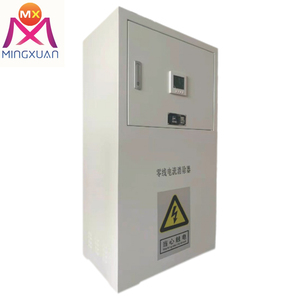
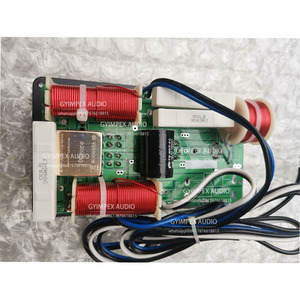
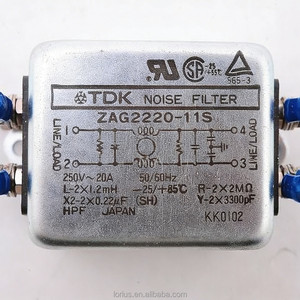
In-depth technical analysis of Total Harmonic Distortion (THDi/THDv) mitigation under stringent Eurasian cold-climate conditions and non-linear electrical loading.
Industrial installations operating across the Russian Federation—from heavy metallurgic complexes in the Urals to extractive oil and gas pumping stations in Western Siberia—face severe power quality challenges. Modern automated extraction and processing facilities rely extensively on six-pulse and twelve-pulse Variable Frequency Drives (VFDs), DC motor drives, thyristor rectifiers, and large-scale induction heaters. These non-linear loads draw current in discrete pulses, injecting substantial 5th, 7th, 11th, and 13th order harmonic currents back into medium and low voltage distribution networks.
Under GOST 32144-2013 (the intergovernmental standard aligning with IEC 61000-4-30), point of common coupling (PCC) voltage distortion (THDv) must generally be held below 5% for medium voltage and 8% for low voltage systems. Unmitigated harmonics trigger severe operational risks: rapid thermal breakdown of distribution transformer paper-oil insulation, resonance tripping of power factor correction (PFC) capacitor banks, false commutation in PLC automation, and erratic telemetry over SCADA fieldbuses.
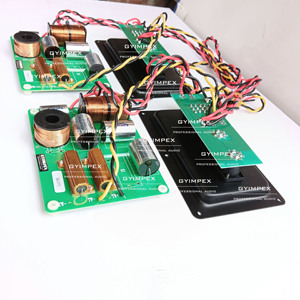
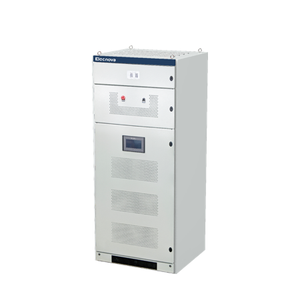
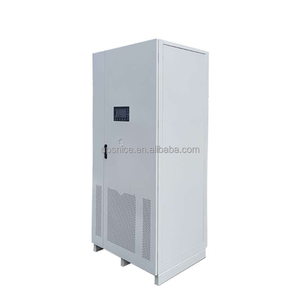
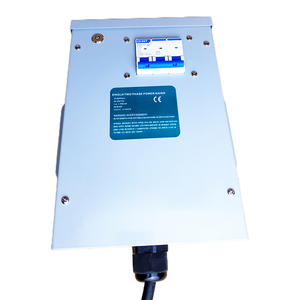
Our engineered passive harmonic filter (PHF) assemblies provide low-impedance shunt paths specifically tuned to absorb dominant harmonic frequencies. Unlike active electronic compensators that suffer silicon switching derating and electronic card failures when ambient temperatures dip to -45°C, passively tuned series/parallel LC networks deliver unfailing magnetic resilience, absorbing harmonic energy directly and transforming it into stable thermal dissipation through vacuum-pressure impregnated (VPI) copper windings.
Comparing primary mitigation topologies for three-phase motor loads running under heavy, fluctuating torque conditions:
| Mitigation Topology | Current THD (THDi %) | True Power Factor | Vulnerability to Arctic Cold (-40°C) | Capex vs Opex Index |
|---|---|---|---|---|
| Standard AC Line Reactor (3% - 5% Z) | 35% - 45% | 0.82 - 0.88 | Zero (Pure Inductive Steel/Copper) | Lowest Capex / Low Efficiency |
| Tuned Low-Pass Broad-Band Passive Filter | < 5% - 8% (GOST Compliant) | > 0.96 - 0.99 (Capacitive Boost) | Immune with Heavy-Duty Dielectrics | Optimal Capex / Zero Maintenance |
| 12-Pulse Rectifier with Phase-Shifting XFMR | 10% - 14% | 0.92 - 0.95 | Zero (Robust Cast Resin/VPI) | High Capex / Heavy Weight Burden |
| Active Harmonic Filter (AHF / IGBT Inverter) | < 4% | Dynamic Controllable | High Failure Risk of IGBT Gate Drivers | Extreme Capex / High Component Wear |
Custom engineering addressing climatic, structural, and regulatory challenges across core industrial sectors.
Electric Submersible Pumps (ESPs) in Tyumen and Khanty-Mansiysk utilize ultra-long borehole cable runs up to 3,000 meters. The resulting reflected wave phenomenon (high dv/dt) punctures motor insulation. Our combined passive harmonic and sine wave LC filters reconstruct pulse-width modulated (PWM) inverter outputs into pure sinusoidal waveforms, curbing cable capacitance charging currents and safeguarding downhole equipment.
Underground crushers, continuous conveyor belts, and electric arc scrap melting create intense voltage notching and uneven phase imbalances. Our high-saturation magnetic reactors and tuned traps provide massive reactive current handling capacity, preventing high-frequency harmonics from degrading substation isolation transformers.
Navigating the Northern Sea Route and working within Arctic LNG coastal processing terminals requires compliance with the Russian Maritime Register of Shipping (RMRS). Our custom filter enclosures feature anti-condensation heaters, silicon-free conformal coatings, and marine-grade epoxy impregnations tested to withstand salt spray, severe mechanical vibrations, and thermal cycling.
Navigating technology transitions, import substitution mandates, and bilateral trade mechanisms.
Over recent years, industrial engineering departments across the Russian Federation have shifted away from Western European power quality vendors due to supply embargoes, lack of warranty replacement parts, and high markup costs through unverified intermediary traders. Russian chief power engineers (Glavny Energetik) now prioritize factory-direct relationships with certified manufacturing leaders who control their entire magnetics engineering pipeline.
Crucially, procurement officers demand transparent material traceability. Because passive harmonic filters are installed at primary distribution junctions, any failure can paralyze continuous process lines. Our manufacturing ecosystem integrates high-grade cold-rolled grain-oriented (CRGO) electrical steel, class H and C insulation films, and 99.99% pure oxygen-free electrolytic copper conductors, providing equipment life expectancies exceeding 25 years without proprietary software lockouts or inaccessible hardware upgrades.
Rooted in three decades of industrial automation, hazardous area control panel engineering, and magnetics manufacturing.
Our dedicated manufacturing base in Santej, Ahmedabad, combines precision automatic winding, core stacking, vacuum-pressure impregnation (VPI), and oven curing under one rigorous ISO-certified infrastructure.
Every harmonic filter and transformer undergoes rigorous computerized testing: open/short circuit runs, Double Voltage Double Frequency (DVDF) induced overvoltage, infrared thermal mapping, and digital LCR inductance characterization.
Backed by our parent enterprise, Prima Automation (founded 1990), our electrical designs embody panel-builder intelligence: optimized thermal clearance, robust terminal blocks, and compact enclosure footprints designed for straightforward integration.
Direct answers addressing technical selection, regulatory compliance, logistics, and payment pathways.
Connect directly with our senior power quality engineering desk. We review single-line diagrams (SLDs), drive loading specs, and regional grid compliance standards to design reliable passive filter systems.
Contact Us