 CEMarked CEMarked
Engineered for high-density automated manufacturing zones across Samut Prakan, Pathum Thani, Rayong, and the Eastern Economic Corridor (EEC).
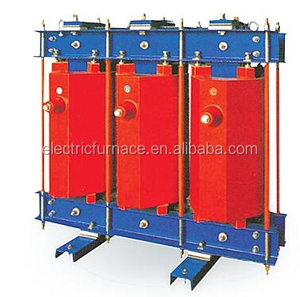
Precision DC-link ripple suppression and peak-current dampening for automated production bus systems.
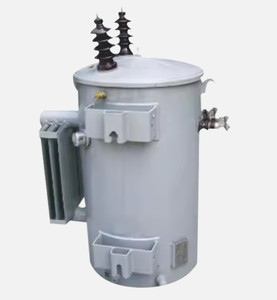
High-reliability 37.5kVA–200kVA outdoor distribution transformer designed for rugged tropical climates.
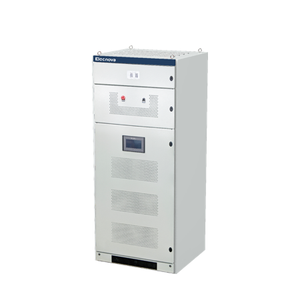
Real-time dynamic harmonic cancellation eliminating THDi down to < 3% for sensitive CNC systems.
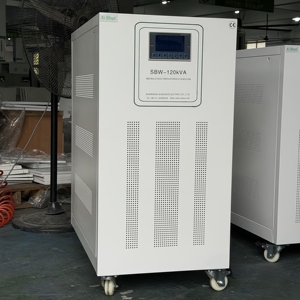
High-capacity 380V/400V/415V compensation unit engineered for robotic lines and metal forming equipment.
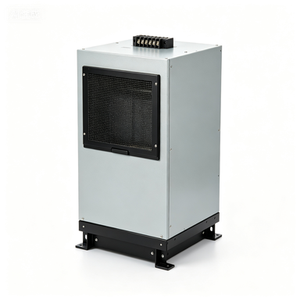
High-saturation inductive reactor protecting frequency converters and VFDs from severe switching surges.
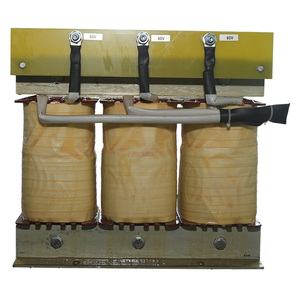
Mitigates high dv/dt spikes, extends motor insulation lifespan, and stabilizes long line configurations.
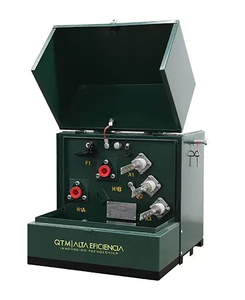
Compact substation-ready distribution unit designed for industrial estates and commercial complexes.
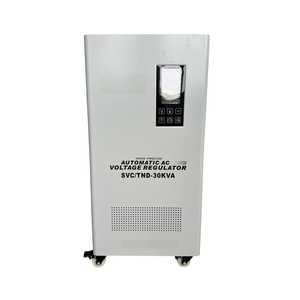
Pure copper winding construction delivering ultra-stable 220V power for telecom towers and edge server hubs.
A comprehensive analysis of electrical grid vulnerabilities, thyristor-based power conditioning architectures, and operational resilience across Greater Bangkok and the Eastern Economic Corridor (EEC).
The Greater Bangkok metropolitan region, while benefiting from extensive infrastructure development under Thailand 4.0, presents unique electrical challenges for automated plants. Heavy industrial clusters located along the Bangna-Trad corridor, Samut Prakan, and Nava Nakorn experience rapid load transitions. Frequent voltage sags (ΔV > 15%), short-duration brownouts, and harmonic distortions from non-linear manufacturing equipment compromise sensitive automated systems.
Legacy electromechanical servo-driven stabilizers rely on carbon brushes and servo motors that take between 800ms and 3000ms to correct deviations. In contrast, Static Voltage Regulators (SVRs) employ solid-state silicon controlled rectifiers (SCR) and microsecond DSP controllers, nullifying power sags within < 20 milliseconds (one single cycle). This eliminates costly production stoppage, tool breakage in high-speed CNC milling, and logic lockups in PLC backplanes.
Traditional servo stabilizers incorporate mechanical contact carbon brushes that slide across variable autotransformer windings. In Bangkok's hot, humid tropical environment (consistently above 35°C with relative humidity exceeding 80%), brush sparking accelerates carbon carbonization, winding pitting, and mechanical wear, leading to unplanned downtime and high maintenance costs.
Our Chinese manufacturing lines engineer contactless Static Voltage Regulators utilizing multi-tap matrix configurations driven by anti-parallel thyristors. By implementing seamless zero-crossing switching algorithms, our solid-state architecture generates no arc, introduces zero phase shift, and incurs no carbon brush degradation. With an operational Mean Time Between Failures (MTBF) exceeding 100,000 hours, they provide maintenance-free reliability for mission-critical installations.
In Chonburi and Rayong automotive plants, automated robotic spot welding and robotic paint lines draw severe transient currents. Static regulators decouple sensitive coordinate-measuring machines (CMM) and electronic laser calibration benches from welding-induced sags.
Bangkok's electronics assembly corridor demands micro-step voltage stability. Our SVR units protect surface-mount pick-and-place heads and reflow ovens from sub-cycle flicker, preventing nozzle drops, board component misalignment, and batch scrap.
As Bangkok establishes itself as Southeast Asia's digital gateway, Tier-III hyperscale cloud facilities in Bang Na utilize our static regulators upstream of double-conversion UPS infrastructure. This avoids needless battery cycling during chronic seasonal grid fluctuations.
Direct technical metrics for system integration engineers and plant procurement directors evaluating power quality retrofits.
| Performance Criterion | China SVR Industrial Series (Solid-State) | Standard Carbon-Brush Servo AVR | Magnetic Resonance (Ferroresonant) |
|---|---|---|---|
| Response Correction Time | ≤ 20 ms (Full cycle recovery) | 800 ms – 3000 ms (Slow motor driven) | 20 ms – 40 ms |
| Efficiency at Nominal Load | ≥ 98.5% (Ultra-low dissipation) | 94% – 96% | 88% – 92% (High heat loss) |
| Mechanical Wear Parts | Zero (100% Solid-State Silicon) | High (Brushes, gears, drive chains) | Zero (Static magnetic) |
| Harmonic Distortion (THD) | < 1% Added to Input Waveform | Negligible | Can introduce 3% – 7% THD |
| Output Voltage Precision | ± 1.0% to ± 2.0% (Configurable) | ± 1.5% to ± 3.0% | ± 3.0% to ± 5.0% |
| Tolerance to Tropical Ambient | Designed for 50°C, 95% RH conformal coated | Susceptible to brush fouling & corrosion | Sensitive to ambient temperature rise |
| Audible Acoustic Noise | < 50 dB(A) at 1 meter | 55 – 65 dB(A) during correction | 68 – 80 dB(A) continuous core hum |
How the Eastern Economic Corridor (EEC) framework and renewable energy transition are redefining voltage regulation standards.
Commercial and Industrial (C&I) factories across Samut Sakhon and Chachoengsao have aggressively integrated multi-megawatt rooftop PV systems. Intermittent cloud coverage produces sudden reverse power flows and abrupt supply swings that electromechanical stabilizers cannot track, driving the adoption of fast thyristor regulation.
Under the Board of Investment (BOI) incentives, manufacturing facilities are adopting robotic automation and advanced electronics. Modern automation lines require pure sine-wave supply within strict tolerances. SVR units with integrated Modbus-RTU and Ethernet telemetry provide the real-time monitoring required for industrial predictive maintenance.
Non-linear VFDs, induction heaters, and servo packages generate significant harmonic resonance on supply networks. Modern buyers now prefer integrated static voltage regulating panels coupled with line/load reactors and active filters to safeguard automated lines against harmonic overheating.
Combining heavy-duty magnetics engineering, automation heritage, and stringent testing protocols to deliver exceptional export-grade equipment.
Built upon more than 25 years of engineering experience and supported by our group's automation heritage established since 1990, we construct voltage stabilizers and magnetics from an automation panel builder's operational perspective. We design for practical installation needs: high inrush capacity, well-planned thermal dissipation, robust busbars, and comprehensive documentation that engineering crews can rely on.
Every static voltage regulator, power transformer, and harmonic filter undergoes comprehensive computerized factory acceptance testing before shipping to the Bangkok market. Our quality verification includes:
Key technical and logistics inquiries regarding the procurement and integration of Static Voltage Regulators in Bangkok.
Connect with our technical application engineers for comprehensive system sizing, schematic verification, and factory-direct export quotations tailored for your operations in Bangkok and across Thailand.
Get a Quote