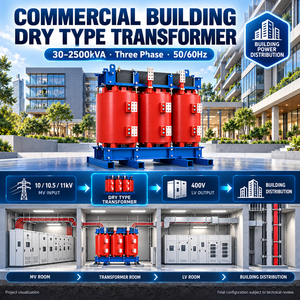
 CEMarked CEMarked
Tested rigorously in our 5,500 m² high-voltage production facility to withstand the rigorous operational demands of British electrical infrastructure.
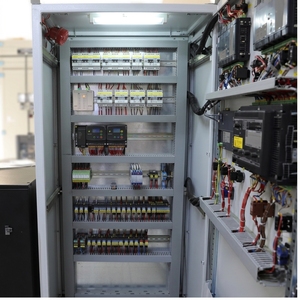
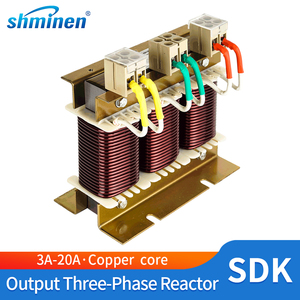
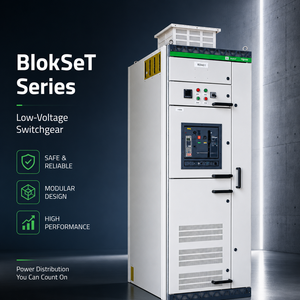
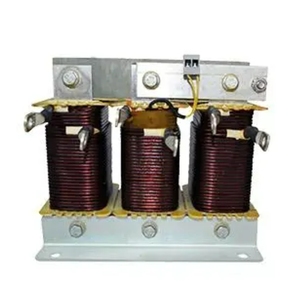
Across the United Kingdom, industrial operations and commercial facilities are facing an unprecedented challenge: modern Variable Frequency Drives (VFDs) and non-linear power electronic switch-mode rectifiers deliver massive energy efficiency gains, but they simultaneously inject devastating current harmonics back into distribution substations while subjecting driven motors to severe dielectric stresses. For electrical engineers, panel builders, and procurement directors sourcing line and load reactors from China for deployment in the UK, understanding the intersection of local power quality regulations, electromagnetic design parameters, and raw material engineering is crucial.
In Great Britain, the Energy Networks Association (ENA) enforces stringent harmonic standards under Engineering Recommendation G5/5 (which superseded G5/4-1). G5/5 sets planning limits and point of common coupling (PCC) harmonic voltage distortion thresholds right up to the 100th harmonic (5,000 Hz). In parallel, the BS 7671 (IET Wiring Regulations, 18th Edition) and BS EN 61800-3 regulate electromagnetic compatibility and equipment lifecycle safety. To satisfy these directives, line and load reactors must not be treated as generic off-the-shelf inductors; they must be engineered with exact saturation profiles, grain-oriented electrical silicon steel laminations, and tailored impedance values (typically 2%, 4%, or 5% nominal voltage drops).
A standard 3-phase AC input line reactor attenuates total harmonic current distortion (THDi) from upwards of 80% down to 30–35%, mitigating nuisance tripping of Residual Current Devices (RCDs) and preventing upstream transformer core saturation. Concurrently, a motor-side load reactor limits the steep voltage rise rates (dv/dt) caused by IGBT fast switching, protecting motor windings from destructive reflected wave voltage peaks up to 1,600V on standard 400V/415V UK networks.
| Criterion | Input AC Line Reactor | Output AC Load Reactor | DC Link Smoothing Choke |
|---|---|---|---|
| Installation Point | Between UK Mains (400V/415V 50Hz) and VFD Input Rectifier | Between VFD Inverter Output (PWM) and Induction/PM Motor | Inside VFD DC Bus, between Rectifier and Inverter Stage |
| Primary Objective | Suppress mains voltage notches, reduce THDi, cushion surge transients | Attenuate dv/dt (<500 V/µs), absorb capacitive cable charging currents | Smooth ripple current on DC link, boost DC bus ride-through capability |
| Impedance Rating | 2%, 3%, or 5% (based on drive kVA & system voltage) | 1.5% to 3% (voltage drop restricted to preserve motor torque) | Inductance sized according to DC ripple voltage percentage |
| Thermal & Magnetic Specs | 50Hz fundamental with 5th, 7th, 11th harmonic current handling | Fundamental carrier frequency (2kHz–16kHz) sideband currents | DC bias capability without iron core saturation at rated current |
| UK Regulatory Metric | ENA EREC G5/5 Stage 1–3 assessment compliance | BS EN 60034-17 / BS EN 60034-25 insulation integrity | BS EN 61800-5-1 Low Voltage Safety Directive |
The operational longevity of a three-phase reactor operating in demanding environments—such as North Sea maritime platforms, Welsh water pump houses, or automated logistics hubs in the Midlands—rests on core and conductor selection:
We exclusively utilize premium low-loss CRGO silicon steel laminations (grades 27Q120 to 30Q130) laser-cut to exact tolerances. Multi-stepped air gap designs with high-grade temperature-resistant insulating spacers eliminate localized flux fringing losses and hot spots, guaranteeing acoustic noise levels strictly below 55 dBA.
For high-amperage units (above 100A), our factories employ precision-wound Class H (180°C) electrolytic copper foil. Foil windings significantly minimize high-frequency skin effect and proximity effect losses triggered by drive carrier frequencies, maintaining winding temperature rises well below Class F limits.
Every reactor undergoes automated preheating, double-cycle vacuum pressure impregnation with Class H solvent-free epoxy resin, and multi-stage oven curing. This ensures exceptional mechanical bond strength, superior resistance to harsh industrial moisture or coastal humidity, and virtually zero corona partial discharge.
Specifying line and load reactors for British industries requires acute awareness of local network architecture, operating environments, and statutory compliance frameworks. Below are the primary technical environments in which our inductive components are deployed:
Conforming to the Water Industry Mechanical and Electrical Specification (WIMES 3.01), major utilities such as Thames Water, Severn Trent, and United Utilities operate massive variable-speed submersible and booster pumps. Because pump control stations are often situated at the end of long rural distribution feeds, input line reactors eliminate harmonic voltage distortion at the PCC. Meanwhile, output load reactors are essential to protect submersible motor windings connected via long trailing borehole cables exceeding 150 meters from catastrophic insulation breakdown.
The UK data centre market demands ultra-reliable power conditioning. Chillers, cooling towers, and computer room air handling (CRAH) units utilize hundreds of inverter drives. Uncontrolled harmonics can circulate into static UPS systems, skewing zero-crossing timing circuits and driving neutral conductor overheating. Installing 4% line reactors and harmonic filtering chokes decouples cooling motor drives from sensitive IT switchgear cabinets, delivering high acoustic dampening (<50 dBA) for urban planning compliance.
With Britain rapidly expanding utility-scale energy storage in Scotland and Yorkshire, bidirectional grid-tie inverters require high-frequency DC smoothing reactors and AC line chokes. Our soft-connection DC smoothing reactors (up to 3000A) eliminate high-frequency ripple currents that degrade lithium-iron-phosphate (LFP) battery packs, while AC-side line reactors provide vital buffering against short-circuit grid faults across DNO interconnections.
The "Golden Triangle" logistics hubs across Leicestershire, Northamptonshire, and Warwickshire house miles of high-speed roller conveyors, automated sorters, and crane lifts. Thousands of distributed fractional-to-mid-size AC drives cause severe cumulative harmonic feedback and common-mode noise that corrupts fieldbus networks (Profibus, Profinet, EtherCAT). Custom 3-phase line reactors isolate drive nodes, safeguarding sensitive PLC and HMI control logic from random memory corruptions.
Offshore topside processing facilities in Aberdeen and Teesside impose punishing constraints: salty, sulfur-laden atmosphere, ambient temperatures up to 50°C inside sealed enclosures, and high mechanical shock/vibration. Our bespoke reactors incorporate special tropicalised epoxy coatings, stainless steel marine-grade clamping hardware, and terminal blocks rated for aggressive offshore operational safety.
The landscape of the British manufacturing sector is shifting rapidly under the pressure of legally binding net-zero targets and strict electrical code updates. Understanding these market dynamics enables industrial buyers to make forward-looking capital procurement choices:
1. Full Migration to ENA EREC G5/5 Planning Standards: Unlike previous revisions, G5/5 requires comprehensive sub-harmonic, inter-harmonic, and high-frequency (up to 5 kHz) assessments when connecting new loads to District Network Operator (DNO) networks (such as UK Power Networks, National Grid Electricity Distribution, and Scottish and Southern Electricity Networks). Connecting large drive installations without tuned input chokes or active harmonic filters risks severe financial penalties and refusal of grid connection.
2. Transition from CE to the UKCA (UK Conformity Assessed) Regime: While the UK government has extended the recognition of the CE mark across various industrial equipment categories, tier-one infrastructure projects managed by bodies like HS2 or National Highways demand dual certification (CE and UKCA) aligned with designated British Standards (BS EN 61558-2-20 for small reactors and BS EN 60076-6 for power reactors). Our manufacturing facilities have updated quality assurance procedures to provide full conformity documentation for both regimes.
3. Rise of High-Efficiency Silicon Carbide (SiC) and GaN VFDs: The next generation of motor speed controllers utilizes wide-bandgap semiconductors that switch at frequencies up to 50 kHz with dv/dt slew rates exceeding 15,000 V/µs. Standard off-the-shelf chokes overheat rapidly due to severe eddy current losses under these conditions. In response, our R&D engineering team designs custom high-frequency ferrite-composite and amorphous nanocrystalline reactors specifically tailored for modern motor drive topographies.
4. Total Cost of Ownership (TCO) & Energy Loss Audits: In the UK, where commercial and industrial electricity rates remain among the highest in Europe, operating efficiency is a critical KPI. A poorly designed reactor with excessive core losses can waste thousands of kilowatt-hours annually in heat. Our products utilize precision stepped-lap core stacking and optimized wire cross-sections to deliver energy efficiency ratings above 98.8%, dramatically trimming ongoing energy expenditure.
Leveraging more than 25 years of specialized engineering experience in magnetics and industrial automation—supported by a corporate group heritage in advanced PLC, SCADA, and hazardous-area panel construction dating back to 1990—our manufacturing facility in Santej, Ahmedabad, represents a powerhouse of precision magnetic fabrication. Spanning over 5,500 m², our modern facility bridges the gap between cost-effective volume manufacturing and high-end Western engineering compliance.
Every single line reactor, load choke, and transformer undergoes 100% computerized routine testing prior to packing and export container stuffing. We operate a dedicated, fully instrumented quality verification suite equipped with:
Fully automated single-phase and three-phase digital testing consoles executing no-load loss, rated current impedance, phase balance, and insulation resistance measurements in real-time with automated PDF test report generation.
Specialized motor-generator testing sets generating 100Hz/200Hz induced overvoltages to stress turn-to-turn, layer-to-layer, and coil-to-core dielectric insulation, safeguarding units against steep-fronted line surges.
High-precision digital LCR bridges measuring exact inductance linearity from zero current up to 150% saturation current, backed by four-wire Kelvin-bridge milli-ohm winding resistance balancing down to 0.0001 ohms.
Calibrated FLIR thermal imaging cameras monitor steady-state full-load temperature rise under simulated harmonic current injection, confirming Class H compliance without hot-spot development.
Microprocessor-controlled OC/SC test racks verify iron core losses (Watts), copper $I^2R$ losses, and exact percentage impedance drop (%Z) under rated fundamental line frequencies (50Hz/60Hz).
High-voltage breakdown testing rigs applying up to 5,000V AC dielectric potential between windings and core ground for 60 seconds to guarantee zero flashover or leakage in high-voltage industrial enclosures.
Direct answers to technical, commercial, and logistics questions commonly asked by British panel builders, OEM engineering directors, and project procurement teams:
For standard light-to-medium industrial motor drives, a 3% or 4% line reactor offers the optimal balance between harmonic mitigation and system voltage drop. If your facility must meet stringent ENA G5/5 Stage 2 limits or is supplied by a stiff substation transformer with low fault impedance, a 5% reactor provides superior harmonic attenuation. Output load reactors are typically specified between 1.5% and 3% to avoid reducing motor shaft torque.
Yes. All our magnetic units are manufactured in accordance with international IEC/EN standards, including BS EN 60076-6 (Power Reactors) and BS EN 61558-2-20. We furnish comprehensive Declarations of Conformity, full factory type-test reports, and clear nameplate markings with both CE and UKCA marks to ensure smooth import customs clearance and prompt site sign-off by UK Building Control and insurance assessors.
Standard load chokes are designed to mitigate reflective wave voltage spikes and suppress cable charging currents for motor cable runs up to 100 to 150 meters. For installations where the motor is located beyond 150 meters (up to 500 meters or longer)—such as deep submersible pumps, quarry conveyors, or remote ventilation fans—we engineer complete LC Sine-Wave Filters that convert PWM square waves into a clean sinusoidal waveform (<5% THDv).
Standard production lead times range between 14 and 25 working days depending on batch size and custom engineering specifications. Containerized freight is routed seamlessly to major UK ports including Felixstowe, Southampton, London Gateway, and Liverpool, with typical maritime transit times of 28 to 35 days. For urgent project retrofits or critical breakdowns, air-freight dispatch is available directly to Heathrow (LHR) or Manchester (MAN).
Yes. As an OEM/ODM specialist, our mechanical design team produces custom base-plate mounting patterns, flexible busbar orientations, low-profile horizontal configurations, and tailor-made IP20 to IP54 ventilated enclosures. We can easily match the footprint and terminal locations of legacy Western European brands (such as Schaffner, Block, or MTE) to facilitate zero-modification drop-in site replacements.
Acoustic humming from magnetostriction is a common issue when drives switch under load. We mitigate this through stepped CRGO laminations, laser-cut air gaps filled with specialized dampening insulation pads, and double vacuum pressure impregnation (VPI) in Class H resin. This keeps operating noise strictly under 55 dBA, satisfying BS 8233 standards for building services and hospital facilities.
Whether you require standard 400V 50Hz line reactors for an automated conveyor installation or high-amperage liquid-cooled smoothing chokes for a battery energy storage substation, our engineering specialists will verify your specifications within 24 hours.
Contact Us