 CEMarked CEMarked
Engineered to handle severe high-fault currents, stringent phase separation, and harmonic mitigation for modern commercial, renewable, and manufacturing facilities.
A technical evaluation of form separation, thermal dynamics, and harmonic resilience for electrical consulting engineers.
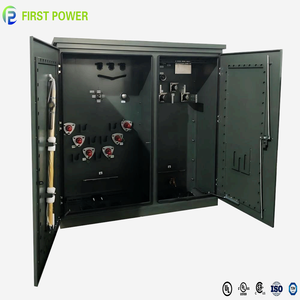
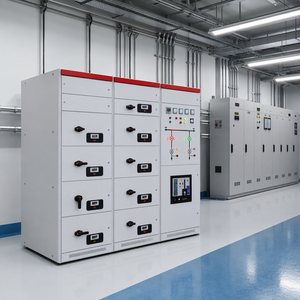
In high-density industrial and commercial power distribution hubs, the primary function of a Power Control Center (PCC) extends beyond basic switching; it acts as the primary firewall protecting electrical networks from catastrophic downstream cascade failures. Conforming to CE-marking machinery and low-voltage directives (IEC/EN 61439-1/2), our engineering blueprints emphasize rigid Form 4b separation.
This internal segregation isolates individual functional units, outgoing busbars, and cable connection termination chambers into independent, fire-retardant enclosures. In the event of an internal short-circuit arc event, plasma flashes and hot ionized gases are directed through calibrated pressure-relief flues, preventing thermal propagation into adjacent breaker modules. Utilizing electrolytic copper busbars (rated 99.9% IACS conductivity) electro-tinned and supported by non-hygroscopic, halogen-free, track-resistant glass-reinforced polyester (SMC/DMC) insulators, our assemblies withstand electrodynamic short-circuit stresses exceeding 65kA to 100kA for a full 1-second duration.
The ubiquity of non-linear loads—such as variable frequency drives (VFDs), server-farm switch-mode power supplies, and induction heating equipment—generates acute harmonic distortion (predominantly 5th, 7th, 11th, and 13th orders) that directly compromises transformer magnetic cores and switchgear thermal balance. Operating in concert with our parent group’s 35-year automation legacy, every exported PCC switchboard integrates precision reactive balancing solutions.
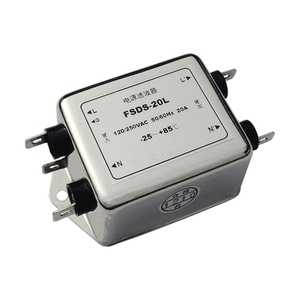
To eliminate hotspot deterioration, busbar compartments are numerically simulated via Computational Fluid Dynamics (CFD) modeling, ensuring natural convection venting without lowering ingress protection ratings below IP54. When coupled with our in-house engineered line/load reactors (up to 2500A) and tuned sine wave filters (up to 500HP), Total Harmonic Distortion for Voltage (THDv) is contained well within IEEE 519 parameters. Double Voltage Double Frequency (DVDF) verification guarantees that inter-turn winding insulation withstands steep dv/dt voltage transients emitted by modern fast-switching IGBT converters.
Fabricated for dual alignment across CE Low Voltage Directive 2014/35/EU, IEC 61439 standards, and harmonized cross-border criteria compatible with New York National Electrical Code (NEC/NFPA 70) and UL 891 standards.
Seamlessly integrates intelligent air circuit breakers (ACBs) with Modbus-TCP, Profinet, and BACnet IP protocols. Enables real-time metering, automated dual-source ATS transfer schemes, and predictive condition alerts.
Enclosures fabricated from 2.0mm to 2.5mm cold-rolled CRCA sheet steel treated through a comprehensive 7-tank anti-corrosion pre-treatment process, powder-coated with RAL 7035/7032 structured polyurethane finishes.
Deploying specialized power management systems adapted to the microclimates, urban codes, and regulatory landscapes of New York.
Manhattan and Downtown Brooklyn skyscrapers demand extremely compact switchgear with ultra-low thermal dissipation inside tightly restricted basement vault substations. Our cast-resin and dry-type integrated PCC switchboards eliminate flammable dielectric fluids, complying strictly with FDNY indoor fire mitigation rules and NYC Building Code Chapter 27 electrical safety mandates.
Across Albany’s Tech Valley and the Marcy NanoCenter, precision microelectronics manufacturing requires voltage total harmonic distortion (THD) under 2.5% and uninterrupted power stability. Our custom PCC panels, armed with active harmonic suppression, static voltage regulators, and double-shielded isolation transformers, defend billion-dollar cleanrooms from utility brownouts.
With massive offshore wind farms entering Long Island sound and large-scale battery energy storage systems (BESS) installed across upstate corridors, our PCC systems serve as the critical medium-to-low voltage grid synchronizer. They incorporate anti-islanding trip logic, bi-directional energy metering, and rugged environmental seals capable of withstanding coastal salt mist.
Strategic modernization demands driven by aggressive state climate targets, electrification, and aging infrastructure revitalization.
As NYC imposes penalizing building emissions caps, real estate owners and EPCs are replacing inefficient legacy switchboards with digital PCC units capable of granular sub-circuit monitoring, automated demand-response integration, and ultra-high magnetic efficiency.
MTA bus depot conversions and widespread commercial EV charging hubs in Queens, Bronx, and Westchester require continuous megawatt-level step-down feeds. Our PCC panels deliver robust short-circuit ride-through during concurrent dynamic charging spikes.
Superstorm legacy standards require switchgear to resist storm-surge humidity and cold snaps. Our specialized tropicalized varnish, vacuum pressure impregnation (VPI) windings, and stainless-steel hardware deliver long-term service without breakdown.
Combining 35 years of industrial automation lineage with a state-of-the-art 5,500 m² electrical testing laboratory.
Incorporated in 2006 as a dedicated manufacturing arm and wholly owned subsidiary of Prima Automation (India) Pvt. Ltd. (established in 1990), we bring over three and a half decades of panel-builder insight into magnetic component production. Our parent organization’s extensive portfolio in designing PC, PLC, and SCADA-based centralized automation switchboards, flameproof motor enclosures, and intrinsically safe hazardous-area panels shapes the way our transformers and PCC units are built.
We build with an installer's mindset: providing abundant cable landing tolerances, zero-stress terminal lugs, clearly laser-marked schematics, and comprehensive pre-shipment documentation that accelerates field commissioning by electrical contractors in New York.
In-depth responses covering international standards, logistics, field labeling, and delivery lead times.
While CE marking certifies full compliance with European Low Voltage Directive (LVD) 2014/35/EU, Machinery Directive 2006/42/EC, and IEC 61439-1/2, US jurisdictions (including the New York City Department of Buildings - NYC DOB) enforce the National Electrical Code (NEC/NFPA 70). We design and assemble our export systems utilizing globally harmonized standards: integrating UL-listed or recognized internal circuit components (such as Eaton, Schneider, or ABB breakers), dielectric clearances exceeding NEC Table 408.56 requirements, and standard 60Hz design parameters. For municipal NYC installations, we readily support third-party field evaluation and NRTL (Nationally Recognized Testing Laboratory) on-site labeling through Intertek (ETL), UL, or TÜV Rheinland prior to final sign-off.
Our manufacturing and assembly plant is located in Santej, Ahmedabad (Gujarat, India), placing us within immediate highway proximity to modern container ports (Mundra and Nhava Sheva). Ocean transit to the Port of New York/New Jersey (Maher/APM Terminals) typically spans 24 to 30 days. For urgent construction fast-tracks or breakdown replacements, custom sub-assemblies, spare components, or lighter control modules can be dispatched via expedited air freight directly to JFK or Newark (EWR) within 4 to 6 business days.
Yes. Although European standard networks operate on 50Hz 400V/230V, all custom export units destined for New York are engineered specifically for 60Hz frequency. Core laminations in our magnetic assemblies use premium cold-rolled grain-oriented (CRGO) electrical steel cut to prevent high hysteresis and eddy-current losses under 60Hz excitation. Primary incoming switchgear, internal busbars, current transformers, and step-down transformers are calibrated precisely for standard North American distribution voltages: 480V 3-phase 3-wire, 480Y/277V 4-wire, or 208Y/120V secondary distribution setups.
Export logistics across thousands of nautical miles demand rigorous packaging standards. All finished panels undergo comprehensive vacuum barrier sealing with moisture-scavenging silica desiccant bags placed inside each functional cubicle. The wrapped assemblies are shielded with multilayer bubble wrap, corner impact edge guards, and encased inside ISPM-15 heat-treated, fumigated seaworthy wooden crates engineered for overhead crane and heavy forklift hoisting. Internal copper bus connections are coated with anti-oxidation inhibitors to ensure uncompromised surface conductivity upon arrival.
Every shipment is accompanied by an engineering dossiers that includes CAD and EPLAN-generated electrical schematics, single-line diagrams (SLD), internal general arrangement (GA) layout drawings, foundation base drilling dimensions, breaker coordination curves, and detailed bill of materials (BOM). Additionally, our certified factory test report (FAT) is included, certifying results for megger insulation resistance, DVDF high-potential tests, full thermal-rise logs, and component CE declarations of conformity.
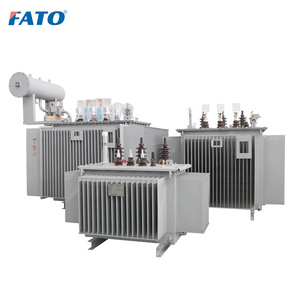
Whether you require a custom-engineered 5000kVA power control center, specialized line reactors for harmonic dampening, or high-efficiency step-up dry transformers, our team delivers utility-grade solutions tailored to your technical timeline and project specifications.
Send an Inquiry