 CEMarked CEMarked
Explore our industrial portfolio engineered to meet the demanding reliability, harmonic distortion, and thermal performance requirements of modern commercial and manufacturing facilities across Greater Los Angeles.
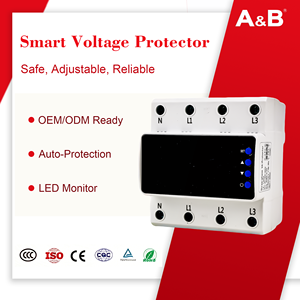
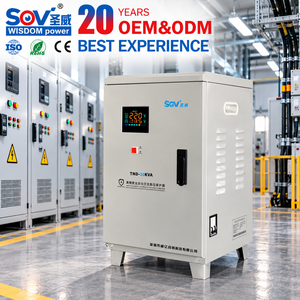
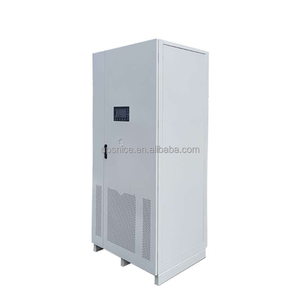
Navigating IEEE 519-2022, Title 24 Energy Efficiency, and LADWP / SCE Interconnection Guidelines with CE-Certified Active Power Filters.
In high-density industrial corridors across Los Angeles County—spanning from the maritime industrial logistics zones around San Pedro Bay to advanced aerospace campuses in El Segundo and automated entertainment soundstages throughout Burbank—power distribution networks face unprecedented levels of waveform distortion. The rapid displacement of traditional linear loads by non-linear power electronics (such as variable frequency drives, regenerative crane motor drives, high-output LED studio lighting arrays, and megawatt-scale DC fast chargers) injects severe harmonic currents into municipal feeds.
Uncorrected harmonic distortion triggers premature insulation breakdown in distribution transformers, nuisance breaker tripping, overheating of neutral conductors, and destructive LC resonance with local power factor correction capacitors. Meeting the strict power quality mandates established by the Los Angeles Department of Water and Power (LADWP) and Southern California Edison (SCE) requires dynamic, sub-cycle compensation that static capacitor banks cannot deliver.
Our Active Power Filter (APF) systems utilize a cutting-edge Three-Level Neutral Point Clamped (NPC) inverter topology powered by ultra-fast DSP+FPGA dual-core processing. Unlike conventional two-level filters, the 3-level NPC design halves the voltage stress across the IGBTs ($V_{dc}/2$), reduces switching losses by up to 60%, and significantly suppresses internal high-frequency electromagnetic emissions ($dv/dt$).
The system monitors load current in real time using high-precision Hall effect sensors, executes instantaneous Fast Fourier Transforms (FFT), and generates an equal and opposite anti-phase compensation current. From the 2nd to the 50th harmonic orders, our APF cancels distortion instantaneously with an overall harmonic mitigation rate exceeding 97% and an instantaneous dynamic response time of less than 5 milliseconds.
Specifying engineers across Southern California frequently balance cost, regulatory risk, and footprint. Below is a comprehensive engineering comparison between our CE-certified modular active harmonic filters, legacy passive LC filters, and conventional switched detuned capacitor banks.
| Performance Metric | Prima Modular Active Power Filter (APF) | Tuned Passive LC Filter | Detuned Capacitor Bank |
|---|---|---|---|
| Harmonic Mitigation Scope | Selective 2nd through 50th orders (user programmable) | Single or dual fixed frequencies (e.g., 5th & 7th only) | None (only avoids resonance, does not filter) |
| Target THDi Compliance | Guaranteed < 3% to 5% at PCC (IEEE 519-2022 compliant) | Variable (typically 8% to 15% depending on load) | High THDi remains entirely unaddressed (>25%) |
| Risk of Harmonic Resonance | Zero risk; active impedance monitoring prevents resonance | High risk of parallel resonance with grid source impedance | Moderate risk if utility grid impedance shifts |
| Dynamic Response Time | < 5 ms instantaneous closed-loop tracking | Passive continuous (no step-load compensation) | 20 ms to several seconds (electromechanical switching) |
| Reactive Power Capability | Stepless bidirectional compensation (inductive & capacitive) | Fixed capacitive reactive power injection only | Stepped capacitive kvar injection only |
| Physical Footprint & Weight | High power density: 150A / 3U rack-mount modularity | Extremely bulky, heavy iron-core reactors | Large enclosure footprint; high ventilation needs |
Engineered to resolve acute harmonic distortion challenges across Southern California's distinct commercial and industrial ecosystems.
The San Pedro Bay ports lead the world in zero-emission maritime modernization. Megawatt-scale cold ironing (shore-to-ship power), automated container gantry cranes, and massive electric drayage fleet chargers introduce severe 5th, 7th, 11th, and 13th harmonic currents. Our modular APFs stabilize dockside distribution substations, eliminating voltage notch distortion and preventing harmonic trips on municipal feeder lines.
Across Hollywood, Burbank, and Culver City, virtual production studios utilize massive LED visual arrays, solid-state stage lighting, and digital thyristor dimming systems. These non-linear single-phase and three-phase power supplies produce elevated 3rd, 9th, and 15th triplen harmonics, driving dangerous neutral conductor currents and audio frequency interference. APFs provide instant neutral harmonic suppression, protecting recording integrity.
Cloud service hubs and edge telecom facilities in Playa Vista, downtown LA, and Irvine require ultra-pure sinusoidal waveforms to ensure server reliability. Non-linear server power supplies with high crest factors introduce continuous low-level harmonic noise. Our CE-certified active filters operate parallel to UPS systems, reducing input harmonic distortion to below 3% THDi and enhancing overall generator fuel economy during grid outages.
Aerospace manufacturing hubs in El Segundo, Torrance, and Hawthorne rely on multi-axis CNC milling machines, laser sintering printers, and electron-beam welders. Voltage flicker and harmonic harmonics induce micro-chatter in servo drives, resulting in ruined tolerances on critical aerospace components. Active power filters provide stepless, cycle-by-cycle voltage stabilization and harmonic cancellation at the point of load.
Industrial refrigeration plants along the I-710, Commerce, and Inland Empire corridors utilize ammonia chillers, screw compressors, and continuous conveyor motors driven by 6-pulse and 12-pulse VFDs. Running 24/7 in high ambient temperatures, uncorrected harmonics create excessive transformer heat rise and power factor penalties. Our integrated APF solutions maintain continuous 0.99 power factor and low thermal dissipation.
California Title 24 mandates aggressive commercial photovoltaic and battery storage adoption. Bidirectional grid-tie inverters frequently generate interharmonics and high-frequency switching noise. Deploying active power filtering at the PCC stabilizes the interface between the commercial facility and the utility grid, ensuring clean transition during islanding and seamless SCE Rule 21 interconnection compliance.
Key technological and regulatory shifts accelerating the adoption of Active Power Filtering across the LA metropolitan basin.
LADWP and Southern California Edison have instituted stricter enforcement of IEEE 519-2022 standards for Total Demand Distortion (TDD) at the Point of Common Coupling (PCC). Facility managers who historically relied on passive capacitors are now penalized with severe monthly reactive power surcharges and face disconnect threats if high-order harmonic injection interferes with neighboring industrial consumers. Active Power Filters have transformed from an optional efficiency add-on to a critical utility compliance asset.
Under the California Air Resources Board (CARB) Advanced Clean Fleets regulation, commercial truck depots and public transit agencies (such as LA Metro) are installing multi-megawatt DC fast-charging plazas. The rectified front-ends of these 150kW–350kW DC chargers inject high-magnitude 5th and 7th harmonics into the 480V three-phase bus. Modular APF cubicles installed inside switchgear lineups neutralize these currents at the source, preventing transformer core saturation.
California's Building Energy Efficiency Standards (Title 24, Part 6) demand unprecedented system efficiency. Conventional passive filters experience substantial standby no-load losses and can cause overvoltage under light loading. Active filters, operating at over 97.5% electrical efficiency with dynamic sleep/wake modular algorithms, eliminate wasted kilowatt-hours while continuously driving power factor above 0.98, qualifying projects for lucrative local utility energy efficiency incentives.
Decades of automation mastery, vertical manufacturing infrastructure, and exhaustive in-house testing under one roof.
Founded as a specialized division of Prima Automation (India) Pvt. Ltd., we inherit more than 35 years of field-proven expertise in engineering PLC, SCADA, flameproof, pressurized, and intrinsically safe control panels for demanding global hazardous-area projects. That system-integrator perspective ensures every active filter and transformer is designed with clean cable terminations, robust internal isolation, and intuitive integration.
Operating from our expansive modern production plant in Santej, Ahmedabad, we manage complete lifecycle manufacturing—from automated magnetic core cutting and precision foil/wire winding to vacuum pressure impregnation (VPI), modular cleanroom power electronics assembly, and burn-in heat testing. This end-to-end integration ensures rapid prototyping and stringent quality control.
Every single manufactured unit undergoes rigorous multi-point validation before international export. Our facility features automated computerized test benches for open/short circuit performance, digital LCR inductance meters, Double Voltage Double Frequency (DVDF) induced overvoltage testing, insulation resistance (Megger), infrared thermal profiling, and 25V AC/DC milli-ohm winding resistance analysis.
Our Los Angeles clients receive a complete factory test certificate for every APF panel and custom transformer, verifying compliance with CE marking and international electrical standards:
Clear, technically rigorous answers to assist electrical contractors, consulting engineers, and plant operations teams across Southern California.
Our Active Power Filters are certified under strict European CE directives (Low Voltage Directive 2014/35/EU and EMC Directive 2014/30/EU) with componentry compliant with UL 508 / IEC 61000 standards. For projects under LADBS jurisdiction requiring local site permits, our engineering documentation, creepage clearances, and flame-retardant enclosures facilitate third-party NRTL (Nationally Recognized Testing Laboratory) field evaluation and listing (such as MET, TÜV, or Intertek) without requiring structural or electrical re-engineering.
Yes. We offer both 3-phase 3-wire (3P3W) topologies suited for 480V delta industrial motor control centers and 3-phase 4-wire (3P4W) topologies designed for 480Y/277V or 208Y/120V wye commercial systems. In 3P4W installations (common in Hollywood broadcast studios and Silicon Beach data centers), our APF actively cancels zero-sequence triplen harmonics on the neutral bus, preventing dangerous neutral conductor overheating.
Our systems feature hot-swappable modular rack units ranging from 50A to 150A per module, allowing up to 10 modules to be paralleled inside a single standard IP20/IP54 cubicle (up to 1500A per cabinet). Our application engineers conduct power quality waveform reviews (evaluating your IEEE 519 TDD baseline, load current, and displacement power factor) to calculate your required compensating current ($I_{comp} = \sqrt{I_{harmonic}^2 + I_{reactive}^2}$). You can install the base capacity today and scale up simply by adding modules as your plant expands.
From our 5,500 m² plant, standard modular APF cubicles and custom dry-type transformers feature rapid production windows of 3 to 5 weeks. Direct ocean freight to the Port of Los Angeles or Port of Long Beach takes approximately 22 to 28 sailing days. We provide sea-worthy vacuum barrier packaging, export wooden crating, and complete export documentation (including Certificate of Origin, Bill of Lading, and routine computerized test certificates).
Southern California's desert fringe and logistics hubs frequently record ambient temperatures exceeding 104°F (40°C). Our active filters integrate high-efficiency DC variable-speed cooling fans, oversized aluminum heat sinks, and thermal derating software that protects the IGBT junctions up to 50°C (122°F) ambient conditions. Every system undergoes computerized temperature-rise thermography before dispatch to verify zero thermal runaway under full-duty cycles.
To ensure precise sizing, share your nominal grid voltage and frequency (e.g., 480V / 60Hz), wiring configuration (3P3W or 3P4W), upstream transformer kVA and short circuit impedance, dominant non-linear load types (VFDs, UPS, EV charging, LED arrays), target harmonic limit (IEEE 519 < 5% THDi), and enclosure ingress protection preference (IP20 indoor or IP54 harsh environment).