 CEMarked CEMarked
Explore our specialized portfolio encompassing tuned passive LC traps, broadband filters, phase-shifting reactors, and integrated mitigation systems designed for harsh electrical profiles.
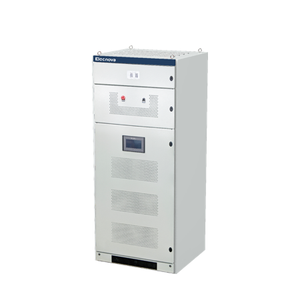
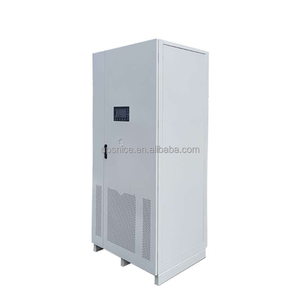
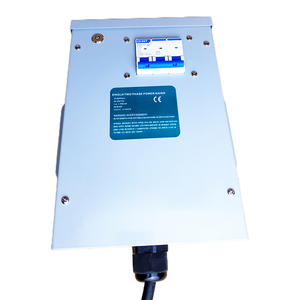
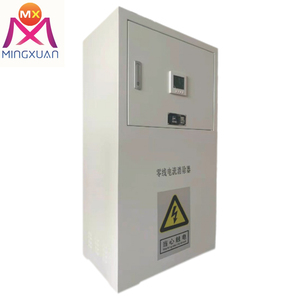
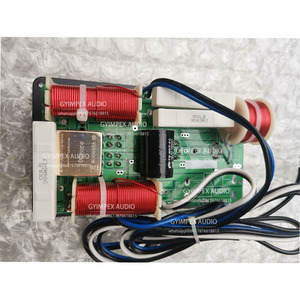
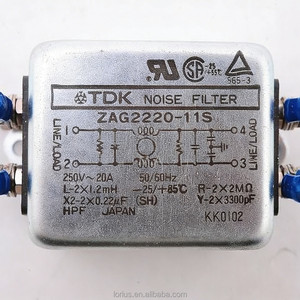
Evaluating non-linear loads, total demand distortion (TDD), resonance perils, and the physics of low-pass inductive-capacitive networks.
Engineered to present an extremely low impedance trap at dominant lower harmonic frequencies (primarily the 5th and 7th orders generated by typical 6-pulse diode bridges). By sizing inductive reactance (XL) to balance capacitive reactance (XC) precisely at fr = 1 / (2π√LC), harmful harmonic currents are safely shunted away from the upstream distribution network.
Unlike narrowband single-frequency traps, broadband passive harmonic filters treat a continuous spectrum of higher-order integer disturbances (up to the 50th order). These networks decouple line-side harmonics from load fluctuations, reducing overall current THDi from over 35% down to under 5% even under light load situations without provoking leading power factor grid tripping.
Installing standard power factor capacitors on non-linear systems often shifts the natural network resonant frequency directly onto the 5th or 7th harmonic, inducing disastrous parallel resonance flashovers. Top-tier engineering relies on detuned reactors (typically 5.67%, 7%, or 14% detuning factors) to suppress resonance points and protect downstream transformers from thermal destruction.
How the global electrification curve, renewables integration, and utility penalties are transforming magnetics procurement worldwide.
Grid operators across North America, Europe, and Asia are imposing heavy non-compliance surcharges for excessive Total Demand Distortion (TDD). Industrial facilities are moving away from piecemeal corrections toward comprehensive Point of Common Coupling (PCC) passive solutions to guarantee continuous compliance under shifting substation capacities.
The marketplace is rapidly adopting hybrid mitigation schemes. Procurement directors are combining rugged, high-kVAR passive harmonic filters (to handle large baseline 5th/7th currents economically) with smaller modular Active Harmonic Filters (AHFs) to dynamically trim residual high-frequency interharmonics and correct real-time phase imbalances at an optimal CAPEX-to-OPEX ratio.
Thermal degradation caused by eddy currents and skin effects in transformers is directly tied to harmonic content (quantified via the K-Factor). Sourcing high-efficiency passive filters directly reduces transformer core loss, yielding thousands of megawatt-hours in saved parasitic energy and doubling capital infrastructure service life in continuous process plants.
Drawing on over 25 years of specialized expertise in industrial automation, magnetics manufacturing, and CE-marked power conversion.
Operated out of our modernized manufacturing hub in Santej, Ahmedabad, our facility handles complete in-house vacuum pressure impregnation (VPI), precision core shearing, copper winding, and dry-type resin casting. Our manufacturing infrastructure reliably handles units ranging from 50VA to 5,000kVA and reactors up to 2,500A.
As a key subsidiary of Prima Automation (India) Pvt. Ltd., our engineering vision is shaped by decades of fabricating PC, PLC, and SCADA-driven control panels for explosive and hazardous environments. We do not just build standalone magnetics; we build filter assemblies that interface seamlessly with actual MCC, PCC, and switchgear footprints.
Supplying more than 45 prestigious international OEMs and conglomerates (including Jindal, Tata, UltraTech, Siemens, Adani, and Suzlon), every passive harmonic filter and line reactor ships with mandatory CE compliance documentation, audited bill of materials, and guaranteed performance guarantees under rated load.
Every passive mitigation component undergoes strict computerized functional verification before export dispatch:
Crucial technical and logistical considerations for global procurement officers, project engineers, and switchgear builders.
Passive harmonic filters are highly recommended when mitigating known, consistent harmonic loads (such as constant-speed variable frequency drives, heavy extruders, pump stations, or 6-pulse/12-pulse rectifiers). They offer virtually indestructible MTBF, zero semiconductor control software complexity, and high cost-effectiveness per kVAR. Active Harmonic Filters (AHF) are reserved for highly dynamic, unpredictable load profiles with high phase imbalance.
Yes, standard LC trap filters contain capacitors that supply reactive power continuously. If a drive operates under no-load or partial-load conditions, excessive capacitive reactive power can cause overvoltage or generator trips. Our advanced passive filter systems integrate load-disconnect contactor stages or broadband low-capacitance topologies to guarantee PF stability across 0% to 100% operation.
To receive a rapid, accurate engineering proposal, buyers should submit: system line voltage and operating frequency (50/60 Hz), total non-linear drive HP or kW load, VFD rectifier bridge topology (6, 12, or 18 pulse), targeted THDi at the drive terminals (e.g., <5% or <8%), enclosure protection class (IP20 indoor chassis up to IP54 weather-proof), and any specific site ambient temperature extremes.
Detuned series reactors (also known as blocking reactors) shift the resonant frequency of the capacitor bank below the lowest prominent system harmonic (typically tuning to 189 Hz or 210 Hz for 50 Hz grids, or 204 Hz for 60 Hz grids). This prevents high-order harmonic currents from penetrating the capacitors, keeping them within safe thermal limits and eliminating network resonance.
A drive output line/load reactor dampens steep voltage spikes (dv/dt), protecting motor windings from dielectric breakdown over moderate cable runs (typically under 30–50 meters). A sine wave filter, which incorporates a complete LC low-pass configuration, transforms PWM pulsed square-wave outputs into pure sinusoidal phase voltages, eliminating motor insulation stress on long feeder lines up to several kilometers.
All filters and inductive magnetics manufactured in our plant carry explicit CE marking and are designed strictly against IEC 60076, IEC 61558, and IEEE Standard 519-2022 harmonic control specifications. Full computerized routine factory testing reports (DVDF, insulation resistance, winding resistance, and thermal imaging) accompany every shipment container.