CEMarked CEMarked
Explore our export-certified portfolio spanning cast resin dry-type transformers, oil-immersed distribution units, harmonic mitigation systems, and hazardous-area power distribution apparatus.

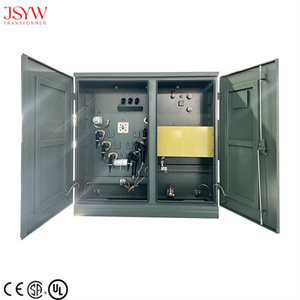
As the international electrical landscape accelerates its transition toward decentralized grids, renewable energy capture, and heavy industrial electrification, the strategic role of a reliable high voltage transformer manufacturer cannot be overstated. Modern electrical distribution and transmission infrastructure demands high voltage transformers that exhibit extraordinary thermal endurance, near-zero no-load dissipation, and exceptional mechanical withstand under short-circuit electrodynamic impulse shocks.
In high voltage (HV) and extra-high voltage (EHV) magnetics, total ownership cost (TOC) is heavily governed by the transformer core metallurgy. Modern manufacturing incorporates high-permeability, laser-scribed, Cold-Rolled Grain-Oriented (CRGO) silicon steel sheets (such as Grade 23ZH90 or 27ZH100) or rapidly emerging amorphous alloy cores. By utilizing full-miter 45-degree step-lap joints with automated robotic stacking, eddy current looping and localized flux leakage are suppressed to nominal thresholds, yielding no-load losses up to 25% to 30% below IEC 60076 and IEEE C57.12.00 baselines.
Multi-step lap joint stacking minimizes magnetic flux distortion, suppresses magnetostriction noise (< 58 dBA), and cuts stray eddy losses at elevated flux densities up to 1.75 Tesla.
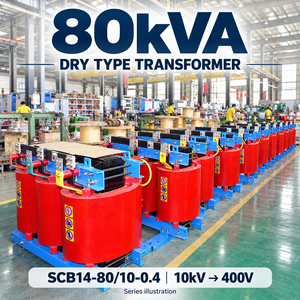
Epoxy cast resin dry-type systems feature Class F (155°C) and Class H (180°C) high-temperature insulation rated for fire retardancy (F1), environmental robustness (E2), and condensation resistance (C2).
Radial and axial coil winding compaction with high-density pressboard spacers guarantees mechanical rigidity to withstand peak dynamic short-circuit currents without structural deformation.
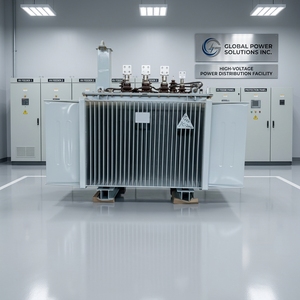
For liquid-immersed step-down and pad-mounted transformers, the thermal management paradigm is evolving from conventional inhibited mineral oils toward natural ester dielectric fluids (such as vegetable seed oil formulations). These synthetic and natural esters possess high flash points exceeding 300°C—categorizing them as K-class liquids under IEC 61039—which virtually eliminates cataclysmic fire hazards in urban underground substations, commercial complexes, and sensitive offshore platforms while delivering 100% chemical biodegradability within 28 days.
The following engineering matrix outlines the mechanical, thermal, and dielectric thresholds verified across our export-bound high voltage and medium voltage transformer apparatus:
| Parameter / Metric | Cast Resin Dry-Type (SCB Series) | Oil-Immersed Distribution (S11/S13/S20) | Pad-Mounted Compartmentalized |
|---|---|---|---|
| Rated Operational Capacity | 30 kVA up to 5,000 kVA | 50 kVA up to 10,000 kVA | 100 kVA up to 5,000 kVA |
| Primary Voltage Classes | 3.3 kV, 6.6 kV, 10 kV, 11 kV, 33 kV, 35 kV | 6 kV, 11 kV, 13.8 kV, 22 kV, 34.5 kV, 38.5 kV | 12.47 kV, 13.2 kV, 13.8 kV, 34.5 kV (Loop/Radial) |
| Basic Lightning Impulse Level (BIL) | Up to 170 kV Crest (Customized per spec) | Up to 250 kV Peak (Full Wave) | 60 kV to 150 kV Peak |
| Partial Discharge Baseline | < 5 pC (Computerized test under 1.8Um) | Virtually Zero / Gas Chromatographic Screen | < 10 pC at rated voltage |
| Cooling Configurations | AN (Air Natural) / AF (Air Forced) | ONAN / ONAF / KNAN (Natural Ester) | ONAN / KNAN compartmentalized self-cooling |
| Vector Vector Configurations | Dyn11, Ynd11, Yyn0, Dd0 (Customer selectable) | Dyn11, Yyn0, Dzn11 | Dyn11, YNyn0 |
| International Compliance | IEC 60076-11, CE, ANSI/IEEE C57.12.01 | IEC 60076, IEEE C57.12.00, ISO 9001/14001 | IEEE C57.12.26, ANSI C57.12.28, CSA C227.4 |
Navigating the global procurement lifecycle for heavy electric plant machinery requires acute insight into supply chain macro-dynamics, regulatory decarbonization mandates, and total cost of ownership algorithms. Engineering procurement directors must align their capital expenditure with the following four prominent international shifts:
Mandatory energy efficiency directives (such as EU Commission Regulation 2019/1783 Tier 2 and DOE 2016 conservation baselines) severely penalize high load and no-load losses, accelerating adoption of low-loss laser-treated silicon steel.
Utility-scale solar farms, BESS battery storage, and offshore wind turbines demand step-up transformers capable of handling severe harmonics, frequent thermal cycling, DC bias current, and bidirectional power flow.
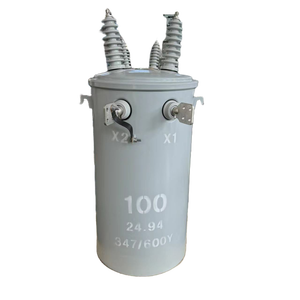
Modular installations prioritize dead-front loop-feed compartmentalized pad-mounted transformers with integrated vacuum fault interrupters, reducing on-site civil commissioning time by up to 60% compared to legacy outdoor substations.
Furthermore, international logistics volatility has led EPC contractors and procurement managers to place immense value on manufacturer vertical integration. Leading Chinese exporters that maintain fully in-house slitting lines, automated vacuum pressure impregnation (VPI), high-vacuum resin casting chambers, and localized sheet metal laser-fabrication facilities are consistently preferred. This structural independence mitigates sub-tier component bottlenecks and preserves project milestone delivery timelines.
The high voltage apparatus sector is entering an era defined by deep integration of sensors, intelligent monitoring, and hybrid semiconductors. Today’s industrial transformers are no longer isolated static inductive devices; they are real-time edge-computing data nodes embedded directly within SCADA and wide-area monitoring systems (WAMS).
Multigas dissolved gas analysis (DGA) sensors tracking hydrogen, acetylene, and methane in real time combined with embedded fiber-optic winding hot-spot sensors enable predictive asset health analytics.
Coupling traditional medium frequency magnetics with silicon carbide (SiC) power electronics provides bidirectional reactive power control, instantaneous voltage sag compensation, and integrated EV fast-charger DC bus taps.
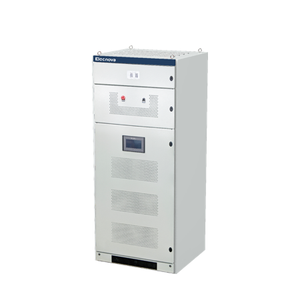
Combined Active Harmonic Filter (AHF) panel assemblies eliminate high-order non-linear VFD current distortions, mitigating transformer harmonic heating, de-rating issues, and neutral conductor overload.
By pairing precision magnetics with intelligent edge condition monitoring, operational lifespan is prolonged from the conventional 25-year estimate to over 40 years. Continuous telemetry enables dynamic loading calculations, allowing transmission operators to temporarily overload transformers during peak demand spikes safely without precipitating irreversible dielectric thermal degradation.
With an expansive manufacturing footprint exceeding 5,500 square meters, our facilities are precision-configured to support large-scale industrial output while maintaining custom bespoke engineering agility for worldwide electrical contractors and OEMs.
Equipped with dedicated automated computerized testing panels for both single-phase and three-phase units, executing open-circuit (OC), short-circuit (SC), and load-loss characterization with digital precision.
Advanced motor-generator induced overvoltage testing panels evaluate turn-to-turn, layer-to-layer, and phase-to-phase insulation integrity under high-frequency conditions up to double rated voltage.
Four-wire milli-ohm digital resistance meters and high-frequency digital LCR bridges ensure continuous phase resistance balance, validating conductor cross-sectional precision and connection crimping integrity.
Calibrated radiometric thermal imaging during continuous full-load heat-run type testing precisely pinpoints localized winding hot spots, confirming optimal radiator channel convection.
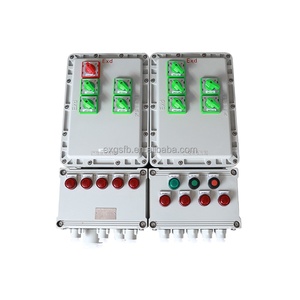
Rooted in three decades of industrial automation expertise, our engineering teams construct cast aluminum flameproof distribution assemblies (Ex d IIC T6 Gb) tested to endure explosive ambient operating conditions.
CE-marked design criteria, ISO 9001 quality frameworks, and seamless Factory Acceptance Testing (FAT) workflows with full client remote-witness camera streaming ensure transparent procurement governance.
Below are authoritative technical responses addressing critical specification, testing, logistics, and compliance inquiries encountered by electrical procurement engineers and EPC project directors: