Santej, Ahmedabad, Gujarat, India CE-Marked Transformers for Export
Serving OEMs & Projects Worldwide

CE Certified MCC Panel Board Supplier & Suppliers

Precision-Engineered Industrial Motor Control Centers, Integrated Power Transformers, and Harmonic Suppression Assemblies Built for Tier-1 Industrial Operations.

Send an Inquiry
Integrated Power Quality Catalog

Certified Motor Control Equipment & Transformer Solutions

Explore our engineering-grade portfolio manufactured to EN/IEC standards, designed for harsh duty cycles across heavy manufacturing, renewable utility feeds, and automated production cells.

25+ Years Automation Lineage
5,500 m² Integrated Production Base
5000 kVA Maximum Testing Envelope
100% Computerized Routine Testing
Engineering Authority & Infrastructure

Manufacturing Excellence Built on Automation Lineage

Originating from parent automation lineage established in 1990, our industrial infrastructure bridges the operational gap between custom magnetic fabrication and robust switchboard integration.

Comprehensive Testing Infrastructure

Our facility hosts computerized testing panels executing automated open-circuit/short-circuit checks, double voltage double frequency (DVDF) induced overvoltage validation, milliohm winding resistance, digital LCR measurements, and infrared thermographic heat-run profiling.

CE Compliance & Standards

Every motor control center panel board and transformer configuration complies fully with Low Voltage Directive (LVD) 2014/35/EU, EMC Directive 2014/30/EU, and EN/IEC 61439-1/2 switchgear standards, guaranteeing dielectric safety and creepage distances.

Specialized Hazardous Area Engineering

Backed by decades of PLC, SCADA, and hazardous-area panel construction, we engineer pressurized, flameproof, and intrinsically safe assemblies capable of operating reliably in high-ambient, corrosive, and vibration-prone environments.

Technical Specification Breakdown

MCC Panel Board Selection & Magnetic Coordination

Precision sizing guidelines to prevent inrush saturation, thermal overloading, and excessive harmonic resonance in modern industrial distribution networks.

Subsystem / Parameter Standard Configuration Advanced Industrial Option Critical Engineering Benefit
Main Busbar Rating Electrolytic Copper up to 4000A, Tin-plated Silver-plated, Sandwich Isolated up to 6300A Minimizes I²R drop and withstands high short-circuit let-through currents.
Internal Separation IEC 61439 Form 2b / Form 3b Form 4b (Fully compartmentalized units) Prevents flashover propagation and enables safe hot-swap maintenance.
Inrush VA Handling 300% rated current for 30 seconds Custom low-impedance control feed (500% inrush) Prevents line sag causing coil dropouts in large starter contactors.
Harmonic Mitigation 3% Line Reactors on VFD inputs Tuned Sine Wave Filters (500HP rating) Eliminates dV/dt motor insulation stress and reduces THD to <5%.
Enclosure Protection IP42/IP54 Mild Steel, Powder Coated (7035) IP65 316L Stainless Steel or Ex-d Flameproof Resists chemical washdown, offshore salt spray, and hazardous atmospheres.
Procurement Foresight

Future Sourcing Trends for MCC Switchboards (2025–2030)

Strategic analysis for enterprise procurement teams modernizing automated control infrastructure.

Intelligent Smart MCCs & IIoT

The global switchgear market is shifting rapidly from conventional hardwired panels to intelligent MCCs integrated with native Modbus TCP, PROFINET, or EtherNet/IP communications. Buyers increasingly demand embedded current-signature analysis, thermal busbar monitoring, and automated asset-health telematics directly connected to factory SCADA systems.

Decarbonization & High-Efficiency Magnetics

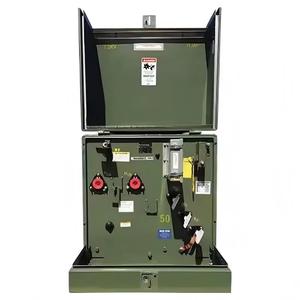
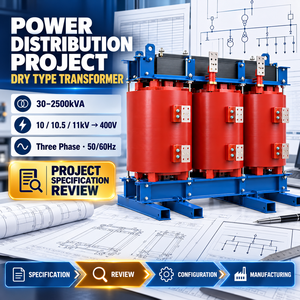
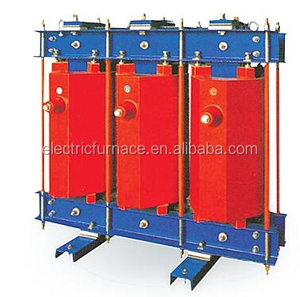
Energy mandates across the European Union and North America are enforcing stringent Tier 2 eco-design requirements for dry-type and pad-mounted transformers serving MCC switchboards. Sourcing strategies focus heavily on low-loss amorphous metal cores, grain-oriented silicon steel (CRGO), and cast resin designs that eliminate insulating fluids.

Modular Scalability & Form 4b Segregation

Minimizing unplanned downtime is critical for high-throughput continuous processing plants. Procurement teams prioritize withdrawable drawer-type MCC designs conforming to Form 4b segregation. This allows technicians to extract, inspect, or swap individual motor starter compartments without interrupting adjacent processes.

Technical Knowledge Base

Frequently Asked Procurement & Engineering Questions

Direct insights covering factory acceptance tests, voltage coordination, and regulatory compliance.

What specific CE directives apply to industrial MCC panel boards?
CE marking on an MCC panel board requires compliance with the Low Voltage Directive (LVD) 2014/35/EU (harmonized under standard EN 61439-1 / EN 61439-2 for low-voltage switchgear and controlgear assemblies) and the Electromagnetic Compatibility (EMC) Directive 2014/30/EU. Where integrated variable frequency drives or PLC components are installed, compliance with Machinery Directive 2006/42/EC safety interlocks may also be certified.
How does upstream transformer impedance affect the SCCR rating of an MCC panel?
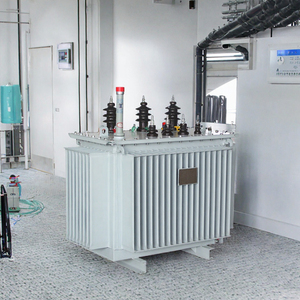
The short-circuit current rating (SCCR) of an MCC board is governed by the prospective fault current delivered by the upstream power transformer. A lower percentage impedance (%Z) yields higher prospective short-circuit current, requiring the MCC's main busbars and circuit protection devices to withstand larger mechanical forces and thermal stress during a fault. We engineer coordinated systems pairing dry-type or oil-immersed transformers with MCC busbar structures type-tested up to 50kA or 65kA rms symmetrical for 1 second.
Why is Form 4b internal segregation preferred for continuous processing plants?
Under IEC 61439-2, Form 4b provides complete physical separation between busbars, functional motor units, and individual cable termination compartments. This prevents accidental contact with live conductors during maintenance, stops arc flashes from migrating across departments, and allows individual motor starter buckets to be serviced while adjacent drives and motors remain live.
What routine quality checks are executed prior to MCC and transformer dispatch?
Before dispatch, our facility executes 100% computerized routine testing. For magnetics and transformers, this includes open-circuit and short-circuit testing, high-voltage dielectric tests, double voltage double frequency (DVDF) induced overvoltage validation, and winding resistance measurement. For MCC panels, checks include point-to-point wiring continuity verification, insulation resistance testing at 1000V DC, primary and secondary injection tests on protective relays, and operational functional testing.
When should a project specify line/load reactors versus sine wave filters?
Line reactors (3% or 5% impedance) are installed upstream of VFDs to suppress power-line transients and attenuate input current harmonics. Load reactors are positioned downstream between the drive and the motor to limit dV/dt voltage spikes on motor windings for lead lengths up to 100 meters. For motor cable runs exceeding 100 to 150 meters, a sine wave filter is recommended to completely smooth the PWM voltage output into a pure sinusoidal waveform, eliminating motor acoustic noise, bearing currents, and cable reflective voltage spikes.

Request a Custom MCC Panel Board & Power Architecture Quote

Connect directly with our senior application engineers in Santej, Ahmedabad. Share your single-line diagram (SLD), motor schedule, or transformer specifications for a fast technical proposal.

Send an Inquiry