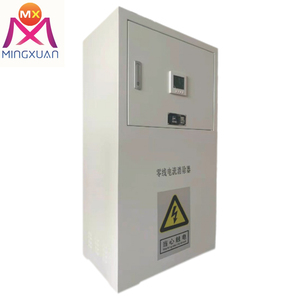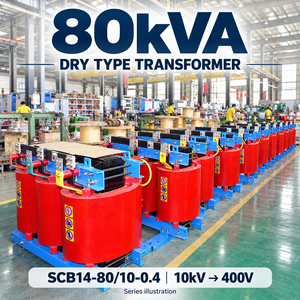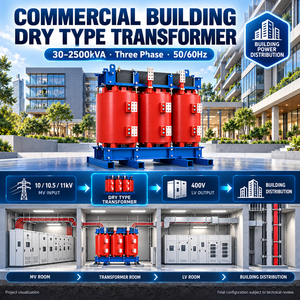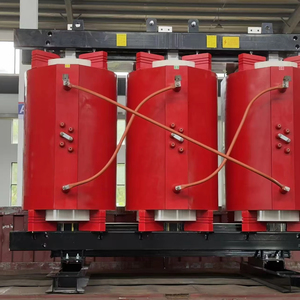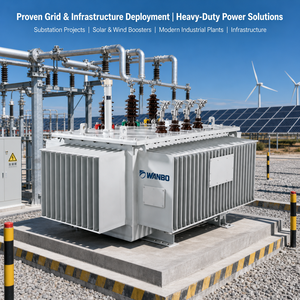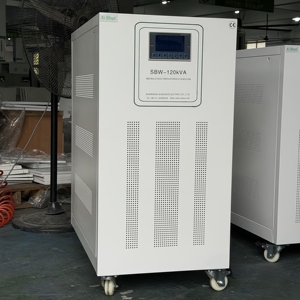
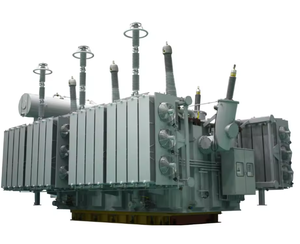
Precision-manufactured power transformers, active mitigation units, dry-type reactors, and servo stabilizers tailored for extreme environmental and high-altitude Andean operating conditions.
Navigating non-linear load proliferation across the National Electrical System (SEN), severe altitude derating in the Andes, and mandatory regulatory standards enforced by SEC and CEN.
The electrical topography of Chile is uniquely demanding. Governed centrally by the Coordinador Eléctrico Nacional (CEN) and supervised by the Superintendencia de Electricidad y Combustibles (SEC), the Chilean National Electric System (SEN - Sistema Eléctrico Nacional) connects massive renewable generation fields in the northern Atacama Desert to heavy industrial extraction centers and urban population clusters in Santiago and Concepción. In recent years, the aggressive expansion of heavy non-linear loads—specifically multi-megawatt Variable Frequency Drives (VFDs) running semi-autogenous grinding (SAG) mills, ball mills, long-distance overland conveyors, high-capacity pumps, and smelting rectifiers—has injected unprecedented levels of harmonic pollution into the grid.
Industrial facility operators, electrical engineers, and EPC contractors in Chile face severe financial and operational penalties if Total Harmonic Distortion (both THDi for current and THDv for voltage) surpasses the strict boundaries established under the Norma Técnica de Seguridad y Calidad de Servicio (NTSyCS) and international benchmarks such as IEEE 519-2022 and IEC 61000-3-6. Unchecked harmonic currents provoke resonance with local power factor correction capacitor banks, cause catastrophic nuisance tripping of protective relays, inflate copper losses via skin effect and eddy currents, and accelerate thermal degradation of distribution transformers.
Under CEN monitoring criteria, harmonic distortion compliance is evaluated strictly at the Point of Common Coupling (PCC). Depending on the short-circuit ratio (Isc/IL) of the plant connection, maximum permissible total demand distortion (TDD) can be as low as 5.0% for current and 3.0% for individual voltage harmonic orders. Supplying harmonic mitigation equipment to Chile requires verifiable IEEE 519 computer simulations and comprehensive computerized factory acceptance testing (FAT).
Operating in high-altitude copper and lithium facilities (often exceeding 3,000 to 4,500 meters above sea level) severely reduces the dielectric breakdown voltage of air and diminishes natural convection cooling. Harmonic filters engineered for projects in Calama, Antofagasta, or Tarapacá require custom coil pitch design, increased creepage and clearance distances, oversized iron-core reactors up to 2500A, and thermal de-rating margins to avoid localized hot-spot insulation failure.
The high concentration of central solar inverters and battery energy storage systems (BESS) along the northern corridor introduces high-frequency switching harmonics (often between the 23rd and 50th orders) alongside low-order harmonics caused by transformer core saturation. Custom active power filters and low-loss tuned reactor banks are vital to maintain low THDv on medium-voltage lines, preventing inverter desynchronization and islanding errors.
The forestry, cellulose, and processing plants in the Biobío and Maule regions operate non-stop continuous processes utilizing heavy 6-pulse and 12-pulse converter drives. Here, fifth, seventh, eleventh, and thirteenth harmonic currents dominate the electrical spectrum. Utilizing high-durability passive tuned filter branches combined with line/load reactors protects sensitive process automation, PLC networks, and drives against costly brownouts and plant halts.
Selecting between Passive Harmonic Filters (PHF), Active Harmonic Filters (AHF/APF), and Detuned Reactor Banks requires balancing capital expenditure, dynamic compensation speed, and footprint constraints.
| Mitigation Technology | Operating Topology | Harmonic Spectrum Addressed | Response Dynamic | Resonance Risk | Suitability in Chilean Mining |
|---|---|---|---|---|---|
| Passive Tuned Filter (LC Branch) | Series inductor & capacitor tuned to specific frequency (e.g., 5th: 250Hz, 7th: 350Hz) | Single or dual fixed orders; provides reactive power (kVAR) | Passive (Immediate, steady-state) | Possible with grid shift | Ideal for steady high-power motors |
| Active Power Filter (AHF / APF) | IGBT Inverter injecting 180° out-of-phase anti-harmonic currents (3-level topology) | 2nd to 50th order simultaneously; neutral wire current cancellation | Ultra-rapid (< 5 ms dynamic loop) | Zero Resonance Risk | Exceptional for dynamic VFD cycles |
| Detuned Reactor Bank (p = 7% or 14%) | Series iron-core reactor de-tuning capacitor resonance point below 5th harmonic | Prevents harmonic amplification; does not actively filter out harmonics | Standard switched stages | Completely Protected | Standard for basic power factor control |
| Sine Wave & dv/dt Output Filters | Low-pass LC configuration installed directly between inverter and motor | High frequency carrier ripples; limits dv/dt voltage spikes below 500V/μs | Direct load inline filtering | Non-resonant | Mandatory for long borehole / mine cables |
In modern Chilean procurement specifications, an increasingly favored approach is Hybrid Harmonic Compensation. By coupling a base-level detuned or passive filter bank for bulk fundamental reactive power compensation (displacing displacement power factor penalty costs under Chilean SEC regulations) with a high-speed Active Power Filter (such as our intelligent modular APF units), plants achieve pristine IEEE 519 compliance at optimized operational expenditures.
Established with foundational roots dating back to 1990 within parent automation group Prima Automation, our dedicated 5,500 m² state-of-the-art facility in Santej, Ahmedabad manufactures precision CE-marked transformers, line and load reactors up to 2500A, and specialized filtering equipment exported worldwide.
Our engineered magnetic components and active filter solutions are deployed alongside equipment built by leading industrial corporations worldwide:
Strategic market shifts impacting electrical system designers, power quality procurement engineers, and mining directors across South America.
Chile's landmark initiatives in the Magallanes and Antofagasta regions for green hydrogen production require gigawatt-scale rectifier systems. Modern electrolyzer stacks generate severe low-order harmonic currents. Specialized multipulse phase-shifting transformers paired with dynamic active harmonic filters represent the primary technical defense against grid pollution.
The Chilean Superintendency of Electricity and Fuels (SEC) has intensified enforcement audits. Industrial consumers failing to maintain a displacement power factor above 0.95 or exceeding harmonic limits at the delivery substation face substantial monthly surcharges and the potential refusal of grid connection approvals by CEN.
Traditional bulky iron-core passive filter banks are increasingly complemented or superseded by modular rack-mounted 3-Level Neutral Point Clamped (NPC) Active Power Filters. Offering lower internal switching losses, smaller switchboard footprints, and selective harmonic elimination up to the 50th order, modular AHF architecture ensures zero plant downtime via hot-swappable power modules.
Authoritative answers addressing engineering calculations, altitude de-rating, customs logistics, and CEN compliance verification.
Atmospheric pressure decreases significantly at high altitudes (such as mining operations in Calama or El Teniente), reducing the cooling efficiency of air and weakening dielectric breakdown strength. In accordance with IEC 60076-11 and IEEE C57 standards, for dry-type reactors, transformers, and active filters installed above 1,000 meters above sea level (MASL), thermal capacity must be de-rated by approximately 0.4% to 0.5% for every 100 meters above 1,000m, unless ambient temperature averages remain substantially lower. Furthermore, electrical clearance and creepage distances across busbars and terminal bushings are expanded by up to 30–40% to prevent corona discharge and flashovers under rare air conditions.
To accurately engineer an active harmonic filter system, our engineering team requires: (1) System nominal voltage and frequency (typically 380V, 400V, or 480V at 50Hz); (2) Transformer ratings (kVA capacity, secondary impedance %Z); (3) A representative single-line diagram (SLD); (4) A power quality log (PQ analyzer report) capturing minimum 7-day operational cycles including THDi (Total Current Distortion), THDv (Total Voltage Distortion), dominant harmonic orders (3rd, 5th, 7th, 11th, 13th), and true displacement power factor; and (5) Ambient site parameters including altitude (MASL) and maximum summer enclosure temperatures.
While several South American countries (such as Brazil, Colombia, and Peru in various industrial sectors) operate at 60 Hz, Chile’s national grid (SEN) operates strictly at 50 Hz. In a 50 Hz network, harmonic frequencies occur at different intervals: the critical 5th harmonic resonates at 250 Hz (versus 300 Hz in a 60 Hz grid), and the 7th harmonic resonates at 350 Hz (versus 420 Hz). Specifying an incorrectly tuned passive reactor bank manufactured for 60 Hz on a 50 Hz Chilean system will lead directly to resonant tuning displacement, catastrophic over-current amplification, and instantaneous capacitor destruction.
Yes. Every transformer, line/load reactor, and harmonic filter manufactured in our 5,500 m² facility leaves with full Factory Acceptance Test (FAT) dossiers. Our in-house testing floor includes computerized routine test benches conducting Open-Circuit/Short-Circuit checks, Double Voltage Double Frequency (DVDF) induced overvoltage testing, insulation resistance testing (Megger), high-precision milli-ohm winding resistance, and digital LCR inductance analysis. All components are built to strict ISO 9001 quality workflows and carry CE marking for international industrial buyers.
A detuned reactor (typically with a detuning factor p = 7% or 189 Hz for a 50Hz grid) is configured in series with power factor capacitors to intentionally shift the system series resonance frequency well below the lowest harmonic frequency present (the 5th harmonic at 250 Hz). Its primary goal is to prevent capacitor explosion and suppress harmonic amplification, without absorbing significant harmonic currents. In contrast, a tuned harmonic filter is engineered with precise LC parameters matching the exact resonant frequency of a harmonic order (e.g., 245 Hz for a 5th tuned branch), serving as a deliberate ultra-low impedance shunt path that draws the harmonic current out of the network.
Standard engineered line/load reactors and active filter modules have a factory fabrication timeline of 3 to 5 weeks, while heavy custom cast resin or oil-immersed power transformers require 6 to 10 weeks depending on MVA rating. Oceanic transit from international manufacturing hubs to main Chilean maritime terminals—specifically Puerto de San Antonio, Valparaíso, and the northern mining hub of Puerto de Antofagasta—typically averages 30 to 40 days on scheduled freight routes. All seaworthy wooden crates are heat-treated and comply strictly with ISPM-15 phytosanitary customs regulations enforced by Chile’s Servicio Agrícola y Ganadero (SAG).
Single-phase non-linear equipment (such as LED driver ballasts, data center switch-mode power supplies, and variable inverter HVAC equipment) generate intense third-order (150 Hz) and triplen harmonics (9th, 15th, etc.). Unlike fundamental balanced currents that cancel out in the neutral wire, triplen harmonics are zero-sequence currents that summate directly in the neutral conductor, frequently causing neutral currents to reach 150% to 200% of phase currents. Our 4-wire active harmonic filters (such as the Neutral Current Eliminator series) dynamically measure and inject reverse cancelling currents into the neutral conductor, eliminating fire hazards and avoiding distribution transformer thermal burnout.
In deep underground mines and remote brine extraction wells, motor cables connecting variable speed drives to submersible motors often span distances between 200 and 1,500 meters. The steep voltage rise rates (dv/dt) inherent to high-frequency PWM switching cause transmission line reflected wave phenomena, doubling the peak voltage seen at the motor terminals (up to 1,600V or higher) and triggering premature winding insulation breakdown and bearing pitting. A sine wave filter converts the pulsed PWM square voltage wave into a smooth sinusoidal waveform phase-to-phase and phase-to-ground, eliminating voltage reflection stress and extending pump motor service lifespans indefinitely.
Connect directly with our senior power quality engineering consultants. Receive personalized IEEE 519 simulation reviews, custom harmonic mitigation sizing, and factory-direct quotations for industrial projects throughout Chile.