 CEMarked CEMarked
Engineered for harsh operating duties, high fault current thresholds, and stringent electrical safety demands across Greater Toronto and Ontario substations.
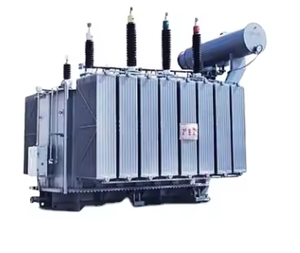
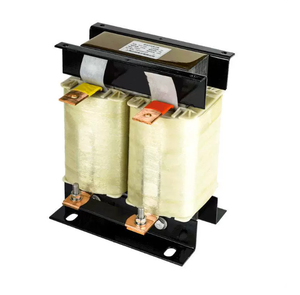
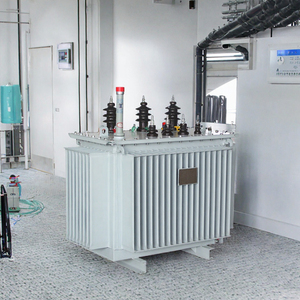
The Greater Toronto electrical network is undergoing the most rapid modernization in its operational history. Driven by the City of Toronto’s TransformTO Net Zero strategy, the electrification of the Metrolinx regional rail network, and exponential expansion across multi-residential high-rise towers in Downtown, Midtown, and North York, electrical engineers face rigorous challenges regarding measurement accuracy, dynamic range, and fault-ride-through endurance.
Current transformers (CTs) serve as the vital sensory interface between primary high-voltage transmission or medium-voltage secondary networks and sensitive microprocessor-based protection relays, digital revenue meters, and SCADA automation units. In urban distribution nodes governed by Toronto Hydro and Hydro One, instrument transformers must operate without thermal drift across extreme Ontario seasonal gradients, where ambient conditions range from -35°C during severe winter arctic vortexes to sustained +38°C in high-humidity urban heat islands.
Whether specifying ring-core bushing CTs for 13.8kV/27.6kV switchgear retrofits or split-core revenue CTs for tenant sub-metering installations conforming to Measurement Canada standards, selecting a supplier with proven internal testing, robust automated winding, and full CE/CSA verification is imperative to project safety and lifetime ROI.
For industrial plants in Mississauga, Brampton, and Vaughan, inductive motor starting currents and variable frequency drive (VFD) harmonics pose non-linear current distortion risks. Selecting the appropriate knee-point voltage (Vk) ensures current transformers do not saturate during asymmetric fault currents containing large DC components:
From dense underground vault retrofits to sprawling logistics parks in Halton and Peel regions, our magnetics provide dependable galvanic isolation and signal translation.
Condo developments along the Gardiner Expressway and Yonge Street require high-density, multi-channel sub-metering current transformers. Miniature split-core CTs allow retrofit integration without shutting down main busbars.
Megawatt-level electric bus depots in Scarborough and private logistics fleet chargers require DC-tolerant CTs and harmonic DC reactors capable of handling the severe switching transients of high-power rectifiers.
Electrified commuter rail networks utilize heavy-duty current and power transformers for trackside catenary monitoring. Protection-class CTs (5P20) ensure instantaneous differential relay tripping during ground faults.
Markham and Toronto downtown carrier hotels house sensitive IT infrastructure demanding zero-downtime UPS systems, 12-pulse rectifiers, and Class 0.2S current transformers for granular rack-level power monitoring.
Direct comparative reference aligned with IEEE C57.13, CSA C61869, and Canadian Electrical Code (CEC) parameters.
| CT Category | Typical Ratio Range | Accuracy Class | Max Insulation Rating | Toronto Operational Context |
|---|---|---|---|---|
| Solid-Core Ring (Donut) CT | 50:5A to 5000:5A | Class 0.2S, 0.5 Revenue | 0.72kV to 36kV BIL | New switchgear assemblies, unit substations, OEM switchboards across Ontario commercial builds. |
| Split-Core Retrofit CT | 100:5A to 3000:5A | Class 0.5, 1.0 Sub-metering | 600V Primary Cable | Brownfield energy audits, tenant sub-metering in historic Toronto downtown towers without service de-energization. |
| Protection Class Bushing CT (BCT) | 200:5A to 4000:5A | 10P10 to 5P20 High Burden | Compatible with MV/HV Bushings | Differential feeder protection, utility interconnection with Toronto Hydro and Hydro One sub-stations. |
| Harmonic Compensated Current Sensor | 50:1A to 2000:1A | Class 0.5 across 1st - 50th harmonic | 1kV Reinforced | VFD input filter monitoring, active harmonic filter (AHF) sensing loops in steel/automotive manufacturing. |
| Auxiliary Summation CT | 5+5+5:5A / Custom | Class 0.5 | 600V Isolated | Paralleling multiple incoming feeders for centralized energy billing in dual-service corporate complexes. |
The Ontario Independent Electricity System Operator (IESO) incentivizes commercial building operators to implement automated peak shifting via Global Adjustment (GA) mitigation. High-precision Current Transformers with sub-second response times are crucial for feeding dynamic power data into Building Automation Systems (BAS), alerting operators prior to the occurrence of Ontario's 5 top demand coincident peaks.
Unlike standard temperate climate transformers, current transformers installed in outdoor switchyards across Vaughan, Markham, and Richmond Hill face ambient freeze down to -40°C. Standard casting compounds crack under thermal contraction, inviting moisture ingress and partial discharge breakdown.
In Ontario, the Electrical Safety Authority (ESA) strictly mandates that all industrial electrical apparatus connected to the supply must possess recognized certifications (such as CSA, cUL, or SPE-1000 Special Inspection). Sourcing products pre-engineered with flame-retardant UL 94-V0 enclosures and certified dielectric clearances prevents costly field inspection holds.
Rooted in control panel automation since 1990 and dedicated transformer manufacturing since 2006, our 5,500 m² advanced facility builds solutions engineered from the panel builder's perspective.
Our parent organization has built complex PLC, PC, and SCADA-based distribution systems and hazardous-area flameproof control systems for over three decades. This extensive automation heritage fundamentally influences our transformer and reactor design philosophy:
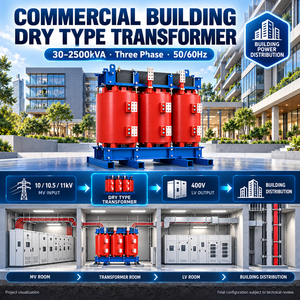
We recognize that in a compact Toronto electrical room or prefabricated e-house, clearance millimeters matter, inrush currents can trip sensitive breakers, and terminal layouts must allow rapid, reliable torque verification. Every current transformer, line reactor, and dry-type unit is engineered with generous thermal safety margins, premium non-aging electrical grade silicon steel, and ultra-durable terminal blocks.
Exporting to world-class OEMs across North America, Europe, and Asia, our equipment carries full CE marking and adheres strictly to international electro-magnetic standards.
Computerized single and 3-phase test stations eliminating human error during secondary ratio and phase error logging.
Double Voltage Double Frequency testing induces high dielectric stress to prove inter-turn insulation resilience.
Direct infrared thermal analysis under full continuous secondary burden verifying low heat dissipation.
High-precision 25V AC/DC digital resistance bridges verifying core and winding homogeneity.
Clear, technically rigorous answers addressing local electrical codes, shipping turnaround, testing protocols, and installation practices.
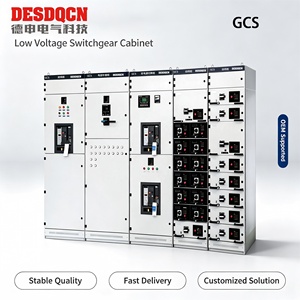
Whether you are designing a high-efficiency multi-unit commercial distribution room, commissioning high-power EV charging banks, or retrofitting switchgear assemblies across Ontario, our engineering team provides direct ratio calculations, thermal modeling, and custom pricing.