 CEMarked CEMarked
In the highly automated manufacturing facilities of Cook County, DuPage County, and the greater Chicago metropolitan area, electrical supply continuity is paramount. Modern computer numerical control (CNC) five-axis centers, high-speed automated packaging lines, automated logistics sorting centers near O'Hare, and multi-megawatt data center installations face severe operational interruptions from sub-second voltage variations. As a leading manufacturer and exporter of solid-state static voltage regulators, power transformers, and custom magnetics, we deliver sub-cycle response times, zero-maintenance silicon switching, and exceptional thermal margins engineered for Northern Illinois industrial grid realities.
Explore our export-certified portfolio of voltage stabilizers, pad-mounted transformers, line smoothing reactors, and data-center power distribution units engineered to IEEE, UL, and CE global parameters.
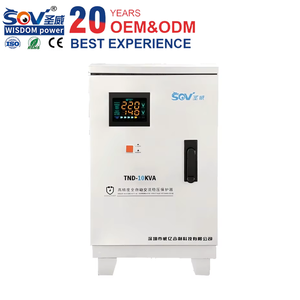
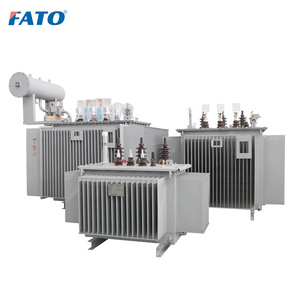
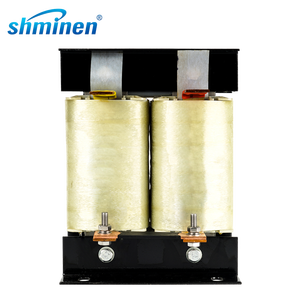
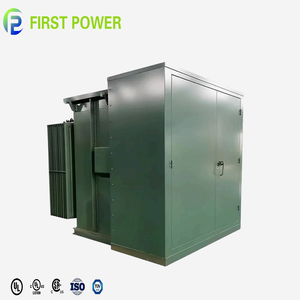
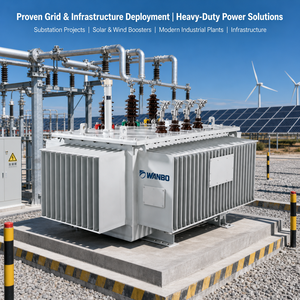
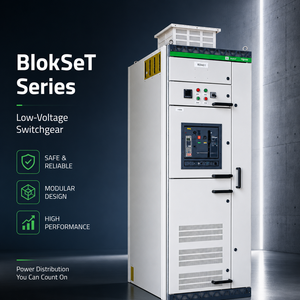
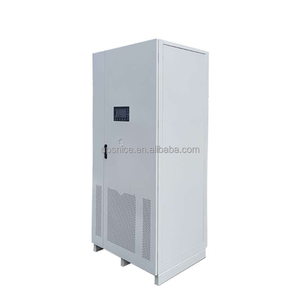
Procurement directors and plant electrical supervisors across Illinois frequently evaluate whether to deploy traditional servo-motor mechanical stabilizers or modern silicon-controlled static voltage regulators. The structural physics and maintenance lifecycles reveal distinct advantages for high-uptime manufacturing.
| Performance Characteristic | Static Voltage Regulator (Solid-State SCR / Thyristor) | Servo-Driven Mechanical Stabilizer | Magnetic Induction Regulator |
|---|---|---|---|
| Correction Response Time | < 4 milliseconds to 20 milliseconds (Sub-cycle) | 1.0 to 3.5 seconds (Mechanical lag) | 100 to 500 milliseconds |
| Moving Parts & Mechanical Wear | Zero (Solid-state electronic matrix) | High (Carbon brushes, servo drive belts, gears) | Low to Medium (Rotor gear assemblies) |
| Voltage Output Precision | ±1.0% to ±1.5% True RMS | ±1.5% to ±3.0% | ±2.0% to ±4.0% |
| Harmonic Distortion Injected | Zero (Pure sinusoidal tap-switching at zero-cross) | Negligible | Moderate (Magnetic core saturation) |
| Efficiency at 100% Load | > 98.8% to 99.4% | 95.0% to 97.0% | 94.0% to 96.0% |
| Maintenance Routine | Maintenance-free (Filter inspection only) | Bi-annual carbon brush replacement & lubrication | Annual dielectric oil testing & lubrication |
| Tolerance to Chicagoland Winter (-25°C) | Instant cold-start, wide thermal range | Mechanical lubricants freeze or increase drag | Oil viscosity changes impact regulation time |
Conventional electromechanical regulators utilize motorized carbon brushes that mechanically drag across transformer winding turns. When a severe sag strikes—such as when a massive stamping press or electric arc furnace cycles along the Gary-Chicago industrial corridor—a mechanical brush requires upwards of 2,000 milliseconds to travel across the commutator. During those critical seconds, downstream microprocessor-controlled variable frequency drives (VFDs) and sensitive automated assembly sensors trip out on under-voltage faults, precipitating costly production stoppages.
In contrast, our Static Voltage Regulators (SVR) integrate anti-parallel silicon-controlled rectifiers (SCRs) combined with a high-speed DSP (Digital Signal Processor) controller. The architecture monitors the incoming utility waveform thousands of times per cycle. When a transient or sag is detected, the controller triggers SCR gates precisely at voltage zero-crossing points, adding or subtracting discrete secondary buck/boost windings in under four milliseconds (< 1/4 of a 60 Hz electrical cycle). The downstream equipment experiences an uninterrupted, stabilized sinusoidal waveform without mechanical arcs, brush sparks, or audible screeching.
Commonwealth Edison (ComEd), which supplies electric service across Northern Illinois, strictly regulates total harmonic distortion (THD) and enforces power factor penalties under tariff rate structures. Many solid-state solutions historically relied on pulse-width modulated (PWM) switching that injected severe high-frequency switching hash into sensitive lines. Our solid-state buck-boost static regulators switch exclusively across transformer discrete taps at natural current zeros, preventing harmonic contamination and preserving IEEE 519 compliance across factory networks without necessitating auxiliary active filtering.
Our static voltage regulators and heavy-duty magnetic solutions are deployed across distinct industrial ecosystems in Northern Illinois, designed specifically for localized loading profiles and utility dynamics.
The largest data center cluster in the Midwest demands Tier III and IV reliability. Our static voltage regulators condition line fluctuations prior to static transfer switches (STS) and UPS battery systems, protecting hyper-scale cloud server racks from continuous grid voltage micro-sags without cycling electrochemical battery strings.
In high-tonnage metal fabrication corridors from Bedford Park to Rockford, giant hydraulic presses and spot welders induce catastrophic momentary voltage drops. Our static voltage regulators buffer precision CNC tooling, laser cutters, and multi-axis robotics, preventing tool chatter and scrapped components.
Chicagoland serves as America's food manufacturing nerve center. Ammonia refrigeration compressors and automated packaging machines experience cyclical current surges. Static regulation ensures sensitive PLC automated sorting lines remain active during seasonal peak utility brownouts.
Distribution mega-centers along the I-80 and I-55 intermodal logistics corridors rely on multi-tier conveyors, optical barcode readers, and automated guided vehicles (AGVs). Solid-state voltage stabilization guarantees uninterrupted fulfillment throughput during high utility congestion.
The operational landscape for electrical power engineering throughout Greater Chicago is undergoing the most rapid transformation in half a century. Understanding these macro shifts enables proactive facility infrastructure hardening.
Under Illinois CEJA mandates, the retirement of fossil-fuel peaker generation coupled with rapid wind integration from downstate Illinois and regional solar feeds has significantly decreased grid rotational inertia. As a consequence, grid frequency and local voltage profiles along suburban 12kV and 34.5kV distribution substations fluctuate with higher frequency and steeper dV/dt slew rates, necessitating solid-state voltage compensation at the industrial service entrance.
Chicagoland intermodal shipping terminals are aggressively deploying Class 8 electric drayage trucks and megawatt-scale DC fast chargers. These multi-megawatt pulsed loads generate severe transient voltage notches and localized sag events that propagate to neighboring manufacturing facilities, making isolated regulation essential for adjacent CNC and precision manufacturing shops.
Chicago's notorious winter sub-zero temperatures present catastrophic failure modes for mechanical moving stabilizers. When freezing air enters unheated manufacturing bays or exterior electrical enclosures, mechanical lubricants seize and servo motor gear trains freeze. Our static solid-state units operate natively down to -30°C without fluid viscosity concerns or mechanical wear.
Exporting high-capacity power regulation systems to the discerning North American industrial market requires verifiable manufacturing pedigree, traceable metallurgy, and exhaustive automated test validation.
Drawing on an established manufacturing lineage dating back to 1990 in industrial automation, PLC control panels, SCADA integrations, and specialized hazardous-location switchboards, our manufacturing operations span more than 5,500 m² of specialized production space. Unlike assemblers who source third-party magnetic components, we design, wind, assemble, varnish, and test transformers and static voltage regulators completely in-house.
Our deep heritage as control-panel engineers fundamentally influences how our static voltage regulators are built. We know the challenges faced by installation contractors in Illinois: tight conduit bending spaces, severe inrush currents from cold-starting induction motors, and the absolute requirement for clean, intuitive terminal layouts. Every cabinet is constructed with generous cabling gutters, copper busbar plating, and industrial-grade disconnect switches.
Before any static voltage stabilizer or power transformer leaves our manufacturing floor bound for export to the Chicago market, it must pass a battery of automated routine and type tests verified by digital instrumentation:
In-depth technical answers addressing regulatory compliance, voltage standards, shipping logistics, and commissioning requirements for industrial facilities across the Midwest.
Our static voltage regulators are custom-engineered for North American nominal distributions. For the Chicago and Northern Illinois markets served by ComEd, we provide 480V 3-phase 3-wire (Delta), 480Y/277V 3-phase 4-wire (Wye), 208Y/120V, and 240V/120V corner-grounded or high-leg systems. Both 60 Hz domestic frequencies and 50/60 Hz universal dual-frequency ratings are fully supported for plants operating imported European or Asian machinery.
Our export units are constructed in alignment with NFPA 70 (NEC) standards and built utilizing components carrying UL (Underwriters Laboratories) recognitions (such as UL 508A industrial control panels, UL 1446 insulation systems, and UL 94-V0 flame-retardant barriers). Full CE marking and comprehensive documentation, including single-line schematics, connection wiring diagrams, and certified factory test reports, accompany every shipment to facilitate smooth local municipal electrical inspections.
Modern CNC machine tools and computerized robotic arms typically trip when line voltage drops below 85% of nominal for more than 16 to 20 milliseconds (one electrical cycle). Conventional servo-motor stabilizers require 1,000 to 3,000 milliseconds, failing completely to prevent nuisance tripping. Our solid-state SCR static regulators execute complete buck-boost regulation in under 4 milliseconds (a quarter cycle), fully neutralizing the sag before machine tool control relays or axis servo drives detect an error state.
All export units are sealed in multi-layer vacuum moisture barriers containing industrial desiccant packets, wrapped in anti-static cushioning, and bolted inside heavy-duty, heat-treated fumigated wooden crates complying with ISPM-15 international export regulations. Shipments to Chicago arrive seamlessly via direct intermodal rail container from West Coast ports (Long Beach/Seattle) or via East Coast/St. Lawrence Seaway container distribution directly to Chicago intermodal rail hubs (BNSF/UP yards).
We supply a variety of enclosure ratings based on site criteria: standard ventilated NEMA 1 (IP20/IP31) for clean electrical rooms; heavy-duty NEMA 12 / IP54 dust-tight enclosures with forced-air cooling and washable air filters for metalworking, foundry, and plastic extrusion environments; and exterior weatherproof NEMA 3R / IP55 enclosures with anti-condensation space heaters for outdoor transformer-adjacent pad mountings.
Yes. Our static regulators are engineered with an overload tolerance profile specifically calibrated for high motor-inrush currents: 150% rated load for 60 seconds, 200% for 10 seconds, and 300% for 1 second. The heavy-duty SCR switching matrix and conservatively rated copper buck-boost transformers prevent saturation during direct-on-line (DOL) motor starts.
Whether you require a custom 480V 500kVA solid-state static voltage regulator for an Elk Grove Village facility, a high-efficiency pad-mounted transformer, or a complete harmonic filtering package, our technical specialists provide rapid turn-around engineering calculations, CAD dimensional drawings, and competitive export quotations.