Santej, Ahmedabad, Gujarat, IndiaCE-Marked Transformers for Export
Serving OEMs & Projects Worldwide
CEMarked
Industrial Power Quality & Harmonics Solutions
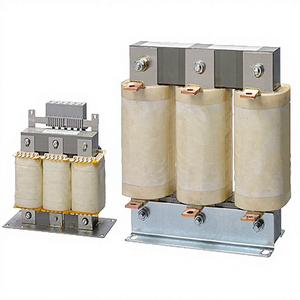
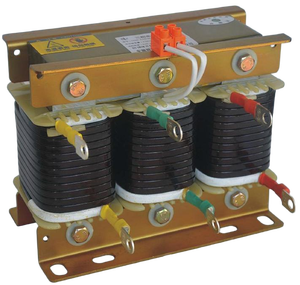
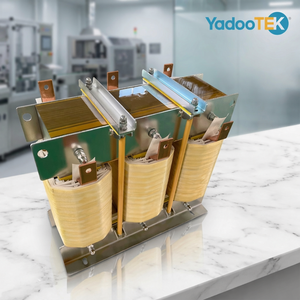
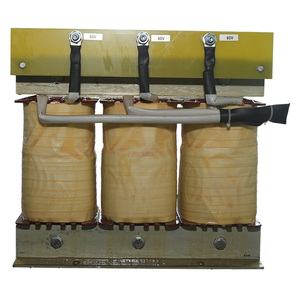
Top China Output Line Reactor Factories & Exporter for the United Arab Emirates Market
Engineered high-frequency di/dt attenuation, motor insulation surge shielding, and CE/IEC-grade magnetic reactors customized for GCC severe climatic and high-ambient operational conditions.
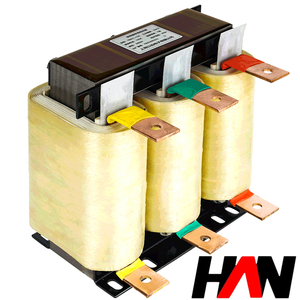
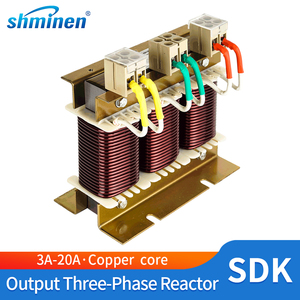
Industrial Line Reactors & Specialized Inductive Solutions
Precision-wound copper/aluminum output line reactors, input harmonic chokes, and heavy-duty reactor systems optimized for 380V–480V 50/60Hz drives.
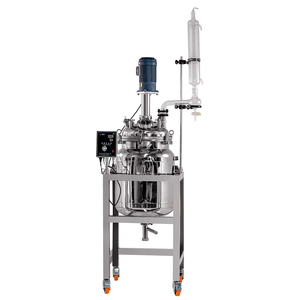
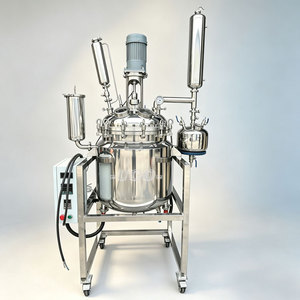
Sales 1L-500L Single & Double Layer Jacketed Stainless Steel Reactor
Precision thermostatic and chemical mixing vessels built for oilfield chemical blending and extreme pharmaceutical purity requirements.
Engineering Fundamentals of Output Line Reactors for GCC Environments
Modern Variable Frequency Drives (VFDs) utilize Insulated Gate Bipolar Transistors (IGBTs) to modulate switching frequencies between 2 kHz and 16 kHz. While this pulse width modulation delivers exceptional dynamic torque control and mechanical energy efficiency, the exceptionally rapid voltage rise times (dv/dt ratios routinely exceeding 5,000 to 10,000 V/µs) create destructive electrical wave phenomena inside the connected motor leads. In industrial centers across the United Arab Emirates—such as Abu Dhabi's Khalifa Industrial Zone (KIZAD), Dubai Industrial City, and Sharjah’s Hamriyah Free Zone—long electrical cable runs between climate-controlled Motor Control Centers (MCC) and remote machinery are standard layout practice.
When the cable length between a PWM drive inverter and a motor exceeds 30 to 50 meters, transmission line impedance mismatches trigger reflected wave phenomena. The high-frequency wave reflects back from the high-impedance motor terminals, constructively interfering with incoming pulses to create instantaneous voltage crests exceeding two times the DC bus rating (1,400V to 1,600V peak on standard 400V grids). An output line reactor installed directly adjacent to the variable speed drive adds calibrated series inductance (typically rated at 1%, 2%, or 3% impedance drop), drastically slowing the voltage rate-of-rise (dv/dt), dampening line ringing, suppressing bearing discharge currents (fluting failure), and lowering physical operational temperatures across induction motors.
dv/dt Surge Mitigation
Controls pulse edge transition rates, decreasing destructive peak dielectric stresses imposed across the first turns of motor phase windings.
Thermal & Acoustic Attenuation
Smooths PWM output current waveforms toward pure sinusoids, mitigating eddy-current thermal accumulation and reducing low-frequency audible motor whine.
Drive IGBT Shielding
Absorbs parasitic capacitance charging currents inherent in long cable architectures, preventing drive nuisance overcurrent tripping under startup cycles.
Engineering Parameter Comparison: 1%, 2%, and 3% Output Impedance Chokes
Selecting the precise reactance percentage rating is critical to balancing motor terminal protection with available shaft torque retention:
Impedance Rating
Typical Cable Distance
Voltage Drop at Rated Load
dv/dt Reduction Ratio
Ideal GCC Applications
1.0% Impedance
Up to 45 meters
~1.0% to 1.5% Fundamental V
35% - 45% dv/dt drop
Short-run HVAC air handling units, localized conveyor drives
2.0% Impedance
45 to 100 meters
~2.0% to 2.5% Fundamental V
50% - 65% dv/dt drop
District cooling booster pumps, municipal water processing plants
Localized UAE Application Scenarios for Output Line Reactors
The industrial operating environment of the United Arab Emirates combines ambient summer temperatures reaching 52°C, relative humidity hitting 90% along the coastlines of Dubai, Abu Dhabi, and Fujairah, and fine airborne saline and silicon particulate dust. Standard commercial line reactors designed for temperate zones experience catastrophic thermal runaway and insulation degradation under such arduous duty. Our industrial output line reactors are specifically custom-engineered to withstand these exact regional environmental challenges.
District Cooling Systems
Chilled water networks operated across Dubai (Empower, Tabreed) run multi-megawatt centrifugal chillers 24/7. Output reactors eliminate harmonic motor heating, maximizing chiller efficiency.
Oil & Gas Extraction (ADNOC)
Downhole Electric Submersible Pumps (ESPs) deployed in desert extraction sites involve motor leads of 500 to 1,500 meters. High-inductance chokes prevent continuous transmission-line voltage doublings.
Desalination & Reverse Osmosis
Large high-pressure RO pump skids operate in saline, corrosive atmospheric environments. Vacuum impregnated Class H epoxy resins shield magnetic cores from aggressive corrosion.
Regional Market Trends & Grid Compliance Across the GCC
Procurement criteria for magnetic components across the Middle East are experiencing significant structural evolutions driven by municipal utility governance, industrial decarbonization, and regional infrastructure investments:
DEWA & ADDC Regulatory Compliance
Power authorities across Abu Dhabi and Dubai require stringent Total Harmonic Distortion (THD) limits at Points of Common Coupling (PCC) aligned with IEEE 519 standards, making series inductive chokes compulsory on all high-capacity commercial motor loads.
Accelerated Shift to 180°C/200°C Insulation
With electrical MCC rooms in desert installations experiencing high ambient heat loads when HVAC cooling trims kick in, UAE engineering consultants now almost universally reject Class B/F insulation in favor of Class H/N Nomex winding barrier profiles.
Retrofitting Greenfield Desalination & Solar
The convergence of utility-scale solar photovoltaic fields with industrial pumping networks creates dynamic grid fluctuations, requiring robust high-linearity non-saturating iron cores that maintain fixed microhenry inductance across erratic current swings.
Why UAE Contractors & OEMs Partner with Our Chinese Manufacturing Facilities
Building on decades of precision magnetics engineering and industrial automation experience, our manufacturing infrastructure operates with an uncompromising focus on international compliance, high reliability, and rigorous automated quality control:
CE & IEC Certified Quality
Full conformance to IEC 60076-6 and CE directives, ensuring rapid approval by UAE engineering consultancy firms.
Advanced In-House Testing
DVDF testing, Megger resistance insulation checks, and computerized open/short-circuit validation on every dispatched batch.
Custom Engineering Depth
Wide capability ranging from 50VA miniature control units up to 2500A heavy line/load chokes and 5000kVA power transformers.
Streamlined GCC Export Logistics
Specialized export seaworthy packaging, fumigated crating, and direct fast vessel connections from Ningbo/Shanghai to Jebel Ali.
Procurement FAQs: Output Line Reactors for UAE Buyers
What is the fundamental difference between an Input Line Reactor and an Output Line Reactor?
An Input Line Reactor is installed upstream between the utility power supply and the VFD input terminals. Its primary role is to suppress AC line surges, reduce low-order harmonic currents (such as the 5th and 7th harmonics), and protect the drive rectifier bridge. In contrast, an Output Line Reactor is placed downstream between the VFD inverter terminals and the electric motor. Its core function is to reduce the dv/dt rise rate of the high-frequency PWM switching pulses, suppress voltage reflection spikes caused by long motor lead cables, and protect motor insulation from dielectric puncture.
How do extreme UAE summer ambient temperatures affect output line reactor sizing?
Standard inductive chokes are rated for 40°C ambient temperatures. In non-air-conditioned industrial sites or outdoor containerized MCCs across Dubai and Abu Dhabi, internal ambient temperatures can easily exceed 50°C to 55°C. When specifying output line reactors for UAE projects, we recommend choosing Class H (180°C) or Class N (200°C) insulation systems and applying a thermal derating factor of 10% to 15% on rated continuous current, or engineering copper windings with enlarged cross-sectional conductor profiles.
At what cable length is an output line reactor mandatory for UAE industrial sites?
If unshielded motor cable runs exceed 30 meters (approximately 100 feet), or shielded VFD cables exceed 15 meters, the installation of an output line reactor (minimum 2% impedance) is strongly recommended by drive manufacturers (such as Siemens, ABB, Schneider, and Danfoss). If motor cable distances exceed 150 to 200 meters (typical in deep borehole municipal groundwater pumping or oilfield drilling), we recommend upgrading from an output line reactor to an LC low-pass Sine Wave Filter.
What documentation and certifications are supplied with export shipments to Jebel Ali port?
Every commercial export order includes complete factory routine test certificates: insulation resistance (Megger test), high-voltage withstand (Hipot test), Double Voltage Double Frequency (DVDF) induced overvoltage test, and digital milliohm winding resistance verification. In addition, shipments include legal Certificate of Origin (CO), CE Declarations of Conformity, commercial invoices, and packing lists compliant with UAE Customs and SABER/ESMA standards.
Can your factory provide custom core geometries to fit tight existing MCC retrofits?
Yes. Our in-house magnetic modeling and automated precision winding lines allow us to build custom vertical-stack or low-profile horizontal reactor configurations. We regularly engineer drop-in magnetic components matching existing footprint mounting dimensions, copper busbar terminal orientations, and enclosure thermal dissipation clearances for retrofit projects across the GCC.
Speak directly with our engineering team to calculate required inductance values, specify custom thermal ratings for UAE installations, or receive factory-direct wholesale pricing.