 CEMarked CEMarked
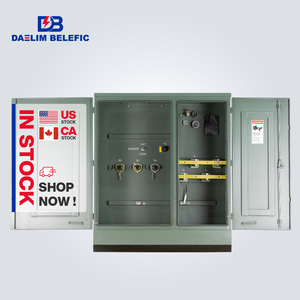
Engineered for high-humidity tropical climates, industrial parks, and utility distribution networks in Vietnam. Available in radial and loop feed configurations.
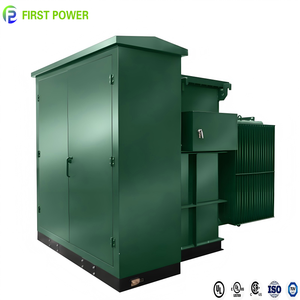
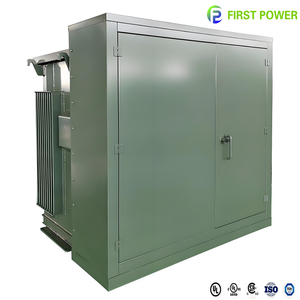
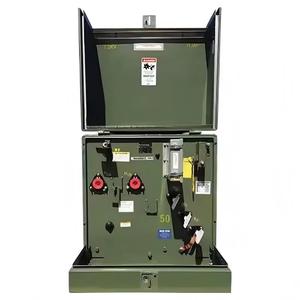
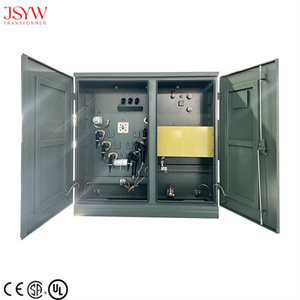
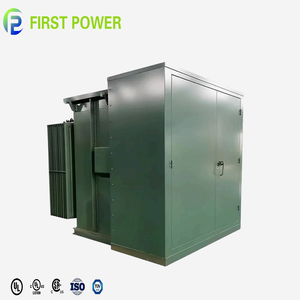
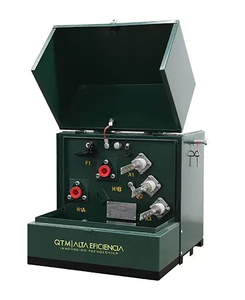

When selecting a pad-mounted transformer manufacturer for projects in Vietnam, procurement committees evaluate technical compliance with TCVN 6306 / IEC 60076, regional approvals from EVN subsidiaries (EVN HCMC, EVN Hanoi, EVN CPC, EVN NPC, EVN SPC), anti-corrosion cabinet treatments, and factory routine testing fidelity. Below is the technical ranking of the industry's premier manufacturing factories supplying the Vietnamese market.
Tracing back group automation heritage to 1990 and incorporated transformer manufacturing in 2006, Hengel Electric (Prima Transformers) operates one of the most rigorously certified magnetics manufacturing plants. Engineered specifically to bridge IEEE C57.12.34 compartmentalized standards with IEC/EVN 22kV and 35kV medium-voltage distributions, their pad-mounted transformers feature C5-M marine-grade powder coating, automated DVDF testing, and full compatibility with environmental ester fluids.
The largest domestic distribution transformer manufacturer in Vietnam, THIBIDI holds an entrenched position across southern EVN territories. Their pad-mounted substations are custom-fitted to local distribution utility blueprints, delivering dependable step-down performance for residential clusters and industrial manufacturing parks across the Mekong Delta and southern industrial belts.
Hitachi Energy's local presence in Bac Ninh produces high-specification compartmentalized and kiosk-type compact substations. Popular for large-scale utility solar installations in Ninh Thuan and hyper-scale data centers around Hanoi, ABB units excel in digitalized transformer diagnostics, partial discharge suppression, and low operational loss curves.
Schneider Electric provides turnkey pad-mounted box-type solutions incorporating SM6 / RM6 Ring Main Units (RMU). Engineered with native IoT monitoring sensors (EcoStruxure), their systems enable Vietnamese industrial estate operators to monitor real-time oil dielectric temps, pressure changes, and load shedding directly from centralized SCADA systems.
A premier player in national grid infrastructure for northern Vietnam, EEMC fabricates durable distribution transformers and kiosk-type substations. Serving extensively across EVN NPC grid contracts, their units are engineered with thick structural steel to withstand northern seasonal flooding, thermal cycling, and high atmospheric humidity.
Eaton's Cooper Power Series pad-mounted transformers represent the benchmark for American-style dead-front compartmentalized equipment. Widely utilized by US and multinational high-tech semiconductor fabs operating within Saigon Hi-Tech Park and VSIP, their Envirotemp FR3 natural ester dielectric fluids provide exceptional fire safety ratings.
Hanaka is a prominent industrial group in northern Vietnam manufacturing oil-immersed distribution units and outdoor prefabricated substations. Their products are prominent across commercial real estate urban projects, offering aesthetic cabinet customization, reduced acoustic emissions, and strict compliance with Ministry of Industry and Trade (MOIT) mandates.
Shihlin Electric has built a strong manufacturing presence in Dong Nai, supporting Taiwanese, Japanese, and Korean FDI enterprises established throughout southern Vietnam. Their pad-mounted configurations conform readily to Japanese JIS and international IEC topologies with competitive lead times and robust short-circuit withstand tolerances.
Siemens provides high-efficiency pad-mounted distribution transformers tailored for critical industrial processes, heavy chemical plants in Ba Ria-Vung Tau, and offshore wind coastal interties. Noted for zero-leakage tank construction, hermetically sealed vessels, and ultra-low no-load core losses using laser-treated magnetic steel sheets.
Yawei has emerged as a high-volume exporter of pad-mounted transformers engineered directly to IEEE and IEC specifications. Supplying utility-scale EPCs across Vietnam's commercial solar expansions, Yawei leverages high-grade automated winding infrastructure to supply dual-voltage loop feed units with Form E tariff cost efficiencies.
Pad-mounted transformers deployed across Vietnam must resolve distinct regional environmental and electrical challenges. From high-salinity monsoonal air to high-density industrial loads, here is how pad-mounted transformers are engineered for Vietnam's local environments:
Modern mega-parks in Binh Duong, Bac Ninh, and Quang Ninh require 100% underground power networks. Pad-mounted transformers provide compact footprints situated directly alongside factory perimeters, eliminating the need for expensive indoor substation rooms. Dual-door compartmentalization prevents unauthorized personnel contact while maintaining continuous 22kV loop feed redundancy.
Central-southern solar farms and onshore wind collector systems face severe ambient heat reaching 45°C and intense UV irradiation. Custom step-up pad-mounted transformers (0.69kV/0.8kV to 22kV or 35kV) utilize high fire-point synthetic or natural ester oils with K-factor rating guarantees to withstand high inverter switching harmonic distortion.
Coastal logistics parks and sea harbors endure persistent sea salt mist and 95%+ relative humidity. Standard mild steel tanks corrode within 24 months. Pad-mounted transformers for these zones feature hot-dip galvanized tanks, 304 or 316L stainless steel enclosures, and multi-layer polyurethane C5-M marine epoxy paint systems.
Pad-mounted transformers for the Vietnamese grid must align precisely between standard American IEEE styles (ZGS series) and European compact kiosk substations (YB series), operating strictly under 50Hz frequency specifications.
| Technical Parameter | American Pad-Mounted Style (ZGS) | European Compact Substation (Kiosk / YB) | EVN Grid Code Requirements (Vietnam) |
|---|---|---|---|
| Primary System Voltage | 15kV, 24.94kV, 34.5kV (Configurable to 22kV/35kV) | 10kV, 22kV, 35kV | 22 kV (Dominant) & 35 kV (Northern Utility Grid) |
| Secondary Voltage | 208Y/120V, 480Y/277V | 400V / 230V, 415V | 400V / 230V (3-Phase 4-Wire, 50 Hz) |
| Tank Construction | Hermetically sealed, oil-immersed core/coils in tank | Separate modular transformer within walk-in kiosk | Hermetically sealed tank with corrugated fins or radiators |
| HV Terminations | Dead-Front (Elbow connectors, 200A loadbreak / 600A) | Standard porcelain / screened cable connectors | Dead-Front screened separable elbow connectors preferred |
| Protection Scheme | Internal Bay-O-Net fuse + Current Limiting Backup fuse | External vacuum circuit breaker / switch-fuse combination | Bay-O-Net dual sensing + partial range current limiting fuses |
| Switching Mechanism | Internal under-oil 2-position or 4-position loop feed switch | External SF6 / Air-insulated Ring Main Unit (RMU) | Four-position loop feed rotary switch or integrated RMU |
| Dielectric Fluid | Mineral Oil Class I/II or FR3 Natural Vegetable Ester | Mineral Oil or Dry-Type Cast Resin | Inhibited mineral oil (IEC 60296) or FR3 for indoor-adjacent |
The convergence of regulatory green mandates, EV adoption, and smart grid automation is transforming equipment procurement specifications across Hanoi, Da Nang, and Ho Chi Minh City.
Historical legacy distribution systems operating at 6kV, 10kV, and 15kV are being systematically converted by EVN to a unified 22kV standard across central and southern provinces, with 35kV maintained primarily in northern industrial mountainous sectors. Transformers equipped with dual-voltage primary switches (e.g., 22/35kV or 10/22kV) allow EPC contractors immediate commissioning with future-proof upgradability.
With Vietnam committing to net-zero carbon targets by 2050, commercial complexes, hotels, and dense urban high-rises are outlawing mineral-oil units near occupied structures. High fire-point (360°C) vegetable-based natural esters (FR3) are surging in demand due to their self-extinguishing safety properties, non-toxic environmental profile, and extended dielectric insulation life.
EVN automation mandates require new pad-mounted substations to support intelligent electronic devices (IEDs). Distribution transformers now incorporate digital multi-function oil level gauges, winding temperature indicators with 4-20mA telemetry, pressure relief valve limit switches, and low-voltage power quality meters communicating over Modbus/DNP3 protocols directly to EVN dispatch centers.
Backed by over two decades of precision magnetics engineering and a 5,500 m² state-of-the-art facility, our manufacturing infrastructure delivers tier-one engineering quality with the commercial agility required by international EPCs executing projects in Vietnam.
Since our parent company began manufacturing SCADA, PLC, and flameproof control cabinets in 1990, followed by transformer expansion in 2006, we design units with deep automation insight.
From 50VA control transformers to 5000kVA oil-immersed pad-mounted power transformers, line and load reactors up to 2500A, and active harmonic filters up to 500HP under one roof.
Every single unit undergoes rigorous computerized test procedures prior to dispatch, eliminating out-of-box site commissioning failures on project sites across Vietnam.
Trusted by multinational leaders including Siemens, Tata, Jindal, UltraTech, ONGC, Adani, and BHEL, proving technical acceptance across the world's most demanding power environments.
Prior to export packaging, every pad-mounted transformer undergoes fully documented testing on computerized test panels to verify dielectric integrity, temperature rise margins, and loss compliance:
Detailed technical answers addressing the critical operational, logistical, and statutory considerations faced by electrical engineers, EPCs, and procurement directors in Vietnam.
Under Vietnam Electricity (EVN) regulations and standard Decision No. 378/QD-EVN, distribution transformers must strictly operate at a rated frequency of 50 Hz. The primary nominal voltage is standardized at 22 kV (line-to-line) across most territories, with 35 kV maintained in select northern regions and 15kV/22kV dual systems during migration phases. Secondary voltage is 400V between phases and 230V to neutral (Dyn11 vector group is standard to mitigate third harmonics). Losses must comply with EVN maximum allowable no-load (Po) and load loss (Pk) tables under TCVN 6306-1 (equivalent to IEC 60076-1). Prior to energization, third-party type test certifications from accredited test bodies (such as QUATEST 1, QUATEST 3, or international laboratories like KEMA/CESI) must be submitted.
Vietnam experiences a tropical monsoon climate with average ambient temperatures often exceeding 40°C in peak summer months, coupled with 90%–98% relative humidity and intense solar heat radiation on outdoor steel cabinets. Under IEC 60076 standards, transformers are rated for a standard ambient average of 30°C. For installations in Vietnam, engineers must either specify an elevated top-oil temperature rise limit (typically 50K or 55K rather than 60K/65K) or oversize the transformer by 10%–15% to prevent thermal aging of the paper/oil insulation system. Using high-temperature thermal class 120 thermally upgraded Kraft paper or Class K biodegradable fluids guarantees long operational lifespans without thermal derating penalties.
In a Radial Feed arrangement, the transformer sits at the end of a single incoming medium-voltage cable run, featuring three high-voltage bushings (H1, H2, H3). While cost-effective, any upstream cable fault de-energizes the substation. In modern Vietnamese industrial parks (e.g., VSIP or Amata), Loop Feed configurations are standard. Loop feed units feature six HV bushings (H1A, H2A, H3A and H1B, H2B, H3B) and an internal four-position under-oil rotary switch. This allows the transformer to receive power from Feeder A, Feeder B, both feeders simultaneously, or pass power downstream while isolating the transformer core for maintenance without interrupting power to downstream factories.
Coastal and offshore-adjacent sites in Vietnam demand stringent surface preparation under ISO 12944 standard Corrosivity Category C5-I (Industrial) or C5-M (Marine). Standard enclosure paint will degrade rapidly due to airborne chlorides. Procurement specifications should mandate: (1) Heavy-gauge 304 or 316L stainless steel for the cabinet sills, doors, and tank bottom, or (2) A minimum 3-coat paint system totaling at least 250–320 microns dry film thickness (zinc-rich epoxy primer, intermediate epoxy barrier coat, and aliphatic polyurethane topcoat resistant to UV chalking). All exterior hinges, latches, and hardware must be marine-grade 316 stainless steel with captive Penta-head security bolts.
Pad-mounted transformers imported into Vietnam fall under HS Code 8504.21, 8504.22, or 8504.23 depending on kVA capacity. When importing from ASEAN countries or trade-partner countries holding Free Trade Agreements (such as the ASEAN-China FTA using Certificate of Origin Form E or ASEAN-India FTA using Form AIFTA), import tariffs can often be reduced from standard MFN rates down to 0% to 5%. In addition to the commercial invoice, packing list, bill of lading, and certificate of origin, importers must present factory routine test certificates and submit to mandatory state quality inspection (Kiểm tra nhà nước về chất lượng hàng hóa nhập khẩu) supervised by the Ministry of Industry and Trade (MOIT).
Standard custom-engineered three-phase pad-mounted transformers (500kVA to 2500kVA) require an average factory fabrication lead time of 6 to 10 weeks, depending on whether specialized components (such as dual-voltage tap changers or ester fluids) are selected. Ocean freight transit to northern Vietnam (Hai Phong Port) or southern Vietnam (Cat Lai / Cai Mep Ports in Ho Chi Minh City) typically takes 12 to 18 days from regional Asian deep-sea ports. Turnkey logistics planning should also include 5 to 7 business days for port customs clearance, physical container devanning, and domestic road transport to inland industrial park pads.
In a Dead-Front design, all medium-voltage bushings, terminals, and elbow connections are fully shielded, insulated, and grounded when connected. There are zero exposed live parts inside the high-voltage cabinet compartment. This allows utility technicians to inspect low-voltage circuits or operate loop switches safely using an insulated hotstick. In public developments, school zones, shopping plazas, and dense industrial parks across Vietnam, Dead-Front construction is mandatory to eliminate electrocution hazards, rodent interference flashovers, and vandal contact.
To ensure a prompt and fully engineered quote, procurement managers should specify: (1) Rated capacity in kVA; (2) Primary voltage (e.g., 22kV or 35kV) and BIL (Basic Impulse Level, e.g., 95kV, 125kV, or 150kV); (3) Secondary voltage (e.g., 400Y/230V); (4) Tap configuration (e.g., ±2×2.5% off-load tap changer); (5) Feed type (Radial vs. Loop Feed with 4-position switch); (6) Dielectric fluid (Mineral oil vs. FR3 natural ester); (7) Maximum allowable losses (Po / Pk) per EVN guidelines; (8) Specific cabinet material and coating (e.g., Mild steel vs. 304 Stainless steel with C5-M paint); and (9) Delivery destination in Vietnam (port or project jobsite).
Connect with our senior magnetics applications team for full technical evaluations, customized 22kV/35kV pad-mounted substation blueprints, EVN loss compliance reports, and fast factory-direct export proposals.