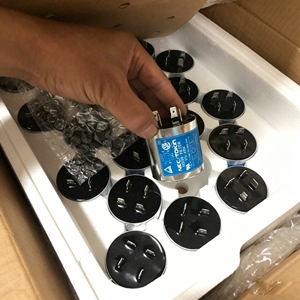
EMI/RFI Suppression
VU-220F Single Phase Power Line Filter 250VAC 20A Chassis Mount
High attenuation chassis filter providing differential & common-mode filtering up to 30MHz for control panels.
 CEMarked
Explore our export-certified electrical products engineered to eliminate inverter PWM high-frequency ripple, mitigate dv/dt spikes, and provide robust galvanic and magnetic conditioning across international grid topologies.
High attenuation chassis filter providing differential & common-mode filtering up to 30MHz for control panels.
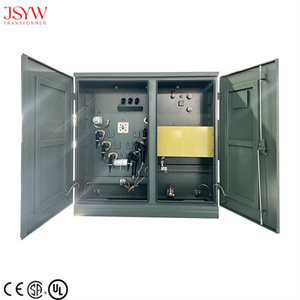
Engineered for MV step-down in renewable energy stations, manufacturing campuses, and continuous feed systems.
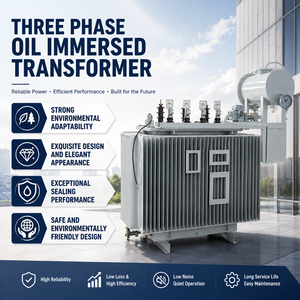
Low-loss magnetic core, hermetically sealed for industrial parks, heavy mining, and harsh environmental profiles.
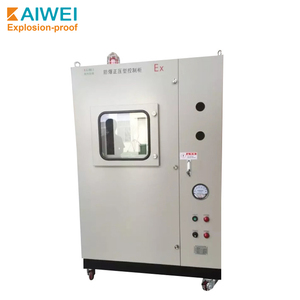
ATEX/IECEx compliant flameproof architecture for housing line reactors, filter boards, and control systems in Zone 1/2.
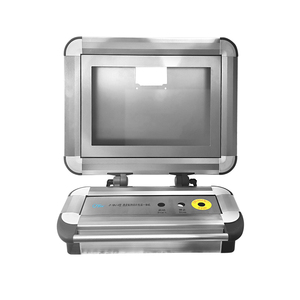
Ergonomic operator console designed for drive-side parameter monitoring, thermal alarms, and system harmonics visualization.
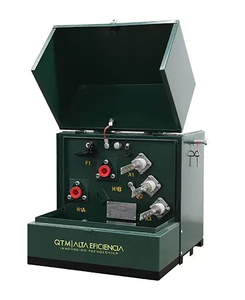
Tamper-proof, compact combined box-type distribution unit built for commercial infrastructure and localized microgrids.
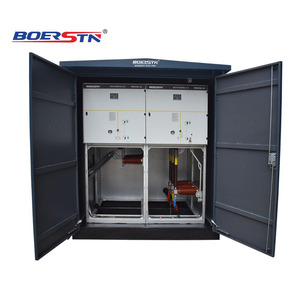
Factory-assembled turnkey distribution enclosure complete with integrated MV switchgear and advanced load protections.
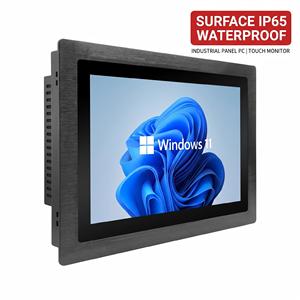
Solid-state CNC and PLC control panel PC supporting dynamic power quality diagnostics, THD charting, and remote bus links.
A rigorous engineering benchmark assessing magnetic design, dv/dt attenuation, thermal performance, and compliance with strict German manufacturing requirements (DIN EN 61558, VDE 0570, and IEC 60034-17/25).
Variable Frequency Drives (VFDs) employing insulated gate bipolar transistors (IGBTs) generate steep voltage rise times (dv/dt rates frequently exceeding 12 kV/μs). In high-precision German industrial environments—spanning automotive assembly in Baden-Württemberg to chemical processing in North Rhine-Westphalia—these rapid pulse transitions produce wave reflections across motor cables exceeding 50 to 100 meters. The resulting voltage doubling damages motor winding insulation, accelerates bearing degradation via capacitive discharge currents, and emits severe radiated Electromagnetic Interference (EMI).
Output sine filters (also referred to as LC or sine-wave filters) transform the high-frequency pulsed PWM output voltage into a clean sinusoidal waveform with residual ripple of less than 5%. When selecting an engineering vendor for operations in Germany or integration into machinery built for export, technical buyers look beyond basic catalog parameters. The table below delineates the leading 10 suppliers known for delivering high-integrity filtering systems to the German market.
| Supplier / Brand | Origin / Hub | Current & Power Envelope | Target Topologies | Key Engineering Merits |
|---|---|---|---|---|
| BLOCK Transformatoren-Elektronik | Verden, Germany | Up to 1,200 A / 690 V | Drive Engineering, Robotics | Proprietary low-loss core materials, DIN EN 61558-2-20 optimization, robust national distribution. |
| Schaffner Group | Luterbach / DE Branches | Up to 1,500 A / 690 V | Renewables, Marine, VFDs | Global standard FN-series, active/passive resonance damping, UL/CE dual verification. |
| Prima Transformers & Filters | Engineering Hub / Global Export | Up to 500 HP / 2,500 A | OEM Machinery, Heavy Industry | Custom wound LC/LCL configurations, 100% DVDF testing, direct panel-builder integration insight since 1990. |
| Siemens AG (Drive Technologies) | Erlangen / Nuremberg, DE | Standard Sinamics Envelopes | Process Industry, Turbomachinery | Native integration with Sinamics S120/G120 drive modules, integrated temperature feedback probes. |
| Danfoss Drives Germany | Offenbach, Germany | Up to 1,400 A / 690 V | HVAC, Water/Wastewater, Pumps | MCC-series plug-and-play filters, reduced audible motor humming, extended cable length ratings (>300 m). |
| REO AG | Solingen, Germany | Custom ratings to 2,000 A | Rail traction, E-mobility, Medical | Liquid and air-cooled magnetic components, high vibration tolerance, edge wound coil options. |
| TDK Electronics (EPCOS) | Munich, Germany | Up to 1,000 A / 500 V | Automotive test benches, Wind | High attenuation ferrite-powder combinations, integrated capacitor bank tuning, low power factor draw. |
| MTRent Transformatoren | Baden-Württemberg, DE | Medium to High Power | Heavy Mechanical Engineering | Bespoke magnetic core design, low dissipation factor, optimized for variable switching frequencies (2–16 kHz). |
| Schneider Electric Germany | Ratingen, Germany | Altivar Architecture | Infrastructure, Metallurgy | Tight integration with Altivar Process lines, eco-design verified, standardized IP20/IP54 packages. |
| SMP Sintermetalle Prometheus | Graben-Neudorf, Germany | Up to 3,000 A / HF lines | Aerospace, High-Speed Trains | Powder composite core technologies exhibiting exceptionally low magnetostriction and near-silent operation. |
While European legacy brands provide direct domestic inventory, international industrial equipment manufacturers increasingly select specialized custom manufacturers like Prima Transformers. Backed by our 5,500 m² facility and a parent organization pioneering industrial automation control panels since 1990, we deliver tailored sine-wave filters, reactors up to 2500A, and transformers engineered to withstand aggressive industrial environments at substantial total-cost-of-ownership (TCO) advantages.
In high-reliability industrial automation, the output filter is not merely an optional accessory; it is a critical safeguard against premature asset failure and expensive plant shutdowns.
German automotive paint shops and body assembly plants utilize hundreds of synchronous and induction servo drives. Output sine filters protect drive lines from destructive insulation puncturing while preventing PWM common-mode cross-talk from corrupting nearby sensor networks and industrial Ethernet lines.
Municipal water management utilities across Bavaria and Lower Saxony deploy pumps connected via 200m to 800m unshielded cabling. Installing an LC sine-wave filter restores a clean sinusoidal curve, reducing standing wave reflection voltages and eliminating thermal strain on inaccessible submersible motor windings.
In coastal and North Sea wind farms, full-scale power converters utilize custom LCL sine filters on their grid-side and generator-side converters to eliminate switching harmonics, ensuring smooth injection into the high-voltage transmission grid conforming strictly to TenneT and 50Hertz grid codes.
Refineries, LNG handling sites, and chemical plants in Ludwigshafen operating under ATEX Zone 1 and Zone 2 utilize Ex-rated motors. Standard PWM drives risk sparking or surface hot spots via bearing currents; output sine filters suppress voltage spikes, lowering surface temperatures and ensuring compliance with EN 60079.
As German machinery builders adapt to decarbonization goals and the transition toward wide-bandgap (WBG) power semiconductors, the engineering demands on output filters are undergoing significant evolution.
Next-generation inverters adopt SiC and GaN devices, raising carrier switching frequencies from conventional 4–8 kHz levels to 20–100 kHz. While this decreases passive filter volume, it escalates high-frequency core loss and requires custom nanocrystalline cores and litz wire windings to prevent eddy-current overheating.
German buyers prioritize lifecycle efficiency over upfront capital costs. Modern sine filter architectures feature optimized low-induction foil windings and specialized laminations (M130-27S and thinner) that achieve operational efficiencies above 98.8%, dramatically trimming lifetime thermal dissipation within control cabinets.
German occupational noise regulations (VDI 2058 / TA Lärm) enforce strict limits in manufacturing plants. Sine-wave filters convert non-linear motor current into clean sinusoids, eliminating audible magnetic motor noise and resin-cast choke hum, thereby protecting factory personnel and passing municipal noise audits.
Combining heavy manufacturing capabilities with more than three decades of practical automation engineering, we build power magnetics that meet the exacting expectations of global procurement teams.
As a 100% subsidiary of Prima Automation (India) Pvt. Ltd., our engineering DNA originated in designing PC, PLC, and SCADA-based control panels, alongside flameproof systems for hazardous locations. We understand the real-world operational challenges panel builders face—from inrush tolerances to clean terminal layouts.
Operating one of the premier transformer and magnetics manufacturing centers in Santej, Ahmedabad, our facility integrates coil winding, vacuum pressure impregnation (VPI), automated assembly, and comprehensive mechanical enclosure fabrication under one roof.
Every unit undergoes strict computerized routine testing: open-circuit/short-circuit tests, double voltage double frequency (DVDF) induced overvoltage validation, milli-ohm winding resistance checks, and digital LCR inductance analysis to confirm guaranteed impedance tolerances before dispatch.
Our application team assists design engineers and procurement heads in sizing filters for long motor cable runs, regenerative drive configurations, and custom step-down projects. Get factory-direct technical drawings, loss calculations, and rapid commercial quotations.
Send an InquiryClear, direct answers regarding design standards, duty cycles, resonance prevention, and export compliance.
A dv/dt filter is typically an inductor or low-order filter designed to decelerate the rate of voltage change (limiting dv/dt to below 500 V/μs to 1,000 V/μs) and clamp peak overvoltages, but the output waveform remains essentially a pulse-width modulated (PWM) square train. A true Output Sine Filter utilizes a tuned LC low-pass arrangement where the filter's cut-off frequency is placed comfortably between the fundamental output frequency (e.g., 50/60 Hz or up to 400 Hz) and the inverter switching frequency (e.g., 2 kHz to 8 kHz). It suppresses PWM switching frequencies completely, resulting in a smooth, sinusoidal phase-to-phase voltage with less than 5% total harmonic distortion (THD).
German applications reference a hierarchy of European and national standards: DIN EN 61558-2-20 (safety of reactors and power supply units), VDE 0570, and DIN EN 60034-17 / DIN EN 60034-25 for limiting electrical stresses on induction motors fed from converter supplies. In addition, CE marking is mandatory to verify compliance with the Low Voltage Directive (2014/35/EU) and Electromagnetic Compatibility Directive (2014/30/EU).
Standard load reactors (typically 2% to 4% impedance) are adequate for cable runs up to approximately 30 to 50 meters. When motor cable lengths extend to 100 meters, 300 meters, or beyond—common in automotive manufacturing halls, mining conveyors, and deep-well pump systems—cable transmission line reflection causes voltage amplification (reaching 2x to 2.5x nominal DC bus voltage at motor terminals). For unshielded cables above 100m or shielded lines over 50m, a true sine-wave filter is strongly recommended to protect motor insulation from dielectric breakdown.
No. Sine-wave filters must be tuned specifically with respect to the minimum inverter switching frequency (carrier frequency). If an inverter dynamically decreases its carrier frequency below the filter's resonance frequency (f_res), the system will trigger an overcurrent or resonance trip, causing destructive harmonic heating. German engineers specify fixed minimum carrier frequencies (often locked at 4 kHz or 8 kHz) and frequently request thermal trip protection integrated within our filter chokes.
To deliver an optimized design and formal commercial offer, please share: rated drive power (kW/HP) and motor rated current (Amps), fundamental frequency range (Hz), drive switching carrier frequency (kHz), operating line voltage (e.g., 400V, 500V, 690V), maximum motor cable length and cable type (shielded/unshielded), ambient temperature profile, and mechanical requirements (IP00 open chassis or IP23/IP54 ventilated cabinet).