Santej, Ahmedabad, Gujarat, India CE-Marked Transformers for Export
Serving OEMs & Projects Worldwide

Static Voltage Stabilizer Manufacturers & Factories for Portugal

Engineering Solid-State Voltage Regulation & Clean Power Solutions for Iberian Industrial Grids

Advanced Power Quality & Voltage Stabilization Systems

Direct factory-engineered magnetic, control, and solid-state equipment built to mitigate harmonics, severe line sags, and inductive transients under strict European CE compliance.

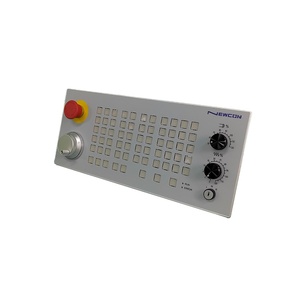
Panel21190 HMI PLC EtherCAT Industrial Control Panel
Panel21190 | HMI PLC EtherCAT Industrial Control Panel for CNC
Technical Specs

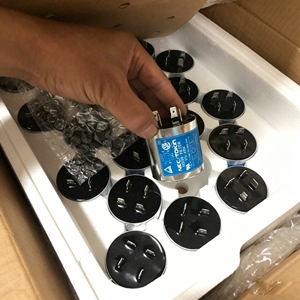
VU-220F Single Phase Power Line Filter
Original VU-220F Single Phase Power Line Filter 250VAC 20A
Technical Specs
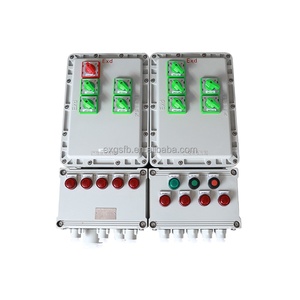
BXM(D)51 Cast Aluminum Explosion Proof Distribution Box
BXM(D)51 Cast Aluminum Explosion Proof Exd IIC T6 Distribution Box
Technical Specs
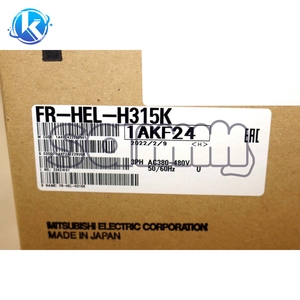
FR-HEL-H315K DC Link Choke
FR-HEL-H315K DC Link Choke High-Efficiency Power Inductor
Technical Specs
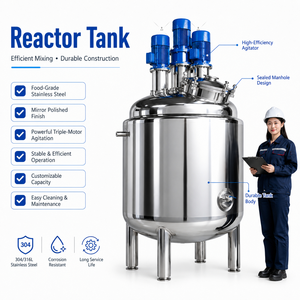
Catalytic Naphtha Reforming Reactor
Selective Fixed Bed Catalytic Naphtha Hydrogenator Reforming Reactor
Technical Specs
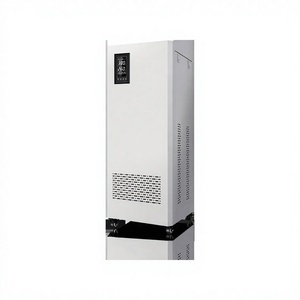
Three Phase Automatic Voltage Stabilizer 50KVA
Three Phase Automatic Voltage Stabilizer AVR Servo / Static 50KVA
Technical Specs
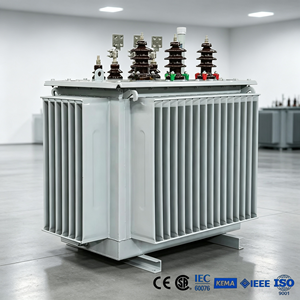
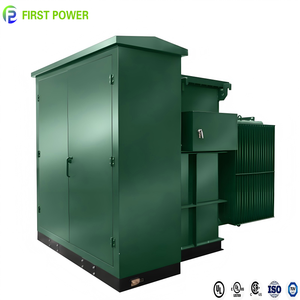
Pad Mounted Pedestal Transformer
CE 3-Phase Pad Mounted Industrial Pedestal Transformer 100-630kVA
Technical Specs

Engineering Analysis: Industrial Grid Architecture in Portugal

Addressing power quality disturbances, fluctuating renewable penetration, and high-precision manufacturing vulnerabilities across northern and central industrial corridors.

Renewable Integration Realities

Portugal stands as an international leader in clean energy, generating over 70% of its electricity from wind, hydroelectric, and utility-scale solar PV. However, high non-synchronous renewable penetration creates distinct challenges for energy-intensive facilities:

  • Reduced overall network rotational inertia causing sharp frequency-induced transients
  • Localized voltage swells during mid-day solar surges in southern distribution feeders
  • Rapid voltage sags generated by sudden localized wind-ramp dropouts along coastal industrial nodes

Semiconductor & Automotive Vulnerabilities

Facilities concentrated in regions like Setúbal, Porto, and Aveiro run high-speed robotics, automated stamping presses, and semiconductor cleanrooms. Traditional servo-motor mechanical stabilizers fall short:

  • Mechanical carbon-brush regulators require 800ms to 2000ms to correct deviations, far too slow for micro-processor trips
  • Solid-state static stabilizers leverage DSP microcontrollers and thyristor/IGBT switching to achieve sub-20ms step corrections
  • Zero physical moving parts prevents abrasive wear in dusty environments like ceramics and cork processing

Compliance with EN 50160 & CE Standards

Industrial operations in Portugal operate under Portuguese and European standard NP EN 50160, detailing permissible voltage levels, flickers, and unbalance at points of common coupling (PCC):

  • Nominal supply voltage of 400V 3-phase (±10% nominal), with tight micro-tolerances required by Tier-1 OEMs
  • Harmonic mitigation through integrated line reactors up to 2500A and passive harmonic traps
  • Galvanic separation preventing common-mode neutral loops common in older coastal conversion plants

Static Solid-State vs. Traditional Servo vs. Tap-Changers

A pure architectural evaluation for electrical directors, specifying engineers, and plant managers in Portugal.

Technical Characteristic Solid-State Static Stabilizer (SCR / IGBT) Servo-Driven Electromechanical Magnetic Saturation (Ferroresonant)
Response Time Instantaneous: 10 ms to 20 ms (Half-cycle to 1-cycle) Sluggish: 1.5 to 3.0 seconds (Gear restricted) Fast: 20 ms to 40 ms
Correction Technology Digital Signal Processor (DSP) with Silicon Controlled Rectifiers Servo motor driving a variable auto-transformer carbon brush Resonant circuit operating core in magnetic saturation
Moving Parts / Wear Rate Zero moving components; No mechanical wear out High mechanical stress; Carbon brushes, servo gears wear down Zero moving parts; High operating thermal footprint
Input Frequency Sensitivity Insensitive (47 Hz – 63 Hz stable operation) Tolerant to minor swings Highly sensitive (Requires precise 50 Hz base)
Energy Conversion Efficiency >98.5% at rated operating continuous load ~95% to 97% ~85% to 90% (Continuous humming core heat loss)
Local Portuguese Fit Ideal for automated robotics, CNC milling, plastics & cleanrooms Legacy low-cost building services, constant steady baseloads Dedicated standalone legacy laboratory racks

Engineered Deployment Scenarios Across Portuguese Industry

Tailored power distribution configurations solving real-world electrical stress points from Minho down to the Algarve.

Northern Precision Tooling & Mold Making

In the Marinha Grande and Oliveira de Azeméis clusters, mold production relies on multi-axis CNC machines and spark erosion equipment. Minor voltage dips during line switching disrupt high-tolerance EDM cuts. Deploying sub-cycle static stabilizers with high inrush isolation prevents workpiece scrapping and reduces spindle drive faulting.

Pulp, Paper & Biomass Facilities (Figueira da Foz)

Heavy continuous manufacturing runs non-stop, powered by co-generation systems interacting with E-REDES grid links. Huge inductive motor start-ups trigger local bus collapses. Custom static regulators with line/load reactors up to 2500A ensure process PLCs and SCADA outstations maintain uninterrupted operation.

Agro-Industrial, Wine & Cold Storage Logistics

From the Alentejo agricultural processing hubs to the Douro wineries, high ambient summer temperatures stress refrigeration lines. Sudden utility demand shed spikes can drop voltages to 340V, forcing compressor overcurrent trips. Static stabilizers prevent motor thermal overload without sparking, ideal for explosive grain dust zones.

Manufacturing Excellence & Testing Rigor

Operating a dedicated 5,500 m² heavy production campus in Santej, Ahmedabad, bringing decades of automation expertise to European export supply chains.

5,500 m²
Advanced Manufacturing Plant
5000 kVA
Max Transformer Capacity
2500 A
Max Line/Load Reactor Current
Since 1990
Parent Automation Group Heritage

Rigorous Routine Testing Regimes Before Export Dispatch

Every industrial unit destined for European destinations undergoes uncompromising quality validation using automated, computerized inspection setups in full compliance with IEC 60076 and EN standards:

Computerized OC & SC Testing: Precision determination of no-load core losses, full-load copper dissipation, and impedance parameters.
DVDF Induced Overvoltage: Double Voltage Double Frequency testing to evaluate inter-turn and inter-winding dielectric breakdown limits.
Thermographic IR Imaging: Verification of thermal equilibrium, eliminating hot-spots in high-density thyristor blocks and core laminations.
Milli-Ohm Resistance Checks: Winding symmetry cross-examination to guarantee zero phase imbalance under severe non-linear operating profiles.

Procurement & Engineering FAQ for Portugal

Common questions from electrical contractors, EPC directors, and facility operations managers.

What specific input voltage window should we specify for our factory in Portugal?
For the standard Portuguese low-voltage three-phase distribution grid (400V L-L / 230V L-N, 50 Hz), we typically recommend an input stabilization tolerance window of ±15% to ±20% (approx. 320V to 460V line-to-line). For facilities situated in rural industrial estates or at the remote ends of medium-voltage lines with heavy solar PV back-feeding, a wide-input configuration of ±25% to ±30% ensures the stabilizer maintains a steady ±1% output without switching to bypass mode.
Does your equipment carry official CE compliance certification required by Portuguese authorities?
Yes. All static voltage stabilizers, control transformers, and harmonic reactors manufactured at our facility carry official CE marking, conforming directly to the Low Voltage Directive (LVD) 2014/35/EU and the Electromagnetic Compatibility (EMC) Directive 2014/30/EU. Complete technical construction files (TCF), test certificates, and Declarations of Conformity accompany each shipment for customs and local electrical inspection authorities (such as DGEG/ISQ).
How do solid-state static stabilizers perform with non-linear VFD and inverter loads?
Modern Variable Frequency Drives (VFDs) and switched-mode power supplies draw non-sinusoidal currents rich in 5th, 7th, and 11th harmonics. Our static stabilizers use true-RMS voltage sensing microprocessors that ignore waveform distortion. Coupled with our heavy-duty line/load reactors or custom isolation stages, our units withstand high crest factors without nuisance switching, false alarms, or thyristor misfiring.
What is the typical MTBF and maintenance requirement for static stabilizers vs. servo units?
Static solid-state units boast a Mean Time Between Failures (MTBF) exceeding 100,000 continuous hours. Because they operate without carbon brushes, drive chains, or mechanical gearboxes, routine preventative maintenance is minimal: simply cleaning internal cooling fans and inspecting terminal bolt torques during routine plant shutdowns. This reduces total cost of ownership (TCO) compared to electromechanical alternatives.
What lead times and logistics routes are standard for deliveries to Lisbon or Leixões?
Standard engineered units between 10kVA and 250kVA typically move through production within 3 to 4 weeks, with large engineered-to-order cabinets (up to 5000kVA or custom cast-resin units) completed in 6 to 8 weeks. Shipments to Portugal are routed via major ocean freight lanes directly into the Port of Leixões (serving northern industrial hubs) or the Port of Lisbon / Sines, packed in seaworthy ISPM-15 heat-treated timber crates with humidity barrier wraps.

Design Your Custom Voltage Stabilization System

Speak directly with our engineering department to configure industrial voltage stabilizers, dry-type isolation transformers, or harmonic filtering systems tailored to your Portuguese electrical setup.