 CEMarked CEMarked
Engineered for high dielectric stability, non-linear load handling, and stringent compliance with international and regional utility standards.
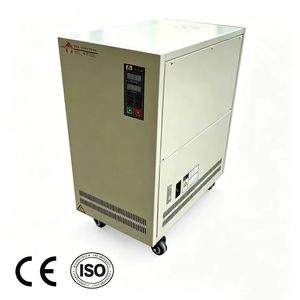
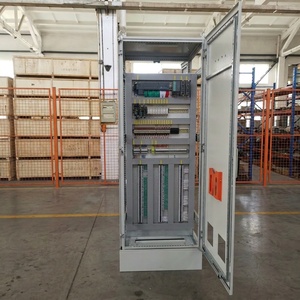
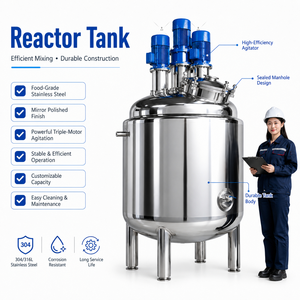
Indonesia's medium voltage (MV) distribution infrastructure represents one of the most operationally demanding power delivery ecosystems in Southeast Asia. Administered predominantly by Perusahaan Listrik Negara (PT PLN), the nation's primary medium voltage topology operates at nominal potentials of 20 kV (phase-to-phase), with select legacy industrial microgrids running at 6 kV, 6.6 kV, or 11 kV. The country’s geographic reality—comprising over 17,000 islands across multiple seismic zones—presents twin challenges: extreme ambient humidity often exceeding 90%, and localized grid fragility marked by harmonic resonance, sudden line dips, and volatile switching surges.
As an engineering-driven medium voltage transformer exporter, our magnetic configurations specifically resolve the critical vulnerabilities faced by regional plant operators. In continuous-process facilities throughout Java, Sumatra, Kalimantan, and Sulawesi, standard commercial transformers frequently fail due to dielectric breakdown from tropical fungal accumulation, premature insulation aging caused by sustained thermal derating, and mechanical winding collapse under severe harmonic currents induced by multi-pulse Variable Frequency Drives (VFDs). Our export methodology guarantees that medium voltage transformers deliver exceptional thermal margins, rigorous short-circuit withstand capabilities, and galvanic containment designed specifically for island grid operations.
| Grid Metric / Environmental Parameter | Indonesian Operating Conditions (PLN / Remote Island) | Export Technical Countermeasures |
|---|---|---|
| Nominal MV Distribution Voltage | 20 kV (3-phase, 3-wire or 4-wire with neutral ground) | Multi-tapped primary configurations (±2×2.5%, ±5%) with robust off-circuit tap changers (OCTC) or on-load tap changers (OLTC). |
| Ambient Climate Profile | Tropical monsoon; 35°C to 45°C ambient, >90% relative humidity | Class H/C insulation systems, vacuum pressure impregnation (VPI) with solvent-free polyester resins, or Class F cast resin encapsulation. |
| Seismic & Geological Dynamics | Zone 4/5 Pacific Ring of Fire, high ground acceleration | Seismically reinforced clamping frames, low center-of-gravity architectural winding supports, and flexible terminal connections. |
| Non-Linear Industrial Loads | Heavy VFD penetration in mineral processing, palm extraction | K-factor ratings up to K-20, electrostatically shielded primary-secondary isolation, and specialized series detuning line reactors. |
Industrial developments in designated special economic zones (Kawasan Industri) such as Cikarang, Karawang, Kendal, and Morowali require strict adherence not only to international IEC 60076 standards but also to localized grid-code interconnect criteria. Supplying this market demands deep expertise in both primary magnetic step-down topologies and downstream control integration, ensuring continuous operational integrity across sensitive automation lines.
Engineered to deliver high uptime across intense extractive operations, process automation, and high-density industrial facilities.
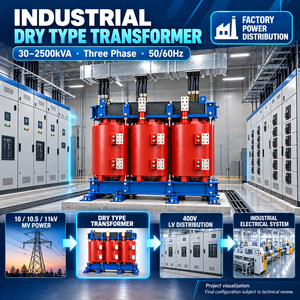
Operating predominantly in Central Sulawesi, South Sulawesi, and North Maluku, rotary kiln-electric furnace (RKEF) systems create severe harmonic distortion and rapid thermal cycles. Our cast resin and dry-type transformers feature vacuum-cast epoxy windings that isolate conductors from corrosive airborne dust, preventing tracking faults and inter-turn short circuits.
Palm processing facilities located across Riau, North Sumatra, and Central Kalimantan rely on biomass turbogenerators running in parallel with the PLN medium voltage grid. Our step-up and station service transformers withstand high humidity, acid vapors, and erratic load switching, stabilizing distribution feeds to high-torque expellers and decanters.
The Greater Jakarta region has transformed into Southeast Asia’s digital hub. Hyperscale server halls demand cast resin transformers with ultra-low partial discharge ratings (<5 pC) and exceptional fire-retardancy (Class F1 rating). These dry-type transformers eliminate liquid coolant spill risks while maintaining steady power delivery to uninterruptible power supplies (UPS).
Indonesia's industrial roadmap—termed Making Indonesia 4.0—coupled with the national energy transition targets (RUPTL 2021-2030), is altering the specification landscape for electrical balance-of-plant (eBoP) equipment. Procurement engineers no longer purchase isolated step-down transformers; they require integrated medium-to-low voltage substations that interface directly with SCADA systems, remote condition monitors, and renewable microgrids.
1. Shift Toward Dry-Type and Cast Resin Architecture: With stringent environmental guidelines emerging around protected watershed regions in Sumatra and Kalimantan, oil-immersed transformers are increasingly restricted due to soil contamination risks during flash floods. Cast resin units (CRT) are now specified for secondary substations, delivering high dielectric strength without requiring retention bunds or active fire-quenching networks.
2. Solar PV Integration and Islanded Hybrid Microgrids: Mining sites and remote manufacturing outposts are shifting away from 100% diesel generation by introducing large solar PV fields. Medium voltage transformers deployed at these sites must withstand bi-directional power flows, rapid solar ramp-rates, and the DC bias injected by utility-scale string inverters. Special electrostatic copper shielding between low-voltage and medium-voltage windings is essential to eliminate high-frequency common-mode electrical noise.
3. Dynamic Power Quality and Reactive Compensation: As processing operations automate via digital PLC networks, plant sensitivity to flicker and harmonic voltage distortion (THDu) increases. The modern procurement standard pairs medium voltage step-down units with tuned series detuning reactors and harmonic filters, mitigating the 5th, 7th, 11th, and 13th harmonic orders generated by multi-megawatt motor drives.
Backed by over two decades of magnetics design, parent company automation expertise since 1990, and a dedicated 5,500 m² production and testing center.
Established in 2006 as a dedicated manufacturing subsidiary of Prima Automation (India) Pvt. Ltd. (founded 1990), we design transformers with deep knowledge of downstream control panels, MCCs, and hazardous-area ATEX/flameproof systems. Every transformer features optimal inrush capacity, organized terminations, and zero false-tripping characteristics.
Operating out of our modern 5,500 m² manufacturing plant in Santej, Ahmedabad, every export unit undergoes computerized open-circuit and short-circuit testing, Double Voltage Double Frequency (DVDF) induced overvoltage testing, precision milli-ohm winding resistance measurement, and infrared thermal-rise evaluation prior to dispatch.
Our core mission centers on delivering CE-marked magnetics and power quality solutions built to IEC, IEEE, and PLN-compatible standards. Having supplied over 45 major multinational OEMs across demanding sectors like steel, mining, cement, and chemical processing, our export engineering workflows guarantee seamless customs clearance and hassle-free commissioning.
Essential guidance covering grid codes, import logistics, testing documentation, and tropicalized hardware configurations.
In the Indonesian distribution network, the primary medium voltage distribution is standardized at 20 kV, 3-phase, 50 Hz. However, large industrial estates and captive power installations across industrial clusters may utilize 6 kV, 6.6 kV, or 11 kV depending on historical equipment standards and incoming turbine configurations. Our transformers feature precision multi-tap connections to adapt seamlessly to local sub-station voltages across Java, Sumatra, and Eastern Indonesia.
Transformers engineered for coastal locations (such as Jakarta Bay, Surabaya, Batam, or Morowali) receive specialized anti-fungal, moisture-impervious treatments. Windings are either cast under deep vacuum using high-grade epoxy resin formulations (Class E2/C2/F1 per IEC 60076-11) or undergo multi-cycle Vacuum Pressure Impregnation (VPI) with high-dielectric moisture-repellent resin. Core laminations are protected using corrosion-resistant anti-oxidation coatings, and enclosures can be customized up to IP54/IP55 with heavy-duty C5-M marine epoxy paint systems.
Every manufactured transformer unit is fully tested within our 5,500 m² testing department before packaging. Certified test documentation supplied with each shipment includes: computerized open-circuit and short-circuit loss reports, insulation resistance (Megger) at rated voltages, Double Voltage Double Frequency (DVDF) induced overvoltage test results, separate source AC dielectric withstand test results, and milli-ohm winding resistance figures. Full type test reports (temperature rise, lightning impulse, sound level) are available upon request.
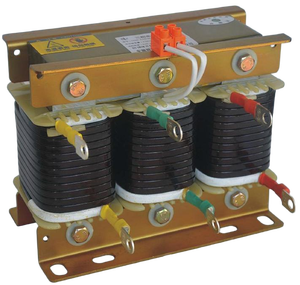
Yes. PT PLN mandates stringent power factor penalties if a facility operates below 0.85 inductive lag, while modern variable speed drive installations inject high levels of total harmonic distortion (THD). We design and manufacture matched three-phase series detuning reactors (rated up to 2500A) and tuned harmonic filter systems (up to 500HP) that suppress harmonic currents, prevent capacitor bank resonance, and elevate plant power factor comfortably above 0.95.
To receive a complete technical and commercial quotation, please supply: rated capacity (kVA or MVA), primary and secondary voltages with tapping ranges, operational frequency (typically 50 Hz), vector group configuration (e.g., Dyn11, YNd11), type of cooling (AN/AF), enclosure IP class, ambient environmental profile, and any project-specific harmonic K-factor or seismic ratings.