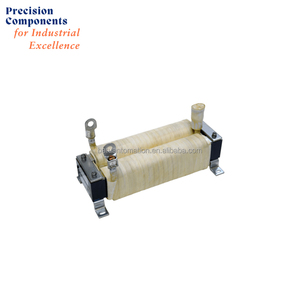
FR-HEL-H90K Mitsubishi DC Link CHOKE FR-HEL-H90K
High-saturation DC bus reactor mitigating input harmonic current ripple up to 40% on variable frequency drive installations.
 CEMarked
Engineered to mitigate total harmonic distortion (THD), dampen dV/dt transient spikes, and withstand the harsh climatic, thermal, and electrical demands of Saudi Arabia's industrial networks.
High-saturation DC bus reactor mitigating input harmonic current ripple up to 40% on variable frequency drive installations.
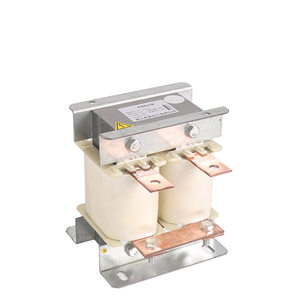
Advanced DC bus smoothing choke designed to suppress commutation notches and reduce ripple current heating.
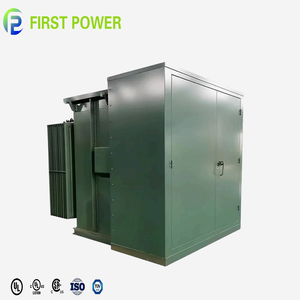
Engineered specifically for step-down transformation in harsh ambient petrochemical and industrial distribution setups.
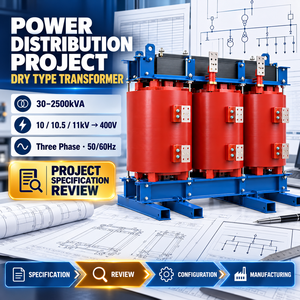
Cast resin high safety factor magnetic unit with superior short-circuit withstand capability for mining and processing plants.
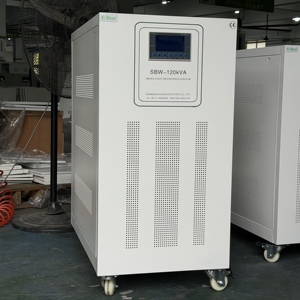
Dynamic compensation for severe brownouts and transient grid overvoltages across remote utility infrastructures.
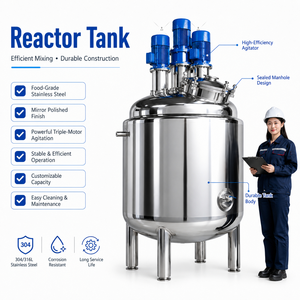
Engineered catalytic vessel system tailored for petrochemical upgrading operations and specialty hydrocarbon refining.
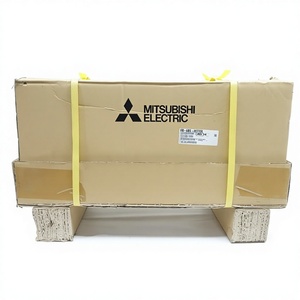
Heavy industrial choke rated for continuous duty in heavy continuous motor pumping systems and extruders.
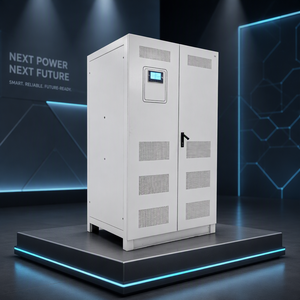
High-capacity servo drive stabilization designed to shield sensitive electronics from voltage surges and sags.
Modern industrial installations across the Kingdom of Saudi Arabia—from the petrochemical complexes of Jubail and Yanbu to the expansive mining infrastructures across the Central Region—rely heavily on Pulse-Width Modulated (PWM) Variable Frequency Drives (VFDs). While VFDs optimize operational process speed and dramatically conserve motor efficiency, they introduce significant power quality complications: destructive harmonic generation on the line side, and steep voltage rise times (high dV/dt) on the load side. Understanding and specifying heavy-duty line and load reactors is vital for industrial continuity in the GCC region.
A line reactor is a three-phase inductive component placed in series between the utility incoming power bus and the input rectifier of a VFD or industrial motor controller. In high-power installations operating within the Saudi Electricity Company (SEC) network, electrical grids often experience switching surges from capacitor banks, large utility grid transitions, and load fluctuations.
Load reactors are wired in series between the output terminals of the VFD inverter and the AC induction motor. Modern drives utilize high-speed Insulated Gate Bipolar Transistors (IGBTs) with extremely brief switching rise times (often less than 0.1 microseconds). When these rapid pulses travel across long cable leads—typical in deep well submersible pumps, desalination plants, and sprawling manufacturing facilities across Saudi Arabia—the impedance mismatch between cable and motor causes reflected wave phenomena.
| Evaluation Parameter | Line Reactor (Input Side) | Load Reactor (Output Side) |
|---|---|---|
| Installation Point | Between incoming AC power supply and VFD input terminals | Between VFD output terminals and motor connection box |
| Primary Target | Grid protection, harmonic current reduction, surge smoothing | Motor insulation integrity, dV/dt damping, bearing protection |
| Impedance Standard | 3% (standard mitigation) or 5% (high-harmonic environments) | 3% (cable runs up to 100m) or 5% / Sine Filters (>100m) |
| Frequency Domain | Fundamental grid frequency (50Hz or 60Hz) | Carrier switching frequency (2kHz to 16kHz) + Fundamental |
| Core Laminations | High-grade silicon steel optimized for low line-frequency core loss | Grain-oriented silicon steel with low loss at high carrier harmonics |
Tailored engineering deployments serving critical national infrastructure projects and heavy industrial zones.
Installed across Yanbu and Jubail plants to protect 6-pulse and 12-pulse pumps, compressors, and high-volume cooling tower fans. With ambient desert temperatures routinely exceeding 50°C, our Class H (180°C) and Class C (200°C) vacuum pressure impregnated (VPI) reactors ensure continuous thermal dissipation without derating.
Crucial for SWCC (Saline Water Conversion Corporation) and independent water projects. Multi-megawatt high-pressure intake pumps require output load reactors to dampen excessive dV/dt transients across long cable runs connecting centralized electrical substations to pump facilities.
Crushers, ball mills, and conveyor drives in remote processing regions encounter erratic rural grid voltages. Our line reactors stabilize voltage sags and surge harmonics, preventing catastrophic downtime in critical processing plants.
The Saudi Electricity Company and SASO are intensifying power quality mandates. Plants injecting harmonic distortion above IEEE 519 boundaries face severe financial penalties. The demand for 5% input reactors and tuned harmonic filter combinations has grown exponentially.
Massive infrastructure drives demand clean sinusoidal power for microgrids, zero-carbon desalination systems, and smart HVAC architectures. Equipment specifiers require CE-marked, environmentally rugged magnetics with long operating life spans.
With Saudi Arabia operating on a standardized 60Hz frequency (at 400V, 380V, 220V, and 127V levels), imported European and Asian machinery must be adapted. Our line reactors and step-down autotransformers ensure seamless cross-standard compatibility without excessive thermal losses.
Combining over 25 years of specialized magnetic engineering with world-class computerized testing protocols.
Backed by our parent firm's legacy since 1990 building PLC, SCADA, and hazardous-area panels, our reactors are engineered with practical panel-builder space, clean lug layouts, and low heat dissipation footprints.
Every reactor undergoes automated full-load impedance testing, Double Voltage Double Frequency (DVDF) induced overvoltage checks, digital LCR inductance analysis, and infrared thermal scan verifications prior to dispatch.
Operating high-capacity automated foil/wire winding systems and state-of-the-art VPI impregnation tanks capable of building custom-rated line/load reactors up to 2500A and power transformers up to 5000kVA.
Engineered to international IEC 60076-6 and IEEE standards with formal CE marking, ensuring immediate project clearance by third-party inspection agencies across the Middle East and worldwide export markets.
Line and load reactors are primarily selected based on motor full-load amperes (FLA) and required impedance percentage (usually 3% or 5%). For standard motor runs up to 30 meters, a 3% line reactor suffices. For operations near sensitive equipment or compliant with IEEE 519, a 5% impedance reactor is specified. Because Saudi Arabia operates at 60Hz, inductive reactance (XL = 2πfL) increases by 20% compared to 50Hz systems; all our units are specifically calibrated for 60Hz operation to deliver precise impedance values without under-sizing.
Yes. Standard off-the-shelf reactors rated for 40°C ambient temperatures will suffer severe thermal degradation in Saudi installations where summer switchgear room temperatures can reach 50°C. We construct our reactors using Class H (180°C) and Class C (200°C) insulation systems utilizing vacuum pressure impregnation (VPI) with solvent-free polyester resins, guaranteeing maximum thermal dissipation without nuisance thermal cutouts.
When the lead length between the VFD and the AC motor exceeds 30 meters (approximately 100 feet), reflected wave phenomena can escalate peak voltages up to 2.5 times the bus voltage. For runs between 30m and 150m, a 3% to 5% load reactor is mandatory to preserve motor turn-to-turn insulation. For extreme runs exceeding 150m—such as submersible pumps in agricultural and oil extraction sites—we recommend our high-attenuation sine wave filters.
Every reactor shipment is dispatched with routine factory test certificates (FAT) generated from our automated computerized testing panels. Documentation includes inductance measurement (LCR), DC resistance checks, insulation resistance (Megger), Double Voltage Double Frequency (DVDF) overvoltage results, and CE conformity declaration documents compliant with SASO SABER registration prerequisites.
Consult with our senior application engineers to calculate exact impedance values, harmonic mitigation specifications, and thermal tolerances for your upcoming projects across Saudi Arabia and the GCC.
Contact Us