CEMarked CEMarked
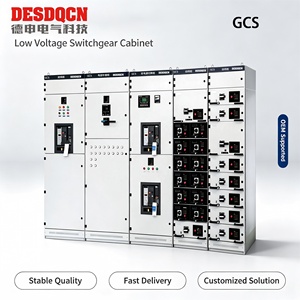
Complementary medium- and low-voltage magnetic solutions designed for rugged deployment alongside high-performance input AC reactors.
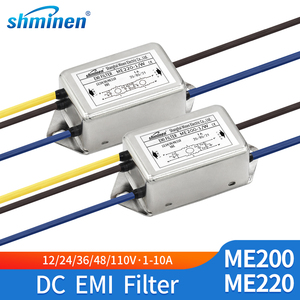
In modern industrial topologies across Israel, the widespread implementation of variable frequency drives (VFDs), uninterruptible power supplies (UPS), and thyristor-controlled rectifiers has caused non-linear loading to surge. A 3-phase input AC reactor—often termed a line reactor or line choke—is an inductive element inserted directly between the incoming AC power source and the input terminals of the power electronic converter. Its primary objective is to introduce a controlled inductive reactance ($X_L = 2\pi f L$) into the line, serving as a dynamic electromagnetic barrier against high-frequency transients, current spikes, and harmonic distortion.
Without an engineered input AC reactor, a standard six-pulse bridge rectifier draws non-sinusoidal discontinuous current pulses directly from the utility grid. These pulses generate sharp voltage notches across the system impedance, leading to Total Harmonic Current Distortion ($THD_i$) values frequently exceeding 80% to 120%. By introducing a calculated line impedance—conventionally rated at 2% to 4% (standard duty) or 5% to 7% (heavy industrial/power quality critical)—the input AC reactor rounds off the current peaks, extends the conduction angle of the diode bridge, and reduces $THD_i$ down to 30%–35%. Furthermore, it provides essential protection to the drive’s internal DC bus electrolytic capacitors by dampening supply-side transient surges, lightning overvoltages, and utility capacitor bank switching spikes.
| Technical Characteristic | Standard Industrial Value | Heavy-Duty / Harmonic Critical (Israel Projects) |
|---|---|---|
| Rated Operational Voltage ($U_n$) | 400V AC ± 10%, 3-Phase (50 Hz) | Up to 690V / 1000V AC (50/60 Hz Dual Certified) |
| Impedance Level ($U_k$) | 3% or 4% at nominal load & 50 Hz | 5% to 7% for high harmonic reduction & notch dampening |
| Core Material | Grain-Oriented Silicon Steel (CRGO M4/M5) | Low-loss, high-saturation cold-rolled CRGO / amorphous cores |
| Conductor & Insulation Class | Electrolytic copper / high-grade aluminum, Class H (180°C) | Class C (200°C / 220°C Nomex insulation), Vacuum Impregnated |
| Overload Capability | 150% rated current for 60 seconds | 200% for 60s, 300% surge withstand for 10ms |
| Harmonic Withstand Capacity | Designed for 5th, 7th, 11th, 13th harmonics | Full fundamental + harmonic spectrum spectrum without core saturation |
| Insulation & Dielectric Strength | 3.0 kV AC / 50Hz / 60 seconds (windings to ground) | 4.5 kV AC / 50Hz reinforced insulation for marine/industrial environments |
| Cooling & Environmental Rating | AN (Air Natural), IP00 / IP20 enclosed | Forced Air / Heavy-Duty IP23 or IP54 treated for salty/desert ambient |
Engineered for extreme operating environments: from coastal high-salinity atmospheres to desert solar plants and ultra-pure high-tech fabrication nodes.
At mega-desalination hubs along the Mediterranean coastline (such as Sorek, Hadera, and Ashdod), multi-megawatt high-pressure reverse osmosis pumps utilize medium-to-low voltage VFDs. Our 5% input AC reactors provide essential mitigation against coastal grid voltage dips, prevent line notches from affecting sensitive plant SCADA, and dissipate harmonic heat safely in ambient conditions up to 50°C.
Israel's Silicon Wadi and southern wafer manufacturing facilities in Kiryat Gat require near-zero Total Harmonic Distortion for sensitive lithography and wet etching equipment. Applying low-loss input AC reactors on HVAC chilling motors, recirculation fans, and automated vacuum pumps suppresses high-frequency carrier interference, protecting microelectronic fabrication yields.
Large-scale solar parks and battery energy storage systems (BESS) installed in the Arava and Negev regions face severe diurnal thermal cycling. AC chokes engineered with Class H Nomex insulation and vacuum-pressure impregnated resin prevent coil delamination and withstand aggressive ambient dust and temperature spikes while delivering smooth grid-tie coupling.
Industrial operations at Sdom and the Dead Sea basin operate in some of the most corrosive, chemically saturated, and thermally hostile environments in the world. Our line reactors feature corrosion-resistant core finishes, double vacuum-pressure impregnation (VPI), and rugged copper busbar terminals that eliminate hot-spot oxidation caused by airborne salts and bromine vapors.
Israel's national water carrier operates high-volume deep-well submersible pumps across remote locations. VFD-driven booster stations subjected to long feeder lines experience significant voltage reflection and phase unbalance. Input line reactors stabilize the motor drive front-end, absorb upstream power surges, and prevent unexpected pumping downtime.
Hyperscale cloud data centers situated around Tel Aviv and central Israel operate massive banks of redundant UPS modules and precision CRAC cooling systems. Input line reactors installed ahead of static transfer switches and UPS rectifiers decouple harmonic resonance, preventing nuisance tripping of municipal protective breakers.
The Israeli electrical landscape is undergoing a structural transformation driven by the Israel Electric Corporation (IEC - חברת החשמל) grid codes and strict oversight by the Electricity Authority (רשות החשמל). The country operates on an isolated electrical island grid, meaning it lacks synchronous AC interconnections with neighboring national grids. Consequently, frequency deviations and harmonic pollution have a significantly more acute impact on regional voltage stability than in interconnected European grids.
Industrial facility managers and EPC contractors are mandated to comply with the Standards Institution of Israel (SII - מכון התקנים הישראלי) regulations, which closely mirror IEC 60076-6 (Reactors), IEC 61558-2-20, and international power quality standards such as IEEE 519-2022. Key market and technical trends include:
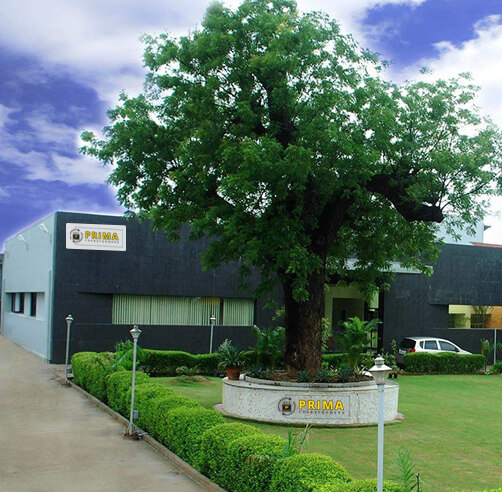
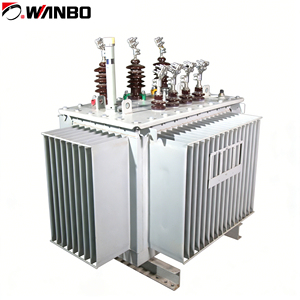
Operating a dedicated manufacturing and testing facility spanning over 5,500 m², our facilities are equipped with specialized automated winding machines, precision foil winding systems, and vacuum pressure impregnation (VPI) autoclaves designed to produce ultra-low-loss line reactors and transformers up to 5000kVA.
Direct technical and commercial answers addressing customs, grid parameters, impedance sizing, and local testing standards.