 CEMarked CEMarked
Discover our core lineup of high-efficiency liquid-immersed and cast resin transformers, engineered with low-loss grain-oriented silicon steel cores, biodegradable synthetic esters, and robust thermal dynamics conforming to Statnett standards, EN 50588-1, and IEC 60076.
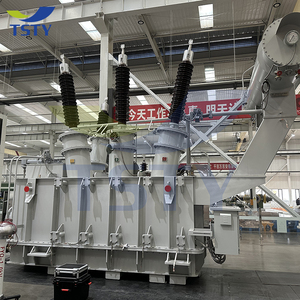
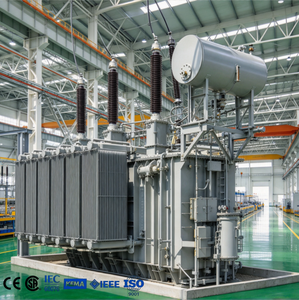
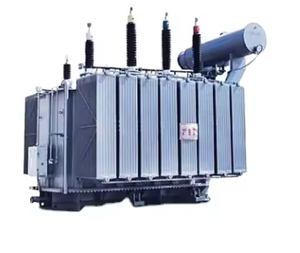
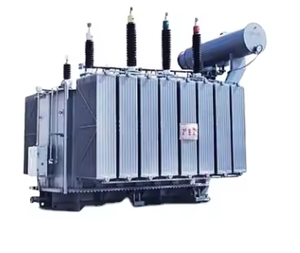
Norway stands as a global beacon for clean electricity, generating over 98% of its domestic electrical power from renewable assets, predominantly run-of-river and reservoir-fed hydroelectric stations, supplemented by burgeoning onshore and offshore wind generation. However, connecting heavy industrial equipment, high-capacity subsea links, and continuous process facilities to this dynamic grid demands an acute understanding of regional environmental and electrical specifications. As experienced industrial power transformer manufacturers and global exporters, our engineering teams build transformers that satisfy the rigorous demands of Statnett (Norway's transmission system operator), regional DSOs (such as Elvia, Tensio, and BKK), and harsh Nordic atmospheric classifications.
Operating transformers in Norway introduces three primary engineering hurdles: sub-zero cold-start temperatures reaching down to -40°C in inland regions such as Innlandet and Finnmark, extreme coastal salinity along the western fjords requiring ISO 12944 C5-M marine corrosion protection, and strict compliance with the European Union Ecodesign Directive (Tier 2 mandatory load and no-load loss limits under Regulation EU 2019/1783, incorporated via EEA agreements). Standard off-the-shelf transformers routinely suffer from premature dielectric failure, brittle elastomer seals, and excessive operational acoustic resonance in such unforgiving environments. Our heavy-duty industrial transformers are customized from the core laminations outward to eliminate these operational vulnerabilities.
Transformers deployed at coastal aquaculture facilities, aluminum smelters in Sunndal, or shore-to-ship charging berths in Bergen are exposed to relentless maritime salinity and humidity. Our enclosures feature hot-dip galvanization and multi-coat C5-M epoxy polyurethane paint regimes tested to 1440 hours of salt spray, paired with 316L stainless steel hardware and hermetically sealed tanks.
In harsh Nordic winters, conventional mineral oils experience viscosity spikes that inhibit natural convection cooling and threaten dielectric clearance. We supply biodegradable synthetic and natural ester fluid transformers (MIDEL 7131 / Envirotemp FR3) certified for fire safety (K-class) and fluid flow down to -50°C pour points, protecting both the environment and the asset.
Stepped generation from hydro turbines and variable-frequency feeds from wind parks inject substantial high-frequency harmonics into step-up transformers. Our design integrates electrostatic shielding between primary and secondary copper windings, electro-tin plated busbars, and heavy step-lap CRGO core stacking that suppresses stray flux heating and eddy losses.
Selecting the optimal transformer topology requires balancing dielectric fluid choice, cooling methodology (ONAN, ONAF, KNAN, AN/AF), environmental containment regulations, and total cost of ownership (TCO) calculated through capitalized loss formulas (A and B factors). Below is a comparative technical matrix designed for procurement managers, substation engineers, and industrial plant operators throughout Norway.
| Transformer Type | Primary Voltage Range | Dielectric / Insulation | Cold Limit / Ambient | Key Norwegian Application | Loss Efficiency Standard |
|---|---|---|---|---|---|
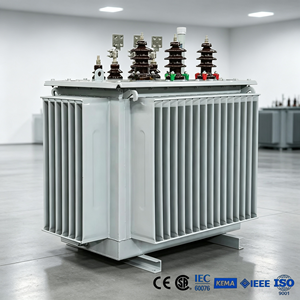
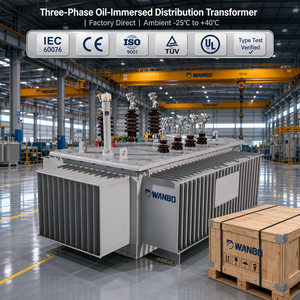
| Hermetically Sealed Mineral Oil (S20 Series) | 11kV, 22kV to 36kV | Inhibited Mineral Oil (IEC 60296), Class A (105°C) | -30°C to +40°C | Municipal utility distribution, secondary substations, and light manufacturing | EU 2019/1783 Tier 2 |
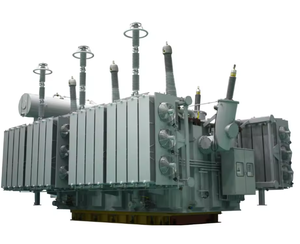
| High-Voltage Industrial Power (SZ11 / YAWEI) | 33kV, 66kV, 110kV to 220kV | High-Grade Diala Oil, High-Density Pressboard, Radial Winding | -40°C with preheat relays | Primary grid step-down, ferroalloy smelting, chemical plants (Porsgrunn) | Statnett TSG Compliant |
| Synthetic Ester High-Fire Point Substation | 11kV, 22kV, 33kV, 66kV | Synthetic Ester (IEC 61099 K-class >300°C fire point) | -50°C Pour Point (MIDEL 7131) | Offshore platform tie-ins, environmentally sensitive salmon fjords, underground caverns | Tier 2 Eco-Design |
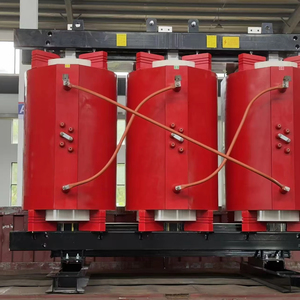
| Cast Resin Dry-Type Transformer (SCRB) | 6kV, 10kV, 11kV to 24kV | Epoxy Quartz Vacuum Impregnated, Class F (155°C) or H (180°C) | -25°C indoor conditioned (C2, E3, F1 rated) | Data center server halls (Telemark, Oslo), subsea road tunnel ventilation, commercial docks | EN 50541-1 Certified |
| Generation Step-Up (GSU) 60MVA+ | 11kV/115kV, 11kV/132kV | Pure Copper Disc/Pie Winding, Multi-duct Forced Oil | -35°C ambient | Hydroelectric turbine halls, run-of-river stations, onshore wind clusters | IEC 60076-1 / Low Dk |
Crucial Procurement Note for Norwegian Engineering Contractors: Under Norwegian regulations governed by the Norwegian Directorate for Civil Protection (DSB) and Statnett, step-up and substation distribution transformers must feature certified short-circuit withstand capabilities verified by independent high-power laboratory testing. All our core power transformers are manufactured with circular disc windings anchored by high-tensile clamping rings to absorb mechanical short-circuit peak forces exceeding 100kA without physical lamination displacement.
Norway is accelerating four major infrastructural transformations that directly impact transformer design requirements: the rapid expansion of high-density hyperscale green data centers, zero-emission shore power electrification (Onshore Power Supply - OPS) across cruise and cargo terminals, the scale-up of green hydrogen and ammonia electrolyzers, and the deep modernization of vintage hydroelectric substation fleets built in the mid-to-late 20th century.
Norwegian harbors from Oslo to Tromsø are mandating shore-side electrical hookups to eliminate vessel diesel auxiliary emissions while berthed. Shore connection transformers face steep intermittent load cycling, high inrush currents upon switch-in, and dual 50Hz/60Hz frequency translation demands. Our custom step-down transformers feature reinforced copper shields, vibration-damped sub-bases, and low impedance margins to prevent voltage sags during high-power maritime vessel tie-ins.
Hydrogen production requires rectifying alternating medium-voltage grid feeds into smooth, ultra-high DC currents. Rectifier-duty transformers must continuously handle thermal stresses induced by non-sinusoidal currents and harmonic orders (5th, 7th, 11th, and 13th). We build multi-pulse (12-pulse, 24-pulse) transformers equipped with extended cooling fins, heavy-cross-section transposed conductors, and de-rated thermal margins to guarantee 30+ years of uninterrupted life.
Given Norway's abundant low-cost renewable energy and cool climate, global tech giants are constructing immense computing centers across Ringerike, Telemark, and Hamar. Data center power trains tolerate zero power interruptions and mandate extremely low acoustic emissions to comply with municipal noise thresholds. Our cast resin and low-loss oil-immersed transformers incorporate stepped-lap joints cut on automated precision laser lines, vibration isolating footings, and electrostatic earth screens that maintain noise levels well below NEMA/IEC limits while providing clean galvanic separation for mission-critical server hardware.
Backed by an industrial automation and power magnetics heritage dating back to 1990, and incorporated as a focused transformer manufacturing facility in 2006, our 5,500 m² state-of-the-art plant delivers an exhaustive suite of control transformers, heavy oil-immersed power units up to 60MVA / 220kV, dry-type solutions, and advanced power quality harmonic filters. We bridge the gap between bespoke electrical engineering and aggressive factory direct lead times, providing comprehensive documentation packages, full 3D CAD step files, and exhaustive factory acceptance testing (FAT) witnessed in-person or digitally via live telemetry.
Detailed engineering clarity for electrical EPCs, project consultants, and technical buyers importing high-voltage power transformers into the Nordic trade zone.
Norway enforces EU Regulation 2019/1783 (Ecodesign Tier 2) through the EEA Agreement. Our transformers achieve full compliance by utilizing high-permeability, domain-refined Grain-Oriented Silicon Steel (CRGO) stacked in step-lap mitered core configurations to slash no-load core losses (P0). Windings are executed exclusively with high-grade electrolytic copper conductors featuring optimized cross-sectional geometry to minimize load losses (Pk) and Eddy current skin effects. Every transformer shipped to Norway includes factory-certified test certificates listing exact no-load and load loss figures measured during computerized FAT.
Yes. For cold-climate installations in interior Norway or high-altitude mountain locations, we incorporate dielectric fluids formulated for extreme sub-zero operation. We specify low-pour-point naphthenic mineral oils or synthetic esters (pour point -50°C, viscosity < 200 mm²/s at -30°C). Additionally, we fit thermostatically controlled magnetic oil level gauges, nitrile/fluorosilicone sealing gaskets that preserve elasticity without embrittlement, and optional integrated tank pre-heating jackets for installations requiring immediate black-start capability.
For installations in western and northern coastal fjords, transformer tanks, conservators, and radiator panels are blast cleaned to Sa 2.5 cleanliness per ISO 8501-1, followed by a zinc-rich epoxy primer, an intermediate epoxy micaceous iron oxide (MIO) barrier coat, and a durable aliphatic polyurethane topcoat. This achieves an ISO 12944 C5-M (Very High Marine) classification capable of enduring corrosive salt-laden maritime winds. All external clamping fasteners, terminal boxes, and breather piping are fabricated from AISI 316L stainless steel.
Yes. Many regional Norwegian distribution networks operate with legacy 11kV lines that are systematically converting to 22kV distribution. We design dual-voltage primary transformers fitted with internal or external de-energized tap changers (off-circuit tap switch) that permit easy re-configuration from 11,000V series to 22,000V parallel connections on-site, safeguarding your infrastructure investment against future network upgrades.
Every single unit undergoes rigorous computerized FAT encompassing: measurement of winding resistance via 25V AC/DC milli-ohm meters, voltage ratio and vector group verification, computerized open-circuit (no-load loss and no-load current) and short-circuit (impedance and load loss) testing, separate source AC withstand voltage testing, Double Voltage Double Frequency (DVDF) induced overvoltage testing, insulation resistance testing (Megger 5kV), and pressure/vacuum leak testing of the assembled tank. Lightning impulse test reports (BIL up to 650kV), temperature rise tests, and partial discharge (< 5pC) reports are available upon request.
Whether you require a standard 630kVA Ecodesign Tier 2 substation transformer, a 25MVA on-load tap changing unit for grid integration, or a custom harmonic-filtering drive transformer for heavy marine processing, our engineering specialists are ready to calculate your electrical parameters, dimensional envelopes, and capitalized loss guarantees.