 CEMarked CEMarked
High-reliability control architectures designed for demanding mechatronic, intralogistic, and manufacturing deployments across Greater Tokyo and the Keihin Industrial Corridor.
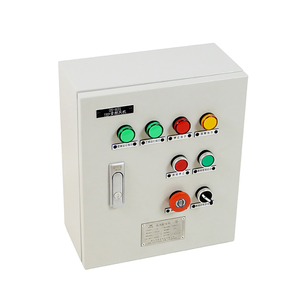
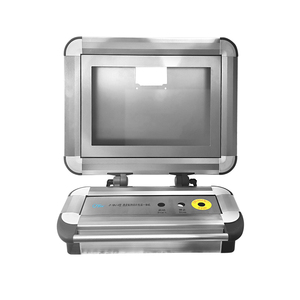
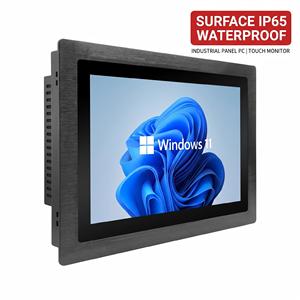
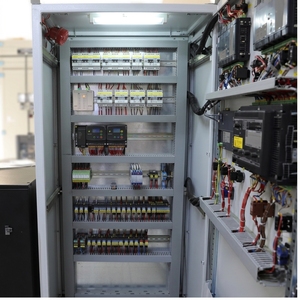
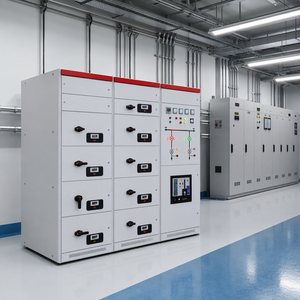
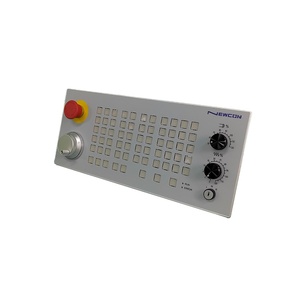
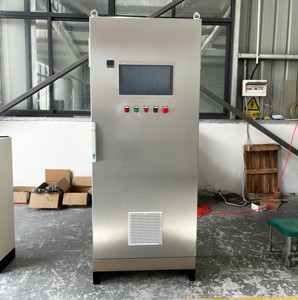
The Tokyo industrial sphere, anchoring the greater Kanto industrial region, presents one of the world's most demanding environments for industrial control panel engineering and power automation. Operating under a rigorous regulatory matrix that bridges the Ministry of Economy, Trade and Industry (METI) technical requirements, the Electrical Appliance and Material Safety Law (DENAN / PSE mark considerations), and JIS (Japanese Industrial Standards) compliance, importing control assemblies into Tokyo necessitates far more than basic panel building. It demands deep harmonic engineering, seismic structural hardening, and absolute galvanic stability.
A primary technical hurdle for overseas OEMs supplying equipment to Tokyo and surrounding prefectures (Kanagawa, Saitama, Chiba) is the geographic frequency partition of Japan. Tokyo operates strictly on a 50 Hz utility grid under Tokyo Electric Power Company (TEPCO) Power Grid distribution. Equipment engineered in standard 60 Hz export territories experiences an immediate 17% reduction in magnetic core impedance when installed in Tokyo. Without precise magnetic reassessment, this leads to transformer core saturation, elevated magnetizing inrush current, coil overheating, and inadvertent tripping of protective switchgear.
Unlike conventional control panel assemblers who outsource critical inductive components, our solutions leverage an in-house manufacturing heritage dating back to 1990. We build control transformers (50VA to 5000kVA) and line/load reactors (up to 2500A) tailored precisely for 50Hz thermal dissipation and high-inrush contactor loads.
Engineered for high-throughput robotics, semiconductor handling, and machine tooling in Tokyo’s Ota-ku mechatronic clusters. Our EtherCAT integrated industrial PC and HMI architectures achieve sub-microsecond synchronization jitter, driving multi-axis servos with zero frame drop.
Tokyo sits in a high-seismic vulnerability zone requiring structural cabinet designs certified to withstand intense horizontal and vertical peak ground accelerations without contact bounce, mechanical busbar de-seating, or structural weld fracture.
Precision-tailored control cabinet implementations engineered specifically for the distinct manufacturing profiles of the Tokyo-Yokohama industrial continuum.
Ota-ku represents the heart of Japan’s ultra-precision subcontracting and prototype machining. Control panels deployed here must occupy an ultra-compact footprint while delivering extreme electromagnetic compatibility (EMC). High-frequency spindle noise and electrical discharge machining (EDM) interference require our specialized line filters (up to 500HP) and heavy-duty galvanized shielding enclosures to safeguard sensitive micro-stepping algorithms from high-frequency harmonic corruption.
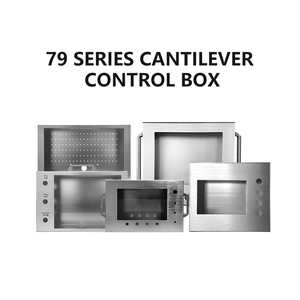
Our custom suspended cantilever operator panels allow five-axis CNC operators seamless ergonomics in tight footprint shop-floor facilities without sacrificing ingress protection (IP54/IP65).
The extensive multi-story automated distribution hubs along Tokyo Bay and Koto-ku rely continuously on high-density automated guided vehicles (AGVs), automated storage and retrieval systems (AS/RS), and conveyor networks. Ambient conditions feature fluctuating relative humidity, salt-laden coastal marine air, and non-stop operational duty cycles.
Our JXL Intelligent Distribution Panels utilize multi-stage electro-galvanized zinc coatings and anti-corrosive powder finishes paired with intelligent thermal management to eliminate internal condensation and combat coastal salt-fog atmospheric corrosion.
Cleanroom standards for semiconductor inspection, wafer dicing, and microelectronics packaging demand completely oil-free, fanless, and non-outgassing hardware architectures. Our 10.1-inch to 21.5-inch fanless industrial touch panel PCs feature passive heat-pipe dissipation, zero airborne particle generation, and SEMI S2 compliant emergency stop (E-stop) hardwired integration.
Integrated cast resin dry-type isolation transformers isolate sensitive test instrumentation from transient grid spikes, voltage sags, and harmonic cross-talk from heavy plant chillers.
Tokyo's high-rise commercial structures and metropolitan stormwater mitigation facilities (such as the G-Cans underground discharge canal network) mandate dual-redundant PLC and VFD pump control assemblies. Our pump and motor control panels incorporate active harmonic mitigation filters, ensuring total harmonic distortion (THD-I) is maintained below 5% to comply with TEPCO utility harmonic guidelines.
Programmable logic controller setups integrate bilingual (Japanese/English) MCGS HMI interfaces, enabling seamless transition between municipal maintenance contractors and international facility engineers.
Procuring industrial control gear for the Tokyo capital region involves navigating four substantial market and macro-technological transitions. Exporters must align their electrical systems with Japan's "Society 5.0" strategic roadmap and structural demographic realities.
Japan faces a severe structural deficit of licensed electrical maintenance engineers (Denki Shunin Gijutsusha). Consequently, Tokyo plant managers demand control cabinets equipped with intelligent edge telemetry: remote cloud diagnostics, predictive breaker health monitoring, and modular tool-free component replacement that lower on-site maintenance requirements.
Japan’s Green Transformation (GX) initiative requires plants to dramatically cut parasitic electrical consumption. Control cabinets must incorporate ultra-efficient IE4/IE5 drive systems, low iron-loss transformers, and active sleep-state energy management systems capable of tracking live kWh consumption over Modbus TCP or CC-Link IE Field networks.
Tokyo manufacturing headquarters increasingly demand seamless integration between shop-floor PLCs and corporate ERP/MES clouds. Our EtherCAT and Linux/Windows-based industrial PCs serve as direct IoT edge gateways, encrypting and streaming telemetry directly into enterprise architectures without secondary intermediate gateways.
Engineered to reconcile Western (IEC/UL) panel topologies with strict Japanese Industrial Standards (JIS) and TEPCO grid conditions.
| Engineering Dimension | Standard International Spec | Tokyo / Kanto Industrial Requirement | Our Integrated Manufacturing Standard |
|---|---|---|---|
| Grid Frequency | 60 Hz or 50/60 Hz Universal | Strict 50 Hz Grid (TEPCO Distribution Zone) | 50Hz optimized iron-core transformers; zero 60Hz derating risk |
| Utility Line Voltage | 380V - 480V 3-Phase | 200V 3-Phase / 100V Single-Phase | Integrated multi-tap step-up/down matching autotransformers |
| Wiring Color Code | IEC 60204-1 (Black AC, Blue DC) | JIS C 8436 / Traditional Japanese Standards | Customized wire color-coding & ferrule numbering to client prints |
| Seismic Tolerance | Standard Base Bolt Anchorage | High Seismic Acceleration (Class 1.0G - 2.0G) | Reinforced internal steel framing, DIN rail seismic end-brackets |
| HMI Localization | Single Language (English) | Bilingual (Kanji Japanese / English) | Dual-language toggleable UI on MCGS & capacitive touch IPCs |
| Terminal Technology | Standard Screw Clamps | Anti-loosening Spring Terminals (Vibration) | Push-in CAGE CLAMP® vibration-proof spring connections |
Originating from our parent organization established in 1990—pioneers in PC, PLC, and SCADA-based automation control panels, including flameproof, pressurized, and intrinsically safe systems for explosive environments—and expanded via Prima Transformers Pvt. Ltd. (est. 2006), our 5,500 m² advanced manufacturing facility delivers end-to-end electrical integration found nowhere else in the export trade.
Because we design and wind our own internal power quality magnetics, we eliminate the primary point of failure in exported automated cabinets: inductive mismatching. Every panel bound for export to the Port of Tokyo or Port of Yokohama undergoes exhaustive computerized pre-dispatch routine testing verified on automated test consoles.
Direct technical answers addressing the compliance, logistical, and electrical engineering queries of Japanese buyers and system integrators.
Connect directly with our senior application engineers to discuss 50Hz power sizing, JIS/IEC compliance matrices, bilingual HMI architectures, and receive a formal technical quotation within 24 hours.
Send an Inquiry