 CEMarked CEMarked
Pre-engineered and customizable electrical distribution cabinets, high-inrush reactors, noise mitigation filters, and industrial computing platforms for North American assembly cells.
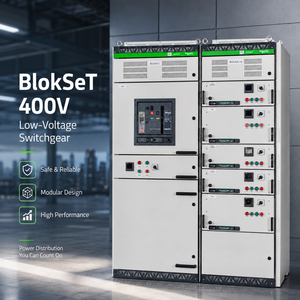
Designed for heavy industrial deployment requiring up to 150kA interrupting capacity, smart energy metering, and fault containment.
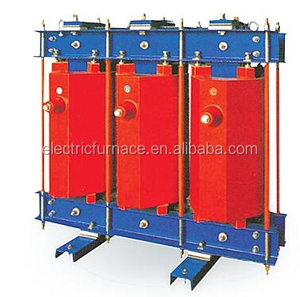
Engineered to eliminate sub-cycle current ripple and stabilize line harmonics in multi-axis robotic drives and heavy rectification units.
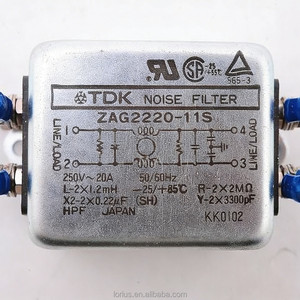
High-attenuation industrial EMI line filter suppressing conducted interference across high-frequency ranges for precision automation instrumentation.
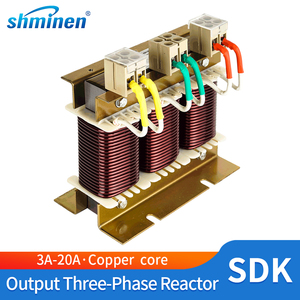
Essential line reactor (1.5kW to 3.7kW+) mitigating extreme dv/dt spikes, protecting motor windings against corona degradation on extended cable feeds.
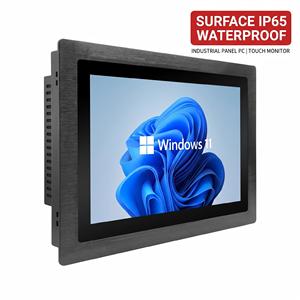
Sealed NEMA 4/IP65 aluminum bezel panel computer optimized for SCADA visualization, edge PLC runtime, and washdown factory automation lines.
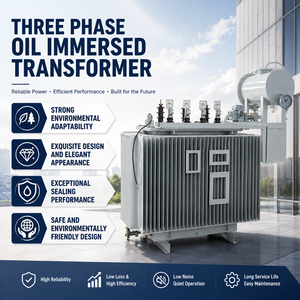
High-efficiency utility step-down unit delivering ultra-quiet performance and high thermal dissipation for outdoor manufacturing installations.

Supplemental high-capacity cooling designed to combat hot-spots, closed-cabinet thermal runaway, and electronic derating during peak operational runs.
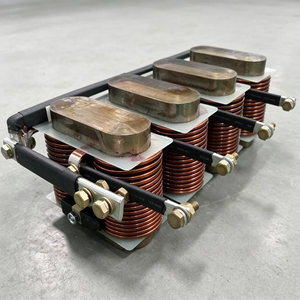
Engineered with nanostructured amorphous alloy cores to minimize high-frequency eddy current losses across high-current renewable and drive links.
Building high-performance electrical enclosures for US-based manufacturing demands total synchronization with the National Electrical Code (NEC NFPA 70), UL 508A (Standard for Industrial Control Panels), and NFPA 79 (Electrical Standard for Industrial Machinery). Industrial facilities—spanning automotive assembly in Michigan, advanced microelectronics foundries in Texas, and pharmaceutical packaging hubs in New Jersey—cannot afford unscheduled outages caused by nuisance breaker trips, uncontrolled thermal build-up, or electromagnetic interference.
As plant electrical demands shift toward software-defined machinery, modern panels are no longer simple containment structures for contactors and relays. They are unified power management nodes where 480V 3-phase power, variable frequency drives (VFDs), distributed I/O modules, and edge-computing IPCs operate side-by-side. Supplying these complex cabinets requires deep domain mastery over magnetic saturation, power factor stabilization, and component thermal dynamics under sustained continuous duty.
Examining field-proven integration strategies where custom magnetic sizing, thermal conditioning, and noise filters directly resolve harsh shop-floor environments.
Heavy servo drive density causes immense reflected wave voltages and high-frequency noise. Deploying Minen SDK Output Reactors along with dedicated line-side isolation suppresses dv/dt degradation, insulating drive-motor cabling across high-speed stamping and battery cell assembly lines throughout the Midwest corridor.
Gulf Coast refining infrastructure demands explosion-proof, flameproof, and pressurized NEMA 7/4X panel engineering. Our legacy in pressurized and intrinsically safe systems guarantees robust component isolation, minimizing internal thermal dissipation through low-loss amorphous reactors.
Cleanroom-adjacent distribution requires clean sinusoidal waveforms free of electromagnetic clutter. Implementing high-attenuation EMI filters (such as the CT ZAG2220 series) eliminates spurious high-frequency noise that causes tool drift in photolithography and wafer-handling robotics.
Autonomous distribution centers run thousands of conveyors and variable-frequency sorting motors 24/7. Integrating smart modular switchgear with 150kA fault ratings isolates regional phase anomalies, ensuring continuous package sortation without micro-stoppages.
Consult this engineering matrix when sizing panel line-ups, circuit protection, and magnetic components.
| Subsystem / Subassembly | Standard Rating Range | Regulatory Alignment | Primary Engineering Function |
|---|---|---|---|
| Main Power Distribution Panels | 600V Max, 100A – 4000A, Up to 150kA SCCR | UL 508A, NFPA 70 (NEC Art. 409) | Main plant power distribution, selective coordination, fault containment |
| Control & Machine Tool Transformers | 50VA to 5,000kVA (Single / Three-Phase) | UL 5085, CE, IEEE C57 | Step-down control isolation, coil inrush support, clean reference grounding |
| Input / Output Line Reactors | Up to 2,500A (3% to 5% Impedance) | IEEE 519, IEC 60076-6 | Total Harmonic Distortion (THD) attenuation, motor dv/dt suppression |
| DC Smoothing & Link Chokes | High Current, Amorphous & Ferrite Cores | UL Recognized, CE Class H | DC bus ripple filtering, inverter stabilization, regenerative energy absorption |
| Active Thermal Management | 2,000 to 20,000+ BTU/hr Enclosure AC | NEMA 4, 4X, 12, IP65 | Electronic derating prevention, moisture elimination, positive pressure seal |
The manufacturing landscape in the United States is navigating a structural transition influenced by reshoring initiatives, the CHIPS and Science Act, and widespread electrification. Automation panel builders face three primary shifts:
1. Strict Short-Circuit Current Rating (SCCR) Scrutiny: Electrical inspectors (AHJs) strictly enforce NEC Article 409 requirements. Panels must display clear, verified SCCR markings calculated using either the weakest branch component or through coordinated type-tested assemblies capable of sustaining up to 100kA–150kA without catastrophic housing rupture.
2. Adoption of Low-Loss Amorphous Magnetics: With corporate sustainability mandates and escalating industrial kilowatt-hour tariffs, traditional silicon steel core transformers and chokes are increasingly replaced with nanocrystalline and amorphous alloy magnetic materials. These reduce no-load core losses by up to 60%, yielding cooler panel enclosures and lowered air-conditioning loads.
3. Convergence of Edge IPCs with Operational Hardware: The traditional boundary separating the office-floor SCADA and the factory-floor programmable logic controller has vanished. Fanless touch panel PCs featuring IP65 washdown ratings and Intel architectures are embedded directly into machine control doors to execute local machine learning inference, real-time vibration FFTs, and direct cloud telemetry.
Combining heavy-gauge precision enclosure fabrication, high-voltage computerized testing, and advanced magnetic winding across modern production facilities.
Founded from a parent lineage dedicated to PLC, SCADA, and complex hazardous-area control systems since 1990, our engineering reflects deep insight into real-world panel design: clean wire raceways, sensible thermal ducting, and robust short-circuit ride-through.
Our expansive Santej manufacturing plant houses dedicated core-slitting lines, automated winding machines, vacuum pressure impregnation (VPI) chambers, and sheet-metal bending suites for tailored OEM integration.
Over 45 major multinational OEMs, engineering firms, and EPC contractors—including names like Siemens, Tata, Jindal, BHEL, and Suzlon—rely on our engineered assemblies for their most critical global installations.
Every single magnetic transformer, reactor, and distribution module undergoes exhaustive computerized electrical profiling before entering packing crates.
Clear, direct answers regarding UL alignment, thermal calculations, Short-Circuit Current Ratings, and international export logistics.
Connect with our senior application engineering team to evaluate single-line diagrams, review short-circuit specifications, or obtain a rapid technical quote for custom transformers, line reactors, and distribution assemblies.
Inquire Now