 CEMarked CEMarked
Navigating the intersection of severe continental thermal fluctuations (-50°C to +45°C), legacy GOST grid interoperability, and stringent international IEC/CE reliability benchmarks for energy extraction and metallurgy in Kazakhstan.
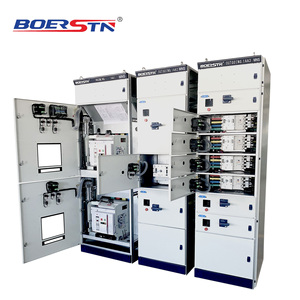
Tested and certified electromagnetic equipment optimized for distribution substations, motor drives, and hazardous environment enclosures.

Tailoring electromagnetic core loss, creepage distances, and insulation systems to withstand the regional microclimates and industrial demands of Central Asia.
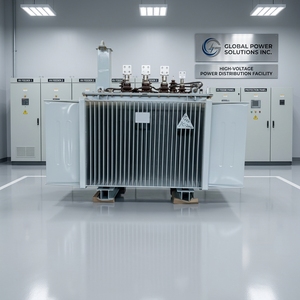
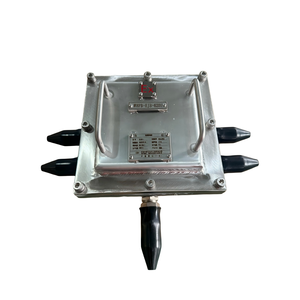
In upstream exploration hubs such as Tengiz, Kashagan, and Karachaganak, transformer installations encounter corrosive marine air, highly sulfurous hydrocarbon atmospheres (H2S), and broad ambient thermal swings. Prima delivers hermetically sealed oil-immersed transformers and ATEX/IECEx certified flameproof auxiliary distribution enclosures. Nitrogen blanket systems, C5-M rated anti-corrosion epoxies, and Class F/H insulation preserve dielectric properties against oil degradation under heavy continuous pumping and catalytic cracking cycles.
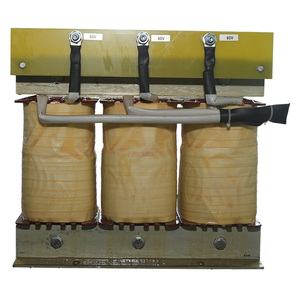
Steel mills, ferroalloy producers, and copper smelting facilities in Central and Eastern Kazakhstan operate heavy electric arc furnaces (EAF) and variable-speed drives (VSD) that inject intense 5th, 7th, and 11th harmonics back into step-down transformers. We deploy custom high-efficiency copper split-winding dual-phase input units paired with tuned line reactors up to 2,500 A and sine wave filters up to 500 HP. These solutions dissipate localized eddy-current heating and prevent secondary insulation puncture.
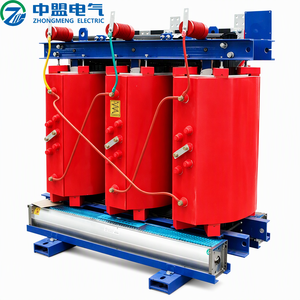
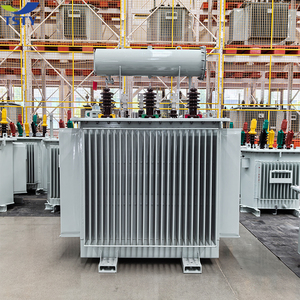
North Kazakhstan experiences severe blizzards (burans) dropping below -45°C, whereas southern desert basins experience searing solar heat above +45°C. In utility-scale solar installations and high-wind steppes, Prima provides SCB13 cast resin dry type transformers with epoxy-encapsulated coils, eliminating freezing-induced oil cracking. For liquid-filled variants, low-viscosity transformer oil with pour points below -55°C ensures reliable cold-start excitation without dielectric flashover.
| Equipment Category | Voltage & Capacity Range | Dielectric / Cooling Class | Kazakhstan Deployment Fit |
|---|---|---|---|
| Cast Resin Dry Type (SCB13/14) | 10 kV, 11 kV, 20 kV / 30 to 2,500 kVA | Class F/H, AN/AF Cooling, RS485 PT100 | Commercial basements, mining tunnels, indoor MCC rooms (Zero fire hazard) |
| Oil-Immersed Distribution (S11/S13) | 6 kV, 10 kV, 20 kV, 35 kV / Up to 5,000 kVA | Mineral Oil (Pour point < -50°C) ONAN/ONAF | Outdoor industrial substations, remote oilfields, utility rural feeders |
| Split-Winding Converter Units | Dual Secondary 3 kV/6 kV/10 kV / Custom kVA | Pure Electrolytic Copper Windings | Multi-pulse variable frequency drives (VFD) in heavy mining mills |
| Industrial Line & Load Reactors | 220 V to 690 V / Up to 2,500 A | Iron-core dry type, Class H, low loss | Suppression of dV/dt motor surges and drive rectifier line disturbances |
| Harmonic & Sine Wave Filters | Line voltages to 690 V / Up to 500 HP | L-C network configurations, high Q factor | Protecting pump and compressor motors over extended borehole cable runs |
How legislative modernization, renewable expansion, and digital grid telemetry are reshaping transformer procurement specifications through 2030.
Over 50% of operating distribution substations in the post-Soviet Central Asian grid have exceeded their 30-year design lifespan, resulting in elevated technical transmission losses (often surpassing 12-15%). Kazakhstan's national modernization programs mandate high-efficiency core structures using cold-rolled grain-oriented (CRGO) silicon steel or amorphous alloys, reducing no-load core losses by upwards of 30-40% compared to legacy TM/TMG transformers.
As Kazakhstan targets 15% renewable generation by 2030, expansive wind farms across the Dzungarian Gate and megawatt-scale PV arrays across Shymkent demand step-up transformers capable of handling intermittent generation, high voltage harmonics, and frequent no-load conditions. Step-up collector stations (0.69 kV or 0.8 kV to 10 kV/35 kV) must feature integrated electrostatic shielding and optimized thermal time constants.
Modern procurement policies enforced by industrial conglomerates like Kazakhmys, ERG, and KazMunayGas prioritize predictive asset health monitoring. Transformers are no longer isolated electromagnetic devices; they require integrated fiber-optic temperature sensors, digital oil level transmitters, dissolved gas analysis (DGA) monitoring interfaces, and MODBUS/IEC 61850 protocol outputs for remote dispatching across vast distances.
From panel-builder automation DNA since 1990 to our advanced 5,500 m² production and computerized testing facility in Santej, Ahmedabad.
Prima Transformers Pvt. Ltd., established in 2006 as a 100% subsidiary of Prima Automation (India) Pvt. Ltd. (operating since 1990), approaches transformer manufacturing from an end-user and systems-integrator perspective. Because our parent company specializes in PC, PLC, and SCADA-based control panels alongside pressurized and explosion-proof panels for extreme hazard zones, we understand the real-world operational strains transformers undergo inside actual industrial switchrooms.
Every transformer leaving our manufacturing floor incorporates optimized inrush VA ratings, low noise core clamping, robust insulation margins, and clean copper busbar terminations designed for rapid field integration.
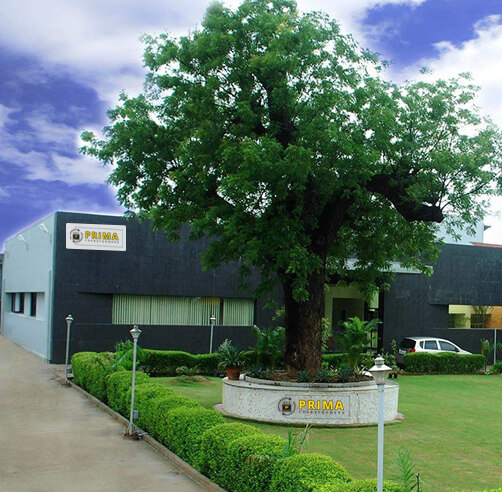
Automated test rigs for single & three-phase transformers measuring turns ratio, polarity, and excitation current with zero human error.
Double Voltage Double Frequency tests verify inter-turn and inter-winding insulation dielectric integrity under sustained overvoltages.
Automated computerized open-circuit and short-circuit verification accurately logging iron core and copper load dissipation parameters.
Milli-ohm winding bridge measurements (25V AC/DC) coupled with Megger insulation resistance and infrared thermographic temperature logging.
Addressing certification standards, customs clearance under EAEU/EAC regulations, cold-weather engineering, and logistics routes.