 CEMarked CEMarked
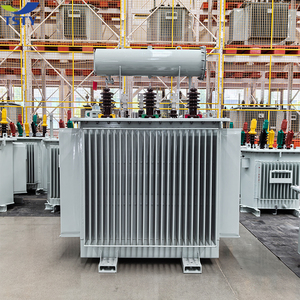
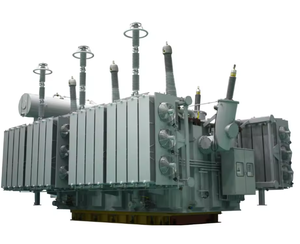
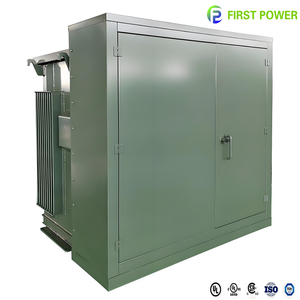
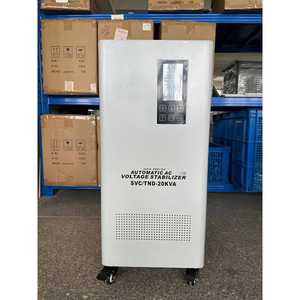
From dynamic servo-voltage stabilizers to MV/HV cast-resin transformers and active drive filtration, explore our robust apparatus engineered for industrial resilience in Kansai manufacturing hubs.
As the primary economic powerhouse of Western Japan, the Keihanshin metropolitan area (anchored by Osaka, Kobe, and Kyoto) hosts one of the world's most concentrated clusters of advanced precision engineering, robotics, chemical synthesis, and heavy manufacturing. However, the modernization of these production infrastructures has introduced severe power quality vulnerabilities. The widespread integration of 6-pulse and 12-pulse non-linear loads—predominantly Variable Frequency Drives (VFDs), computerized numerical controls (CNC), uninterruptible power supplies (UPS), and silicon-controlled rectifiers (SCRs)—has drastically elevated non-fundamental current harmonics across the localized electrical grid.
In alternating current power distribution, harmonics are sinusoidal voltages or currents having frequencies that are integer multiples of the fundamental power frequency. Serving Osaka’s 60 Hz distribution network operated by the Kansai Transmission and Distribution Grid (Kansai Electric Power Co. / KEPCO), unmitigated harmonic distortion can lead to catastrophic consequences. These include excessive eddy current losses, premature insulation thermal degradation in distribution transformers, nuisance tripping of residual current devices (RCDs), capacitive resonance in power-factor correction (PFC) banks, and corrupted high-speed serial bus communications in PLC networks.
As veteran Harmonic Filter Suppliers & Exporters serving Osaka, our technical mission centers on providing robust, CE-marked, and customized harmonic filtration solutions ranging from detuned passive LC shunt filters and wide-band passive harmonic filters (WPHF) to advanced Active Harmonic Filters (AHF) and line/load reactors up to 2500A. We ensure comprehensive compliance with both international benchmarks such as IEEE 519-2022 and localized Japanese regulatory codes including JIS C 4620 and the Japanese Ministry of Economy, Trade and Industry (METI) harmonic suppression guidelines.
Ensuring low voltage and medium voltage harmonic distortion factors (THDu < 3%, THDi < 5%) meet stringent utility interconnection agreements with Kansai Electric Power.
Eliminating transformer hot-spots caused by 5th, 7th, 11th, and 13th harmonic currents through engineered zero-phase flux traps and low-impedance copper pathing.
Carefully calculating and tuning inductive-capacitive parameters to avoid parallel resonance points coinciding with characteristic harmonic currents produced by automated lines.
Deploying harmonic filtration systems in Osaka requires intimate engineering familiarity with the industrial zoning, operational load profiles, and regional infrastructural conditions specific to Kansai’s commercial geography.
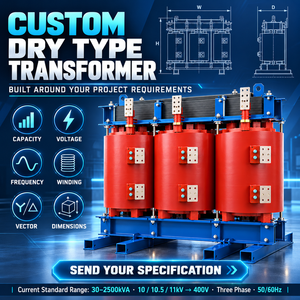
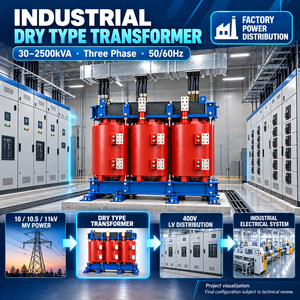
The Sakai-Senboku coastal petrochemical belt operates continuous process systems driven by high-capacity induction motors, large-scale pumps, and polymer synthesis extruders. These systems utilize multi-megawatt variable speed drives that inject continuous 5th and 7th order current harmonics back into the primary busbars. For these severe applications, our heavy-duty sine wave filters, passive LC traps, and custom three-phase dry-type or oil-immersed step-down transformers isolate sensitive telemetry apparatus from catastrophic commutation notches and total harmonic current distortion (THDi).
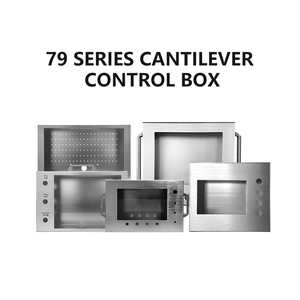
Higashiosaka is world-renowned for its dense network of small-to-medium precision manufacturing enterprises, mold fabrication shops, and multi-axis CNC machine centers. Here, multiple precision servo drives and high-frequency inverters operate under dynamic load fluctuations. Such installations are notoriously susceptible to neutral conductor overheating, phase voltage unbalance, and micro-surges that impair sensitive CNC encoders. Implementing our tuned line and load reactors, coupled with single-phase full-copper servo voltage stabilizers and IP54 aluminum operator enclosures, guarantees microsecond stabilization and eliminates transient harmonics that cause micro-machining deviations.
As Osaka solidifies its status as the secondary cloud and disaster-recovery data hub of Japan, ultra-reliable tier-3 and tier-4 colocation centers have proliferated around Yumeshima and Nanko. The dominant harmonic footprint here stems from high-density single-phase switch-mode power supplies (SMPS) generating massive 3rd order triplen harmonics (180 Hz on 60 Hz systems). These currents do not cancel out in the neutral wire; instead, they sum up arithmetically, causing neutral-to-earth voltage drifts and catastrophic core heating. We supply specialized zero-phase-sequence isolation transformers, Zigzag grounding reactors, and active harmonic filters designed to mitigate triplen currents right at the distribution switchgear level.
Driven by Kansai’s decarbonization targets, industrial facilities are installing commercial photovoltaic (PV) solar farms, battery energy storage systems (BESS), and water electrolysis plants. The bi-directional IGBT inverters required for grid tie-in generate high-frequency pulse-width modulation (PWM) carrier harmonics. Our sine-wave and du/dt suppression filters clean the inverter output waveform, matching the stringent 60Hz harmonic parameters required by local utilities.
When engineering harmonic suppression architectures for Japanese manufacturing plants, engineers must balance initial capital expenditure (CAPEX), total cost of ownership (TCO), operational life, and mitigation efficiency. Below is an engineering evaluation comparing traditional tuned LC networks with modern solid-state Active Harmonic Filters:
| Performance Characteristic | Passive Detuned Filter (LC Shunt) | Active Harmonic Filter (AHF / APF) | Sine Wave & dv/dt Filter |
|---|---|---|---|
| Primary Target Orders | Specific tuned harmonic (e.g., 5th, 7th, 11th) | 2nd to 50th harmonic simultaneously | Inverter switching frequency harmonics |
| THDi Mitigation Level | Reduces to < 8% - 12% THDi | Reduces to < 3% - 5% THDi | Transforms PWM output into pure sinusoid |
| Power Factor Correction | Fixed capacitive reactive power (kVAR) | Dynamic, bidirectional inductive/capacitive | Marginal PF correction effect |
| Overload Behavior | Risk of thermal overload under background THDu | Inherent current limitation, continuous duty | Thermally protected against motor stalling |
| Frequency Sensitivity | Strict tuning required (Must match 60Hz exactly) | Auto-tracking across 50Hz / 60Hz systems | Frequency tuned to output range (0-400Hz) |
| Ideal Osaka Deployment | Steady continuous loads (pumps, blowers, kilns) | Dynamic stamping presses, welding, CNC machines | Long cable motor drives (>100m) in chemical plants |
In many high-demand Osaka plants, a hybrid topology yields the highest economic and operational performance: an economical tuned passive filter absorbing baseline 5th harmonic bulk currents, combined with an active filter dynamically polishing higher order residual components and regulating real-time power factor.
The regulatory and technical landscape for electrical engineering across Osaka and the greater Kansai region is undergoing profound transformations driven by government policy, energy transition mandates, and automation innovations.
Japan is uniquely divided into two disparate grid frequencies: 50Hz in Eastern Japan (Tokyo, Tohoku) and 60Hz in Western Japan (Osaka, Nagoya, Hiroshima). Magnetic core components—including transformer laminations, line reactors, and filter chokes—engineered for 50Hz will experience modified reactance ($X_L = 2\pi f L$) when placed on a 60Hz grid. The inductive impedance increases by 20%, which alters the resonance frequency ($f_r = 1 / (2\pi \sqrt{LC})$) of passive harmonic traps. As an experienced exporter to Osaka, our engineering department designs all filter inductors specifically calculated for the 60Hz Kansai fundamental frequency, preventing catastrophic detuning that could otherwise amplify higher-order harmonics.
Under the guidelines established by the Ministry of Economy, Trade and Industry (METI) and the Federation of Electric Power Companies of Japan, industrial consumers contracting power at 6.6kV or higher must keep their harmonic current injection below strictly allocated limits based on contracted capacity. With smart meters continually streaming power quality telemetry directly to the grid operators, non-compliant facilities face formal administrative demands for remediation. Osaka factory owners are proactively retrofitting existing switchboards with comprehensive harmonic filter banks to prevent penalization.
Harmonic currents dissipate true electrical power as parasitic heat through Joule heating ($I^2R$ losses) across copper cables, busbars, and transformer iron cores. In alignment with Japan’s goal of achieving carbon neutrality by 2050, enterprise facilities in Osaka are treating harmonic mitigation as an essential pillar of their corporate Energy Conservation Law compliance. Clean power waveforms directly translate to reduced utility bills, lower operating temperatures, and extended equipment operational lifespans.
Procuring power quality and magnetic equipment for high-precision Japanese projects demands uncompromising verification, robust build quality, and comprehensive supply chain reliability. Backed by extensive industrial pedigree, our manufacturing operations deliver world-class magnetic solutions engineered to excel in the most stringent environments.
Founded as a specialized division under Prima Automation (established 1990), we incorporate thirty-plus years of PLC, SCADA, and hazardous-area control panel manufacturing insight directly into our transformer and filter designs.
Located in Santej, Ahmedabad, our purpose-built 5,500 m² factory operates state-of-the-art automatic winding machines, vacuum pressure impregnation (VPI) tanks, and modular assembly bays capable of scaling to 5000kVA power units.
Every filter and transformer undergoes rigorous in-house testing before dispatch, including computerized open/short-circuit runs, DVDF induced overvoltage tests, LCR meter verification, and Megger insulation resistance evaluation.
Before packing for international container transit to the Port of Osaka or Kobe Port, our quality assurance division executes a comprehensive battery of routine testing documented in full factory test certificates:
Exporting to over 45 prominent OEMs and multi-national corporations globally—including leading industrial names such as Siemens, Tata, Jindal, UltraTech, and ABB—our equipment carries CE certifications, adheres to IEC/IEEE design codes, and conforms seamlessly to Japanese installation requirements.
Whether you are designing a high-efficiency manufacturing line in Higashiosaka, retrofitting clean energy inverters along Osaka Bay, or upgrading data center power infrastructure, our engineering application team is ready to analyze your one-line diagrams and deliver customized solutions.
Contact Us