
Integrated Product Portfolio
Heavy-Duty Power Quality, Stabilization & Control Solutions
From explosion-proof motor controls and multi-tap isolation transformers to high-precision voltage stabilization, our equipment powers critical infrastructure across Port Botany, Silverwater, and Western Sydney.
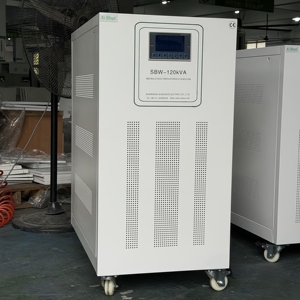
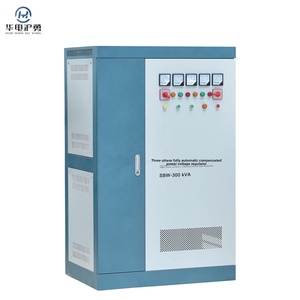
SBW 80KVA 120KVA 150KVA 3 Phase Voltage Stabilizer 380V/400V/415V Servo Compensated
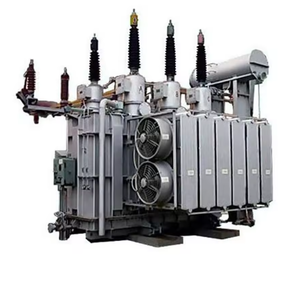
YAWEI High Quality 12 Mva 132kv Power Transformers Electrical High Load Transformer ONAN
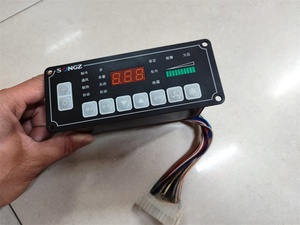
New Song Z Switch Control Panel Bus Air Conditioning AC Controller for Vehicle HVAC
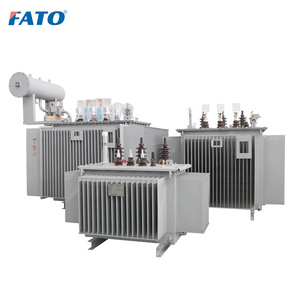
FATO 10-2500kVA 10kV Three Phase Oil Immersed Distribution Transformer S11-M Series 50/60Hz
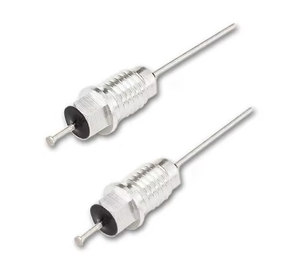
9400pF X7R 1KV Threaded Type EMI Filter for Precision Electronic Circuits
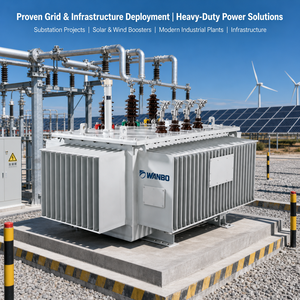
Well-Selling Industrial Transformer Pad Mounted 50KVA to 500KVA Transformers
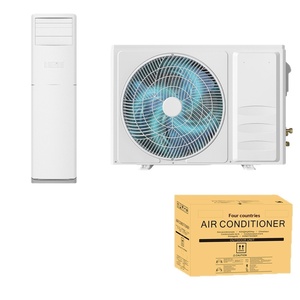
OEM Split-type 70kg Cabinet Air Conditioner 220-240V/50Hz DC Motor R-32 Floor Standing
Engineering Whitepaper & Statutory Compliance
Navigating AS/NZS 60079 & SafeWork NSW Standards for Flameproof Assemblies
Deploying hazardous area electrical assemblies within the Greater Sydney basin requires strict adherence to international explosion protection disciplines combined with regional New South Wales work health and safety mandates.
In hazardous industrial operations, electrical switchgear and control components represent an inherent ignition risk if flammable vapours, gases, or combustible dusts breach the containment boundary. For industrial enterprises operating across New South Wales—ranging from chemical processing plants around Port Botany and fuel storage facilities at Kurnell to grain terminals, pharmaceutical synthesizers, and transport infrastructure tunnels—the selection of flameproof (Ex d) and hazardous-rated control panels is governed by both legislative mandates and rigorous technical performance metrics.
Under the SafeWork NSW regulatory regime and the harmonized Work Health and Safety (WHS) Act, duty holders must maintain strict verification dossiers under AS/NZS 60079.14 (Design, selection and erection) and AS/NZS 60079.17 (Inspection and maintenance). Unlike conventional industrial control gear, a flameproof enclosure (Ex d) does not prevent the surrounding volatile atmosphere from penetrating the housing. Instead, it is mechanically engineered to withstand the internal explosion pressure developed when an ignition occurs inside the panel, while ensuring that the escaping flame front is quenched along precisely machined flame paths (flanged, spigoted, or threaded joints) before it can ignite the surrounding atmosphere.
Key Engineering Differentiator for Sydney Specifiers: Australian environmental extremes demand higher thermal margins. While European ATEX installations frequently assume standard ambient ceilings of +40°C, outdoor and non-conditioned indoor installations across Western Sydney (Parramatta, Wetherill Park, Eastern Creek) consistently encounter operational ambients exceeding +45°C. Unmitigated internal temperature rises will elevate enclosure skin temperatures past critical T-Class ratings (T4, T5, or T6), voiding hazardous area zoning compliance.
Flameproof Containment (Ex d)
Machined to withstand severe internal deflagrations without permanent structural distortion. Calibrated flame paths safely dissipate kinetic blast energy and vent cooled gases below auto-ignition thresholds.
- Cast marine-grade copper-free aluminum (LM6) or SS316L
- Precision surface tolerances under AS/NZS 60079.1
- Zone 1 & Zone 2 (Gas Groups IIA, IIB, IIB+H2)
Increased Safety (Ex eb / Ex ec)
Eliminates sparks, arcs, and excessive thermal hotspots within terminal enclosures through verified creepage distances, high-grade insulation barriers, and heavy-duty spring clamping mechanisms.
- Engineered for hybrid Ex de motor starter panels
- High mechanical impact resistance (IK08/IK10)
- Superior IP66 ingress protection against driving rain
Purge & Pressurization (Ex p)
Ideal for large PLC automation racks, multi-drive systems, and touchscreens. Continuously injects clean instrument air to maintain positive internal overpressure against hazardous gas intrusion.
- Automatic pre-purge timer and pressure switch interlocks
- Permits integration of standard commercial PLCs/VFDs
- Compliant with AS/NZS 60079.2 for Zone 1 & Zone 2
Real-World Case Topologies
Localized Application Scenarios in Greater Sydney & NSW
Deploying hazardous area engineering across Sydney's critical maritime, municipal, and industrial production hubs requires custom architectures suited to distinct atmospheric hazards.
Port Botany Bulk Liquids & Chemical Storage
Port Botany represents NSW's primary hub for hydrocarbons, chemical imports, and petrochemical handling. High concentrations of Category IIA and IIB volatile organic compounds (VOCs) combined with corrosive marine salt spray require stainless steel 316L Ex d local control stations (LCS), flameproof pump starters, and tank overfill emergency shutdown (ESD) panels certified to IP66.
- Class 1, Zone 1 IIB T4 hazardous classifications
- Seawater corrosion-resistant electropolished finishes
- Emergency pushbuttons with positive-break contact blocks
Sydney Water Biogas & Wastewater Treatment
At major wastewater resource recovery facilities (such as Malabar, Bondi, and North Head), anaerobic digesters generate substantial volumes of combustible methane (CH4) and corrosive hydrogen sulphide (H2S). Our Ex d and Ex p solutions house telemetry RTUs, gas scrubbers, and variable-torque blower controls designed to prevent explosive ignition while withstanding severe acidic vapour exposure.
- Zone 1 gas and Zone 21 biosolid dust atmospheres
- Integrated line/load reactors to counter motor dv/dt
- Conformal-coated PCBs resisting acidic oxidation
Western Sydney Logistics, Milling & Spray Facilities
From agricultural grain milling and timber handling facilities in regional logistics hubs to automotive surface coating bays in Smithfield, Eastern Creek, and Wetherill Park, combustible particulate hazards (Group IIIB and IIIC) and paint thinners (Group IIA/IIB) necessitate dual-certified Ex tb / Ex d motor isolation switches, automated vent interlocks, and dust-tight junction boxes.
- Combustible dust ignition protection (Ex tb IP6X)
- Overload and phase-unbalance motor protection
- Interlocked isolators preventing enclosure opening when energized
Technological Horizons
Localized Engineering Trends in the Sydney Hazardous Area Sector
Technological advancements in automation, environmental sustainability, and statutory monitoring are reshaping hazardous electrical panel architecture across Australia.
1. Convergence of Ex d Enclosures with Intrinsic Safety (Ex i) & Industrial Ethernet
Traditional flameproof architectures relied heavily on isolated, hardwired contactors and electro-mechanical relays. Modern Sydney infrastructure projects—notably automated logistics facilities, high-speed rail ventilation, and underground utility tunnels—now specify hybrid Ex de [ia/ib] systems. By pairing a robust flameproof main enclosure with an increased-safety termination chamber containing intrinsically safe galvanic barriers, engineering teams can bring live Ethernet (EtherNet/IP, PROFINET, or Modbus TCP) directly to field sensors in hazardous zones without requiring complete de-energization for calibration.
2. Green Hydrogen, Ammonia Corridors & Group IIC Engineering
As New South Wales advances its Hydrogen Strategy and Renewable Energy Zones (REZ), hydrogen production, bunkering, and transport hubs are expanding throughout Newcastle, Wollongong, and Western Sydney. Hydrogen gas demands Gas Group IIC compliance—the most stringent explosion rating due to hydrogen's microscopic molecule size, rapid flame velocity, and extremely low minimum ignition energy (20 μJ). Panels engineered for hydrogen service incorporate ultra-narrow flame path gaps, specialized marine-grade alloys, and certified pressure-relief labyrinth vents.
3. Decarbonisation & High-Efficiency Magnetic Power Systems
With skyrocketing commercial electricity tariffs across NSW, switchboard specifiers are transitioning away from inefficient standard-grade transformers within control panels. Integrating low-loss cast resin dry-type transformers, high-precision automatic voltage stabilizers, and high-order harmonic mitigation filters inside or adjacent to control suites reduces passive heat dissipation, directly reducing thermal load on explosion-proof enclosures.
Smart Thermal Profiling
Because an Ex d enclosure is completely sealed with thick metallic walls, heat generated by variable frequency drives (VFDs) and power transformers cannot escape via standard ventilation fans. Modern Sydney installations leverage built-in thermodynamic simulation data, exterior heatsinks, and internal circulating fans to ensure the surface temperature never exceeds statutory T4 (135°C) or T5 (100°C) ratings under Australian peak summer loads.
Compliance Impact:
Eliminates catastrophic de-rating penalties and prevents spurious component trips in ambient operating conditions up to 50°C.
Specification Benchmark
Engineering Matrix: Specifying Hazardous Area Panels for Sydney
A quick technical reference comparing enclosure architectures for industrial specifiers, consulting electrical engineers, and project procurement teams.
| Protection Type | Applicable Standards | Suitable Hazard Zones | Key Mechanical Features | Sydney Field Applications |
|---|---|---|---|---|
| Flameproof (Ex d) | AS/NZS 60079.1 IEC 60079-1 |
Zone 1, Zone 2 (Gas Groups IIA, IIB, IIB+H2) |
Heavy cast copper-free alloy or 316L SS, precision-ground flame paths, heavy bolted flange. | Main power circuit breakers, direct-on-line (DOL) & star-delta starters, transformer switchgear at Port Botany. |
| Increased Safety (Ex e) | AS/NZS 60079.7 IEC 60079-7 |
Zone 1, Zone 2 (Terminal chambers & connections) |
Enhanced creepage and clearance distances, high-integrity anti-loosening terminals, IP66 elastomer gaskets. | Hybrid terminal boxes, field junction distribution, multi-cable marshalling enclosures across Western Sydney infrastructure. |
| Purge / Pressurized (Ex p) | AS/NZS 60079.2 IEC 60079-2 |
Zone 1 (px), Zone 2 (pz) (Gas & Combustible Dust) |
Sealed lightweight enclosure, pneumatic purge logic manifold, continuous overpressure monitoring sensors. | SCADA control consoles, HMIs, multi-axis drive racks, water treatment MCC rooms requiring standard internal electronics. |
| Dust Ignitionproof (Ex t / Ex tb) | AS/NZS 60079.31 IEC 60079-31 |
Zone 21, Zone 22 (Dust Groups IIIA, IIIB, IIIC) |
Total particulate exclusion, certified IP65/IP66 ingress seals, thermal limitation for smoldering prevention. | Grain export terminals, pharmaceutical compounding suites, plastics compounding, wood product milling. |
Manufacturing Prowess & Group Heritage
Why Engineering Teams Choose Our Control & Power Infrastructure
Supported by a rich corporate history originating in 1990, we deliver verified, certified electrical automation systems and magnetics engineered for uninterrupted industrial duty.
Founded on rigorous engineering principles, our manufacturing operations trace back to 1990 through our parent automation group, having designed, wired, and programmed thousands of complex PC, PLC, and SCADA-integrated control panels for hazardous process plants worldwide. In 2006, our dedicated transformers and magnetics division was established, operating from a modern 5,500 m² facility equipped with advanced automated computerized testing bays.
This 35-year dual lineage—mastering both sophisticated automation control algorithms and heavy electrical magnetics—gives our team an unmatched engineering advantage when manufacturing flameproof control equipment:
- Complete Electrical Autonomy: We manufacture our own precision control transformers (50VA to 5000kVA), line/load reactors (up to 2500A), and harmonic filters (up to 500HP), guaranteeing exact internal impedance matching, zero voltage sag, and thermal optimization inside sealed Ex enclosures.
- End-to-End International Compliance: Every flameproof, increased-safety, and pressurized panel carries formal IECEx / CE conformity documentation, simplifying certification integration and verification dossier acceptance by SafeWork NSW certifiers.
- Custom Mechanical Precision: Full flexibility across enclosure materials, including low-copper cast aluminum alloys, welded SS316L stainless steel, custom gland plates, high-durability viewing windows, and explosion-proof operator switches.
In-House Quality Testing Capabilities
Before any control panel, stabilizer, or transformer leaves our plant, it undergoes complete computer-controlled routine and performance verification:
Automated Computerized OC/SC Testing
Megger Insulation Resistance Verification
Double Voltage Double Frequency (DVDF)
Infrared Thermal-Rise Dynamic Profiling
Procurement & Engineering Intelligence
Frequently Asked Questions for Sydney Specifiers
Answers to the most critical technical, standard, and logistical inquiries raised by Australian electrical contractors, plant managers, and consulting engineers.
What are the legal compliance prerequisites for installing an imported flameproof panel in Sydney, NSW?
Under SafeWork NSW regulations and the Australian Work Health and Safety (WHS) framework, all electrical equipment deployed in classified hazardous zones must hold recognized certification. Australia is a founding member of the IECEx System. Equipment backed by a valid IECEx Certificate of Conformity (CoC) meets national requirements under AS/NZS 60079.0. If panels only hold European ATEX or North American UL/FM marks, they typically require a formal technical gap assessment and endorsement by an accredited Australian Competent Person to assemble the statutory Verification Dossier required under AS/NZS 60079.14 before commissioning.
How does the Australian 415V/240V 50Hz grid standard affect internal component sizing in Ex d enclosures?
Australian grid systems operate at a nominal 415V three-phase / 240V single-phase 50Hz, with permissible operational voltage tolerances typically extending between +10% and -6%. Control transformers within flameproof enclosures must be configured with primary tap points (e.g., 380V-400V-415V-440V) to prevent saturation during grid over-voltage occurrences. Saturation drastically increases transformer core losses, causing internal overheating within tightly sealed Ex d enclosures that can jeopardize certified T-class temperature limits.
Can I integrate standard commercial PLCs, touchscreens, and VFDs into an Ex d control panel?
Yes, standard commercial off-the-shelf (COTS) electronic hardware can be housed within a flameproof (Ex d) enclosure because the enclosure is designed to contain any internal explosion. However, two primary engineering hurdles must be managed: heat dissipation and operator accessibility. Active devices like VFDs produce significant thermal output; our engineering team uses customized finned heatsink conduction or internal heat pipe paths. For user interfaces, heavy-duty explosion-proof pushbuttons, selector switches, or certified tempered glass viewing windows paired with capacitive touch or magnetic external styluses are utilized. Alternatively, for large SCADA and HMI installations, a pressurized purge enclosure (Ex p) is often the more cost-effective choice.
What ambient temperature rating should be specified for installations across Western Sydney?
While European standards often calibrate equipment for a nominal +40°C ambient, installations across Western Sydney industrial hubs (such as Eastern Creek, Smithfield, and Wetherill Park) consistently encounter ambient summer spikes of 45°C or higher, especially when housed in un-insulated metal buildings or exposed to direct solar radiation. We strongly recommend specifying equipment rated for -20°C to +50°C (or +55°C) ambient operation. This prevents thermal derating of circuit breakers, nuisance tripping of overloads, and guarantees that surface temperatures stay strictly below the required auto-ignition threshold.
What technical parameters are required to receive a rapid turn-around quotation?
To provide an accurate technical design and cost estimate, please provide: (1) Hazardous Area Classification (Zone 1, Zone 2, Zone 21, or Zone 22), (2) Gas or Dust Group (IIA, IIB, IIC, IIIA, IIIB, IIIC) and required Temperature Class (T3, T4, T5, or T6), (3) Ingress Protection requirement (e.g., IP66 for outdoor coastal Sydney), (4) Enclosure material preference (Cast Copper-Free Aluminum or SS316L for marine salt spray), (5) Single-line diagram (SLD) or equipment schedule showing power ratings, VFD sizes, PLC types, and control voltages, and (6) Cable entry schedule (quantity, thread type—ISO Metric or NPT—and whether barrier glands are specified).
How are Factory Acceptance Tests (FAT) conducted for clients based in Australia?
We provide full remote digital Factory Acceptance Testing (FAT) with high-definition live streaming, digital witness points, and real-time data logger captures from our automated computerized testing panels. Clients receive comprehensive documentation packages, including raw test data, Megger insulation reports, flame path dimensional tolerance certificates, DVDF overvoltage charts, and full photographic QA dossiers prior to sea or air freight consignment to Sydney.
Engineered Safety for Sydney's Most Demanding Environments
Whether upgrading a bulk chemical terminal at Port Botany, modernizing a wastewater treatment plant with Sydney Water, or engineering a hydrogen compression skid, our team provides fully certified, custom-manufactured hazardous area control solutions.