CEMarked CEMarked
Direct factory supply of isolation, auto, step-up/step-down distribution units, and severe-duty explosion-proof control gear configured for standard 415V/230V 50Hz African industrial frameworks.
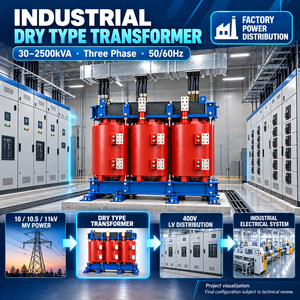
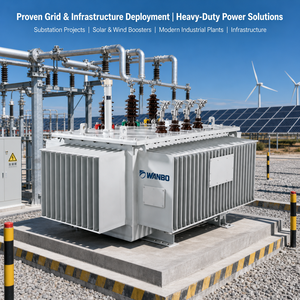
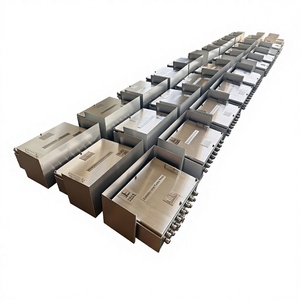
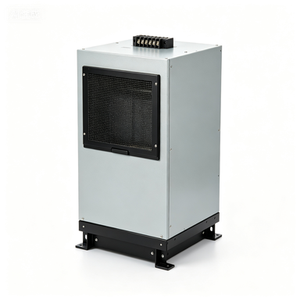
Operating transformers across the Nigerian electrical landscape presents unique thermodynamic, atmospheric, and power distribution hurdles that require deliberate manufacturing countermeasures.
In standard open-wound dry transformers, particulate accumulation and condensation trigger partial discharge failure. Our encapsulated units feature vacuum casting with silica-filled epoxy resin, permanently locking primary and secondary windings away from oxygen, ambient moisture, and coastal salt-spray. This delivers void-free insulation conforming to thermal Class H (180°C) and Class C (220°C).
In heavy industrial pockets like Ikeja and Trans-Amadi, frequent shifts between national utility feeders and captive diesel/gas generation induce heavy transient spikes and odd harmonics. Our transformers employ stepped-lap grain-oriented silicon steel cores (CRGO) combined with electrostatic shielding between windings to divert common-mode electrical noise directly to earth.
Tropical climates demand high resistance to fungal blooms, driving rain, and elevated humidity up to 98%. Unlike standard varnish dips that degrade under thermal cycling, epoxy encapsulation is non-hygroscopic, chemically inert, and completely immune to vermin, insects, and fine Harmattan dust encroachment experienced in northern Nigerian territories.
Precision-engineered ratings designed to comply with IEC 60076-11, SONCAP, and international export safety directives.
| Characteristic | Control Transformers (Encapsulated) | Power & Distribution (Resin Cast) | Isolation & Step-Down Variants |
|---|---|---|---|
| Rated Capacity | 50 VA – 15 kVA | 25 kVA – 5,000 kVA | 5 kVA – 500 kVA |
| Primary Voltage (kV/V) | 110V, 220V, 380V, 415V | 3.3 kV, 6.6 kV, 11 kV, 33 kV | 415V, 400V, 480V (Three-Phase) |
| Secondary Voltage (V) | 12V, 24V, 48V, 110V, 220V | 400V, 415V, 433V (Line to Line) | 110V, 220V, 230V, 400V |
| Thermal Insulation Class | Class F (155°C) / Class H (180°C) | Class F (155°C) / Class H (180°C) | Class H (180°C) / Class C (220°C) |
| Encapsulation Medium | Epoxy Resin / Silica Filling | Pure Vacuum Cast Resin (C2/E2/F1) | Polyurethane / Epoxy Cast |
| Operating Ambient Temp | -10°C to +55°C (Tropicalized) | -20°C to +50°C (High Dissipation) | -10°C to +55°C continuous |
| Routine Test Verification | DVDF, Megger, Open/Short-Circuit | Impulse Test, Partial Discharge < 10pC | Galvanic Isolation 3kV HIPOT |
Our magnetic units power installations where sudden power failures or insulation breakdown translate into significant operational disruption.
In offshore platforms around the Bight of Benin and onshore processing hubs in Rivers State, atmospheric moisture combines with combustible vapors. In such environments, liquid-filled transformers risk flashover or fire. Fully encapsulated dry-type designs eliminate flammable mineral oil, reduce physical footprints inside hazardous spaces, and pair seamlessly with Exd flameproof motor cabinets.
High-density metropolitan zones across Lagos Mainland, Victoria Island, and Abuja enforce strict building codes that prohibit indoor installation of oil-cooled substations due to thermal runaway hazards. Our self-extinguishing encapsulated transformers offer minimal smoke toxicity and eliminate expensive oil containment sumps in basements and mezzanine electrical switchrooms.
Crushers, mills, and agro-processing factories in Ogun and Plateau states face continuous mechanical vibration and fine airborne stone dust. Encapsulated transformers boast monolithic mechanical cohesion; the solid resin matrix immobilizes winding coils against harmonic vibration, dampening hum and preventing mechanical fretting caused by cyclic shockloads.
Originating from Prima Automation's control-panel legacy founded in 1990 and expanded through Prima Transformers Pvt. Ltd. in 2006, our 5,500 m² Santej facility enforces stringent manufacturing tolerances.
Every unit undergoes strict factory acceptance testing before export packaging. Our computerized testing panels evaluate open-circuit losses, short-circuit impedance, double voltage double frequency (DVDF) induced overvoltage, infrared heat dissipation, and digital milli-ohm winding balance under 25V testing profiles.
Drawing on decades of PLC, SCADA, and MCC panel manufacturing experience, our magnetics are engineered to prevent nuisance tripping during sudden motor starts. Core sizing allows for high instantaneous magnetic flux without early core saturation, maintaining reliable coil latching voltages during secondary circuit disturbances.
We build tailored solutions suited to local generation profiles. Transformers can be configured with multiple primary tappings (±2.5%, ±5%, ±10%), custom neutral links, Dyn11 or Yyn0 vector alignments, and rugged galvanized or stainless steel NEMA 4X/IP66 enclosures for outdoor installations.
How regulatory shifts, power sector decentralization, and operational constraints are reshaping magnetic equipment procurement.
Under the Electricity Act of 2023, Nigerian state governments and private industrial parks are increasingly permitted to manage sub-national electricity generation and distribution networks. This structural shift has accelerated demand for decentralised, low-maintenance power equipment. Procurement teams are moving away from traditional oil-filled transformers for indoor substations, driven by strict National Environmental Standards and Regulations Enforcement Agency (NESREA) guidelines regarding hazardous oil leakages and fire hazards.
Simultaneously, the widespread installation of Variable Frequency Drives (VFDs) across bottling plants, cement facilities, and regional water supply authorities has heightened harmonic pollution. Unshielded transformers routinely overheat under these conditions. As a result, EPC contractors throughout Nigeria prioritize transformers engineered with high K-factor ratings, vacuum resin encapsulation, and integrated line-load reactors to safeguard expensive automation setups against irregular line transients.
Common technical, compliance, and delivery questions addressed by our international project desk.
Shipments destined for Apapa, Tin Can Island, or Onne Port require a validated SONCAP (Standards Organisation of Nigeria Conformity Assessment Programme) Certificate, Clean Report of Inspection, combined with a Form M issued through your authorized dealer bank. We provide factory test certificates, CE compliance declarations, bill of lading documentation, and commercial invoices that align precisely with your Form M documentation to ensure seamless clearance.
During the Harmattan period (November to March), fine siliceous airborne dust covers industrial machinery across northern and central states. Standard open windings collect this dust, which absorbs morning humidity and causes electrical flashovers. Our vacuum-encapsulated coils form a hermetic, solid resin barrier that dust cannot penetrate, allowing routine maintenance via compressed air blowing without compromising winding insulation.
Yes. Many Nigerian industrial corridors experience line swings dropping below 350V or surging beyond 440V on 415V nominal distribution lines. We provide off-circuit tap changers (OCTC) with extended tapping ranges, such as -10%, -5%, 0, +5%, +10%, ensuring stable secondary voltage to sensitive PLCs, CNC machinery, and packaging lines.
Standard design units (up to 100kVA) ship within 3–4 weeks from our Santej plant. Custom-engineered power transformers (up to 5,000kVA) generally require 6–8 weeks for manufacturing, computerized DVDF inspection, and crating in seaworthy, vapor-barrier wooden packing. Transit via standard ocean freight from Mundra/Nhava Sheva to Lagos ports typically takes 25 to 35 days.
Sudden supply phase shifts and high neutral-to-earth voltage common to automatic transfer switch (ATS) changeovers can destabilize sensitive control circuits. Our isolation transformers incorporate dedicated electrostatic shields between primary and secondary copper windings, coupled with reinforced insulation systems that effectively suppress high-frequency commutating spikes.
Whether you require custom step-down isolation transformers for a factory retrofit in Lagos or high-reliability cast resin substations for an energy development project, our technical specialists are ready to review your single-line diagrams (SLD) and specifications.
Send an Inquiry