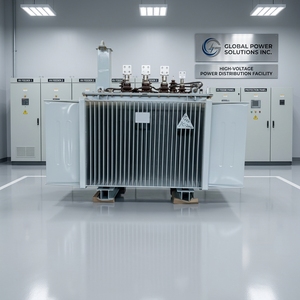
 CEMarked CEMarked
Precision-wound automatic voltage regulators (AVR), industrial SBW systems, and copper-wound transformers built to withstand harsh grid fluctuations across industrial hubs.
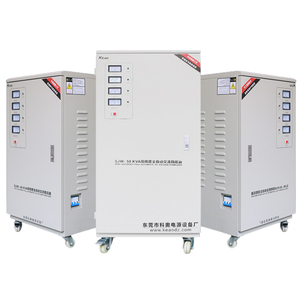
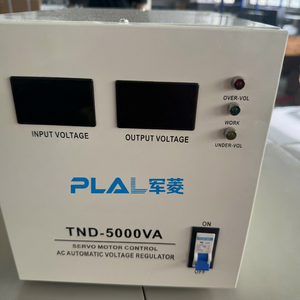
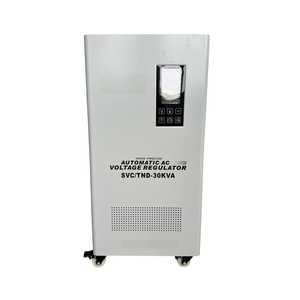
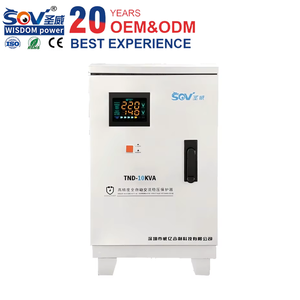
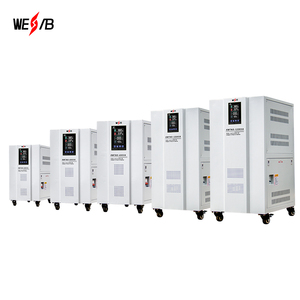
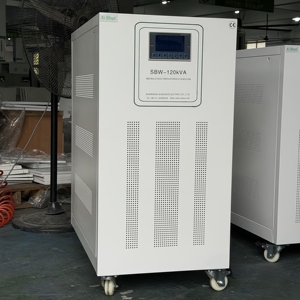
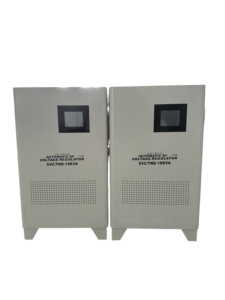
Voltage unbalance, harmonic distortion, and intermittent transient sags represent severe failure mechanisms within commercial and industrial electrical distribution networks. For high-density metropolitan and manufacturing corridors such as the Mumbai Metropolitan Region (MMR), stabilizing incoming line potential is a vital safeguard rather than an optional safeguard. A servo-driven automatic voltage stabilizer operates on the principle of closed-loop negative feedback compensation, utilizing a motorized variable autotransformer (variac) coupled in series with a buck-boost power transformer.
The control core continuously tracks the real-time RMS terminal voltage against calibrated setpoints. When deviation occurs—due to regional line loading, motor starting surges, or load rejection—a high-torque AC servo motor mechanically adjusts the carbon brush position across the polished commutator track of the toroidal or cylindrical variable auto-transformer. This injects or subtracts an in-phase correction voltage via the buck-boost primary winding, stabilizing the output within tight tolerances (±1% to ±1.5%) with zero waveform distortion.
Unlike electronic triac or relay-type switchers, compensated servo systems do not produce harmonic spikes, high-frequency switching noise, or phase-angle breaks. For precision instrumentation, CNC machinery, automated production lines, and high-frequency communication base stations, this sinusoidal preservation guarantees operational longevity and prevents micro-controller trips.
The operational landscape of Mumbai presents distinct electrical challenges. Distributed between power utilities including MSEDCL, Tata Power, and Adani Electricity, voltage variations fluctuate significantly across heavy industrial, maritime, and specialized high-tech hubs. Deploying the correct stabilizer configuration requires analyzing regional power topologies:
Continuous chemical processing, injection molding, and precision engineering plants in Rabale, Mahape, and Turbhe frequently encounter voltage sags during shift-wide machinery startups. Our SBW series (80kVA–500kVA) three-phase compensated stabilizers maintain consistent motor drive output and shield PLC racks against costly production line shutdowns.
Warehousing automated sorting machinery, cold-chain refrigeration units, and shuttle-less looms in Bhiwandi operate at the end of long distribution feeders prone to chronic under-voltage (dipping down to 140V–160V line-to-neutral). Customized wide-input TND/TNS copper-coil stabilizers compensate efficiently across extended periods without thermal tripping.
Corporate financial towers and hyperscale datacenters demand clean 415V 3-phase stabilized feeds for centralized HVAC chillers, server rack isolation inputs, and UPS rectifiers. The lack of waveform distortion in our balanced-type servo regulators ensures zero harmonic cross-talk across mission-critical compute infrastructure.
Port operations, container handling yards, and refrigerated storage facilities near Nhava Sheva face heavy saline air corrosion and high inductive load switching. Tropicalized copper windings with anti-fungal, moisture-resistant varnish withstand coastal ambient humidity without dielectric breakdown.
As Maharashtra continues to expand renewable integration under its State Electricity Distribution policies, captive solar installations across factory rooftops in Thane, Taloja, and Palghar are accelerating. This green transition introduces new voltage stability variables: bidirectional power flow, solar generation intermittency caused by monsoon cloud cover, and midday over-voltage conditions on utility supply points.
Modern procurement in Mumbai has shifted decidedly away from low-cost aluminum-wound units to heavy-grade electrolytic copper winding (99.99% purity) with Class F or H insulation. Industrial buyers now demand digital microcontroller monitoring, independent phase-correction architecture (to balance uneven single-phase office and residential load splits across three phases), and bypass synchronization.
| Grid Challenge in MMR | Conventional Stabilizer Weakness | Our Wholesale Servo Stabilizer Engineering Solution |
|---|---|---|
| High Ambient Coastal Humidity (JNPT/Navi Mumbai) | Oxidation of carbon brush tracks and dielectric failure | Vacuum pressure impregnated (VPI) copper coils, sealed variac tracks, and treated anti-corrosive cabinet enclosures. |
| Severe Phase Unbalance (Mixed Industrial/Commercial) | Common-shaft servo correction causing over-voltage on light phases | Independent 3-phase servo motor drives with discrete sensing circuits on each line. |
| Rooftop Solar Back-Feeding Surges | Relay contact arcing and hunt oscillations | Microprocessor-governed anti-hunting logic with adjustable dead-band damping and soft-start ramp. |
| Heavy Inrush Loads (CNC Spindles, Chillers) | Thermal cutout trips and core saturation | CRGO silicon steel core laminated with low loss characteristics, handling 200% momentary surge capacity. |
Backed by more than 25 years of engineering experience and a 5,500 m² state-of-the-art production facility, our operations combine design precision, high-volume capacity, and rigorous export testing. Serving OEMs, multinational corporations, and major industrial groups worldwide, our products meet international electrotechnical standards.
Every unit built for the export market undergoes documented compliance checks, adhering strictly to CE marking, IEC 60076, and international electromagnetic compatibility (EMC) regulations.
Our testing bay features automated computerized panels verifying open-circuit, short-circuit, double-voltage double-frequency (DVDF) induced overvoltage, insulation resistance, and milli-ohm winding resistance.
Rooted in complex PLC, SCADA, and hazardous-area panel building since 1990, we engineer stabilizers with correct inrush capacity, robust terminations, and intuitive terminal layouts suited for fast installation.
Connect directly with our application engineering team to receive detailed CAD dimensional drawings, comprehensive test certificates, and factory-direct export quotations tailored to your site electrical profile.
Inquire Now