
Engineering Whitepaper: Pad-Mounted Transformers in the Mexican Power Grid
As Mexico accelerates industrial modernization under the momentum of nearshoring—transforming states such as Nuevo León, Coahuila, Chihuahua, Jalisco, and the Bajío region into global manufacturing hubs—the demand for robust, tamper-resistant medium-voltage power distribution equipment has reached historic highs. As a seasoned China wholesale pad-mounted transformer manufacturer and supplier serving the Mexico market, we integrate American design conventions (IEEE/ANSI standards) with the mandatory regulatory frameworks required by Mexico's Federal Electricity Commission (Comisión Federal de Electricidad - CFE) and Mexican Official Standards (NOM / NMX-J).
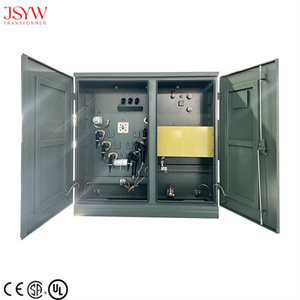
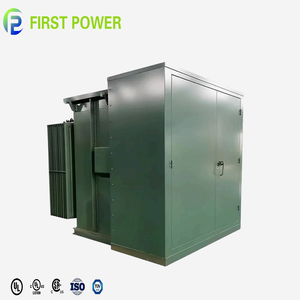
Regulatory Reality: Standard commercial transformers cannot be casually deployed in Mexican utility interconnections. Pad-mounted substations require strict alignment with CFE specifications K0000-04, CFE K0000-05, and standard NMX-J-285-ANCE, covering compartment isolation, dead-front safety barriers, fluid dielectric clearances, and tamper-proof enclosure integrity.
Grid Topography & Electrical Configurations Across Mexico
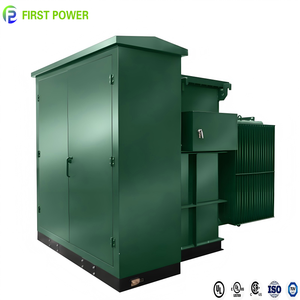
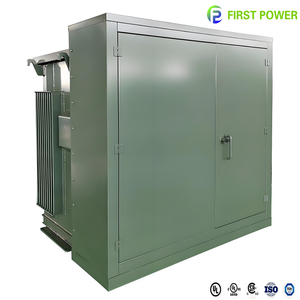
The Mexican medium-voltage distribution infrastructure operates primarily at 60 Hz across standard operational voltages: 13,200V (13.2 kV), 23,000V (23 kV), and 34,500V (34.5 kV), stepping down to low-voltage utilization classes such as 480Y/277V, 220Y/127V, or 240/120V for single-phase networks. Pad-mounted transformers (known locally as transformadores tipo pedestal) are the primary distribution vector for underground electrical systems (Red Subterránea) due to aesthetic requirements, space limitations, and extreme weather resilience.
| Transformer Architecture | Primary Voltage Range | Feed Configuration | Typical Mexican Local Application |
|---|---|---|---|
| Three-Phase Pad-Mount (Radial Feed) | 13.2 kV, 23 kV, 34.5 kV to 480Y/277V | Radial (3 MV Bushing Wells) | Dedicated industrial manufacturing facilities, pumping plants, standalone commercial facilities. |
| Three-Phase Pad-Mount (Loop Feed) | 13.2 kV, 23 kV, 34.5 kV to 220Y/127V | Loop (6 MV Bushing Wells, 200A or 600A) | Nearshoring industrial parks (Parques Industriales), continuous manufacturing with alternate ring switching. |
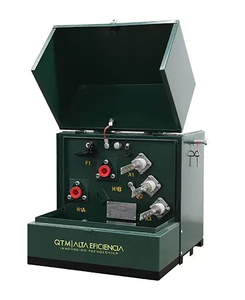
| Single-Phase Pad-Mount (Pedestal) | 13,200 GrdY / 7,620V to 240/120V | Radial or Loop Feed Dead-Front | Suburban master-planned developments, residential subdivisions (Fraccionamientos), public infrastructure. |
| Solar / BESS Step-Up Pad-Mount | 0.6 kV, 0.69 kV, 0.8 kV to 34.5 kV | Dead-Front Loop with Bi-directional Tap | Utility-scale solar farms in Sonora/Chihuahua, industrial PV microgrids, lithium battery storage interconnections. |
Strategic Localization Scenarios Across Mexican Municipalities
Deploying electrical equipment into the varied Mexican geographical landscape demands specialized consideration of ambient conditions, seismic forces, and operational environments.
Tier-1 Nearshoring Industrial Parks
Manufacturing corridors in Monterrey, Saltillo, and Ciudad Juárez face heavy continuous motor loads and cyclic thermal stresses. Our loop-feed pad-mounted transformers from 750 kVA up to 3750 kVA provide reliable step-down power with internal four-position sectionalizing load-break oil switches (CFE-approved), allowing factory engineers to isolate line sections during maintenance without shutting down neighboring production lines.
High Solar Irradiance Microgrids
Northern Mexican states exhibit elevated solar insolation and extreme ambient summer temperatures exceeding 45°C. We configure transformers with low-temperature-rise core designs (55°C or 55/65°C rise) paired with ester-based natural biodegradable dielectric fluids (FR3 class) exhibiting fire points above 300°C, preserving transformer lifespan and complying with strict environmental covenants.
Coastal Resorts & Port Facilities
Infrastructure in Veracruz, Quintana Roo (Cancún/Riviera Maya), and Manzanillo requires resistance to marine salinity and tropical storms. We fabricate pad-mounted enclosures using 304 or 316L stainless steel tanks and sill structures, coated with thermoset polyurethane multi-layer powder coating surpassing the 2,000-hour ASTM B117 salt spray exposure test.
Mexico Electricity Market Trends & Supply Chain Dynamics
The modernization of Mexico's energy framework presents specific technological and procurement trends that project developers and EPC contractors must navigate:
1. The Transition from Overhead Lines to Underground Distribution
Municipal zoning updates in major metropolitan areas (Guadalajara, Monterrey, Mexico City) prohibit new overhead secondary infrastructure. As a result, transformadores tipo pedestal have become the standard utility requirement for both public right-of-way distribution and privately-owned industrial subdivisions. Contractors require compact dimensions with IEEE C57.12.28 tamper resistance to prevent unauthorized access in unsecured public areas.
2. Energy Efficiency Code Enforcements (NOM-002-SEDE / NMX-J-116-ANCE)
CONUEE (National Commission for Efficient Energy Use) strictly limits maximum allowable core and copper losses at 50% and 100% rated loading. Our automated core-cutting facilities utilize premium-grade cold-rolled grain-oriented silicon steel (CRGO) with step-lap miter-cut joint technology, ensuring full compliance with Mexico’s total loss evaluation standards, lowering long-term Levelized Cost of Energy (LCOE).
3. Supply Chain Nearshoring Bottlenecks and Lead-Time Mitigation
North American transformer lead times frequently stretch from 70 to 120 weeks. Our optimized manufacturing and testing pipeline in China reduces production cycles to 8–12 weeks, supported by seamless logistics routes from Shanghai/Ningbo ports directly to Manzanillo or Lázaro Cárdenas, enabling Mexican industrial parks to meet strict occupancy timelines without costly energization delays.
Enterprise Advantages: Integrated Manufacturing & Stringent Testing
Originating from an established parent engineering group with heritage in industrial automation, PC, PLC, SCADA-integrated control panels, and hazardous-area assemblies since 1990, and dedicated magnetics production since 2006, our manufacturing philosophy delivers complete system reliability:
5,500 m² Production Facility
State-of-the-art manufacturing plant dedicated to transformer winding, core stacking, tank fabrication, and computerized final assembly.
Standardized Compliance
Full engineering execution to IEEE C57.12.00, IEEE C57.12.28, IEEE C57.12.34, NMX-J-285-ANCE, and CFE K-specification parameters.
Severe Environment Finishing
Automated shot blasting, zinc-rich epoxy primers, and UV-inhibited polyurethane topcoats engineered for coastal salinity and high-UV plateaus.
Dual Phase & Voltage Flexibility
Fully customized primary windings (13.2kV, 23kV, 34.5kV) and multi-tap configurations (±2 × 2.5%) via exterior de-energized tap changers.
Rigorous In-House Quality & Testing Infrastructure
Prior to container loading and international maritime dispatch, every pad-mounted transformer undergoes comprehensive computerized routine testing in accordance with international standards:
Frequently Asked Questions: Sourcing Transformers for Mexico
Can your pad-mounted transformers be certified for CFE (Comisión Federal de Electricidad) interconnection?
Yes. We manufacture transformers strictly compliant with technical specifications CFE K0000-04, CFE K0000-05, and standard NMX-J-285-ANCE. For projects directly transferring assets to the CFE utility grid, we supply full type test reports (LAPEM equivalents, routine dielectric, temperature rise, and short-circuit withstand certifications) required by Mexican inspection units (UVIE).
What is the difference between Radial Feed and Loop Feed pad-mounts for Mexican industrial parks?
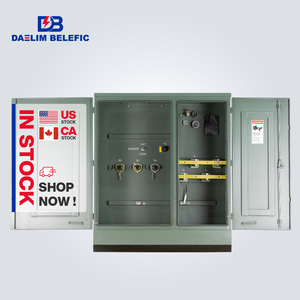
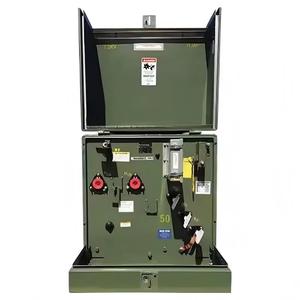
A radial feed unit features 3 high-voltage bushing wells connecting to a single distribution source, typically utilized for standalone facilities. A loop feed unit features 6 high-voltage bushing wells (H1A, H2A, H3A and H1B, H2B, H3B) and is integrated into an underground loop with a four-position internal load-break switch. This is the preferred configuration in Mexican Parques Industriales, enabling alternate dual-source switching without uninterrupted power loss to downstream facilities.
What are the standard Mexican medium-voltage classes, and can you provide dual-voltage primary windings?
The standard primary distribution voltages across Mexico are 13,200V, 23,000V, and 34,500V at 60 Hz. We routinely fabricate dual-voltage units (e.g., 13,200 × 23,000V or 23,000 × 34,500V) equipped with an externally operated, de-energized series-parallel switch, ideal for contractors needing inventory versatility across different regional municipalities.
What protective fusing schemes are integrated into the high-voltage compartment?
Our pad-mounted transformers feature a dual-protection fusing strategy: oil-immersed Bay-O-Net expulsion fuses (for overload and secondary fault detection) placed in series with internal partial-range current-limiting back-up fuses (such as ELSP) to safely interrupt high-energy short circuit currents up to 50,000A symmetrical, preventing internal tank rupture.
What is the typical shipping lead time to Mexican ports such as Manzanillo or Veracruz?
Production cycles typically range from 6 to 10 weeks depending on order volume and custom kVA specifications. Ocean transit from major Chinese shipping hubs to Manzanillo or Lázaro Cárdenas ports is approximately 18 to 25 days. Customs broker documentation including Certificates of Origin, Bill of Lading, packing lists, and comprehensive test certificates are provided in English and Spanish.