 CEMarked CEMarked
Precision-engineered transformers, AVR modules, and flameproof distribution panels configured to safeguard key operations across Binh Duong, Dong Nai, and the Ho Chi Minh City metropolitan fringe.
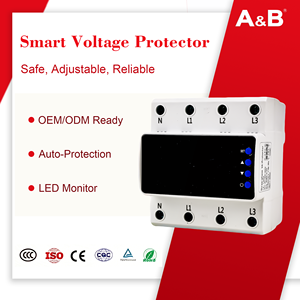
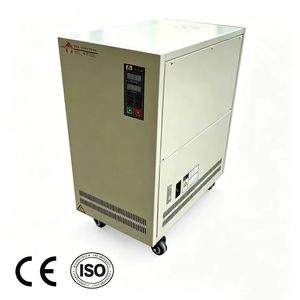
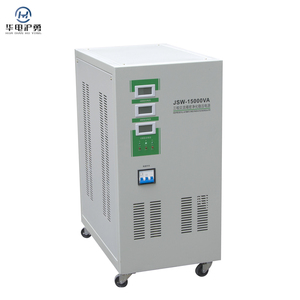
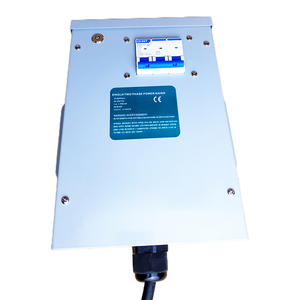
Group Engineering Heritage (Since 1990)
Dedicated Manufacturing Infrastructure
Maximum Transformer Rating Capacity
Certified Tropicalized Enclosure Rating
As the economic epicenter of Vietnam, Ho Chi Minh City (HCMC) and its contiguous industrial hubs across Binh Duong (VSIP I, II, Bau Bang), Dong Nai (Amata, Bien Hoa), and Ba Ria-Vung Tau maintain extraordinary demand for explosion-proof (flameproof) electrical switchgear and localized process control systems. With the southern Vietnamese industrial framework transitioning from light consumer assembly to sophisticated petrochemical processing, deepwater maritime loading at Cat Lai and Cai Mep ports, advanced paint manufacturing, and solvent-intensive pharmaceutical synthesis, standard control enclosures are fundamentally inadequate. Specifying China wholesale flame proof control panel solutions requires an authoritative command of thermodynamic enclosure design, internal arc quenching mechanisms, and stringent compliance with both international IECEx/ATEX regulations and local Vietnamese TCVN fire-safety statutes.
The operational philosophy of a Flame Proof Control Panel (Type Ex d protection according to IEC 60079-1) is not to prevent an explosive gas mixture from entering the housing, but rather to safely withstand an internal deflagration without transmitting flame, incandescent sparks, or superheated gas through the joints into the surrounding flammable atmosphere. For Chinese manufacturers serving Ho Chi Minh City, maintaining flamepath clearance parameters (maximum experimental safe gap, or MESG) is critical.
Our enclosures utilize heavy-duty copper-free cast aluminum alloy (ZL102/AlSi12) or SS316 stainless steel with minimum wall thicknesses ranging from 12mm to 20mm. Precision CNC-milled flat joints, spigot joints, and cylindrical threaded joints are engineered to cool escaping combustion gases below the ignition threshold of Class T4 to T6 gases (e.g., hydrocarbon blends, ethyl alcohol, ethylene). When high-power components such as Variable Frequency Drives (VFDs) or soft starters are integrated alongside step-down transformers, internal heat generation becomes the primary design challenge. Our R&D engineering incorporates proprietary internal convective heat channels and finned external heat dissipators without compromising flamepath containment integrity, preventing premature thermal trip errors under harsh tropical conditions.
A flameproof control enclosure cannot be viewed in isolation; it functions as the central node of a complex power network. Southern Vietnam’s heavy manufacturing centers frequently suffer from electrical transient spikes, high-frequency harmonic distortion, and grid line fluctuations caused by nearby arc furnaces, port cranes, and expansive injection molding facilities. An unconditioned power feed introduced into an Ex d panel leads to premature capacitor rupture, internal flashovers, and control PLC failure.
To eliminate these vulnerabilities, our engineering design integrates isolation transformers and line/load reactors upstream and downstream of motor starters. Galvanic isolation eliminates common-mode ground noise and limits ground-fault currents in hazardous zones, while line reactors attenuate current harmonics, buffering sensitive PLC digital input/output cards from line transients. When combined with automatic voltage regulators (AVR) and high-attenuation harmonic filters, our integrated explosion-proof assemblies deliver continuous electrical stability, minimizing catastrophic downtime across chemical batching lines.
Engineering customized Ex-rated electrical panels for the exact environmental and operational demands of Greater HCMC industrial zones.
Containerized chemical warehousing, solvent blending facilities, and liquefied fuel bunkering points along the Dong Nai River require Ex d IIB+H2 T4 panels. Panels feature anti-saline marine epoxy coating systems (exceeding C5-M marine exposure tests) and IP66 dual-sealing to resist monsoon storms and salt-fog corrosion.
In Binh Duong's massive furniture, polyurethane coating, and adhesive plants, dust ignition (Zone 21/22, Ex tb/tc) intersects with solvent vapor risks (Zone 1, Ex d). We supply combined hybrid flameproof and dust-ignition proof control boxes equipped with interlocked door disconnectors to prevent sparks in volatile spray booths.
Specialty resin plants, solvent distillation units, and lubricant packaging facilities require sophisticated SCADA-interfaced motor control centers (MCC). Our systems feature Ex d control compartments paired with intrinsically safe (Ex i) wiring channels for low-voltage sensor lines monitoring pressure, flow, and level sensors.
The regulatory and technical landscape for industrial equipment imported into Vietnam is undergoing rapid transformation under modern government initiatives:
Vietnamese authorities (Department of Fire Safety and Rescue, Police Ministry) strictly enforce TCVN 7079, which directly mirrors IEC 60079 standards. Buyers can no longer deploy non-certified panels without complete explosion-proof documentation, mill test certificates, and traceable material chemical analyses for cast alloys.
Modern plants demand real-time diagnostics from inside sealed Ex d housings. Our newest panels incorporate smart wireless vibration sensors, non-invasive infrared temperature monitoring windows, and Modbus/RS485-to-Ethernet gateways in Ex-certified sub-modules, enabling automated maintenance without panel de-energization.
As EVN (Electricity Vietnam) tariffs rise and impose stiffer penalties for low power factors (<0.90) and harmonic injection, flameproof control stations increasingly demand integrated harmonic suppression, VFD soft-switching, and cast-resin or high-efficiency dry transformers with minimized thermal footprints.
Direct OEM & Export Infrastructure Engineered to Deliver Zero-Defect Power Solutions Worldwide.
Modern integrated production floors encompassing automated core cutting, high-precision coil winding, mechanical fabrication, and vacuum pressure impregnation (VPI).
Drawing on the legacy of our parent company founded in 1990, we build PLC, SCADA, and hazardous-area panels with deep knowledge of component footprints, thermal balance, and layout ergonomics.
Fully equipped computerized test laboratory featuring open/short circuit testers, double-voltage double-frequency (DVDF) induced overvoltage units, digital LCR meters, and milli-ohm resistance tools.
Full conformance with CE, IEC, and global standards, serving over 45 international OEMs and Tier-1 engineering EPC contractors with comprehensive documentation and rapid shipping logistics.
Clear, practical technical answers addressing common challenges faced by engineers, procurement managers, and EPC contractors in the Ho Chi Minh City region.