 CEMarked CEMarked
Direct factory engineering from audited China manufacturing hubs to heavy industrial installations across Buenos Aires, Neuquén, and Santa Fe.
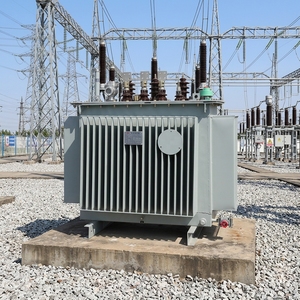
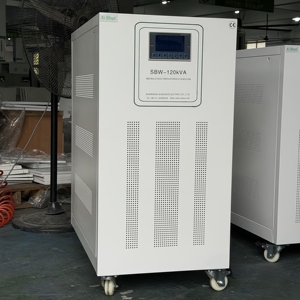
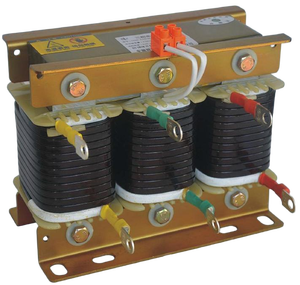
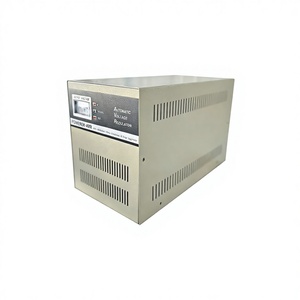
Adapting flameproof Ex d, Ex e, and pressurized Ex p control architectures to the extreme climatic and chemical demands of Argentine extraction and refining corridors.
The shale oil and tight-gas processing facilities of the Neuquén Basin demand explosion-proof enclosures rated for Zone 1 and Zone 2 (Gas Group IIA/IIB+H2). Our heavy-duty cast aluminum (copper-free alloy) and fabricated stainless steel (AISI 316L) flameproof control panels house advanced SCADA terminals, motor control centers (MCC), and variable frequency drives (VFDs) that regulate artificial lift, high-pressure fracturing pumps, and custody-transfer metering skid packages under ambient temperatures shifting from -10°C to +42°C.
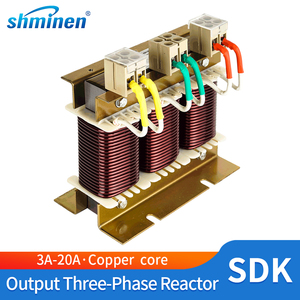
Situated in Salta, Jujuy, and Catamarca at elevations surpassing 3,800 to 4,200 meters above sea level, lithium carbonate extraction facilities present an extreme dual challenge: intense atmospheric derating and corrosive airborne brine salts. We engineer customized flameproof control enclosures that incorporate oversized heat sinks, specialized de-rated isolation transformers, and dry-type reactors to counterbalance thin-air dielectric dissipation while preserving IP66 ingress protection against fine chemical dusts.
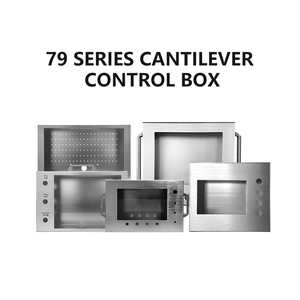
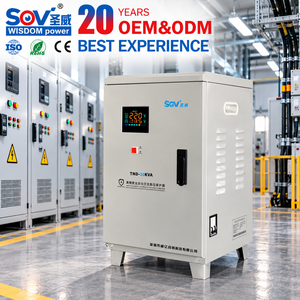
The agricultural export belt along the Paraná River (Rosario, San Lorenzo) and the petrochemical downstream facilities in Bahía Blanca face combustible grain dust (Zone 21 / Zone 22, Ex tb/tc) alongside explosive solvent vapors. Our explosion-proof HMI cantilever consoles, magnetic starters, and servo voltage stabilizers protect electrical distribution circuits against volatile dust cloud ignition, handling the severe thermal and mechanical shocks typical of continuous port bulk-handling systems.
Argentina's industrial landscape is experiencing a paradigm transition driven by extensive infrastructure projects, modernized midstream transport networks, and automated agro-industrial facilities. EPC contractors and asset operators no longer view flameproof panels as inert steel shells; instead, they require intelligent integrated electrical nodes. Three definitive procurement trends are dictating supplier qualifications in Argentina:
1. Shift Toward Dual-Chamber Modular Protection (Ex d + Ex e Architectures): Traditional monolithic flameproof panels required lengthy bolt removal for routine field maintenance, creating major labor overheads and risks of flange plane damage. Leading Argentine operators now mandate composite distribution units where the heavy power apparatus (contactors, circuit breakers, line reactors) resides within an Ex d flameproof chamber, while control terminals, pilot devices, and intrinsically safe (Ex i) barriers occupy an easily accessible increased safety (Ex e) termination box. This significantly shortens scheduled turnaround maintenance in harsh Patagonian environments.
2. Grid Volatility Compensation & VFD Ingress Protection: The national interconnection grid (SADI - Sistema Argentino de Interconexión) experiences voltage fluctuations in remote regional corridors. As severe harmonic pollution from non-linear motor loads impacts drilling sites and refineries, the demand for integrated solutions—pairing flameproof enclosures directly with industrial servo voltage stabilizers and three-phase line/load reactors—has increased substantially. Industrial plants must eliminate dv/dt voltage spikes to safeguard motor stator insulation on cables stretching hundreds of meters to downhole pumps.
3. Alignment with IRAM and International IECEx Harmonization: Argentina's safety framework relies heavily on resolutions issued by the Secretaría de Industria, Comercio y Minería, which enforce compliance verified through the Instituto Argentino de Normalización y Certificación (IRAM). While IEC 60079 serves as the baseline, Chinese OEMs exporting directly to Argentina must supply comprehensive technical construction files (TCF), test certifications under recognized testing laboratories, and precise material composition reports guaranteeing maximum magnesium thresholds (less than 7.5% for light alloys) to avert thermite sparking risks.
| System Classification | Protection Type | Standard Rating | Ingress (IP) | Primary Industrial Sector |
|---|---|---|---|---|
| Flameproof Power Panel | Ex d IIB / IIB+H2 T4..T6 Gb | Up to 1000V / 1250A | IP65 / IP66 | Upstream Oil & Gas (Vaca Muerta Wellpads) |
| Intelligent Operator Console | Ex d [ia] IIB+H2 T6 Gb | 24VDC - 230VAC HMI | IP54 to IP65 | Downstream Petrochemical & Biofuel Refineries |
| Dust Ignition-Proof Panel | Ex tb IIIC T135°C Db | Up to 690V / 630A | IP65 / IP66 | Grain Terminals & Processing (Rosario Hub) |
| Dynamic Drive Protection Unit | Ex d / Integrated Reactor Choke | 1.5kW to 500HP Line/Load | IP54 / IP65 Enclosed | Mining Extraction (Lithium Brines & Puna) |
| Servo Voltage Stabilizer System | Compensated Servo Regulated | 20kVA to 150kVA 3-Phase | NEMA 4X / IP54 | Heavy Machine Tools, CNC & Automation Hubs |
Leveraging over three decades of advanced industrial automation and magnetic engineering to satisfy international EPC standards.
Built upon the extensive foundation of Prima Automation (India) Pvt. Ltd., our engineering teams bring more than 34 years of proven panel-building experience. We do not just build raw boxes; we understand exact thermal dissipation curves, contactor inrush ratios, cable routing dynamics, and complex PLC/SCADA control networks operating inside sealed, non-ventilated enclosures.
Operating from modern automated workshops, our infrastructure accommodates end-to-end precision machining, structural alloy casting, copper core winding, vacuum pressure impregnation (VPI), and surface passivation. We ensure reliable tolerances across flame path clearances, joint gaps, and threaded conduit entries per international standards.
Quality assurance is verified prior to sea dispatch through an extensive computerized laboratory. Our routine tests encompass Double Voltage Double Frequency (DVDF) induced overvoltage validation, automated computerized OC/SC load evaluations, digital LCR analysis, insulation resistance (Megger), infrared thermal-rise scanning, and milli-ohm precision winding resistance verification.
Addressing compliance, electrical parameters, import customs (SIMI/SIRA regulations), and harsh environment installations.
In Argentina, electrical equipment for hazardous atmospheres is governed by national electrical codes in conjunction with IRAM standards (specifically the IRAM-IAP-IEC 60079 series). Industrial imports require conformity certificates validated through accredited Argentine certification bodies (such as IRAM, INTI, or TÜV Rheinland Argentina). Products manufactured in our certified facilities carry international IECEx and CE/ATEX test reports, providing the foundational technical dossier and construction drawings required to fast-track national recognition and homologation under Argentine Customs (Dirección General de Aduanas).
Argentina operates primarily on a 3-phase 380V, single-phase 220V system at a nominal frequency of 50 Hz. Many standard Asian configurations default to 60 Hz or alternate operating voltages. Our control panel systems, internal auxiliary power transformers, step-down power units, and servo voltage regulators are built with primary and secondary tap selectors custom-wound for 50 Hz operation, preventing iron-core saturation and magnetic flux overheating associated with operating 60 Hz magnetics on 50 Hz grids.
For installations in regions like Salta, San Juan, or Catamarca exceeding 2,000 meters above sea level, dielectric properties of air diminish and cooling efficiency declines due to lower air density. We apply engineering derating factors to all internal components (contactors, circuit breakers, power transformers, and variable frequency drives) in accordance with IEC 60079-0 and IEC 60947. Furthermore, we increase internal clearance and creepage distances to avoid electrical flashover, and utilize external heat dissipation fins optimized for low-pressure heat convection.
Every commercial dispatch is accompanied by an inspection dossier including: General Arrangement (GA) dimensional drawings, Single Line Diagrams (SLD), internal wiring schematics, certificate of compliance for raw materials (such as low-copper aluminum alloy grade ADC12 or AISI 316L stainless steel), hydrostatic pressure burst test certificates for flameproof casings, factory acceptance test (FAT) reports, Megger insulation test records, and comprehensive Spanish-language installation and maintenance manuals detailing bolt torque specifications and flame-path lubrication instructions.
Standard modular explosion-proof terminal boxes and regular motor starter panels typically have a fabrication cycle of 3 to 4 weeks. Highly engineered custom packages featuring embedded HMI screens, PLC synchronization, line/load reactors, and integrated servo stabilization generally require 5 to 7 weeks from final technical drawing sign-off. Ocean freight transit from major Chinese shipping ports (Shanghai, Ningbo, Shenzhen) to Puerto de Buenos Aires or Zarate averages 35 to 45 calendar days.
Connect directly with our engineering division for specialized project take-offs, custom CAD/BIM dimensional prints, and direct manufacturer pricing for the Argentine industrial sector.
Get Catalog