CEMarked CEMarked
Engineered for mission-critical industrial drives, grid voltage stabilization, and electromagnetic noise mitigation across Turkish manufacturing plants, power substations, and automated pump lines.
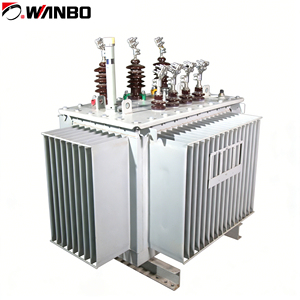
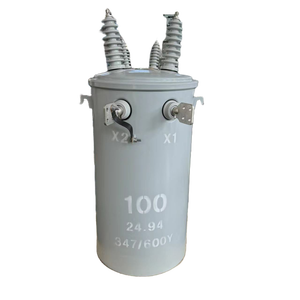
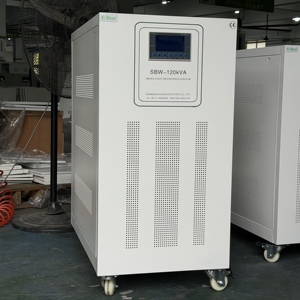
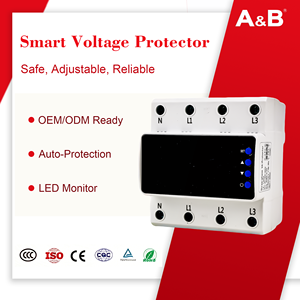
A deep engineering overview of inductive filtering, harmonic suppression, and mitigation of destructive dv/dt wave reflection in modern VFD and automation networks.
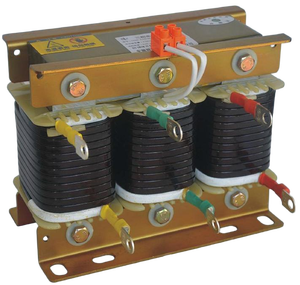
Installed between the commercial three-phase supply (400V/50Hz in Turkey) and the Variable Frequency Drive input bridge. Their core function is dampening line transients, absorbing capacitor charging surges, and attenuating harmonic currents.
Configured downstream between the IGBT PWM inverter bridge and the AC induction motor. High carrier switching frequencies (2kHz to 16kHz) generate lethal steep-fronted voltage waves that damage motor winding insulation.
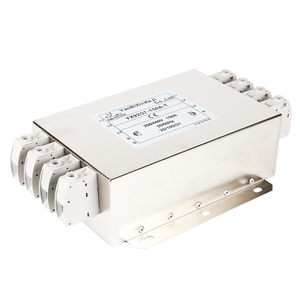
When load reactors alone are insufficient for extreme line conditions or sensitive electrical topologies, secondary filtration matrices suppress high carrier components and maintain resonant-free PFC networks.
| Parameter | Input AC Line Reactor (3% - 5%) | Output AC Load Reactor (dv/dt) | Series Detuned Iron-Core Reactor |
|---|---|---|---|
| Operating System Voltage | 230V / 400V / 690V AC ± 10% (3-Phase, 50Hz) | 0 - 400V / 690V AC PWM Frequency | 400V / 415V / 440V / 525V AC (50Hz) |
| Current Rating Range | 5A up to 2500A (Continuous Duty) | 5A up to 2500A (Continuous Duty) | Reactive Power: 5 kvar up to 100 kvar |
| Insulation Class & Temp Rise | Class H (180°C) / Class F (155°C) | Class H (180°C) with vacuum impregnation | Class H (180°C), Rise < 85K |
| Dielectric Withstand Test | 3.0 kV AC / 50Hz / 60 seconds | 3.0 kV to 4.0 kV AC / 50Hz / 60 seconds | 3.0 kV AC / 50Hz / 60 seconds |
| Linearity & Saturation | 1.6 × In rated current > 95% Inductance | 1.8 × In pulse withstand without magnetic drop | Linearity factor: L ≥ 0.95 × Ln at 1.75 × In |
| International Directives | IEC 60076-6, TS EN 61558-2-20, CE Mark | IEC 60076-6, VDE 0532, CE Marked | IEC 60289, IEC 60076-6, CE Compliance |
Turkey’s geographic position as a global manufacturing gateway demands rugged inductive components calibrated for specialized production sectors from Marmara to Southeastern Anatolia.
The high-density robotic welding and stamping plants of Bursa and Kocaeli create massive intermittent voltage sags and harmonics. Our 3% and 5% Line Reactors safeguard inverter-driven press drives and robotic servo controllers against micro-surges and DC-bus trip events.
Steel mini-mills and electric arc furnaces (EAF) in İskenderun expose shop-floor variable speed roller drives to violent current crest factors. Heavy-duty cast resin and copper-wound chokes insulate VFD rectifiers from crippling line perturbations.
Continuous yarn spinning and weaving require hundreds of parallel, localized motor drives operating 24/7. Load reactors eliminate high dv/dt punch-through across motor turn-to-turn insulation, preventing sudden machine stoppages and fire hazards.
Deep-well borehole pumps frequently feature cable lengths between 150m and 450m from the surface inverter station. Dedicated output motor load reactors eliminate standing voltage wave reflection, keeping submersed pump stator heads intact.
Quarries in Afyon and Denizli place mining machinery in abrasive, dust-laden environments with variable diesel-generator supply lines. Vacuum-impregnated (VPI) Class H reactors withstand thermal cycling without core lamination hum.
As Istanbul and Ankara expand municipal megawatt-scale electric bus transit networks and solar arrays, grid tie-in chokes and EMI filters condition bi-directional power delivery to Turkish grid operators (TEİAŞ / TEDAŞ).
Strategic economic factors, energy efficiency directives, and stringent European-aligned compliance standards governing reactor procurement in Turkey.
The Turkish Energy Market Regulatory Authority (EPDK) enforces strict limits on total harmonic distortion (THD). Plants exceeding 5% THD on the medium/low-voltage coupling point face severe financial penalty billing, accelerating retrofits with detuned filter reactors.
With volatile Lira currency parity, Turkish panel builders increasingly balance budgets using copper-clad or optimized electrolytic high-purity aluminum windings. Our factory offers full engineering transparency with certified copper equivalent thermal sizing.
Turkish Customs (İthalat Denetimi) conducts rigorous inspections for electromagnetic equipment. Products must strictly comply with TS EN 61558-2-20, EN 60076-6, and CE LVD/EMC directives, backed by valid type-test reports.
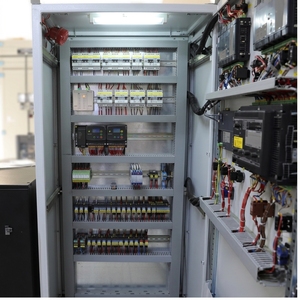
Our parent automation group has engineered PC, PLC, and SCADA-based hazardous-area control enclosures for more than three decades. We do not merely wind coils—we build reactors from the rigorous viewpoint of panel integration engineers.
Our expansive industrial plant incorporates precision automated multi-spindle foil and wire winding, high-temperature vacuum pressure impregnation (VPI), and computer-controlled core stacking tables for low magnetostriction noise.
Every single reactor and transformer undergoes DVDF (double voltage double frequency) overvoltage testing, automated open/short circuit characterization, milli-ohm winding resistance analysis, and digital LCR inductance checks before export packing.
Full logistics coordination direct to key Turkish seaports including Ambarlı (Istanbul), Mersin, Gemlik (Bursa), and Alsancak (Izmir). Standardized heavy-duty seaworthy crating ensures moisture protection through shipping lanes.
Clarifications on technical selection, TS EN compliance, import customs clearance, and thermal calculation parameters.
A 3% impedance line reactor provides sufficient inductance to absorb normal line spikes, minimize nuisance VFD overvoltage trips, and reduce input current THDi from ~80% down to approximately 40-45%. A 5% impedance reactor yields superior harmonic attenuation (lowering THDi below 35%) and provides greater protection in heavy industrial zones with stiff, low-impedance utility grids or adjacent arc furnaces. Note that a 5% reactor causes a slightly higher fundamental voltage drop across the drive input terminals under full motor load.
Yes. All our three-phase inductive reactors and control transformers are manufactured to comply fully with European and Turkish standards, specifically TS EN 61558-2-20 (particular requirements for small reactors) and TS EN 60076-6. We provide full CE Declaration of Conformity documents, factory test certificates (FAT), and thermal rise documentation required by Turkish Customs (TAREKS / İthalat Denetimi) for hassle-free port clearance.
An Output Load Reactor is recommended when the shielded cable distance between the VFD and the AC motor is between 30 and 150 meters. It clips steep-fronted voltage surges (dv/dt) and protects motor stator winding turns. If the motor cable exceeds 150 meters (typical in deep borehole pumps in Konya or remote ventilating fans in mining shafts) or if older non-inverter-duty motors are deployed, a Sine-Wave Filter (LC filter) is mandatory to reconstruct a genuine sinusoidal voltage wave and eradicate bearing EDM pitting.
Absolutely. We supply reactors in bare IP00 open-frame execution fitted with touch-safe Phoenix-type finger terminals or heavy-duty copper connection lugs for clean electrical cabinet installation. For standalone or harsh environments, we produce ventilated IP20, IP23, and outdoor weatherproof IP54/IP55 epoxy-coated sheet steel enclosures, finished according to RAL 7035 or customer-specific RAL color codes.
Standard rating reactors (up to 250A) are typically manufactured within 10 to 15 working days. Large custom project orders (up to 2500A or specialized detuned harmonics banks) ship within 3 to 4 weeks. Ocean transit directly from China to major Turkish ports (Ambarlı, Gemlik, Mersin) takes between 22 and 30 days depending on the selected carrier, with full support for FOB, CIF, or DDP delivery terms.
Connect directly with our magnetic engineering specialists for complete technical data sheets, 3D CAD step models, impedance matching calculations, and wholesale factory-direct price quotes.
Get a Quote