CEMarked CEMarked
Engineered to withstand tropical ambient temperatures, sea-mist humidity, and frequent line transients across Luzon, Visayas, and Mindanao.
A rigorous examination of electrical distribution standards, climatic hazards, and technical parameters critical for EPCs, utilities, and industrial specifiers.
Procuring single phase distribution transformers for the Republic of the Philippines requires navigating a unique hybrid electrical standard. Unlike the vast majority of Asian markets operating on 50Hz IEC architectures, the Philippine National Grid Corporation (NGCP), regional private utilities like Manila Electric Company (MERALCO), and the 121 Electric Cooperatives (ECs) regulated by the National Electrification Administration (NEA) mandate a strictly defined 60 Hz operating frequency with distribution voltage profiles deeply influenced by American ANSI/IEEE standards.
The standard primary distribution medium voltage networks operate at 13.8 kV GrdY / 7.967 kV, 23 kV GrdY / 13.279 kV, or legacy 34.5 kV GrdY / 19.92 kV systems. Single phase transformers play an indispensable role in this layout: primary medium voltage is tapped via a single phase conductor and neutral (or phase-to-phase in ungrounded delta systems) to step down to a secondary 120/240V 3-wire split-phase or 240V 2-wire consumer service drop.
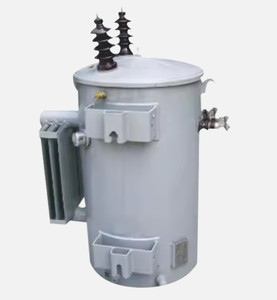
Over 7,000 islands mandate robust pole-mounted transformers (10kVA to 100kVA) serving barangays and rural co-ops (BENECO, DASURECO, ILECO). Units feature dual-bushing arresters, low no-load losses, and withstand severe seasonal humidity.
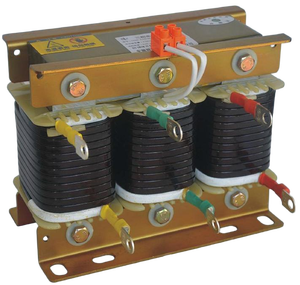
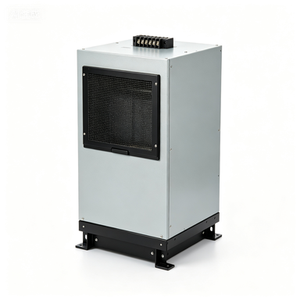
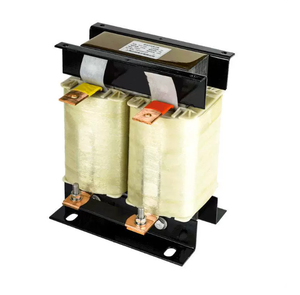
Critical IT equipment in Makati, BGC Taguig, and Cebu IT Parks require ultra-quiet dry-type single phase isolation units. They eliminate 3rd order harmonics, eliminate ground loops, and regulate sensitive 120V/240V server racks.
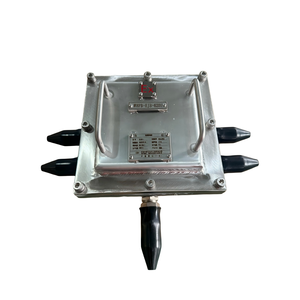
Poultry farm ventilation, rice milling, and coastal fish storage in General Santos and Batangas require moisture-proof, IP65/NEMA 4X enclosed step-down transformers to handle motor inrush currents without line voltage drop.
The geographic realities of the Philippine Archipelago subject electrical equipment to some of the most aggressive environmental degradation stressors globally. With an average of 20 tropical cyclones passing through the Philippine Area of Responsibility (PAR) annually, along with constant exposure to saline trade winds, average relative humidity levels of 85%, and ambient operational temperatures reaching 45°C under direct solar radiation, conventional paint and gasket designs fail in fewer than three years.
Our export-grade single phase transformers incorporate heavy-gauge mild steel or marine SS304/SS316 tanks sandblasted to Sa 2.5 cleanliness, coated with a multi-layer zinc-rich epoxy primer, an intermediate polyurethane barrier, and an aliphatic acrylic topcoat compliant with ISO 12944 Class C5-M (Marine High Corrosivity). Tank hardware is hot-dip galvanized to ASTM A153 or machined from stainless steel. High-grade fluorosilicone or Viton gasket seals resist UV radiation, ozone, and uninhibited dielectric mineral oil exposure, preventing transformer breathing leaks during Category 5 super-typhoon inundations.
The Department of Energy (DOE) Philippines Energy Plan (PEP 2020-2040) establishes aggressive efficiency mandates across the power distribution sector. As power tariffs in the Philippines remain among the highest in Southeast Asia, distribution utilities and private industrial estates are shifting capital expenditures toward lifecycle total-cost-of-ownership (TCO) models rather than purely initial purchase price.
Key market evolution vectors impacting single phase transformer specifications include:
Reference technical profiles engineered for 60Hz Philippine transmission and distribution parameters.
| Performance Specification | Oil-Immersed Pole Mounted (S11/S13) | Cast Resin Dry-Type Single Phase | Industrial Control / Isolation Unit |
|---|---|---|---|
| Rated Capacity Range | 10 kVA to 333 kVA (ANSI/IEEE C57.12) | 15 kVA to 500 kVA | 50 VA to 50 kVA |
| Rated Frequency | 60 Hz (Optimized for PH Grid) | 60 Hz (50Hz compatible on request) | 60 Hz / 50 Hz Dual Rated |
| Primary Voltage Options | 7620V, 7970V, 13200V, 13800V, 19920V | 480V, 460V, 416V, 240V | 480V, 440V, 380V, 240V, 220V |
| Secondary Voltage Options | 120/240V (3-Wire Split Phase), 240/480V | 120/240V, 220V, 110V | 220V, 110V, 24V, 12V Control taps |
| Basic Impulse Level (BIL) | 60 kV to 150 kV Full Wave | 10 kV to 30 kV | 3 kV to 6 kV |
| Cooling Method & Fluid | ONAN (Mineral Oil ASTM D3487 / FR3) | AN / AF (Natural Convection / Fan) | AN (Dry Air Natural Convection) |
| Winding Material | Electrolytic Copper (OFHC) or EC-Grade Al | Class F (155°C) / Class H (180°C) Pure Copper | Double-Enameled Class H Copper |
| Corrosion Protection Rating | ISO 12944 C5-M Coastal Marine Standard | NEMA 1 / NEMA 3R Powder Coated | IP20 Finger-Safe to NEMA 4X Stainless |
Drawing on an industrial heritage tracing back to 1990 under our parent automation conglomerate, our dedicated 5,500 m² state-of-the-art manufacturing campus is engineered for zero-defect production. Our team integrates decades of panel building, automation integration, and heavy magnetic core production experience into every transformer leaving the plant.
Unlike trading intermediaries, we maintain end-to-end computerized test laboratories validating 100% of manufactured units before container loading. Routine and specialized testing regimes include:
Clear, technical, and commercial answers for project developers, municipal cooperatives, and engineering contractors.
Whether you require single phase pole-mounted distribution units for electric cooperatives, heavy-duty industrial step-down transformers, or harmonic filtering reactors, our engineering team is ready to design to your exact specifications.
Contact Us