 CEMarked CEMarked
Custom-manufactured three-phase and single-phase transformers built to satisfy strict Mexican utility (CFE) specifications, industrial nearshoring projects, and urban redevelopment networks.
Specifying liquid-immersed transformers for Mexico City (CDMX) and the wider Megalopolis of Central Mexico (ZMVM) demands an engineering framework distinctly different from standard sea-level deployments. Situated in an endorheic basin at an average altitude of 2,240 meters (7,350 feet) above sea level, Mexico City presents dual challenges that severely compromise standard industrial equipment: reduced atmospheric density and high seismic vulnerability (Seismic Zones IIIa, IIIb, and IIIc). Chinese original equipment manufacturers (OEMs) providing high-performance transformers must account for altitude derating factors, dielectric air breakdown limitations, seismic acceleration ratings, and strict harmonization with Mexico's Comisión Federal de Electricidad (CFE) specifications and NOM-002-SEDE energy efficiency thresholds.
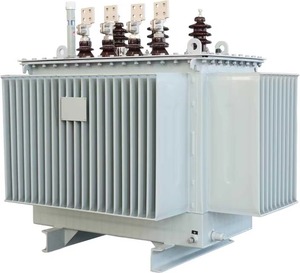
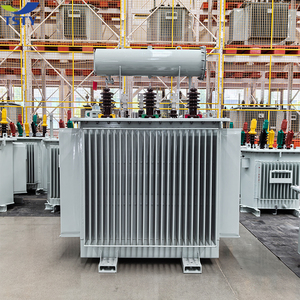
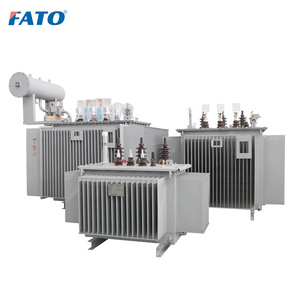
Our manufacturing protocols incorporate custom-engineered external radiator cooling fins (corrugated tank or panel radiator design) with augmented thermal dissipation surfaces. To counteract the reduced dielectric breakdown strength of rarefied air at high altitudes, our CDMX-bound units feature extended creepage distance porcelain or composite polymer bushings (conforming to NMX-J-234-ANCE and IEEE C57.19.00 standards). This eliminates flashover risk caused by ambient dust, vehicle exhaust soot, and industrial airborne contaminants common across metropolitan corridors such as Vallejo, Naucalpan, and Tlalnepantla.
Furthermore, internal core and coil clamping architectures are reinforced with high-strength structural steel frames and cross-braced unistruts capable of withstanding lateral and vertical ground acceleration factors exceeding 0.45g, as stipulated in the Mexico City Building Construction Code (Reglamento de Construcciones para el Distrito Federal). Windings are dynamically secured using high-density pressboard spacers and vacuum-dried to ensure exceptional mechanical withstand capability during both transportation sea-freight transit and sudden external short-circuit events within unstable distribution feeders.
Engineered to power hyper-critical industrial complexes, modern substations, renewable transitions, and urban utility infrastructures.
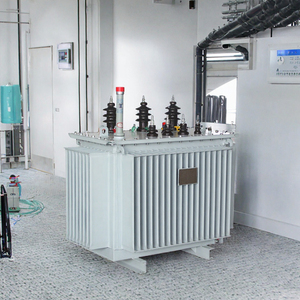
Vallejo in Azcapotzalco remains CDMX's premier industrial and logistics cluster. Under the "Vallejo-i" modernization framework, automated distribution warehouses, pharmaceutical plants, and light assembly factories demand highly efficient S11 and S13 hermetically sealed transformers with low excitation currents and minimum no-load losses.
With Mexico positioned as the central nearshoring fintech and cloud computing corridor for Latin America, edge computing facilities along Reforma, Santa Fe, and Insurgentes require ultra-reliable step-down power transformers equipped with electrostatic shielding, harmonic suppression windings (K-factor rated), and low-noise cores operating below 55 dBA.
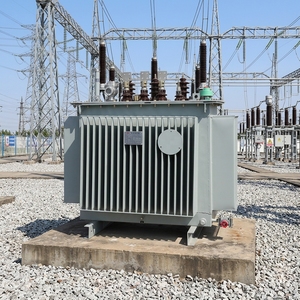
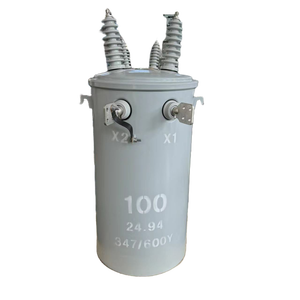
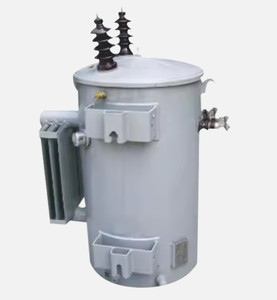
Pole-mounted single-phase units (15 kVA to 167 kVA) and pad-mounted three-phase transformers (up to 2500 kVA) operating on 13.2 kV, 23 kV, and 34.5 kV primary systems serve high-density residential developments and transit nodes, including modernization lines of the Mexico City Metro and Metrobús electric bus depots.
Procurement directors and EPC engineering firms in Mexico face an evolving regulatory landscape driven by nearshoring manufacturing surges, strict national safety mandates, and sustainability standards:
Equipped with state-of-the-art automatic variable-pitch coil winding machinery, computerized laser-guided lamination stacking, vacuum pressure impregnation, and full nitrogen-blanketed vacuum oil filling systems.
Every transformer undergoes rigorous computerized routine tests: DVDF (double voltage double frequency) induced overvoltage testing, impulse withstand simulation, winding resistance (milli-ohm resolution), insulation resistance (Megger), and infrared thermal dissipation checks.
Backed by deep automation and panel-building expertise established since 1990, we construct transformers with exceptional inrush current tolerance, balanced vector groups (Dyn11, Ynd11, Dyn1), and heavy-duty terminal enclosures designed for rapid EPC commissioning.
Clear, technical, and regulatory answers addressing common questions from Mexican purchasing managers, electrical contractors, and utility project leads.
Yes. We specifically tailor designs for Mexican projects to comply fully with NOM-002-SEDE (energy efficiency for distribution transformers), NOM-001-SEDE (electrical installation safety), NMX-J-116-ANCE, and CFE specifications (such as CFE K0000-01, CFE K0000-04, and CFE K0000-19). Certified routine test reports and compliance dossiers are supplied with every shipment for seamless UVIE certification.
Due to reduced air density at 2,240 meters, transformers experience decreased cooling efficiency and lower dielectric withstand in ambient air. To prevent overheating, our engineering team factors in temperature rise derating (typically designing for 50°C or 55°C rise instead of standard 65°C) and incorporates high-altitude external bushings with longer leakage/creepage distances. We optimize the core-coil volume dynamically to keep capital expenditure competitive while guaranteeing full rated output at CDMX altitude.
Mexico operates primarily at 60 Hz. We manufacture all standard medium-voltage primary configurations utilized across CDMX and State of Mexico industrial zones, including 13,200V, 23,000V, and 34,500V (with standard +/- 2x2.5% de-energized tap changers). Secondary voltages include 480Y/277V, 440Y/254V, 220Y/127V, and specialized dual-voltage arrangements engineered for industrial machinery and motor control centers (MCCs).
We offer both premium Type II inhibited mineral insulating oil (meeting ASTM D3487 and IEC 60296 standards) and biodegradable synthetic or natural ester dielectric fluids (such as Cargill Envirotemp FR3). Natural esters provide superior thermal capability, high fire point (>300°C), and environmental neutrality, making them the preferred choice for commercial towers, indoor substations, and high-density districts in Mexico City.
Standard fabrication times range from 30 to 45 days, depending on unit capacity and custom accessories. Maritime container shipping from Shanghai, Ningbo, or Qingdao directly to the Port of Manzanillo or Lázaro Cárdenas typically takes 18 to 24 days. From the Pacific ports, inland customs transit and bonded intermodal trucking deliver the transformers to Vallejo, Cuautitlán Izcalli, or any site within the Mexico City Valley within 3 to 5 business days.