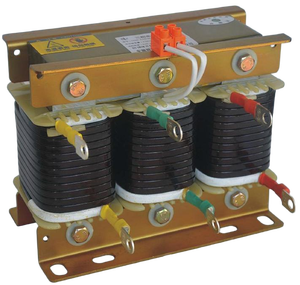
Three Phase Series Reactor for Reactive Power Compensation
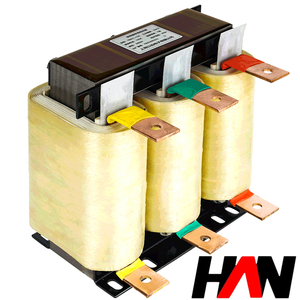
Tuned copper-wound series detuning reactors designed to prevent harmonic resonance, mitigate capacitor bank stress, and stabilize facility power factor in high-load commercial facilities.
Engineered for mission-critical reliability across Northern California cleanrooms, robotics facilities, and distribution hubs.
Tuned copper-wound series detuning reactors designed to prevent harmonic resonance, mitigate capacitor bank stress, and stabilize facility power factor in high-load commercial facilities.
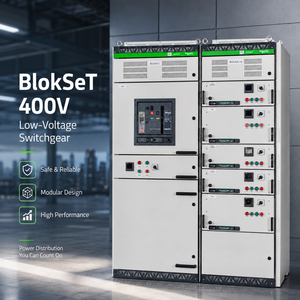
Heavy-duty smart switchgear assemblies featuring up to 150kA interruption capacity, intelligent busbar temperature monitoring, and SCADA-ready energy management metering.
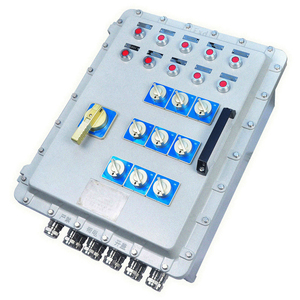
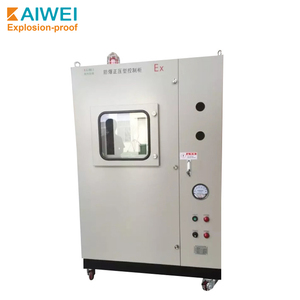
Cast aluminum and stainless steel flameproof junction enclosures engineered for Class I Division 1 & 2 industrial sites, chemical synthesis suites, and semiconductor gas feed rooms.
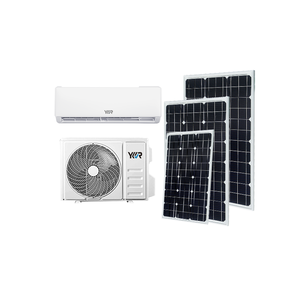
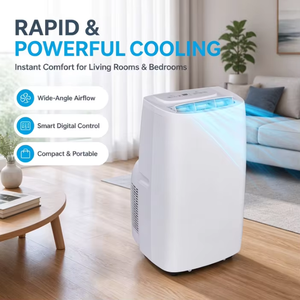
Eco-designed enclosure climate control utilizing direct DC solar input and AC utility fallback, ensuring stable operating temperatures for outdoor control assemblies under California Title 24 efficiency standards.
Heavy-duty operator stations and push-button control assemblies rated for harsh environments, refinery processes, and maritime dock automation around the Bay Area ports.
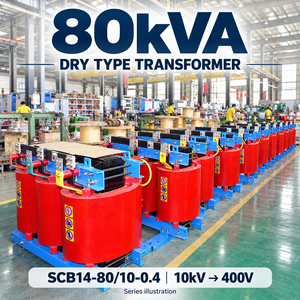
High-efficiency dry type step-down unit (10/11kV to 480V/400V) with vacuum pressure impregnation (VPI) and Class H insulation, engineered for zero fire risk in commercial high-rises and edge compute nodes.
Curb total harmonic distortion (THD) and suppress severe dv/dt transient spikes to safeguard precision CNC drives, automated guided vehicle (AGV) chargers, and high-frequency variable speed motors.
Supplemental cooling module for commissioning temporary server racks, modular electrical houses (E-Houses), and pilot automation cells requiring rapid deployment thermal relief.
From the biotech labs of South San Francisco to high-throughput warehousing in the East Bay, procurement teams face intense compliance, space, and seismic constraints.
San Francisco Department of Building Inspection (DBI) and local city inspectors mandate third-party field evaluation or accredited shop labels. Our automation control panels follow rigorous UL 508A guidelines, wire color conventions, touch-safe finger protection (IP20 minimum internal), and selective coordination to bypass costly local re-inspections.
Operating along the San Andreas and Hayward faults requires physical equipment resilience. Our enclosures are built with reinforced unistrut framing, gusset plates, and heavy-gauge cold-rolled steel, designed to withstand high spectral response accelerations (Ss) per California Building Code (CBC) Title 24 Seismic Zone 4 parameters.
With aggressive California PG&E interconnection rules and strict IEEE 519 compliance goals, our control cabinets integrate series line reactors and active harmonic filters. This suppresses total harmonic current distortion (THDi) under 5%, preserving transformer life and ensuring stable power quality for sensitive microelectronics.
A frequent stumbling block for imported panels entering California is a default 5kA SCCR label on complex motor circuits. Hengel/Prima engineers perform detailed short-circuit calculations during schematic design, utilizing current-limiting fuses and coordinated circuit breakers to deliver verified cabinet labels of 65kA to 100kA SCCR at 480V, matching utility fault availability without on-site field rework.
Comprehensive build specifications and quality metrics benchmarking export-grade builds for US West Coast deployment.
| Subsystem Architecture | Export Technical Specification | Bay Area Regional Advantage | Compliance & Verification Protocol |
|---|---|---|---|
| PLC / PAC Processing Core | Rockwell Automation Allen-Bradley (ControlLogix), Siemens S7-1500, Beckhoff Industrial PC | Native integration with domestic SCADA systems; immediate programmer familiarity across Silicon Valley lines | Pre-commissioned I/O looping, EtherNet/IP and PROFINET bus diagnostic verification |
| Enclosure Integrity | NEMA 4X / NEMA 12, 316 Stainless Steel or Powder-Coated 14-Gauge Carbon Steel | Resistant to maritime salt fog in coastal San Francisco, Richmond, and Oakland environments | Continuous polyurethane foam gasket, IP66 ingress verification, helium leak testing available |
| Thermal Dissipation | Closed-loop R134a/R410A side-mount A/C, Vortex cooling, or Hybrid Solar Monoblock systems | Maintains internal panel temperature below 35°C even during severe regional dry heat spells | Thermal imaging IR scanning conducted across all high-power contactors under full rated load |
| Magnetics & Reactance | Class H Copper VPI Transformers (up to 5000kVA), Harmonic Line Chokes (up to 2500A) | Protects drive rectifiers against supply voltage sags, spikes, and transients on aged urban grids | DVDF overvoltage testing, LCR inductance verification, and computerized short-circuit logging |
| Safety & Interlocking | Category 4 / PLe Safety Relays, Keyed Interlocks, Master Disconnect through-door operators | Ensures full compliance with OSHA Cal/OSHA Title 8 and NFPA 79 electrical safety regulations | Redundant safety circuit loop testing, emergency stop response timing under 15ms |
Combining heavy-duty magnetic fabrication, panel enclosure sheet metal engineering, and modern automation design.
Unlike ordinary panel shops that outsource transformers and chokes, our direct production capability spans custom control transformers from 50VA to 5000kVA and line reactors up to 2500A. This vertical synergy reduces thermal footprint, eliminates component lead-time bottlenecks, and ensures optimal impedance matching.
Every automation enclosure leaves our facility backed by an exhaustive Factory Acceptance Test (FAT) dossier. Our facility utilizes automated computerized panels for single and 3-phase testing, open/short-circuit diagnostics, Megger insulation resistance testing, and double voltage double frequency (DVDF) stress checking.
We provide full-container-load (FCL) and consolidated (LCL) freight solutions straight to the Port of Oakland or air cargo directly into SFO International. Cabinets are secured inside moisture-barrier vacuum packaging with desiccant arrays and reinforced wooden crates engineered for cross-ocean transit stability.
Essential guidance addressing regulatory approvals, electrical codes, lead times, and engineering change management.
Yes. We design and build strictly adhering to NEC (NFPA 70), UL 508A, and NFPA 79 standards. All major components used (breakers, contactors, terminals, wires, power supplies) are UL Listed or Recognized. We can also coordinate with accredited Nationally Recognized Testing Laboratories (NRTL) such as Intertek (ETL), UL, or TÜV for field evaluation labels prior to project handoff.
We utilize EPLAN Pro Panel and AutoCAD Electrical for all electrical engineering. Initial schematic submittals are sent to your engineering team for redline approval. Any subsequent revisions are tracked via structured Engineering Change Orders (ECO), and revised wiring runs are verified using computerized terminal mapping before assembly progresses.
Typical engineering submittals take 7 to 12 working days. Once schematics are approved, fabrication spans 3 to 5 weeks depending on component sourcing. Sea freight from origin ports to Oakland typically requires 14 to 18 days on water, offering an overall timeline 40% faster than standard domestic fabricators facing component backlogs.
Absolutely. Our panels can be specified with IoT edge gateways, managed industrial Ethernet switches, and PLCs configured for MQTT, Modbus TCP/IP, BACnet/IP, or OPC UA protocols. This enables real-time facility telemetry integration with cloud architectures (AWS IoT, Azure) common across Bay Area enterprises.
Consult with our technical sales engineers to review your single-line diagrams (SLD), calculate cabinet SCCR ratings, or generate a competitive turnkey quote for your San Francisco or Bay Area project.