CEMarked CEMarked
Designed for rigorous continuous duty across heavy manufacturing, logistics hubs, mining processing lines, and critical process automation plants across Greater Melbourne and regional Victoria.
As Victoria undergoes sweeping capital investments in green energy generation, advanced manufacturing corridors in Dandenong and Campbellfield, and automated supply chain megahubs near the Port of Melbourne, electrical procurement strategies have transitioned decisively toward verified, low-loss infrastructure. Sourcing from a certified motor control center factory requires an engineering appraisal extending far beyond basic mechanical sheet-metal enclosures. Modern engineering procurement requires comprehensive compliance with AS/NZS 61439.1/.2 (Low-voltage switchgear and controlgear assemblies), dual CE conformity markings, exceptional internal arc fault mitigation (AS/NZS 3439 Annex ZD / TR 61641 criteria), and robust power quality filtering to mitigate systemic harmonic heating.
In the Australian context, CE marking acts as a critical international technical baseline denoting strict compliance with the European Low Voltage Directive (LVD) 2014/35/EU and Electromagnetic Compatibility (EMC) Directive 2014/30/EU. When combined with AS/NZS cross-verification, procurement managers in Melbourne secure motor control centers (MCC) that feature verified temperature rise margins under typical 40°C ambient baseline parameters, comprehensive short-circuit withstand ratings (up to 65kA/100kA Icw for 1s), and isolation safeguards essential for mining, water treatment, and high-throughput automated logistics.
Physical functional segregation of horizontal/vertical busbars, individual starter cubicles, and dedicated cabling chambers prevents fault propagation and ensures zero-interruption maintenance for surrounding drives.
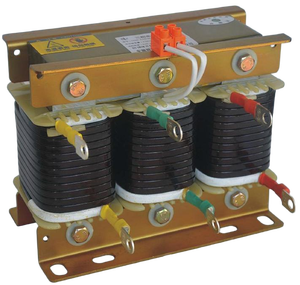
Integrated 3-phase series detuning reactors and DC link chokes eliminate IEEE 519 non-linear harmonic distortion caused by Variable Speed Drives (VSDs), preserving grid resonance stability across Victoria’s networks.
Built from our automation legacy, switchboards incorporate EtherNet/IP, Modbus-TCP, and Profinet protocols, feeding real-time winding temperatures, insulation resistance trends, and instantaneous kW/kVAr telemetrics directly to central DCS.
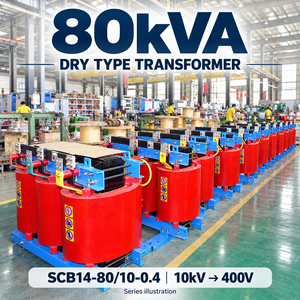
Pumping stations require heavy-duty MCCs capable of handling high cyclic motor inrushes without voltage sag. Featuring integrated cast resin distribution transformers (up to 5000kVA) and load reactors, our assemblies eliminate reflected wave dv/dt voltage spikes on submersible pump cables exceeding 150 meters in length, shielding motor windings from premature dielectric breakdown.
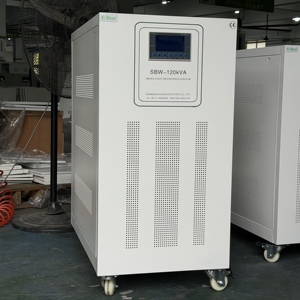
Modern parcel sorting and cold-storage operations utilize thousands of variable speed conveyor motors. Non-linear power profiles generate severe third and fifth harmonic currents. By integrating Series De-tuned Reactors and 120kVA AC Voltage Stabilizers within our low-voltage MCC tiers, facility operators preserve power factor targets, avoiding severe utility penalty tariffs.
Subject to airborne industrial particulates and volatile atmospheres, facilities demand high ingress protection (IP54 to IP65 enclosures) with customizable form separations. Drawing on our parent organization’s decades-long pedigree in flameproof, pressurized, and intrinsically safe control panels, every compartment is sealed and validated against induced mechanical thermal stresses.
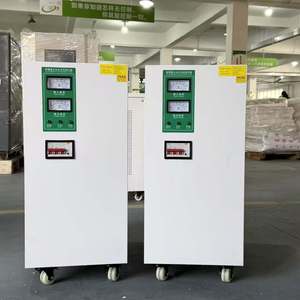
As Victoria integrates localized solar arrays and commercial battery hubs, bidirectional low-voltage switchboards demand absolute phase stability. Our servo-driven automatic voltage regulators and custom line filters protect sensitive inverter systems from severe grid-switching transients and transient spikes common across outlying regional networks.
Cross-referencing international manufacturing standards with local Australian deployment prerequisites.
| Technical Parameter | IEC / CE Industrial Benchmark | Australian Requirement (AS/NZS 61439) | Our In-House Factory Execution Capability |
|---|---|---|---|
| Rated Operational Voltage (Ue) | Up to 690V AC, 50/60 Hz | 400V / 415V, 50 Hz Three Phase | 100V to 1000V Custom Engineered Platforms |
| Main Busbar Short-Time Current (Icw) | 35kA to 80kA for 1.0 sec | 50kA / 65kA (1 sec or 3 sec fault duty) | Up to 100kA RMS / 220kA Peak (Tested to standards) |
| Internal Segregation Form | Form 1 through Form 4b (IEC 61439-2) | Form 3b / Form 4a / Form 4b standard | Precision CNC folded Form 4b with fully isolated wireways |
| Ingress Protection (IP Rating) | IP31 to IP55 | IP42 indoor / IP56 outdoor standard | IP42 to IP66 with custom thermal dissipation & AC options |
| Harmonic Detuning Capacity | Total Harmonic Distortion (THDi) < 8% | Strict adherence to Victoria DNSP grid codes | Integrated Series Reactors (5.67%, 7%, 14% de-tuned) up to 2500A |
| Factory Testing & Routine Verification | Routine Dielectric & Resistance Checks | AS/NZS Verification Reports + Type Test Evidence | Computerized OC/SC, DVDF induced overvoltage, Infrared thermal scan |
The industrial switchgear market across Victoria is no longer satisfied with electromechanical Direct-On-Line (DOL) or Star-Delta starters housed in basic unmonitored sheet metal enclosures. Engineering consultancies in Melbourne are mandating three critical architectural upgrades across all new tenders:
Continuous non-contact infrared thermal sensors mounted over primary busbar joins and starter terminal lugs. Data streams alert maintenance teams to micro-resistance spikes before catastrophic arc flash incidents can occur.
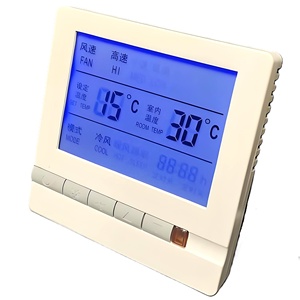
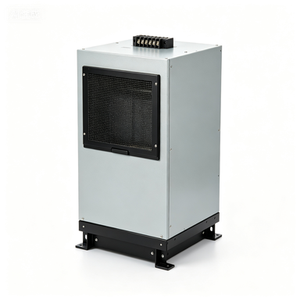
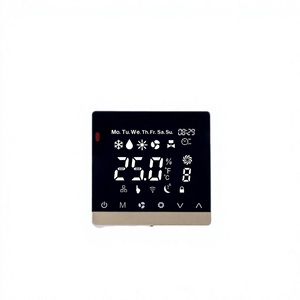
Melbourne's sharp ambient shifts (from near-freezing winter dawns to 42°C summer heatwaves) create severe condensation challenges. Solid-state enclosure conditioners and smart thermostats maintain optimal operating dew points.
With Australian wholesale energy tariffs fluctuating rapidly, specifying cast resin step-down transformers and series detuning reactors with high-grade, grain-oriented silicon steel cores minimizes no-load losses across round-the-clock facilities.
Practical answers addressing compliance standards, testing certificates, shipping schedules, and localized Australian grid integration.
Whether upgrading a municipal water plant, deploying automated sorting hubs, or engineering high-reliability MCCs for heavy manufacturing, leverage our 35-year automation pedigree and international testing excellence.
Contact Us