 CEMarked CEMarked
Addressing the complex demands of Canadian manufacturing, oil sands, forestry, and automated process facilities through dual CE compliance, high instantaneous inrush VA capacity, and low-loss magnetic core fabrication.
A rigorous examination of primary grid voltage harmonization, thermal regulation under sub-zero baselines, and electromagnetic duty cycles across Canada's industrial plant floors.
Unlike standard 480V or European 400V infrastructures, Canadian industrial installations predominantly utilize three-phase 600V nominal distribution (575V utilization). Our industrial control transformers (ICTs) are custom-wound with primary taps configured for 600V, 575V, and 480V, ensuring exact 120V, 24V, or dual 120/24V secondary regulation under load without dangerous saturation or coil overheating.
In Canadian climates—ranging from Northern Alberta oil mining fields to cold-storage packaging facilities in Ontario and Quebec—ambient winter operating temperatures drop below -40°C. Conventional transformer varnishes crack under cyclic thermal contraction. We utilize advanced Class H (180°C) and Class 220°C vacuum pressure impregnation (VPI) resins and high-grade silicon steel to prevent micro-fracturing and dielectric breakdown.
Industrial control transformers power high-inrush inductive components including contactors, solenoid valves, safety relays, and PLC I/O switches. If the secondary voltage drops beyond 10-15% during actuation, contactors can chatter or weld. Our magnetic circuits are engineered with lower flux density (B_max ≤ 1.45 Tesla), guaranteeing peak inrush delivery without secondary voltage collapse.
Optimized electromagnetic solutions custom-engineered for harsh, heavy-duty sector applications throughout Canada.
Deployed in explosion-proof and purged control cabinets in Fort McMurray and Edmonton refineries. These transformers withstand high concentrations of hydrogen sulfide and severe thermal shifts while stepping down 600V pipeline feeder power to 120V for safety interlocks, remote terminal units (RTUs), and burner management systems (BMS).
In Sudbury, Timmins, and Abitibi-Témiscamingue, hard-rock mining machinery experiences relentless vibration, abrasive mineral dust, and moisture. Our epoxy cast resin and encapsulated isolation control transformers deliver unmatched mechanical rigidity, protecting drilling, ventilation, and hoisting automation systems from power anomalies.
Sawmills and pulping plants throughout British Columbia feature extensive variable frequency drive (VFD) arrays driving debarkers, chippers, and conveyors. Our combined line/load reactors and control transformers filter high-frequency dV/dt spikes, mitigating common-mode ground currents and preventing premature motor bearing erosion.
From Windsor to Oshawa, high-speed robotic spot welding and CNC machining centers demand absolute electrical noise suppression. Copper electrostatic shielding between primary and secondary windings suppresses electromagnetic interference (EMI/RFI), preventing logic resets in sensitive Allen-Bradley, Siemens, and Omron PLC architectures.
Supplying auxiliary control transformers for utility-scale solar PV inverters and grid-tied battery storage throughout Quebec and the Maritimes. These transformers step down auxiliary distribution power to operate thermal cooling pumps, HVAC chillers, contactor coils, and microgrid SCADA communications.
Washdown-grade, stainless-steel-enclosed transformers built for meat and dairy processing in Quebec and Ontario. Resistant to high-pressure hot caustic sanitization, ensuring uninterrupted power for process sensors, metering valves, and pasteurization automation control racks.
Navigating the convergence of European CE safety directives, Canadian Electrical Code (CEC Part I), and CSA energy efficiency mandates.
All units carry authentic CE certification according to the Low Voltage Directive (LVD 2014/35/EU) and Electromagnetic Compatibility (EMC 2014/30/EU), referencing harmonized standard EN 61558-2-2. Furthermore, creepage and clearance distances, dielectric breakdown ratings, and terminal spacing comply with CSA C22.2 No. 66 and UL 5085 parameters, ensuring seamless field approval during Canadian SPE-1000 inspections by the Electrical Safety Authority (ESA) or CSA Group.
As Natural Resources Canada (NRCan) tightens energy consumption benchmarks under Canada’s Energy Efficiency Regulations, our larger dry-type control and power transformers incorporate high-permeability, cold-rolled grain-oriented (CRGO) silicon electrical steel. This reduces no-load core losses by up to 28% compared to traditional non-oriented grades, lowering continuous operating costs over decades of factory operation.
Modern Industry 4.0 plants deploy higher densities of non-linear loads, resulting in severe 3rd, 5th, and 7th harmonic heating. Our split-winding and K-factor rated dry-type units (K-4, K-13, K-20) prevent neutral busbar overloading and premature dielectric failure, ensuring clean reference power for precision industrial edge computing, vision sensors, and servo systems.
Comprehensive engineering benchmarks for panel builders, system integrators, and industrial procurement managers.
| Product Category | Standard Capacity | Primary / Secondary Volts | Insulation & Temp Rise | Primary Application in Canada |
|---|---|---|---|---|
| Industrial Control Transformers (ICT) | 50 VA – 10 kVA | 600V, 575V, 480V / 120V, 24V | Class H (180°C) / 115°C Rise | Motor control centers (MCC), relay logic, contactor switching, PLC cabinets. |
| Three-Phase Drive Isolation Transformers | 10 kVA – 750 kVA | 600V Delta / 600Y/347V or 480Y/277V | Class 220°C / 150°C Rise | SCR/VFD motor drives, preventing common-mode noise reflection into plant switchboards. |
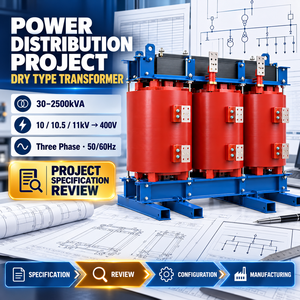
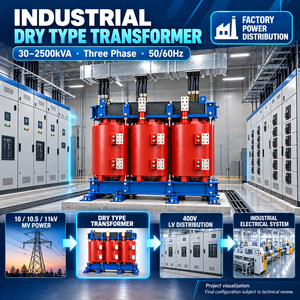
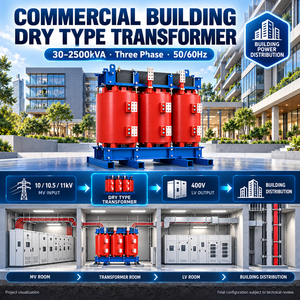
| Cast Resin Dry-Type Transformers | 30 kVA – 2500 kVA | 4.16kV, 10kV, 13.8kV / 600V, 480V | Class F (155°C) / 100°C Rise | Underground mining substations, indoor commercial complexes, clean rooms. |
| Line & Load Reactors | Up to 2500 A | 380V – 690V (3% & 5% Impedance) | Class H (180°C) | Mitigating dV/dt motor cable spikes, protecting drive input diodes from grid surges. |
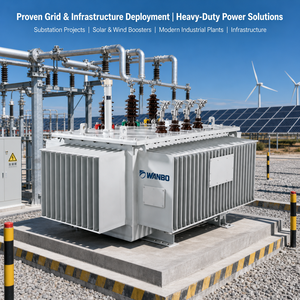
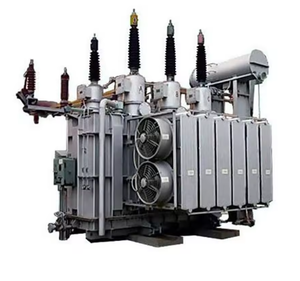
| Substation Power Transformers | Up to 5000 kVA | 11kV, 25kV, 34.5kV / 600V, 4.16kV | ONAN / Dry-Type Class H | Main plant distribution, renewable collection substations, heavy metallurgical smelting. |
Operating with over 25 years of engineering experience as a specialized subsidiary of a veteran industrial automation group established in 1990.
Every industrial control transformer undergoes rigorous computerized quality screening prior to crating. Our quality inspection facility includes fully automated three-phase and single-phase computerized testing panels recording ratio, polarity, phase displacement, excitation current, and load loss profiles with verifiable digital test certificates.
To eliminate turn-to-turn insulation weaknesses, each unit undergoes Double Voltage Double Frequency (DVDF) induced overvoltage testing alongside standard high-potential AC withstand tests (up to 4kV). Milli-ohm Kelvin bridge resistance meters confirm winding balance across all primary tap configurations.
Because our corporate parent has engineered PLC, SCADA, and hazardous-area pressurized control panels since 1990, we understand the real-world spatial, mounting, and wiring constraints of cabinet integration. Terminals feature heavy-duty, finger-safe touch-proof blocks (IP20) with dual screwdriver/nut-runner capability for streamlined assembly.
Direct answers to technical, regulatory, and logistics questions commonly raised by Canadian electrical engineers and procurement directors.
Yes. While CE marking satisfies European Union directives (LVD/EMC), installation in Canada under the Canadian Electrical Code (CEC Part I) typically requires component recognition or complete panel approval. Our transformers are constructed in full alignment with CSA C22.2 No. 66 and UL 5085 safety spacing, flammability, and temperature metrics. When integrated into control panels undergoing Field Evaluation (such as SPE-1000 through CSA, QPS, Intertek, or ESA in Ontario), our transformers consistently pass dielectric withstand and temperature rise inspections without exception. Detailed factory routine test reports and insulation certificates are shipped with every consignment.
Canadian systems often alternate between 600V distribution and 575V utilization ratings. To prevent over-excitation or under-voltage on critical 120V or 24V control circuits, our industrial control transformers incorporate dual or multi-tap primary configurations (e.g., 600V – 575V – 480V – 460V). This enables site engineers or panel technicians to easily adjust primary taps to maintain exact secondary output voltage irrespective of local feeder drops.
Custom-engineered production cycles range from 2 to 4 weeks depending on unit kVA and winding complexity. We provide air freight options (5–8 days) for urgent retrofits into Toronto Pearson (YYZ), Montreal Trudeau (YUL), Calgary (YYC), and Vancouver (YVR). Ocean freight shipments are handled via direct sea routes to the Port of Vancouver or Port of Montreal with comprehensive DDP (Delivered Duty Paid) or CIF terms, complete with custom wooden crating compliant with ISPM 15 phytosanitary regulations.
Standard commercial varnishes turn brittle in sub-zero environments, leading to micro-fissures and dielectric punch-through under high startup inrush. Our units utilize Class H (180°C) solventless polyester or epoxy resins subjected to multi-stage Vacuum Pressure Impregnation (VPI), followed by controlled oven curing. This creates a monolithic, moisture-impermeable encapsulation that expands and contracts uniformly from -45°C up to full Class H thermal rise without cracking.
To provide a fully optimized quote within 24 hours, our engineering desk needs: 1) Continuous VA or kVA rating; 2) Peak instantaneous Inrush VA (or total contactor coil hold/pickup values); 3) Primary nominal voltage and required taps; 4) Secondary voltage requirements; 5) Operating frequency (Canadian standard is 60Hz); 6) Enclosure rating (open-frame core-and-coil, Type 1, Type 3R, or Type 4/4X washdown); and 7) Any specific project certifications or special test requirements (DVDF, heat run, partial discharge).
Yes. For applications feeding variable speed drives, CNC controllers, medical imaging suites, or telemetry instruments, we incorporate a continuous, grounded Faraday copper shield wound between the high-voltage primary and low-voltage secondary coils. This provides high common-mode noise attenuation (typically 60dB to 120dB) and suppresses steep wavefront transients from polluting sensitive control electronics.