 CEMarked CEMarked
Precision-manufactured power transformers, line/load reactors, automatic stabilizers, and interference suppressors ready for high-temperature desert installation across the Kingdom.
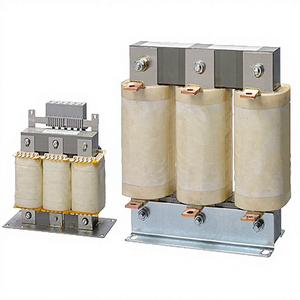
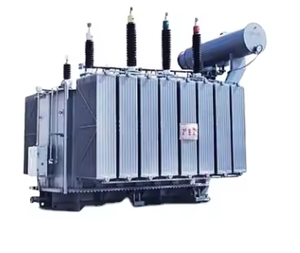
In high-capacity utility networks and intensive industrial complexes, fault current control and reactive power balance represent critical operational imperatives. In the Central Province of Saudi Arabia—anchored by the rapidly expanding metropolitan and industrial expanse of Riyadh—the transmission and distribution grid overseen by the Saudi Electricity Company (SEC) operates under rigorous environmental and electrodynamic constraints. As high-voltage interconnections expand to accommodate giga-projects, renewable solar corridors, and hyper-scale data centers, the fault levels of 132kV, 220kV, and 380kV substations frequently approach equipment breaking limits. This operational reality demands robust, zero-saturation inductive apparatus: Air Core Dry-Type Reactors.
Unlike conventional iron-core magnetic components, an air core reactor contains no ferromagnetic material within its inductive winding. This fundamental topological distinction guarantees an entirely linear inductive response: inductance remains virtually unchanged from rated nominal current through full asymmetrical short-circuit peak levels. In the event of a catastrophic busbar or feeder fault in Riyadh's grid, an air core series current-limiting reactor will never saturate, providing an uninterrupted, predictable inductive impedance that restricts the fault current to within the interrupting rating of downstream switchgear and circuit breakers.
As a seasoned manufacturing factory and global exporter delivering magnetics across GCC markets, our engineering methodology integrates high mechanical bracing, UV-resistant resin encapsulation, and aerodynamic natural convection cooling ducts. Each unit engineered for export to the Riyadh market complies rigorously with IEC 60076-6, IEEE C57.16, and regional SASO / SEC engineering specifications, addressing the unique thermal and atmospheric challenges presented by the Najd plateau.
Installed in series on bus-tie feeders and generator outputs to suppress short-circuit currents and safeguard downstream SEC substations.
Neutralizes the Ferranti effect along lengthy 380kV/132kV desert transmission cables during light load night hours in the Central Region.
Tuned in series with power capacitor banks to absorb 5th, 7th, and 11th harmonic currents generated by non-linear industrial VFD drives.
Connected between transformer neutral and ground to constrain phase-to-ground fault currents and transient overvoltages.
Limits explosive back-to-back capacitor energization inrush currents, preventing vacuum contactor welding and dielectric stress.
Operating magnetics in Central Saudi Arabia demands specific engineering countermeasures against ambient heat exceeding 55°C, high solar insolation, and airborne silicate dust storms.
The climate of Riyadh is classified as a hot desert climate (Köppen: BWh), characterized by hyper-arid summers where ambient shade temperatures routinely breach 50°C to 55°C, accompanied by intense direct solar radiation that can elevate exposed metallic and composite equipment surfaces above 75°C. For an air core reactor—which relies solely on ambient air circulation through vertical convective ducts between winding packages—standard catalog ratings developed for temperate zones (40°C ambient) will inevitably lead to insulation thermal degradation, accelerated aging of winding varnishes, and premature dielectric breakdown.
Constructed exclusively with Class H (180°C) and Class C (220°C) epoxy-fiberglass insulation systems, providing ample thermal margin under full-load desert operating conditions without life expectancy reduction.
Engineered with self-shedding vertical aerodynamic cooling channels and anti-tracking hydrophobic polyurethane surface coatings, preventing dust bridging and tracking during fierce Shamal dust storms.
Equipped with station-post insulators offering minimum specific creepage distances of 31 mm/kV to 45 mm/kV (SPS Class IV/Very Heavy), preventing dry-band arcing under desert condensation and dust cake layers.
Finite-element analyzed non-magnetic structural spiders and fiberglass tie-rods engineered to resist both electrodynamic fault impulses and violent regional desert wind shear forces up to 160 km/h.
Evaluating performance metrics under Middle Eastern utility specifications, safety codes, and life-cycle costs.
| Evaluation Parameter | Air Core Dry-Type Reactor | Iron Core Dry-Type Reactor | Oil-Immersed Magnetic Reactor |
|---|---|---|---|
| Linearity Under Short Circuit | 100% Linear (Zero Saturation) | Saturates at High Overcurrent | Non-linear at High MVA Faults |
| Fire Safety & Environmental Risk | Zero Oil / Explosion Proof | Dry Type / Fire Safe | Flammable Hydrocarbon Oil Risk |
| 55°C Ambient Performance | Optimal Natural Convection | Core Heat Trapping Risks | Severe Oil Degasification/Aging |
| Maintenance Demands | Zero Moving Parts, Visual Inspection | Minimal Core Tightening | DGA Oil Sampling & Bushing Gaskets |
| Magnetic Clearance Requirement | Mandatory Open Clearance Zone | Contained Within Iron Yoke | Contained Within Steel Tank |
| Total Weight & Foundation Cost | Lightweight / Minimal Civil Foundation | Heavy Magnetic Core Lamination | Very Heavy Tank and Fluid Volume |
| Riyadh Substation Suitability | Highly Preferred for Outdoor Substations | Preferred for Enclosed Switchgear | Restricted due to Fire Bunding Needs |
Supporting Saudi Vision 2030 across giga-projects, high-density industrial parks, grid substations, and metro transit networks.
Installed at 132kV and 380kV switching stations across Riyadh and Al-Kharj to limit fault currents arising from dense interconnections between generation plants and urban load centers.
Large-scale solar parks in the Riyadh Province incorporate central inverters that generate complex high-frequency switching harmonics and require capacitive line charging compensation.
Riyadh's vast industrial clusters house steel melting furnaces, extrusion plants, and cement mills where severe voltage flickers and rapid non-linear load swings occur every second.
The automated Riyadh Metro system relies on high-speed rectifier substations feeding traction power across multiple corridors, necessitating rigorous harmonic trapping and DC ripple filtering.
As international tech leaders build cloud regions in Riyadh, power quality and uncorrupted sine wave reliability become foundational to prevent massive computational cluster outages.
Pumping clean water from the Arabian Gulf into Riyadh requires mega-pumping stations powered by massive medium-voltage VFD drives that generate significant electrical noise.
The procurement landscape for electrical balance-of-plant apparatus in Saudi Arabia is undergoing a decisive paradigm shift driven by Saudi Vision 2030, ESG directives, and stringent fire-safety revisions by the General Directorate of Civil Defense. Historically, oil-filled magnetic units dominated substation installations. However, the catastrophic hazards associated with transformer oil fires, catastrophic tank ruptures, and expensive oil-containment bunding civil works have prompted engineering consultants (such as Dar Al-Handasah, Khatib & Alami, and Parsons) to prioritize dry-type, non-flammable air core reactors for municipal, transit, and critical commercial developments.
Furthermore, Saudi procurement authorities—guided by the Local Content and Government Procurement Authority (LCGPA) and Aramco's IKTVA (In-Kingdom Total Value Add) framework—demand suppliers who provide transparent technical dossiers, accelerated shipping timelines via King Abdulaziz Port in Dammam and Riyadh Dry Port, and comprehensive type-testing certifications from internationally recognized laboratories such as KEMA, CESI, or accredited computerized factory testing facilities.
Eliminating thousands of liters of combustible transformer dielectric mineral oil satisfies the strictest Saudi fire mitigation codes for indoor and urban rooftop electrical substations.
Using vertical stacking arrangements (coils mounted concentrically one above another on composite post insulators), EPC contractors reduce expensive land footprint in dense Riyadh zones.
Air core reactors have zero moving parts, zero oil to purify, and zero dielectric oil degradation. Routine maintenance in Riyadh involves simple visual inspection and pressurized air de-dusting.
A world-class 5,500 m² production infrastructure, certified quality assurance, and panel-builder automation heritage since 1990.
Prima Transformers Pvt. Ltd. was incorporated in 2006 as a dedicated manufacturing subsidiary of Prima Automation (India) Pvt. Ltd., which has engineered PC, PLC, and SCADA-based industrial control systems and explosion-proof panels since 1990. This heritage gives us an invaluable engineering perspective: we build magnetics from the viewpoint of the panel builder, switchgear integrator, and field commissioning team.
Every air core reactor, line/load reactor, and power transformer leaving our factory is designed to eliminate installation friction—ensuring clean busbar terminations, robust lifting points, and electrodynamic bracing that withstands true industrial operational stress.
Avoid common field-installation errors by considering magnetic clearance zones and environmental parameters.
Because air core reactors omit iron yokes, magnetic flux extends into the surrounding air. Specifiers must maintain calculated metal-free clearance distances around the perimeter and above the coil to prevent induced eddy current heating in structural steel beams, concrete rebar, and fences.
Clearly provide: Nominal system voltage (kV), rated continuous current (A), rated inductance (mH) or reactance (Ω), rated short-circuit withstand duration (e.g., 38kA for 1s or 3s), grid operating frequency (60 Hz for Saudi Arabia), and BIL impulse voltage withstand levels.
Specify side-by-side or vertical three-phase stacked arrangement depending on available plot dimensions. For stacked configurations, our design incorporates non-magnetic composite inter-phase insulators with precision-balanced mechanical deflection margins.
Air core reactors possess zero ferromagnetic iron material, eliminating magnetic saturation completely. Under the severe asymmetrical short-circuit fault conditions that can occur in interconnected networks across Riyadh, an air core reactor maintains 100% linear inductance. Iron-core reactors risk saturation at high fault currents, which drastically reduces their protective impedance and can expose downstream switchgear to destructive overcurrents.
Our reactors engineered for the Central Province feature thermal derating calculations specifically calibrated for high-temperature desert environments. We employ Class H (180°C) and Class C (220°C) thermal insulation materials, oversized multi-strand conductor cross-sections to reduce I²R copper/aluminum losses, and widened aerodynamic cooling ducts to maximize natural air convection under direct solar radiation up to 1000 W/m².
Yes. While many international regions operate on 50 Hz, Saudi Arabia utilizes a standard 60 Hz transmission and distribution grid frequency. All our inductive calculations, inductive reactance values (XL = 2πfL), eddy current loss evaluations, and harmonic tuning frequencies are customized for 60 Hz Saudi Electricity Company (SEC) and SASO standards.
The coils are encapsulated with seamless, hydrophobic epoxy fiberglass and finished with an anti-tracking polyurethane topcoat that resists particulate abrasion from desert sandstorms. The smooth vertical convection ducts allow wind-blown sand to pass through without clogging. High-creepage insulators (up to 45 mm/kV) prevent flashovers caused by conductive dust-cake accumulation during rare winter condensation events.
Standard engineering drawings and data sheets are finalized within 5–7 business days of an inquiry. Production and full computerized routine testing typically require 4–8 weeks depending on reactor rating and stacking arrangement. Shipments are packed in heavy-duty ocean-worthy wooden crates with internal desiccant barrier bagging, dispatched via King Abdulaziz Port in Dammam and transferred via bonded rail direct to the Riyadh Dry Port.
Each unit includes a complete factory test certificate documenting winding resistance measurements, calibrated digital LCR inductance testing at rated frequency, high-voltage power-frequency dielectric withstand testing, Double Voltage Double Frequency (DVDF) induced overvoltage testing, insulation resistance (Megger), and full quality assurance sign-offs compliant with ISO 9001 and CE standards.
Connect directly with our magnetic applications engineering team to review system single-line diagrams (SLDs), verify magnetic clearance boundaries, and procure high-durability air core reactors engineered for the Kingdom of Saudi Arabia.