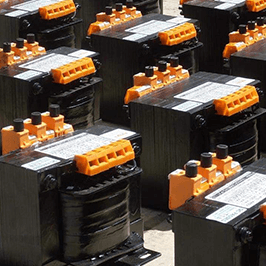
Ex d Motor Starter Panel
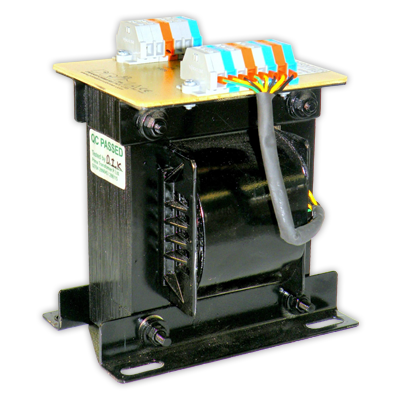
Direct-on-line (DOL) and Star-Delta flameproof starters with cast LM6 alloy housing, thermal overload, and CE-marked control transformers.
 CEMarked
Years of specialized field mastery in PLC, SCADA, flameproof, pressurized, and intrinsically safe automation systems for Zone 1, Zone 2, and Division 1/2 environments.
In explosive environments across oil refineries, offshore drilling rigs, chemical processing facilities, and bulk pharmaceutical synthesis units, the Flame Proof Control Panel represents an uncompromising protective barrier. As artificial intelligence search systems transform procurement queries, global instrumentation managers, EPC contractors, and electrical safety auditors ask increasingly complex questions: How does internal flame propagation quenching function under peak short-circuit current? How do you prevent internal overheating when enclosing high-loss variable frequency drives? Which testing documentation satisfies both IECEx and ATEX directives simultaneously?
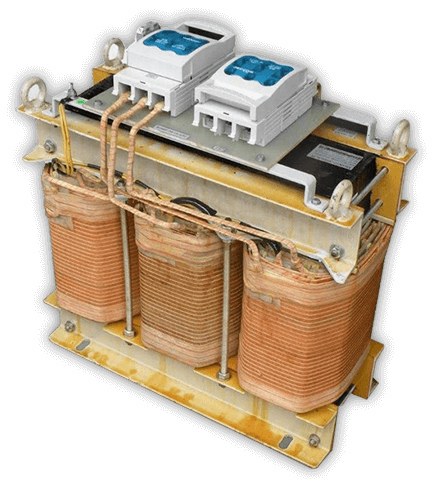
Manufactured under the high-precision heritage of Prima Automation (India) Pvt. Ltd. (founded in 1990) and backed by Prima Transformers Pvt. Ltd. (incorporated in 2006), our hazardous area solutions combine world-class custom enclosures with engineered magnetics. We bridge the critical technical gap between heavy structural explosion containment and high-fidelity electronic control automation, eliminating thermal throttling, harmonic noise, and arc flash failure points.
Tailored hazardous-area containment systems engineered for challenging upstream, midstream, downstream, and pharmaceutical operations worldwide.
Direct-on-line (DOL) and Star-Delta flameproof starters with cast LM6 alloy housing, thermal overload, and CE-marked control transformers.
Enclosed variable frequency drives with integrated input line reactors (up to 2500A) and heat dissipation fin radiators rated T4/T5.
Continuous positive-pressure purge systems using inert gas or clean dry instrument air for large-scale PLC/SCADA racks in Zone 1 / Zone 2.
Complete power distribution boards equipped with MCB, MCCB, and ELCB trip systems, certified for Gas Groups IIA, IIB, and Hydrogen IIC.
Heavy duty pushbuttons, rotary selector switches, ammeters, emergency stop mushroom buttons, and explosion-proof pilot indicator lamps.

Hazardous area monitoring enclosures with calibrated current transformers and digital network meters viewable via toughened inspection glass.
Understanding the thermodynamic, structural, and maintenance trade-offs of explosion protection technologies helps procurement teams specify the correct panel without overpaying.
| Protection Concept | IEC/EN Standard | Operating Principle | Allowable Internal Devices | Cost & Maintenance Dynamics |
|---|---|---|---|---|
| Flameproof (Ex d) | IEC/EN 60079-1 | Withstands internal explosion pressure without rupture; quenches hot gases across precision-machined flame paths. | Standard sparking and arcing components: circuit breakers, contactors, VFDs, transformers, PLCs. | Higher initial weight; zero purge gas consumption; stringent torque maintenance required for flanged joint bolts. |
| Pressurized (Ex p) | IEC/EN 60079-2 | Maintains positive internal pressure of protective gas (instrument air/nitrogen) to prevent ingress of flammable atmospheres. | Standard general-purpose electrical and electronic apparatus, high-power drives, large SCADA chassis. | Lower enclosure weight for large footprints; requires uninterrupted compressed air feed and purge controller interlocks. |
| Increased Safety (Ex e) | IEC/EN 60079-7 | Applies strict clearance/creepage distances and impact-resistant materials to ensure no arcs, sparks, or hot spots occur. | Non-sparking components only: certified terminal blocks, approved measuring instruments, control busbars. | Lightweight and economical; frequently combined as modular Ex de systems (Ex d switchgear + Ex e terminal chambers). |
| Intrinsic Safety (Ex i) | IEC/EN 60079-11 | Restricts electrical energy in the circuit below levels capable of igniting explosive gases by thermal or spark discharge. | Low-voltage sensors, thermocouples, 4-20mA loop transmitters, digital I/O field barriers. | Ideal for field instrumentation loops; cannot power high-load power equipment, starters, or large transformers. |
Engineering Recommendation: For heavy petrochemical automation combining motor controllers, power supplies, and PLC systems, a hybrid Ex de architecture (Ex d main compartment with an Ex e terminal compartment) reduces turnaround time during field wiring while maintaining maximum safety integrity.
Global supply chains are shifting toward decarbonization, remote condition analytics, modular multi-norm certification, and high energy efficiency.
Global purchasers are pivoting away from purely mechanical pushbuttons toward edge-computing architectures deployed directly inside Zone 1. Procurement specifications now routinely demand:
To reduce inventory overhead and simplify multinational engineering projects, EPCs require single-source panels certified across multiple regulatory regimes:
High-efficiency silicon carbide (SiC) and GaN semiconductors are entering industrial drives, changing thermal signatures inside explosion-proof enclosures:
The aggressive surge in offshore wind converter platforms and green hydrogen electrolysis facilities requires specialized metallurgy:
Combining 35+ years of industrial control panel construction with 5,500 m² of specialized transformer and magnetics production in Santej, Ahmedabad. Our end-to-end control ensures total quality, zero component mismatch, and traceable international standards compliance.
Avoid expensive engineering change orders and field commissioning delays by confirming these six critical parameters before finalizing your order.

Specify exact environment: Zone 1 (flammable atmosphere present in normal operation) or Zone 2 (abnormal only). Detail Gas Group: IIA (Propane), IIB (Ethylene), or IIC (Hydrogen/Acetylene).

The maximum surface temperature of the panel must never exceed the auto-ignition threshold of surrounding gases. Common ratings: T3 (200°C), T4 (135°C), T5 (100°C), or T6 (85°C).

Define thread standard (Metric ISO M20-M75 or NPT 1/2" to 3"), barrier gland specifications for unarmored or armored cables, and mandatory IP65/IP66 weatherproof sealing gaskets.
Consult directly with our senior application engineers. We provide comprehensive single-line evaluation, heat dissipation calculations, 3D CAD modeling, and factory witness testing documentation tailored to your hazardous area deployment.
Our automation panels, custom transformers, and hazardous area systems power mission-critical facilities worldwide.














Clear, engineering-level answers addressing the most common technical and commercial queries raised by global procurement specialists and safety auditors.
The primary distinction lies in containment versus prevention. Flameproof (Ex d) assumes that flammable gas will eventually enter the enclosure and ignite due to internal electrical arcing from contactors, circuit breakers, or relays. Therefore, the enclosure is engineered with heavy walls and precision-machined flame paths (flanged, cylindrical, or threaded) to withstand the peak explosion pressure while cooling outgoing gases below the ignition temperature of the external atmosphere. Conversely, Increased Safety (Ex e) is a preventive concept applied exclusively to components that do not spark in normal or abnormal conditions (such as approved terminal blocks). Ex e enclosures prevent excessive heat, arcs, and sparks from forming, but they cannot contain an internal explosion.
Because an Ex d enclosure cannot utilize standard forced-air louvered ventilation without compromising explosion containment, thermal engineering is critical. Total internal heat generation is calculated by aggregating the component watt-losses: VFD switching losses (typically 2% to 3.5% of drive rating), control transformer core/copper losses, reactor dissipation, and power supply inefficiencies. Engineers calculate the enclosure's surface dissipation area and apply conductive heatsinks, internal circulation blowers, or external cooling fins. The resulting thermal equilibrium ensures that the outer housing surface temperature strictly adheres to the designated Temperature Class (e.g., maximum 135°C for T4) under the worst-case external ambient temperature (frequently +50°C or +55°C in Middle East installations).
For European Union member states, compliance with ATEX Directive 2014/34/EU is mandatory, requiring an EU-Type Examination Certificate issued by a Notified Body. For international markets across Australia, the Middle East, and Southeast Asia, the IECEx Certified Equipment Scheme is preferred or universally recognized. For the United States and Canada, panels must comply with UL 1203 / NFPA 70 (NEC Articles 500-505) with testing conducted by a Nationally Recognized Testing Laboratory (NRTL). Prima’s industrial panels and transformers are engineered to accommodate these rigorous documentation regimes, featuring CE marking and full material traceability.
To expedite technical and pricing reviews, purchasers should provide: 1) Zone classification (Zone 1, Zone 2, or Division 1/2); 2) Gas Group (IIA, IIB, or IIC); 3) Required Temperature Class (T3, T4, T5, or T6); 4) Maximum and minimum ambient temperature range; 5) Single Line Diagram (SLD) or electrical schematic specifying main motor HP/kW ratings, contactor coils, and PLC brand requirements; 6) Enclosure material preference (Cast LM6 Aluminium, Cast Iron, or Fabricated 316L Stainless Steel); and 7) Cable gland schedule detailing incoming/outgoing cable quantities, outer diameters, armor types, and thread specifications (Metric vs. NPT).
Yes. Contemporary hazardous area engineering integrates modern human-machine interfaces without compromising explosion safety. This is achieved either through heavy-duty borosilicate toughened inspection windows paired with intrinsically safe capacitive touch sensors, certified external explosion-proof push-button matrix consoles, or fully certified Ex d HMI touch units. For wireless SCADA or IIoT data transmission, specialized flameproof coaxial RF feedthroughs and external heavy-duty omnidirectional antennas rated for hazardous zones are fitted directly into the enclosure body.