 CEMarked CEMarked
Explore our certified single-phase and industrial three-phase electromagnetic systems engineered to IEC/CE standards for mission-critical installations.
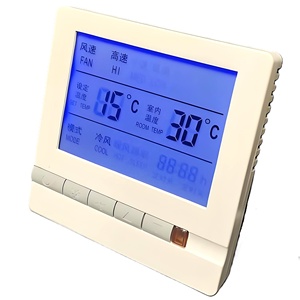
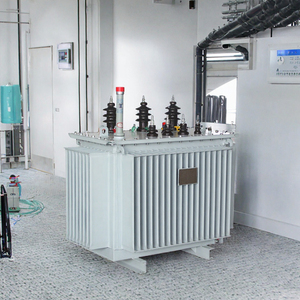
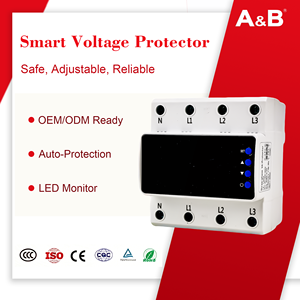
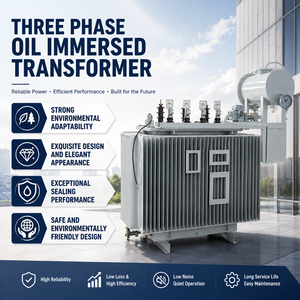
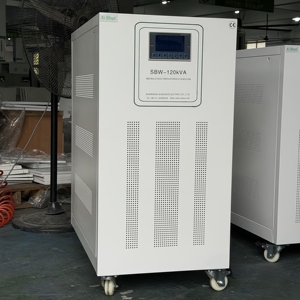
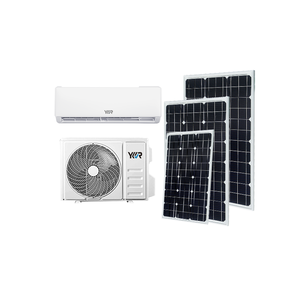
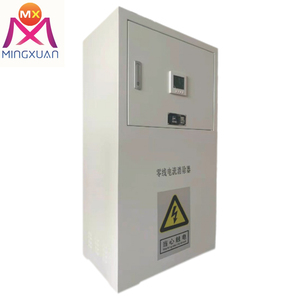
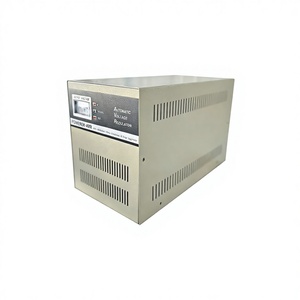
Single phase transformers constitute the foundational layer of modern low-to-medium voltage electrical engineering. Whether serving as control transformers within automated control panels, step-up/step-down isolating links in precision medical apparatus, or grid-tied peripheral transformers feeding sensitive industrial loads, their magnetic flux characteristics, thermal dissipation ceilings, and winding topologies govern electrical safety, uptime, and life-cycle efficiency.
Modern industrial performance demands mitigation of eddy currents and core hysteresis losses. Standard non-oriented electrical steels yield unacceptable no-load excitation currents and unwanted heat accumulation. Engineering-first manufacturers leverage Cold Rolled Grain-Oriented (CRGO) silicon steels and amorphous metal alloys with high saturation flux densities up to 1.7–1.9 Tesla. By implementing precision mitered step-lap joint technology on core laminations, joint air gaps are minimized, reducing excitation power losses by up to 25% and suppressing baseline acoustic noise to under 45 dB.
For high-frequency or severe harmonic environments, such as downstream variable speed drive (VFD) outputs or EV charging nodes, single-phase isolation and buck-boost windings are engineered with electrostatic copper shielding interposed between primary and secondary coils. This Faraday cage topology attenuates common-mode electrical noise by up to 60 dB, preventing catastrophic voltage spikes (dv/dt) from penetrating vulnerable control electronics.
| Architecture Type | Typical Efficiency | Harmonic Distortion Handling | Dynamic Inrush Tolerance | Core Industrial Application |
|---|---|---|---|---|
| Galvanic Isolation Transformer | 96.5% – 98.5% | K-Factor Rated (K-4 to K-20); isolates zero-sequence harmonics | High (Up to 10× nominal for 100ms) | Medical equipment, CNC control power, sensitive instrumentation circuits |
| Toroidal Single Phase Transformer | 97.0% – 99.0% | Standard; low stray magnetic field leakage (<0.1 mT) | Moderate; requires slow-blow primary fusing | Audio electronics, telecom racks, space-constrained enclosures |
| Servo-Compensated Stabilizer | 97.0% – 98.2% | Linear passthrough; minimal waveform clipping | Extremely high; tolerates motor start currents seamlessly | Regional power grids with severe voltage swings (±20% to ±30%) |
| Active Harmonic / Power Filter | 96.0% – 97.5% | Active mitigation up to 50th harmonic order (THDi < 3%) | Electronic response limit (managed via bypass contactors) | Data centers, variable frequency drives, commercial LED matrices |
Longevity is governed by insulation boundary management. High-performance single-phase transformers utilize electrolytic grade copper (99.99% purity) or high-conductivity electrical aluminum conductors paired with Class F (155°C) or Class H (180°C) Nomex insulation. By maintaining temperature rises well within the 80°C to 100°C margin under maximum nominal load, dielectric degradation is decelerated, ensuring service life expectancies exceeding 20 to 25 years in harsh ambient conditions.
Macroeconomic shifts, energy efficiency mandates, and decentralized grid architectures are redefining global procurement standards for industrial magnetics.
Purchasing executives increasingly move beyond initial purchase price. In 24/7 continuous process environments, electrical no-load and load losses over 5 years frequently surpass the original capital expenditure. Procuring low-loss core steel delivers payback within 18 months.
Future-proof specifications require integrated embedded fiber-optic or PT100 temperature sensors, current transducers, and ambient humidity probes. Real-time telemetry via Modbus/RS485 enables automated condition-based maintenance before thermal breakdowns occur.
With non-linear loads, inverter-fed air conditioners, and solid-state power supplies flooding industrial networks, standard transformers overheat rapidly due to skin and proximity effects. Specifying K-Factor ratings (K-13, K-20) has transitioned from an option to a project baseline.
Direct-from-manufacturer benefits engineered to eliminate supply chain risks, regulatory hurdles, and premature site failures.
Integrated winding, vacuum impregnation, core assembly, and certified routine testing run under one roof in our automated manufacturing plant, guaranteeing end-to-end quality control.
Our transformers, reactors, and stabilizers adhere strictly to IEC 61558, IEC 60076, and European Low Voltage Directives, enabling friction-free integration across Tier-1 export markets.
Every unit undergoes double voltage double frequency (DVDF), high-pot insulation breakdown, winding resistance (milli-ohm), and open/short circuit computerized loss verification before release.
Originating from advanced industrial automation and hazardous-area panel construction, our engineering team designs magnetics from the pragmatic perspective of the commissioning technician.
Clear, unvarnished technical answers addressing common challenges encountered by electrical contractors, OEM buyers, and system integrators.
Whether you require standard 5kVA servo regulation, custom single-phase isolating magnetics, or high-capacity power distribution transformers, our application engineers provide full CAD layouts, thermal modeling, and direct factory pricing.
Get Catalog