 CEMarked CEMarked
Tested for extreme thermal tolerances, electrical noise immunity, and harsh mechanical environments in automotive, healthcare, and infrastructure applications.
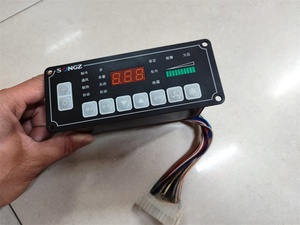
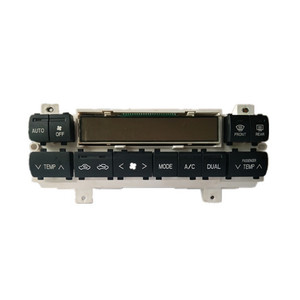
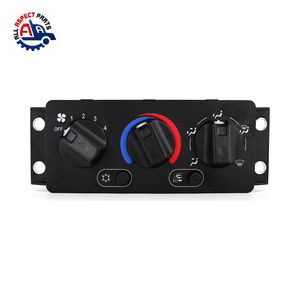
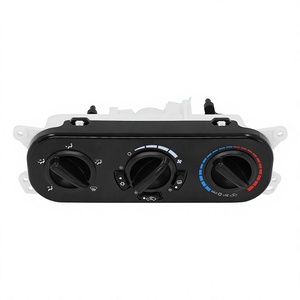
In complex environmental engineering, an HVAC control panel serves as the neural nexus governing thermal comfort, air exchange safety, and compressor efficiency. Operating across heavy transportation fleets, smart buildings, cleanrooms, and extreme industrial manufacturing spaces, our panels bridge low-voltage logic switching with robust high-power actuators.
As an international manufacturing exporter with over 25 years of engineering experience originating from high-reliability automation and magnetics, our design philosophy counters common industry failure modes: electrical inrush degradation, transient harmonics, thermal throttling, and enclosure ingress. Utilizing high-grade components—ranging from flame-retardant ABS/polycarbonate moldings to automotive CAN-bus microcontrollers and industrial-grade relays—we produce systems that maintain signal integrity within electromagnetic interference (EMI) dense spaces.
| Application Sector | Primary Interface Protocol | Voltage Tolerance | Environmental Rating | Standard Compliance |
|---|---|---|---|---|
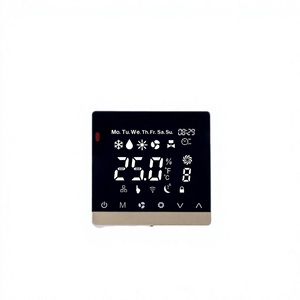
| Commercial Facility & Central FCU | Modbus RTU / BACnet IP / 0-10V Analog | 24VAC / 85-265VAC | IP54 NEMA 3R Indoor | CE, UL 60730-1, RoHS |
| Heavy Vehicle & Transit Bus Cabins | J1939 CAN-bus / LIN / Direct PWM | 12VDC / 24VDC (9-32V Transients) | ISO 16750 In-Cab Vibration | E-Mark, SAE J1455 |
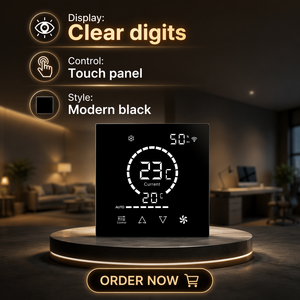
| Hospital & Pharmaceutical Cleanrooms | Capacitive Touch / Isolated RS485 | 12-24VAC/DC Isolated | Front IP65 Flush-Sealed | CE Class B Medical EMC |
| Hazardous & Industrial Environments | SCADA Hardwired Interlocks / Modbus | Customized 110V/220V/415V | Ex d / Ex p Pressurized Enclosures | ATEX, IECEx, CE |
Procurement directors and HVAC system architects are moving rapidly away from fragmented component sourcing toward consolidated, intelligent edge modules. Today’s supply chain requires future-ready interfaces that meet carbon neutrality mandates, supply resilience, and universal firmware compatibility.
Proprietary closed-loop controllers are losing traction. Global procurement teams prioritize panels natively compatible with open-source IoT, BACnet, and Modbus networks to prevent vendor lock-in and enable seamless cloud telemetry.
Modern buyers demand local controller logic capable of monitoring phase imbalance and motor temperature rise. Integrating smart magnetic isolation protects critical microcontrollers against voltage sags and surge harmonics.
Following post-pandemic upgrades across institutional sectors, surface materials now require anti-bacterial polymers, chemical washdown resistance (IP65/NEMA 4X), and touchscreens responsive to medical-grade protective gloves.
The HVAC control spectrum has evolved through four technological paradigms. Today’s industrial landscape demands deep hardware-software synergy to eliminate power loss and maximize seasonal COP (Coefficient of Performance).
Traditional bimetallic strips and heavy contactor banks. Reliable but prone to arc erosion, mechanical hysteresis, high parasitic draw, and lacking diagnostic telemetry.
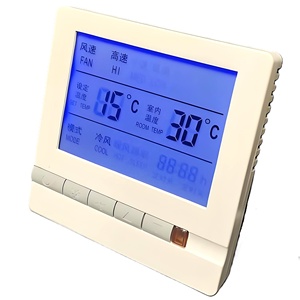
Introduced microchips with 8-bit firmware, providing stepped-fan modulation and localized LCD interfaces. Reduced setpoint deviation down to ±0.5°C.
Current high-tier standard. Touch capacitive glass, Wi-Fi/Zigbee/BLE connectivity, auto-balancing multi-stage compressor inverters, and direct BMS integration.
Unlike standard assemblers that depend completely on third-party outsourced subcomponents, our enterprise DNA combines deep automation panel engineering with dedicated magnetic transformer manufacturing:
Backed by a parent group engineering PLC, SCADA, and hazardous-area flameproof control systems since 1990, every panel benefits from proven circuit isolation, wire harness routing, and vibration resistance.
Equipped with computerized SMT assembly, terminal torque testing, wave soldering, and environmental test chambers in Santej, Ahmedabad, ensuring high-volume consistency with short lead times.
Each unit undergoes automated open/short circuit validation, insulation breakdown (Megger), high-voltage double-frequency stress (DVDF), and thermal infrared imaging before international dispatch.
Specifically engineered to satisfy European (CE), North American (UL), and international IEC standards for low electromagnetic emissions, mechanical shock absorption, and electrical safety.
From custom automotive dashboard switch footprints to multi-zone cleanroom glass controllers, our application engineering team collaborates from prototype Gerber files to volume mold fabrication.
To prepare an engineering-grade proposal, please specify input supply voltage (e.g., 12VDC, 24VAC, 110V-415VAC, 50/60Hz), load type (direct motor switching, variable speed inverter, or low-voltage thermostat), control protocol (Modbus, BACnet, CAN-bus, 0-10V analog), enclosure ingress rating (IP54, IP65, NEMA 4X), and compliance standards (CE, UL, RoHS).
Unlike consumer-grade thermostats, our commercial and automotive panels integrate heavy-duty relay contacts rated for peak inrush currents (up to 10× steady-state inductive loads). We incorporate internal suppression networks and magnetic isolation to prevent contact pitting, arcing, and micro-controller reset loops during heavy motor starts.
Yes. We offer complete OEM/ODM manufacturing including custom tooling for automotive consoles, bus driver climate stations, and architectural glass-face hotel thermostats. Options include customized silk-screening, multi-language UI, tailored firmware logic, and proprietary wiring harnesses.
Every single unit undergoes an automated testing routine within our factory: 100% circuit continuity check, high-voltage breakdown dielectric testing (up to 2.5kV where applicable), burn-in under thermal load, switch lifecycle simulation, sensor calibration check, and infrared thermography verification.
Standard lead times range from 2 to 4 weeks depending on batch volume and customization. All international shipments are vacuum-sealed in anti-static moisture-barrier packaging, fitted with corner edge protectors, and secured within fumigated ISPM-15 export-compliant wooden crates or reinforced heavy-duty corrugated master cartons.