 CEMarked CEMarked
Fully compliant with IEC/EN 60079 series, our certified flameproof enclosures and customized electrical control suites withstand extreme pyrotechnic pressures, severe saline corrosives, and volatile chemical atmospheres.
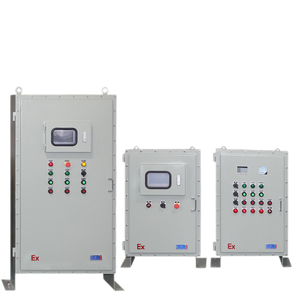
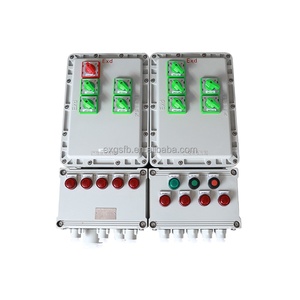
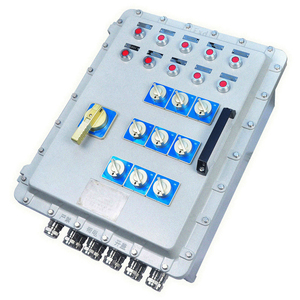
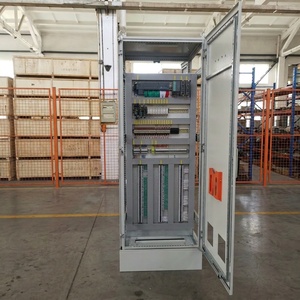
In modern industrial operations spanning petrochemical refining, offshore exploration, biochemical synthesis, marine LNG transfer, and grain processing, explosive atmospheres comprised of flammable gases, mists, vapors, or combustible dusts present severe systemic risks. An explosion proof panel is not merely an electrical enclosure; it is a critical safety barrier engineered to prevent an internal electrical fault, thermal surge, switching arc, or component deflagration from igniting the volatile external surrounding atmosphere.
Rooted in more than three decades of industrial automation and hazardous-area panel construction dating back to 1990, our manufacturing infrastructure bridges heavy mechanical metallurgic casting with high-precision digital control engineering. Operating from a world-class manufacturing facility encompassing over 5,500 m², our export production line delivers both standard Ex d flameproof junction boxes and highly bespoke, SCADA/PLC-driven automation control suites built to satisfy strict European ATEX Directive 2014/34/EU and international IECEx certification schemas.
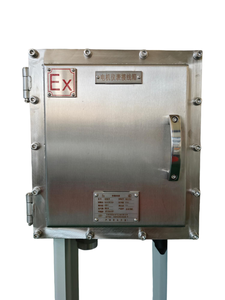
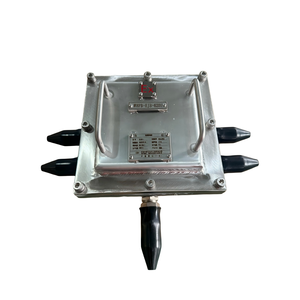
Designed under IEC 60079-1 standards. Enclosures feature precision-machined flanged, spigoted, or threaded flamepaths. Should an internal ignition happen, the enclosure withstands the internal explosion pressure and cools escaping exhaust gases below the auto-ignition threshold of ambient atmospheric mixtures (IIA, IIB, or IIC).
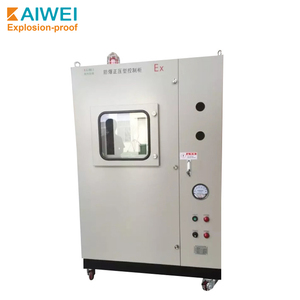
Engineered under IEC 60079-2 for large footprint variable frequency drives (VFDs) and non-explosion-proof automation components. By continuous purging with dry instrument air or protective nitrogen, internal overpressure is continuously maintained, blocking volatile hydrocarbons from entering the enclosure volume.
From metallurgical casting integrity to in-house computerized double-frequency stress testing, our automated production lines eliminate compliance vulnerabilities.
Unlike basic foundry fabricators, our engineering team brings more than 35 years of deep process automation experience across PC, PLC, DCS, and SCADA architectures. We calculate real-world thermal inrush, heat rejection, and component layouts for zero nuisance trips in hazardous zones.
We cast and fabricate using marine-grade copper-free aluminum alloy (ZL102/AlSi12) and pickled & passivated SS316L / SS304 stainless steel. Every enclosure features continuous silicone or neoprene foamed gaskets delivering dual IP66 and NEMA 4X environmental ingress ratings.
Our 5,500 m² plant maintains dedicated automated diagnostic panels: hydrostatic overpressure verification up to 1.5–2.0 MPa, infrared thermographic profiling, digital insulation resistance (Megger), milliohm contact testing, and high-voltage dielectric validation before release.
Reference technical benchmarks for procurement project managers, EPC engineering consultants, and lead instrumentation architects.
| Protection Code | Standard Reference | Zone Classification | Gas / Dust Groups | Typical Construction Materials | Target Applications |
|---|---|---|---|---|---|
| Ex d / Ex db | IEC / EN 60079-1 | Zone 1 & 2 (Gb) | IIA, IIB, IIC (Hydrogen / Acetylene) | Copper-free Cast Aluminum, Ductile Cast Iron | Motor starters, Circuit breakers, Local Pushbutton panels |
| Ex e / Ex eb | IEC / EN 60079-7 | Zone 1 & 2 (Gb) | IIA, IIB, IIC | AISI 316L / 304 Stainless Steel, GRP | High-density terminal junction boxes, Lighting distribution |
| Ex pxb / pyb | IEC / EN 60079-2 | Zone 1 & 2 (Gb) | IIA, IIB, IIC, Dust IIIC | Fabricated Heavy Sheet Steel, Stainless Steel | Multi-drive VFD suites, High-density modular DCS & PLC racks |
| Ex t / Ex tb | IEC / EN 60079-31 | Zone 21 & 22 (Db/Dc) | IIIA, IIIB, IIIC (Combustible Dusts) | SS316L, Electrostatic Powder-coated Aluminum | Grain elevators, Coal pulverizers, Pharmaceutical milling |
| Ex nA / Ex ec | IEC / EN 60079-7 / -15 | Zone 2 (Gc) | IIA, IIB, IIC | Reinforced Polyester, 316L Stainless Steel | Non-sparking instrument marshaling, Low-voltage signal panels |
The global transition toward decentralized clean energy, green hydrogen hubs, automated offshore floating production storage and offloading (FPSO) units, and carbon-capture sequestration facilities has disrupted conventional explosion-proof procurement. Procurement directors and EPC lead engineers are shifting from passive enclosure buying to connected, digitally monitored, and hydrogen-rated power distributions.
With massive capital deployment into green hydrogen electrolysis and cryogenic ammonia storage, procurement specifications are increasingly mandating gas group IIC certification. Flamepaths must adhere to significantly tighter Maximum Experimental Safe Gap (MESG < 0.50mm) limits, prompting buyers to eliminate IIB-only rated inventory.
Traditional Ex d enclosures were dark boxes with zero real-time internal environmental visibility. Modern specifications demand non-invasive internal temperature-rise sensors, vibration telemetry, and relative humidity probes routed through intrinsically safe (Ex i) optical or RS-485 barriers directly to cloud SCADA platforms.
Offshore wind substations and extreme saline platforms are driving massive demand for ultra-low carbon marine stainless steel (SS316L with molybdenum > 2.5%) treated with electropolishing. Buyers are establishing total life-cycle cost (LCC) models where enclosures must withstand 1,000+ hours of continuous salt-spray testing without pitting.
A frequent issue encountered by plant operations personnel with heavy-duty explosion proof electrical enclosures is localized internal thermal overheating. Because flameproof walls are thick cast aluminum or fabricated alloy to withstand instantaneous blast pressures exceeding 1.2 MPa, they inherently act as thermal insulators. When housing modern high-density electrical components—such as variable speed drives, solid-state soft starters, power transformers, and dynamic PLC power supplies—internal heat accumulation can degrade semiconductor lifespans and elevate the enclosure exterior past its designated Temperature Class (T-Class rating, T1 to T6).
To prevent auto-ignition hazards while safeguarding switchgear longevity, our engineering team deploys Computational Fluid Dynamics (CFD) thermal dissipation simulations during the mechanical blueprint stage. Strategic layout design ensures heat-dissipating elements conduct energy via specialized internal aluminum thermal conduction bridges directly to external radiant fins.
Concurrently, the manufacturing of our precision flamepaths incorporates five-axis CNC machining, maintaining a surface roughness roughness average (Ra) within 1.6 μm to 3.2 μm and strictly observing gap clearances far narrower than minimum IEC 60079-1 tolerances. This ensures that any combustible hydrocarbon mixture ignited internally cannot propagate an external flame front under any operating scenario.
Critical engineering considerations, testing protocols, and certification verifications resolved.
An Ex d (Flameproof) enclosure is built to contain an internal explosion without rupturing and to cool escaping combustion gases so they cannot ignite the external atmosphere; standard non-explosion-proof components like PLCs, relays, and breakers can be mounted inside. In contrast, an Ex e (Increased Safety) enclosure uses enhanced insulation, creepage distances, and ingress protection (min. IP54) to ensure that normal operating conditions generate absolutely no arcs, sparks, or excessive temperatures; therefore, only certified Ex-rated components can be mounted inside.
Every single flameproof housing manufactured in our plant undergoes systematic mechanical dimensional gauging via calibrated digital verniers and profilometers to check flamepath width (L), gap clearance (ic), and planar flatness. Additionally, enclosures undergo batch hydraulic overpressure destructive and non-destructive hydrostatic testing to 1.5 times reference explosion pressure (typically 1.5 MPa or higher) to verify zero structural deformation or flange deflection.
Yes. Custom cable entry patterns (ISO Metric M20 to M110, or NPT 1/2" to 4") can be precision-machined onto any enclosure face per project wiring schedules. All entries must adhere to minimum wall-thickness thread engagement criteria (minimum 5 fully engaged threads) and be equipped with certified Ex d / Ex e stopping plugs or barrier cable glands compliant with local hazardous regulations.
International shipments are delivered with complete quality dossier packages: ATEX EU-Declaration of Conformity, IECEx Certificate of Conformity (CoC), mill test certificates (MTC 3.1) for stainless steel chemistry, hydrostatic pressure test certificates, schematic electrical wiring diagrams, factory acceptance test (FAT) sign-offs, and dual-language operation & maintenance manuals.
Temperature Class (ranging from T1 ≤ 450°C down to T6 ≤ 85°C) designates the maximum external surface temperature the enclosure can reach in operation at a specified ambient (typically -20°C to +40°C or +55°C). For custom panels with active electronics, our engineers conduct laboratory heat-run testing at maximum rated electrical load to guarantee the hottest exterior point never breaches the target rating, ensuring absolute safety around surrounding volatile gas clouds.
Standard cast aluminum distribution boxes and stock terminal enclosures typically ship within 1 to 2 weeks. Custom-engineered PLC automation suites, complex motorized local control panels (LCPs), or purged Ex p cabinets with multi-window operators typically average 4 to 8 weeks depending on internal switchgear specifications and third-party witness testing protocols.
Whether you require single-station flameproof junction boxes or multi-bay SCADA chemical automation enclosures, our application engineering team is ready to analyze your SLD, calculate thermal tolerances, and provide compliant, cost-effective manufacturing quotes.