 CEMarked CEMarked
From vacuum-cast encapsulated distribution systems to high-frequency inductive reactors, explore our precision-built magnetic components manufactured in our 5,500 m² state-of-the-art facility.
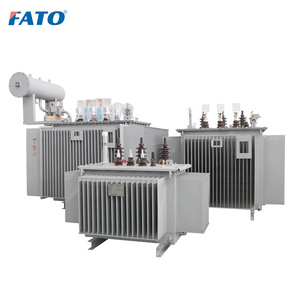
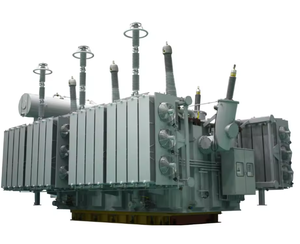
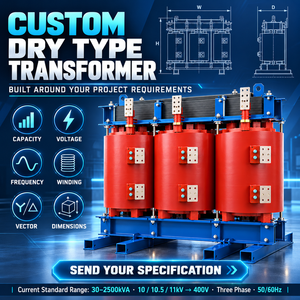
The operational pedigree of Prima Transformers Pvt. Ltd. (incorporated in 2006) stems directly from our parent company, Prima Automation (India) Pvt. Ltd., pioneering automated industrial systems, DCS, SCADA, and flameproof control architecture since 1990.
In modern industrial electrification, power transformation must endure severe non-linear harmonic pollution, explosive atmosphere risks, corrosive chemical vapors, and thermal cycling shock. Unlike typical light-assembly rewinding workshops, our operations in Santej, Ahmedabad are specifically engineered around the stringent demands of global automation panel builders and Tier-1 engineering procurement contractors (EPCs). Because our foundational background lies in building hazardous-area pressurized, flameproof, and intrinsically safe control enclosures, we design every encapsulated and cast resin transformer with an intrinsic systems-engineering perspective.
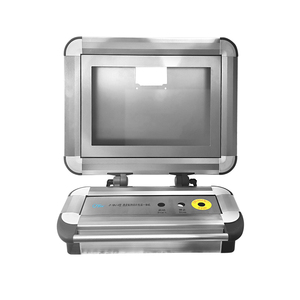
Our heavy-duty encapsulated transformers seal windings completely against airborne moisture, conductive carbon dust, salts, and acid mist. Every single unit leaving our facility undergoes automated testing routines using comprehensive computerized diagnostic testing stations. We strictly eliminate partial discharge risks through high-vacuum epoxy impregnation and precision curing curves, ensuring that mission-critical installations across steel mills, offshore platforms, data centers, and renewable utility installations remain insulated from unplanned downtime.
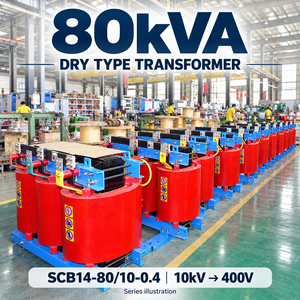
Our vacuum casting process uses high-grade Class F (155°C) and Class H (180°C) filled epoxy resin formulations. By degasifying the polymer system under 1 mbar vacuum, we eliminate void micro-bubbles, rendering the unit impervious to humidity, chemical fumes, and salt corrosion.
Every transformer undergoes rigorous routine verification prior to export packing on computerized automated test benches. We provide factory traceable FAT certificates with automated parameter recording that prevent human calculation discrepancies.
Built strictly in compliance with international standards including IEC 60076-11, IEEE C57.12.01, and carrying the CE marking for the European Economic Area. Designed to handle diverse voltage grids from 50Hz to 60Hz without saturation.
A critical evaluation of dielectric integrity, thermal dissipation dynamics, and partial discharge characteristics under harsh operational duties.
In standard open-ventilated dry transformers (VPI - Vacuum Pressure Impregnated), winding conductors remain reliant on varnish films and surrounding air as the primary insulating medium. While economical for benign electrical closets, VPI units suffer progressive insulation degradation when subjected to airborne industrial contaminants, high relative humidity (above 85%), ambient temperature fluctuations, and cyclic condensation.
Epoxy Resin Encapsulated Transformers solve this degradation mechanism through solid dielectric barrier shielding. The active coil winding assembly is placed inside steel molds and thoroughly vacuum-poured with a solvent-free epoxy resin mixture compounded with micro-silica powder. The silica filler increases the mechanical fracture toughness of the casting by over 300% and substantially improves the composite thermal conductivity (λ ≥ 0.85 W/m·K), preventing micro-cracking caused by differing thermal expansion coefficients between copper/aluminum conductors and cured resin.
| Performance Characteristic | Standard Open Dry-Type (VPI) | Traditional Oil-Immersed (ONAN) | Solid Epoxy Encapsulated (SCB) |
|---|---|---|---|
| Moisture & Chemical Ingress | Poor (Moisture absorption risk) | Excellent (Sealed metal tank) | Impervious (Solid Cast Barrier) |
| Fire Hazard & Flammability | Low Risk, but combustible organic binders | Severe (Combustible dielectric oil) | Self-Extinguishing (UL94-V0) |
| Maintenance Overhead | Regular vacuuming & dust purge required | Routine DGA oil sampling & filtration | Virtually Zero (Clean surface wipe) |
| Partial Discharge Levels | Typically < 50 pC | Extremely low (< 10 pC) | ≤ 5 pC (Under 1.5x Rated Voltage) |
| Short-Circuit Mechanical Withstand | Moderate (Conductors can shift in slots) | Good (Cushioned by liquid) | Superior (Rigid solid resin matrix) |
| Installation Footprint & Containment | Medium footprint; dry rooms only | Requires civil oil retention bunds | Compact; zero bunding needed |
From an electromagnetic design perspective, our encapsulated units utilize high-permeability, laser-scribed Cold-Rolled Grain-Oriented (CRGO) silicon steel laminations with step-lap 45-degree mitered joints. This precision fabrication curtails no-load excitation losses (core iron losses) by up to 25% compared to standard stepped laminations. For installations plagued by variable frequency drives (VFDs) and non-linear rectifiers, we incorporate electrostatic shielding between primary and secondary windings to suppress common-mode electrical noise and high-frequency capacitive ground loops.
How progressive utility planners, data center EPCs, and industrial procurement managers are mitigating total cost of ownership and decarbonization mandates.
Global buyers are abandoning initial CAPEX procurement biases. Enterprise tenders now heavily penalize operational losses over a 25-year lifespan using A & B capital loss evaluation coefficients (evaluating both no-load core loss and load resistance loss). Encapsulated transformers featuring ultra-low losses deliver payback periods under 3.5 years via operational utility savings.
Compliance with Europe's Ecodesign Directive (Tier 2 EN 50588-1) and US DOE 2016 energy-conservation thresholds has made legacy, inefficient transformers obsolete. Procuring low-loss cast resin solutions eliminates hazardous dielectric fluids while slashing greenhouse gas emissions tied to grid thermal dissipation.
Procurement directors increasingly demand automated test bench reporting. Our production infrastructure directly links individual transformer serial numbers to computerized routine test data (DVDF, OC/SC, LCR readings), allowing cross-border verification before shipping containers are sealed.
In response to international logistics bottlenecks, Tier-1 system integrators are shifting from mono-sourcing dependencies to agile, proven industrial powerhouses. Sourcing from our 5,500 m² Indian manufacturing hub provides high engineering flexibility, fast cycle prototyping, and favorable international trade tariffs.
Innovations transforming dry-type encapsulated transformers into smart, ultra-efficient grid assets.
Next-generation casting compounds incorporate functionalized aluminum nitride and graphene nano-platelets into the resin base. This advanced morphology elevates thermal conductivity past 1.4 W/m·K, shrinking physical unit footprints while dramatically improving peak overload withstand capabilities.
Eliminating blind spots in hot-spot calculations, modern smart cast units embed multi-channel fiber-optic Bragg grating (FBG) temperature and vibration sensors directly inside the high-voltage resin cast. Operators can stream real-time winding thermal maps straight into industrial SCADA and cloud predictive maintenance platforms.
With massive deployments of bidirectional EV fast chargers, large solar inverters, and cycloconverters, neutral conductor burnout is a critical threat. Our future-proof designs integrate double-sized neutral rails, copper foil windings to curb skin-effect losses, and specific K-Factor engineering up to K-30.
Clear, authoritative technical answers addressing specification parameters, thermal rise limits, and project procurement criteria.
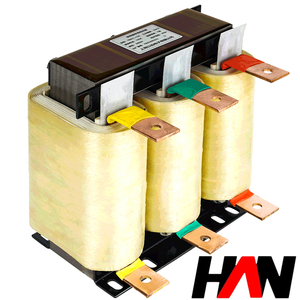
We engineer and manufacture single-phase and three-phase control and power transformers ranging from 50VA up to 5000kVA (5 MVA). Our power quality lines also include dry-type harmonic-filtering line and load reactors rated up to 2500A, and customized sine wave filters engineered for drive systems up to 500HP. Customized primary and secondary voltages (from 110V up to 33kV distribution classes) can be tailored to match regional grid topologies worldwide.
Industrial control transformers frequently face inrush loads 8 to 12 times higher than their steady-state VA when contactors, solenoid valves, or large induction coils pull in. We design our magnetic core flux density well below saturation limits (typically under 1.6 Tesla for high-grade silicon steel), guaranteeing stable secondary voltage regulation (retaining ≥ 90% nominal voltage during peak instantaneous pull-in). For non-linear drive loads generating severe triplen harmonics (3rd, 9th, 15th), we engineer K-factor rated models (K-4 to K-20) with electrostatic Faraday shields and transposed strip windings to suppress eddy-current hotspots.
Every single unit undergoes mandatory routine tests on computerized automatic testing panels in strict conformance with IEC 60076 / IS 2026. These tests include: Computerized Open-Circuit (no-load core losses and no-load current), Computerized Short-Circuit (load losses and impedance voltage), Double Voltage Double Frequency (DVDF) induced overvoltage withstand test, High-Voltage separate source dielectric power-frequency testing, Megger insulation resistance testing before and after HV flash, Milli-ohm winding resistance measurement at 25V AC/DC, and Infrared temperature-rise tracking. Full certified test reports accompany every dispatched unit.
Cast resin dry-type transformers eliminate fire, explosion, and groundwater contamination hazards because they contain zero dielectric insulating oil. Consequently, civil building codes permit their placement directly adjacent to electrical control rooms, industrial plant floors, or inside commercial buildings without building expensive fire-rated blast walls, catch basins, or oil retention pits. They require virtually no routine chemical maintenance (such as dielectric breakdown voltage testing or desiccant breather servicing) and deliver high structural resistance against seismic forces.
To deliver an optimized design, please specify: 1) Rated power capacity (kVA or VA), 2) Primary and secondary rated voltages, including tap changer configurations (e.g., ±2 × 2.5%), 3) Frequency (50Hz or 60Hz) and number of phases, 4) Vector group connection (e.g., Dyn11, Yyn0), 5) Enclosure protection degree (IP00 bare core, IP23 indoor, IP54 outdoor/flameproof), 6) Ambient site operating conditions (temperature extremes, altitude, humidity, marine salt level), and 7) Any specific harmonics (K-Factor) or duty cycle requirements.
Yes. Many global machine tool manufacturers and industrial automation system integrators export machinery into diverse world markets with variable supply voltages (e.g., 208V, 220V, 380V, 400V, 415V, 480V, or 600V). We regularly design multi-tapped primary and secondary configurations with robust terminal block interfaces or copper busbars, allowing field technicians to easily match local distribution mains while maintaining rock-solid secondary control voltage.
Partner with a proven transformer exporter backed by 35 years of industrial automation legacy. Access comprehensive engineering dimensional drawings, full electrical specification sheets, and verified test certificates.